English

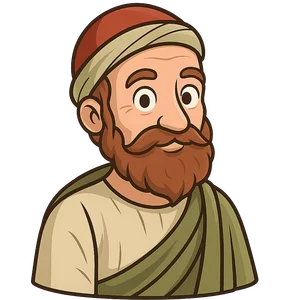
Claudius Ptolemy
A Greco-Roman scholar of Alexandria, known for his influential works in astronomy, geography, and mathematics…
Reads at Grades 6–8 Listens at Grades 4–8
Print & create
Answer keys·No prep·Free with an account
28 worksheets · answer keys · full story · quiz · Ages 10-12 · CEFR B2
Plus adds 164,000+ more stories in 27 languages, audio for every one, and printables for all of them.
Just want Claudius Ptolemy?
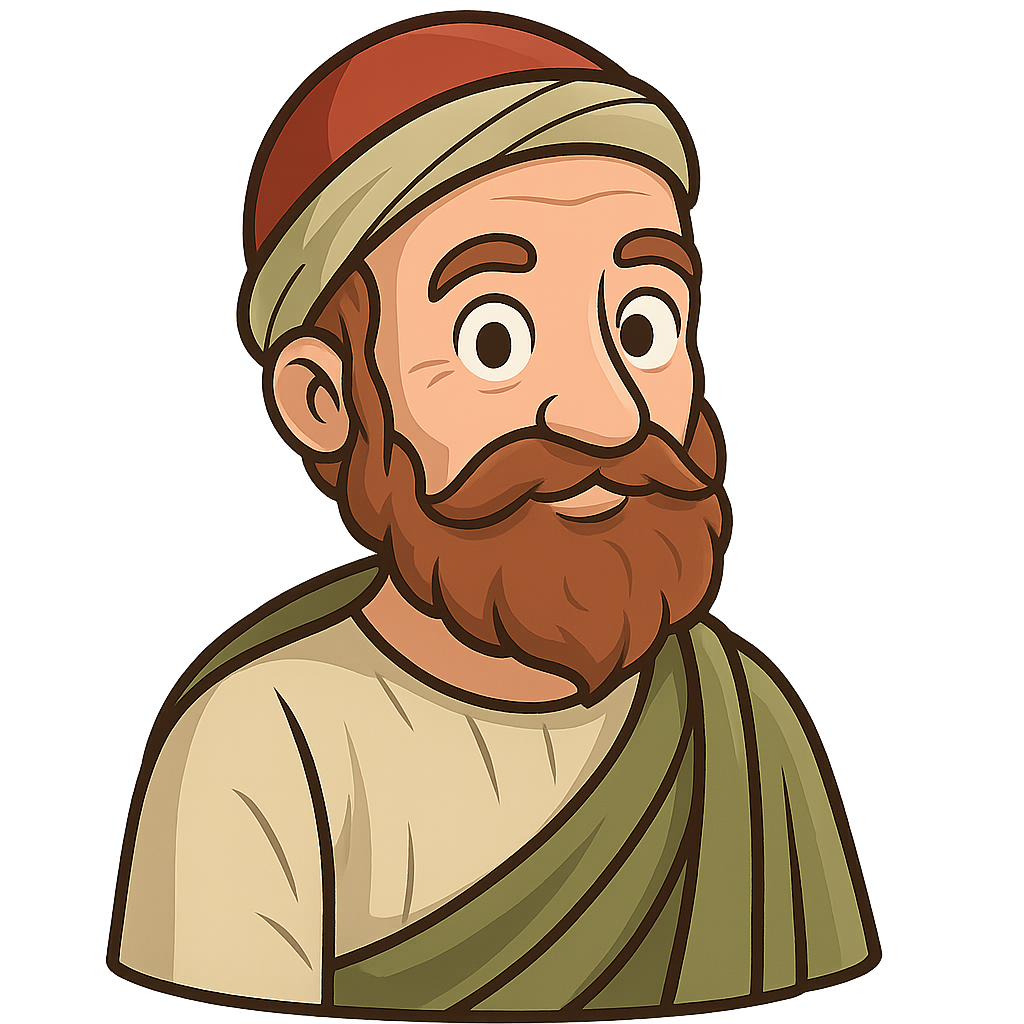
Hello! My name is Claudius Ptolemy. Though my first name is Roman and I lived under the rule of the Roman Empire, I spoke and wrote in Greek. I lived nearly two thousand years ago, from about the year 100 to 170. My home was the magnificent city of Alexandria in Egypt, a bustling hub of trade, culture, and, most importantly for me, knowledge. I spent my days at the legendary Library of Alexandria, which was the greatest center of learning in the entire world. Surrounded by scrolls containing the wisdom of ages, I dedicated my life to observing the world and the universe. I was a mathematician, an astronomer, a geographer, and a philosopher. I wanted to understand everything, from the tiniest flicker of a distant star to the grand shape of our own world.
My greatest passion was studying the heavens. I would spend countless nights gazing at the stars and planets, carefully tracking their movements across the sky. I used mathematics to make sense of what I saw. Around the year 150, I compiled all of my astronomical knowledge into a massive book that would later become known as the *Almagest*, which means 'The Greatest Treatise.' In it, I described a model of the universe with the Earth at the very center. I explained that our planet, Earth, was stationary, and that the Moon, Mercury, Venus, the Sun, Mars, Jupiter, and Saturn all revolved around it in perfect circles. This is called a geocentric model. To explain the strange looping motions the planets sometimes seemed to make, I came up with a clever system of circles-on-circles called epicycles. For over 1,400 years, my book was the most important text on astronomy in Europe and the Middle East. While scientists much later, like Nicolaus Copernicus, would discover that the Sun is actually the center of our solar system, my work was a huge step in using mathematics to predict the movements of the cosmos.
Claudius Ptolemy
Hello! My name is Claudius Ptolemy. Though my first name is Roman and I lived under the rule of the Roman Empire, I spoke and wrote in Greek. I lived nearly two thousand years ago, from about the year 100 to 170. My home was the magnificent city of Alexandria in Egypt, a bustling hub of trade, culture, and, most importantly for me, knowledge. I spent my days at the legendary Library of Alexandria, which was the greatest center of learning in the entire world. Surrounded by scrolls containing the wisdom of ages, I dedicated my life to observing the world and the universe. I was a mathematician, an astronomer, a geographer, and a philosopher. I wanted to understand everything, from the tiniest flicker of a distant star to the grand shape of our own world.
My greatest passion was studying the heavens. I would spend countless nights gazing at the stars and planets, carefully tracking their movements across the sky. I used mathematics to make sense of what I saw. Around the year 150, I compiled all of my astronomical knowledge into a massive book that would later become known as the Almagest, which means 'The Greatest Treatise.' In it, I described a model of the universe with the Earth at the very center. I explained that our planet, Earth, was stationary, and that the Moon, Mercury, Venus, the Sun, Mars, Jupiter, and Saturn all revolved around it in perfect circles. This is called a geocentric model. To explain the strange looping motions the planets sometimes seemed to make, I came up with a clever system of circles-on-circles called epicycles. For over 1,400 years, my book was the most important text on astronomy in Europe and the Middle East. While scientists much later, like Nicolaus Copernicus, would discover that the Sun is actually the center of our solar system, my work was a huge step in using mathematics to predict the movements of the cosmos.
I didn't just look up at the sky; I also wanted to understand the world beneath my feet. I gathered all the information I could from travelers, sailors, and old maps to create another very important book called the Geographia. My goal was ambitious: to create a map of the entire known world. I developed a system that we still use today to locate places on a map. I imagined lines running from north to south, which I called longitude, and lines running from east to west, called latitude. By giving coordinates—two numbers for latitude and longitude—I could pinpoint the location of over 8,000 places, from Britain in the west to China in the east. My maps weren't perfect, of course. I didn't know about the Americas, and I made some continents and oceans the wrong size. But my method of using a grid system was revolutionary. Hundreds of years later, when my book was rediscovered in Europe during the 15th century, it inspired a new age of exploration. Explorers like Christopher Columbus studied my maps before setting off on their world-changing voyages.
My curiosity didn't stop with the stars and the Earth. I was interested in almost everything! I wrote about optics, which is the study of light and how we see. I conducted experiments to understand how light bends, or refracts, when it passes through water or glass. I also wrote about music, explaining how mathematics could describe musical harmonies and the notes in a scale. I even wrote a book about astrology called Tetrabiblos, which explored how the positions of the stars and planets might relate to events on Earth. For me, all these subjects—astronomy, geography, music, and optics—were connected. They were all ways of using logic and mathematics to find the patterns hidden within our amazing universe.
I lived a long and full life, passing away around the year 170 in my beloved Alexandria. For centuries after I was gone, my books were the main source of knowledge for scholars studying the universe and the Earth. Even though we now know the Earth goes around the Sun, my work laid the foundation for astronomy by showing that the universe could be understood through mathematics. My mapping system in the Geographia changed how people saw the world and their place in it. I am remembered as someone who tried to organize all of human knowledge about the cosmos and the Earth into a single, logical system. My story shows that science is a journey—we build on the ideas of those who came before us, always asking new questions and searching for better answers.
Wow facts
About
A Greco-Roman scholar of Alexandria, known for his influential works in astronomy, geography, and mathematics, most notably the Almagest which proposed a geocentric model of the universe that was accepted for over 1,400 years.
Take a Quiz
Question 1 of 5
In one sentence, what was Claudius Ptolemy's main goal in his work as described in the story?
Explore next




Want to do even more?
Go beyond exploring. Unlock tools that turn every story into real learning.

Storypie Plus for families
Full stories, quizzes, and printables. Nights and car rides, sorted.
- Unlimited audio stories
- Create Mode: your child stars in the story
- Offline downloads
- Printable worksheets & coloring pages

Why Storypie for Schools
Students engaged. Prep in seconds. Evenings back to you.
- Worksheets & Quizzes
- Classroom Management
- Formative Assessment
- Custom Curriculum & Lesson Plans
- 27 Languages

Why Storypie for Homeschool
Curriculum done. They'll ask for more. Hours back in your day.
- Worksheet Generator
- First-Person Audio Stories
- Built-in Comprehension Quizzes
- Custom Curriculum & Lesson Plans
- Print & Go Activities