English

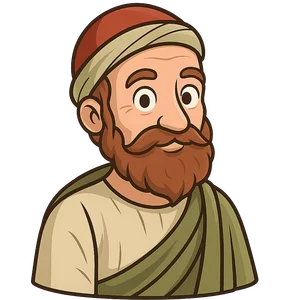
Claudius Ptolemy
A Greco-Roman scholar of Alexandria, known for his influential works in astronomy, geography, and mathematics…
Reads at Grades 3–5 Listens at Grades 1–5
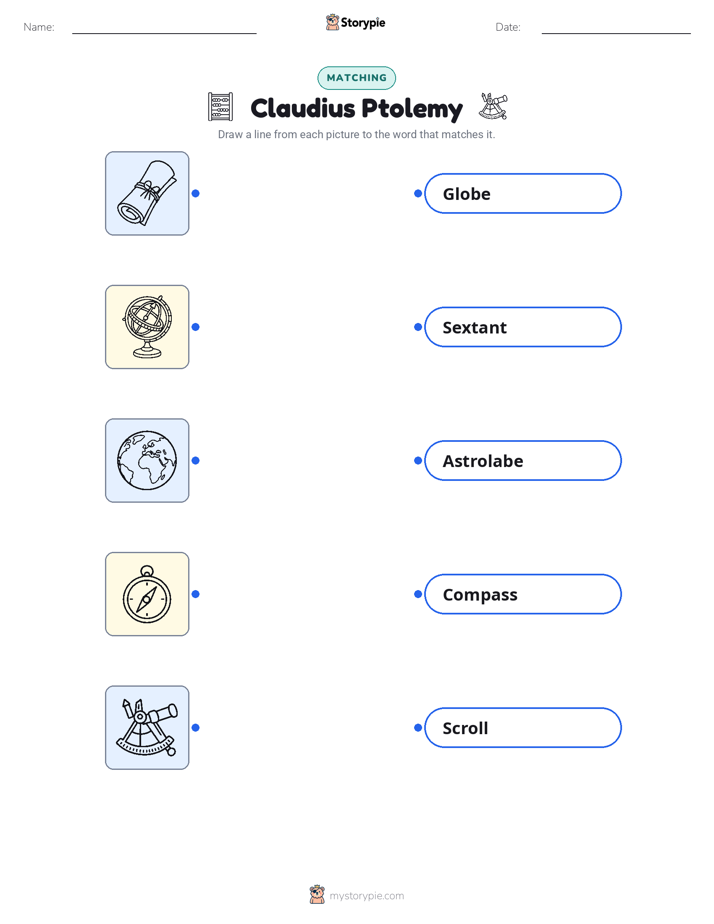
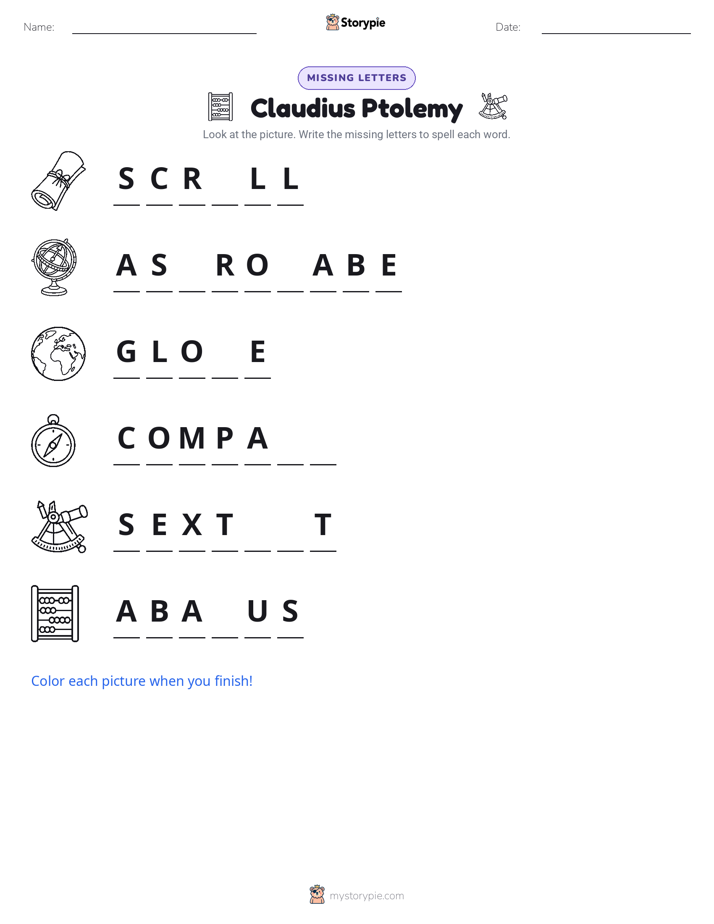
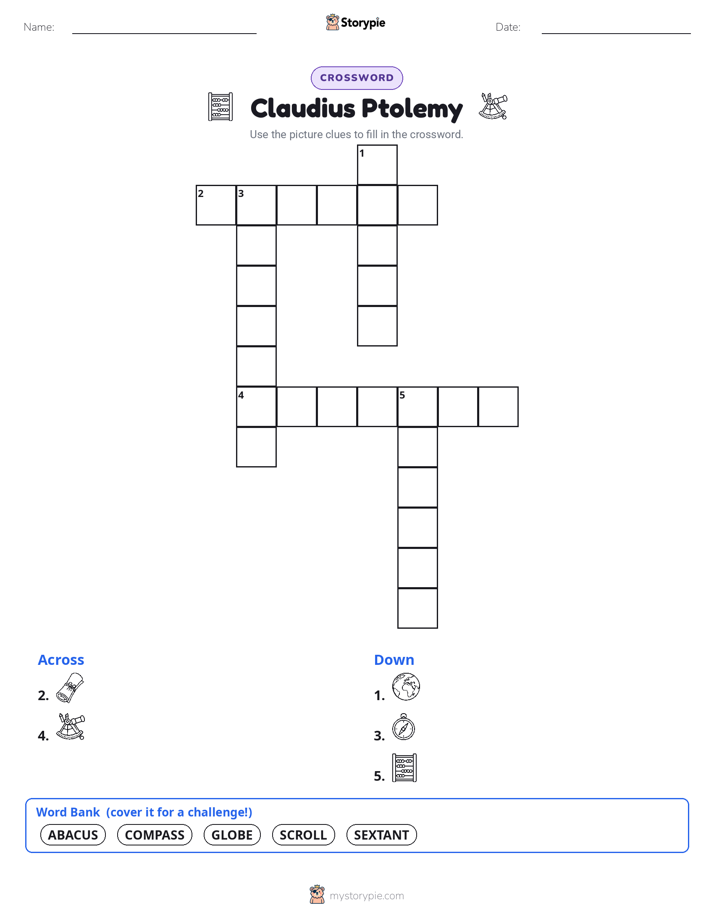
Print & create
Answer keys·No prep·Free with an account
28 worksheets · answer keys · full story · quiz · Ages 8-10 · CEFR B1
Plus adds 164,000+ more stories in 27 languages, audio for every one, and printables for all of them.
Just want Claudius Ptolemy?
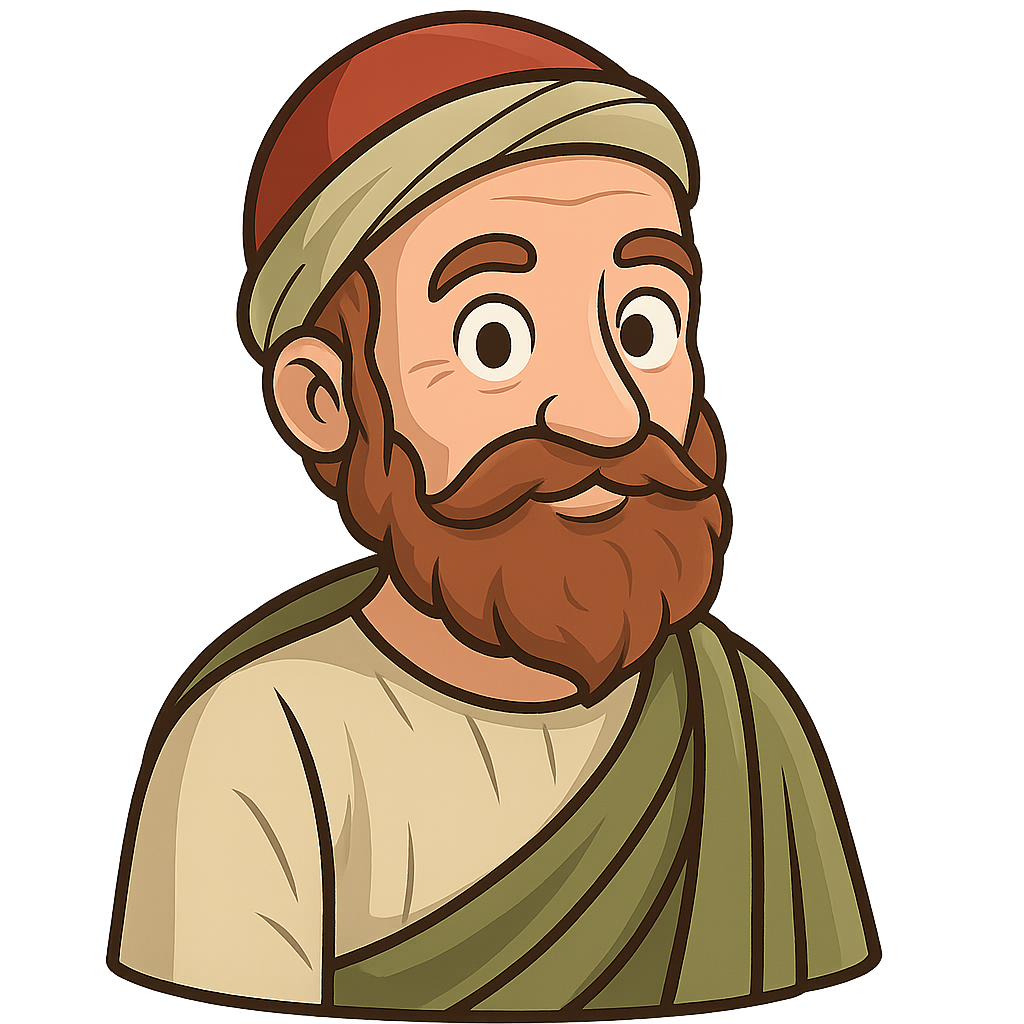
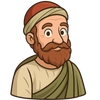
Hello! My name is Claudius Ptolemy. I lived a very long time ago, during the 2nd century, in a bustling city called Alexandria. My home was in a part of the Roman Empire that we now call Egypt. Alexandria was a wonderful place for a curious person like me because it had a great library filled with scrolls and knowledge from all over the world. Ever since I was young, I loved looking up at the night sky. I would spend hours watching the moon glow, the stars twinkle, and the planets wander across the darkness. I was filled with questions about how it all worked. To find the answers, I decided to use mathematics, the language of numbers, to figure out the secrets of the universe.
Around the year 150, I gathered all of my observations and calculations into my most famous book, which people later called the 'Almagest.' In this book, I explained my big idea: that our Earth was the very center of everything! I believed the Moon, the Sun, and all the planets moved in perfect circles around us. This idea is called the geocentric model. It seemed to make sense because when we stand on the ground, it feels like we are perfectly still while everything else in the sky moves above us. I used very careful observations and a lot of math to create charts that could predict where a planet would be on any given night. For over 1,400 years, people all over the world used my book to understand the stars.
I didn't just map the stars; I also wanted to create a map of our own world. I wrote another important book called 'Geographia.' In this book, I shared a new way to make maps that no one had ever thought of before. I imagined invisible lines running all over the globe, from top to bottom and from side to side. You might know these lines today as latitude and longitude. Using this grid system, I could give any place on Earth its own special address, which we now call coordinates. I collected information from travelers and sailors to list over 8,000 places in the world as we knew it then, from Britain all the way to the far parts of Asia. My ideas on map-making were so useful that hundreds of years later, explorers used my work to help them sail across the oceans.
Claudius Ptolemy: Mapper of the Earth and Sky
Hello! My name is Claudius Ptolemy. I lived a very long time ago, during the 2nd century, in a bustling city called Alexandria. My home was in a part of the Roman Empire that we now call Egypt. Alexandria was a wonderful place for a curious person like me because it had a great library filled with scrolls and knowledge from all over the world. Ever since I was young, I loved looking up at the night sky. I would spend hours watching the moon glow, the stars twinkle, and the planets wander across the darkness. I was filled with questions about how it all worked. To find the answers, I decided to use mathematics, the language of numbers, to figure out the secrets of the universe.
Around the year 150, I gathered all of my observations and calculations into my most famous book, which people later called the 'Almagest.' In this book, I explained my big idea: that our Earth was the very center of everything! I believed the Moon, the Sun, and all the planets moved in perfect circles around us. This idea is called the geocentric model. It seemed to make sense because when we stand on the ground, it feels like we are perfectly still while everything else in the sky moves above us. I used very careful observations and a lot of math to create charts that could predict where a planet would be on any given night. For over 1,400 years, people all over the world used my book to understand the stars.
I didn't just map the stars; I also wanted to create a map of our own world. I wrote another important book called 'Geographia.' In this book, I shared a new way to make maps that no one had ever thought of before. I imagined invisible lines running all over the globe, from top to bottom and from side to side. You might know these lines today as latitude and longitude. Using this grid system, I could give any place on Earth its own special address, which we now call coordinates. I collected information from travelers and sailors to list over 8,000 places in the world as we knew it then, from Britain all the way to the far parts of Asia. My ideas on map-making were so useful that hundreds of years later, explorers used my work to help them sail across the oceans.
I lived a full and curious life, and my work continued long after I passed away around the year 170. My ideas about the universe, with Earth at the center, were the most popular ones for a very, very long time. Many centuries later, brilliant astronomers like Nicolaus Copernicus looked at the sky and came up with a new idea—that the Sun was actually the center. And it turns out, they were right! But even though my picture of the universe was eventually replaced, my work was a giant step forward for science. I showed everyone how important it is to use math and careful observation to study the world. My maps of the Earth and the stars inspired generations of thinkers, scientists, and explorers to keep looking up and asking questions.
Wow facts
About
A Greco-Roman scholar of Alexandria, known for his influential works in astronomy, geography, and mathematics, most notably the Almagest which proposed a geocentric model of the universe that was accepted for over 1,400 years.
Take a Quiz
Question 1 of 5
In the story, I say I lived in a 'bustling' city. What does the word 'bustling' most likely mean?
Explore next




Want to do even more?
Go beyond exploring. Unlock tools that turn every story into real learning.

Storypie Plus for families
Full stories, quizzes, and printables. Nights and car rides, sorted.
- Unlimited audio stories
- Create Mode: your child stars in the story
- Offline downloads
- Printable worksheets & coloring pages

Why Storypie for Schools
Students engaged. Prep in seconds. Evenings back to you.
- Worksheets & Quizzes
- Classroom Management
- Formative Assessment
- Custom Curriculum & Lesson Plans
- 27 Languages

Why Storypie for Homeschool
Curriculum done. They'll ask for more. Hours back in your day.
- Worksheet Generator
- First-Person Audio Stories
- Built-in Comprehension Quizzes
- Custom Curriculum & Lesson Plans
- Print & Go Activities