English

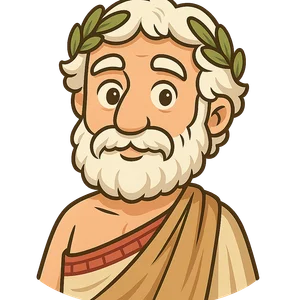
Cleisthenes
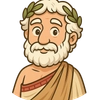
Cleisthenes was an ancient Athenian statesman from the noble Alcmaeonidae family…
Reads at Grades 6–8 Listens at Grades 4–8
Print & create
Answer keys·No prep·Free with an account
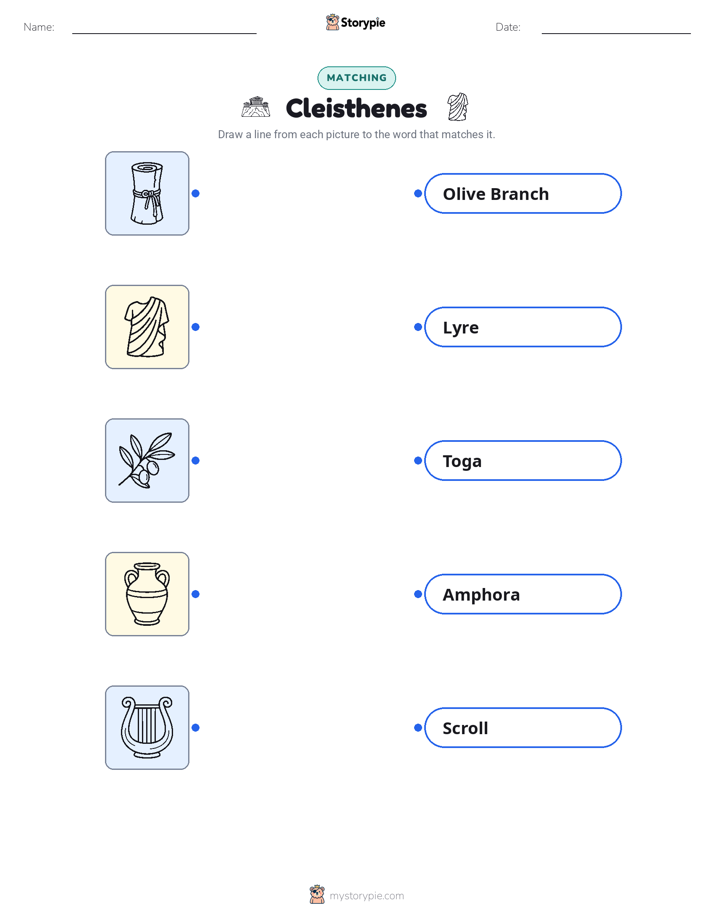
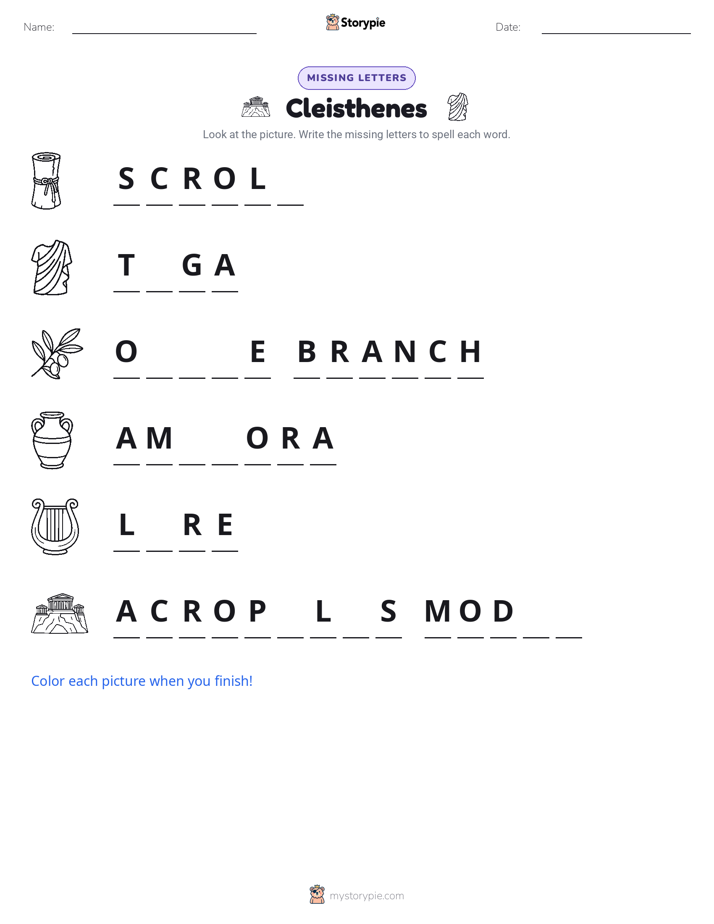
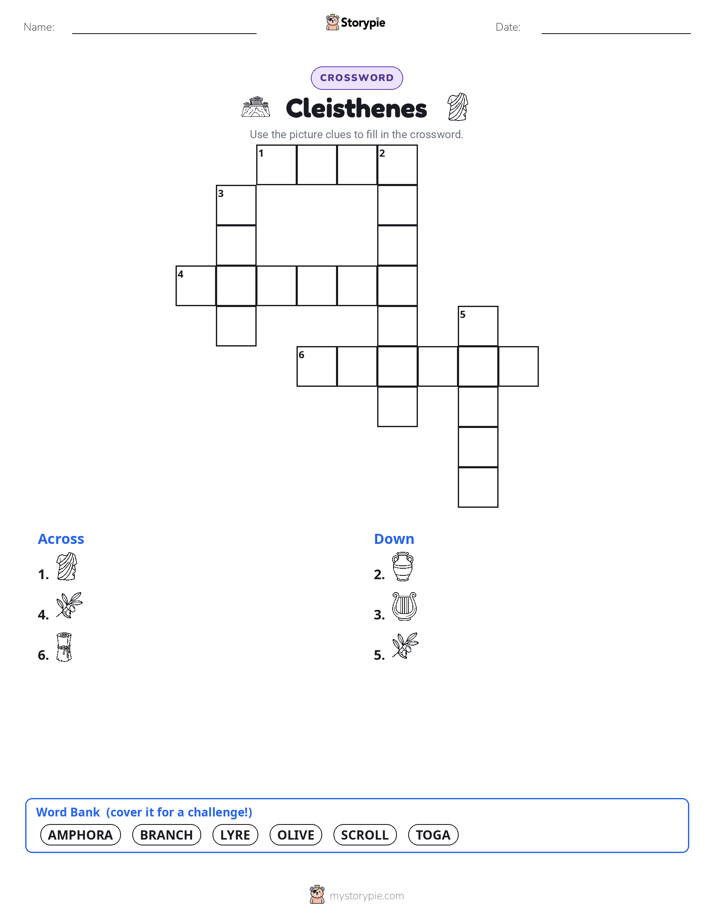
28 worksheets · answer keys · full story · quiz · Ages 10-12 · CEFR B2
Plus adds 244,000+ more stories in 27 languages, audio for every one, and printables for all of them.
Just want Cleisthenes?
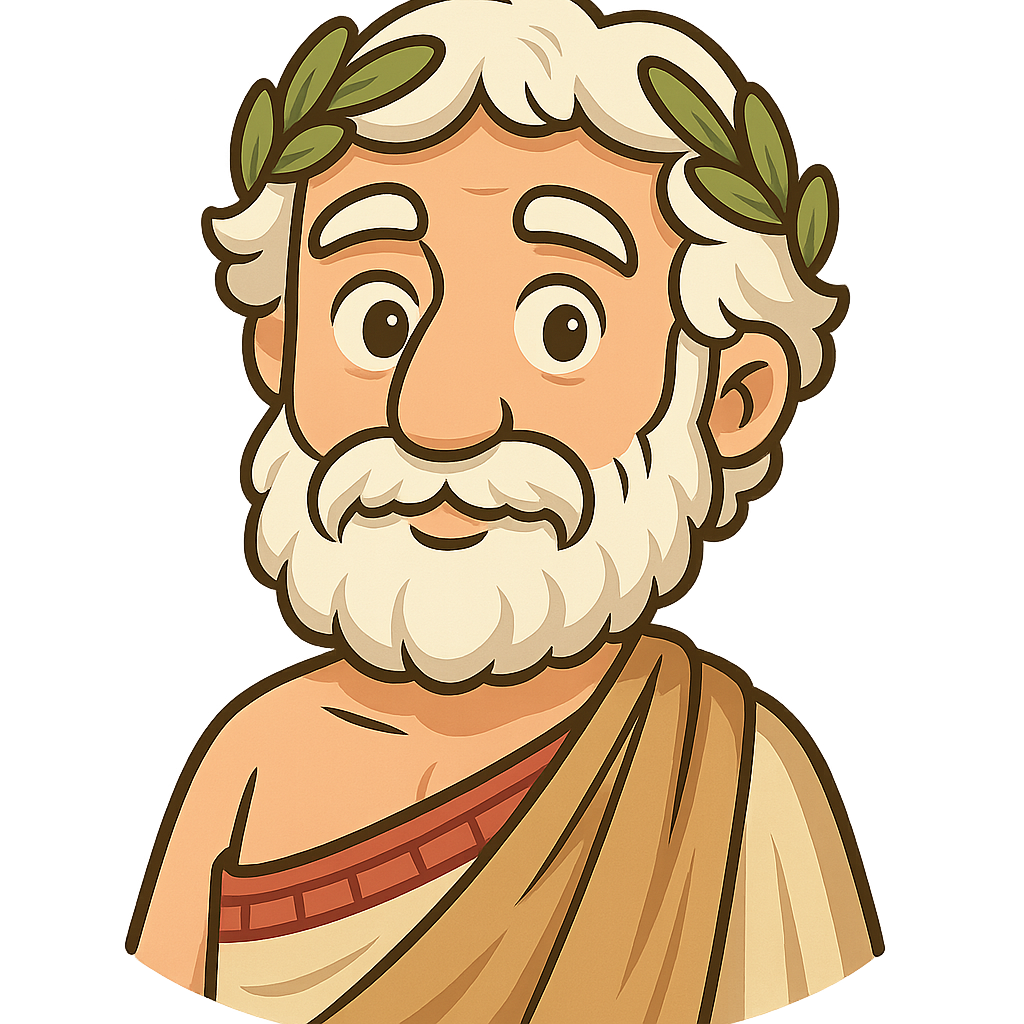
Hello. My name is Cleisthenes. I want to tell you the story of my home, the great city-state of Athens, and how I helped give its people a powerful new voice. I was born around the year 570 BCE into a wealthy and important family called the Alcmaeonidae. Our city was famous for its thinkers, artists, and beautiful buildings, but it was also a place of great political unrest. When I was young, Athens was ruled by powerful men called tyrants, who held all the power for themselves. My family often disagreed with them, and because of this, we were sometimes forced to live in exile, away from our home. This time away taught me a lot about fairness and made me think deeply about how a city should be governed. I dreamed of an Athens where power didn't belong to just one person or a few rich families, but to all of its citizens.
For many years, Athens was under the rule of a tyrant named Hippias. He had inherited his power from his father, and at first, his rule was not harsh. But after his brother was harmed, he became suspicious and cruel, and many Athenians, including my family, believed his rule was unjust. We worked for years to free Athens from his control. Finally, in the year 510 BCE, we succeeded. With some help from the city-state of Sparta, we managed to drive Hippias out of our city. It was a great victory for those of us who wanted a different future. However, our troubles were not over. With the tyrant gone, a new struggle for control began. My main rival was another nobleman named Isagoras. He was very ambitious and wanted to set up a government run by a small group of wealthy aristocrats, which was the opposite of what I envisioned for Athens.
Cleisthenes: The Father of Athenian Democracy
Hello. My name is Cleisthenes. I want to tell you the story of my home, the great city-state of Athens, and how I helped give its people a powerful new voice. I was born around the year 570 BCE into a wealthy and important family called the Alcmaeonidae. Our city was famous for its thinkers, artists, and beautiful buildings, but it was also a place of great political unrest. When I was young, Athens was ruled by powerful men called tyrants, who held all the power for themselves. My family often disagreed with them, and because of this, we were sometimes forced to live in exile, away from our home. This time away taught me a lot about fairness and made me think deeply about how a city should be governed. I dreamed of an Athens where power didn't belong to just one person or a few rich families, but to all of its citizens.
For many years, Athens was under the rule of a tyrant named Hippias. He had inherited his power from his father, and at first, his rule was not harsh. But after his brother was harmed, he became suspicious and cruel, and many Athenians, including my family, believed his rule was unjust. We worked for years to free Athens from his control. Finally, in the year 510 BCE, we succeeded. With some help from the city-state of Sparta, we managed to drive Hippias out of our city. It was a great victory for those of us who wanted a different future. However, our troubles were not over. With the tyrant gone, a new struggle for control began. My main rival was another nobleman named Isagoras. He was very ambitious and wanted to set up a government run by a small group of wealthy aristocrats, which was the opposite of what I envisioned for Athens.
Isagoras managed to get himself chosen as the leader, or archon, and he quickly turned against me and my supporters. In 508 BCE, he used the Spartan army to force me and hundreds of other families who supported my ideas into exile once again. He must have thought he had won and that his vision for Athens would become reality. But then, something amazing happened. The ordinary people of Athens—the shopkeepers, the farmers, the craftsmen—rose up in protest. They would not accept a new kind of tyranny that put power back into the hands of a few. They surrounded the Acropolis, the high hill where Isagoras and the Spartan soldiers were, and forced them to surrender. The people of Athens then sent a message to me, asking me to come home. When I returned, I knew I couldn't just restore the old ways. The courage of the Athenian people had shown me that they were the true strength of the city. It was then that I proposed a series of radical reforms to completely change how our government worked.
Starting around 507 BCE, I introduced my changes. My main goal was to break the power of the old noble families and give it directly to the citizens. First, I reorganized the entire citizen body. Instead of being grouped by their old family clans, which kept certain families in power, I created ten new tribes. Each tribe was a mix of people from different parts of our territory—the city, the coast, and the countryside. This meant that people from different backgrounds and with different jobs had to work together, weakening the old family loyalties. Next, I created a new Council of 500. Every year, fifty men from each of the ten tribes were chosen by a lottery to serve on this council. This was a revolutionary idea. It meant that any citizen, rich or poor, had a chance to help run the city. We called this new system 'demokratia,' which means 'rule by the people.' To protect it, I also introduced a process called ostracism. Once a year, citizens could vote to send away any politician they thought was becoming too powerful or dangerous for ten years, preventing anyone from becoming a tyrant again.
I lived a full life and was fortunate to see my ideas begin to transform Athens into a city where citizens had a real say in their future. The democratic system we built was not perfect, and it would change over the years, but it was a bold first step. The ideas of 'isonomia'—equality of political rights—and 'isegoria'—the right of every citizen to speak in the assembly—became central to the Athenian identity. Today, many centuries later, people around the world live in countries where the government is 'of the people, by the people, and for the people.' I am remembered as 'the father of Athenian democracy,' and it fills me with pride to know that the seed we planted in Athens so long ago grew into an idea that has inspired people all over the world.
Wow facts
About
Cleisthenes was an ancient Athenian statesman from the noble Alcmaeonidae family, credited with reforming the constitution of ancient Athens in 508/507 BCE and establishing the foundations of democracy.
Take a Quiz
Question 1 of 5
In the story, Cleisthenes uses the word 'demokratia.' What does this Greek word mean?
Explore next





Want to do even more?
Go beyond exploring. Unlock tools that turn every story into real learning.

Storypie Plus for families
Full stories, quizzes, and printables. Nights and car rides, sorted.
- Unlimited audio stories
- Create Mode: your child stars in the story
- Offline downloads
- Printable worksheets & coloring pages

Why Storypie for Schools
Students engaged. Prep in seconds. Evenings back to you.
- Worksheets & Quizzes
- Classroom Management
- Formative Assessment
- Custom Curriculum & Lesson Plans
- 27 Languages

Why Storypie for Homeschool
Curriculum done. They'll ask for more. Hours back in your day.
- Worksheet Generator
- First-Person Audio Stories
- Built-in Comprehension Quizzes
- Custom Curriculum & Lesson Plans
- Print & Go Activities