English

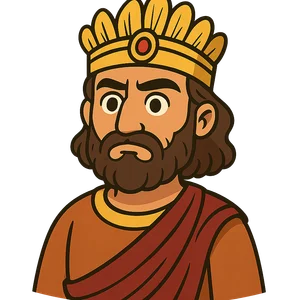
Darius III
Darius III was the last king of the Achaemenid Empire of Persia, reigning from 336 BCE to 330 BCE.
Reads at Grades 6–8 Listens at Grades 4–8
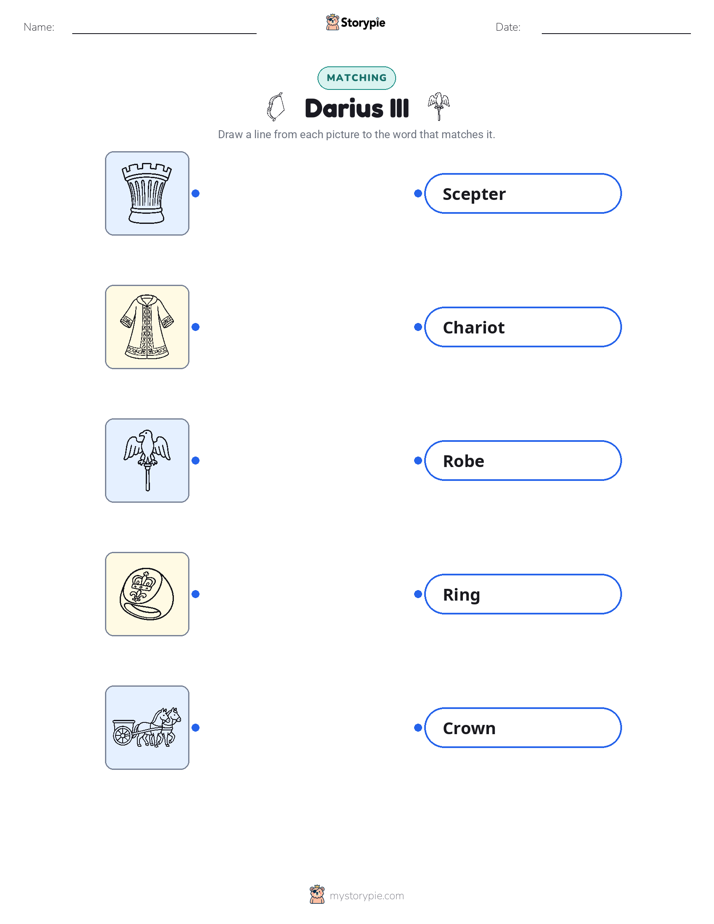
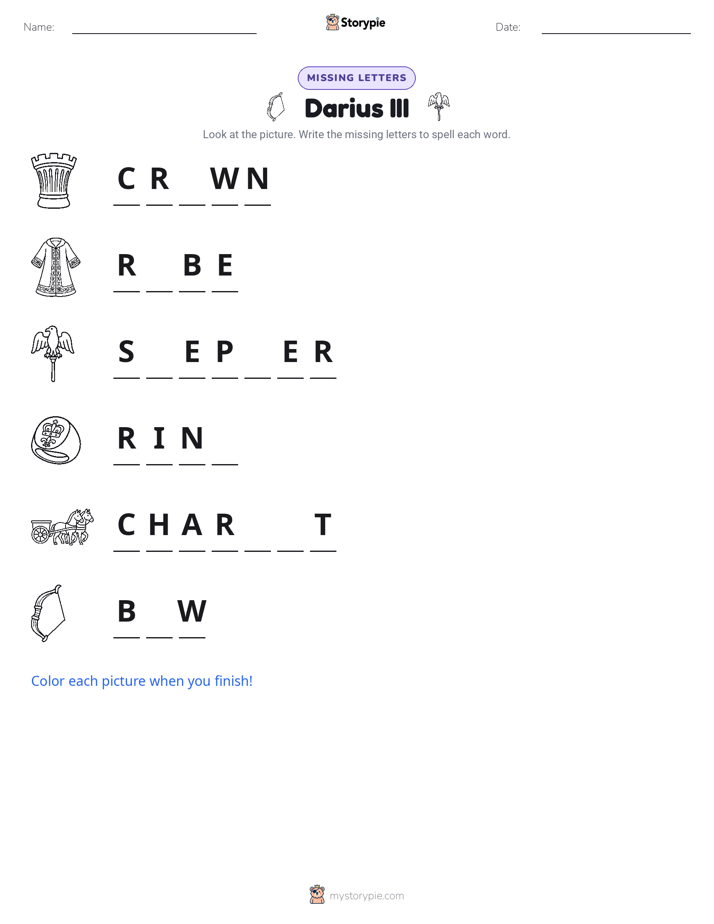
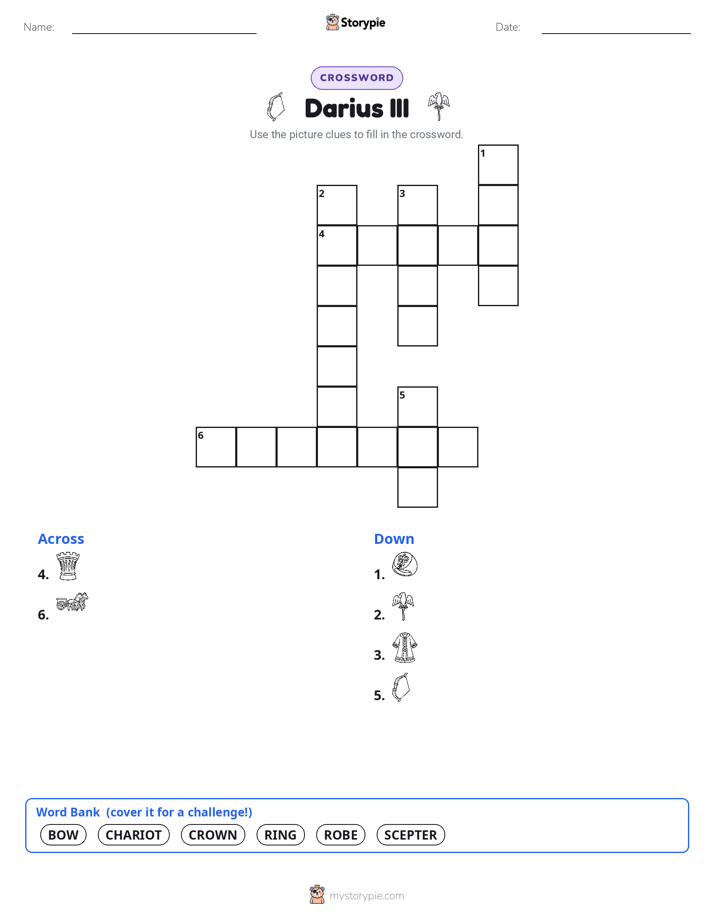
Print & create
Answer keys·No prep·Free with an account
28 worksheets · answer keys · full story · quiz · Ages 10-12 · CEFR B2
Plus adds 244,000+ more stories in 27 languages, audio for every one, and printables for all of them.
Just want Darius III?
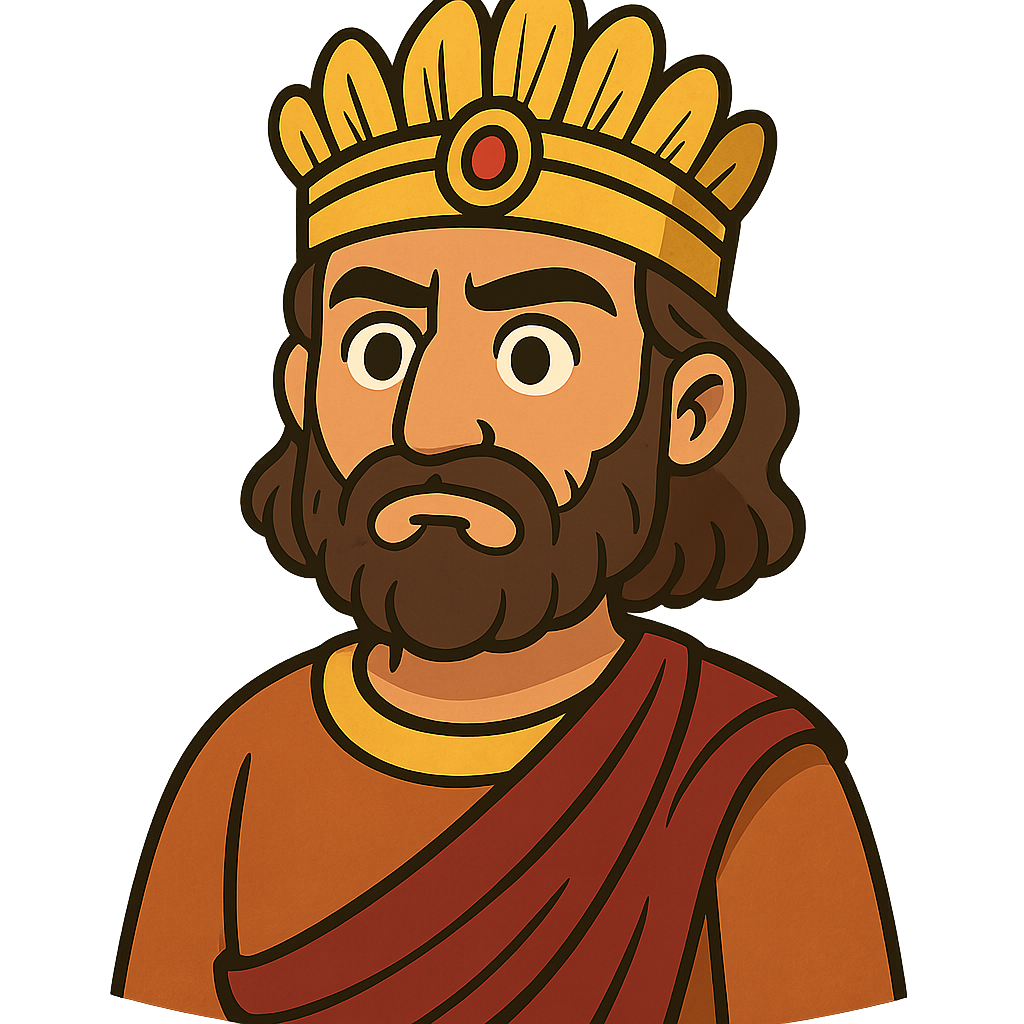
Hello. My name is Darius III, and I was the last Great King of the powerful Persian Empire. But that was not the name I was given at birth. I was born around 380 BCE into the royal Achaemenid family, and my name was Artashata. Even though I was a prince, I was not in the direct line to become king, so I never expected to rule. For much of my early life, I served the empire as a satrap, which is like a governor, in the province of Armenia. In that role, I worked hard and gained a reputation for being brave in battle. During this time, the empire was going through a difficult period with much uncertainty. Then, in 336 BCE, after a series of dramatic and unexpected events, I was asked to take the throne. It was a great responsibility. When I became king, I took the royal name Darius, a name used by some of the greatest kings who came before me.
The empire I now ruled was enormous. It was the largest the world had ever seen, stretching across parts of three continents—Asia, Africa, and Europe. Our cities were centers of art, science, and trade. But my reign was defined by a great challenge that came from the west. A young, brilliant, and very ambitious king named Alexander from the small kingdom of Macedon had his eyes set on my lands. In the year 334 BCE, he led his powerful and well-trained army across the sea and into my territory. He was determined to conquer my entire empire. Our first major clash was the Battle of the Granicus. Alexander’s forces won that day, and his victory showed me that this was not just a small raid. I was facing a serious fight for the future of my kingdom.
Darius III: The Last King of Persia
Hello. My name is Darius III, and I was the last Great King of the powerful Persian Empire. But that was not the name I was given at birth. I was born around 380 BCE into the royal Achaemenid family, and my name was Artashata. Even though I was a prince, I was not in the direct line to become king, so I never expected to rule. For much of my early life, I served the empire as a satrap, which is like a governor, in the province of Armenia. In that role, I worked hard and gained a reputation for being brave in battle. During this time, the empire was going through a difficult period with much uncertainty. Then, in 336 BCE, after a series of dramatic and unexpected events, I was asked to take the throne. It was a great responsibility. When I became king, I took the royal name Darius, a name used by some of the greatest kings who came before me.
The empire I now ruled was enormous. It was the largest the world had ever seen, stretching across parts of three continents—Asia, Africa, and Europe. Our cities were centers of art, science, and trade. But my reign was defined by a great challenge that came from the west. A young, brilliant, and very ambitious king named Alexander from the small kingdom of Macedon had his eyes set on my lands. In the year 334 BCE, he led his powerful and well-trained army across the sea and into my territory. He was determined to conquer my entire empire. Our first major clash was the Battle of the Granicus. Alexander’s forces won that day, and his victory showed me that this was not just a small raid. I was facing a serious fight for the future of my kingdom.
After that first defeat, I knew I could not underestimate this challenger. I decided that I must lead the Persian army myself to stop Alexander's invasion. In 333 BCE, our two massive armies finally met at a place called Issus. The battle was fierce and chaotic, with soldiers and chariots clashing in a narrow coastal plain. During the fighting, Alexander and his best soldiers managed to break through my lines, and they were heading directly for my position. To be captured would have meant the immediate end of the war and my empire. I had to make a heartbreaking choice: I fled the battlefield to save myself so I could continue to lead and rally my people. But this decision came at a terrible cost. In the confusion, my mother, my wife, and my daughters were left behind and captured by Alexander's army. It was a devastating loss, but I later heard that Alexander treated them with the respect due to royalty, which was a small comfort in a very dark time.
Following the terrible defeat at Issus, I tried to find a way to make peace and end the war. I sent messages to Alexander with generous offers. I offered him a huge amount of gold and silver, I offered to give him all the lands west of the Euphrates River—a vast portion of my empire—and I even offered him my own daughter's hand in marriage to form an alliance. But he refused everything. It became clear that he did not want a peace treaty; he wanted it all. I knew then that there was no avoiding another conflict. The fate of the world as we knew it would be decided in one last, great battle. I spent the next two years gathering the largest army I could. Soldiers came from every corner of my empire for this final stand. In 331 BCE, we prepared to face Alexander on a wide, open plain called Gaugamela.
The Battle of Gaugamela was the moment of destiny. My army was immense, far outnumbering Alexander’s forces. We had chariots and soldiers from dozens of different lands, all ready to defend the empire. But even with our massive numbers, Alexander's brilliant strategy and the discipline of his army defeated us again. Once more, I had to flee to survive, hoping to travel to the eastern provinces and raise a new army to continue the fight. But as I traveled, I could feel that many of my own men were losing hope. The final and most painful blow came not from my enemy, but from my own people. In 330 BCE, one of my own satraps, a man named Bessus, betrayed me. He and his followers arrested me, their king. As Alexander's army drew near, they ended my life. I was later found by Alexander himself. He showed respect for a fellow king and sent my body to Persepolis, so I could be buried with honor among my royal ancestors.
I lived to be about 50 years old. My death marked the end of the great Achaemenid Empire, which had ruled much of the known world for over two centuries. I am remembered as its final king, the one who faced one of history's greatest military leaders. My story is forever linked with that of Alexander the Great, and my defeat marked the end of one historical era and the beginning of a new one. Though my empire fell, its rich culture, its ideas about government, and its long and proud history were not forgotten. They continued to influence the world for many, many years to come.
Wow facts
About
Darius III was the last king of the Achaemenid Empire of Persia, reigning from 336 BCE to 330 BCE. His rule was defined by the invasion of Persia by Alexander the Great, which ultimately led to the collapse of his empire.
Take a Quiz
Question 1 of 5
Retell the main events of Darius III's conflict with Alexander the Great, starting from Alexander's invasion.
Explore next




Want to do even more?
Go beyond exploring. Unlock tools that turn every story into real learning.

Storypie Plus for families
Full stories, quizzes, and printables. Nights and car rides, sorted.
- Unlimited audio stories
- Create Mode: your child stars in the story
- Offline downloads
- Printable worksheets & coloring pages

Why Storypie for Schools
Students engaged. Prep in seconds. Evenings back to you.
- Worksheets & Quizzes
- Classroom Management
- Formative Assessment
- Custom Curriculum & Lesson Plans
- 27 Languages

Why Storypie for Homeschool
Curriculum done. They'll ask for more. Hours back in your day.
- Worksheet Generator
- First-Person Audio Stories
- Built-in Comprehension Quizzes
- Custom Curriculum & Lesson Plans
- Print & Go Activities