English


Diego Velázquez
Diego Velázquez was a leading Spanish painter of the Baroque period and a prominent artist at the court of…
Reads at Grades 6–8 Listens at Grades 4–8
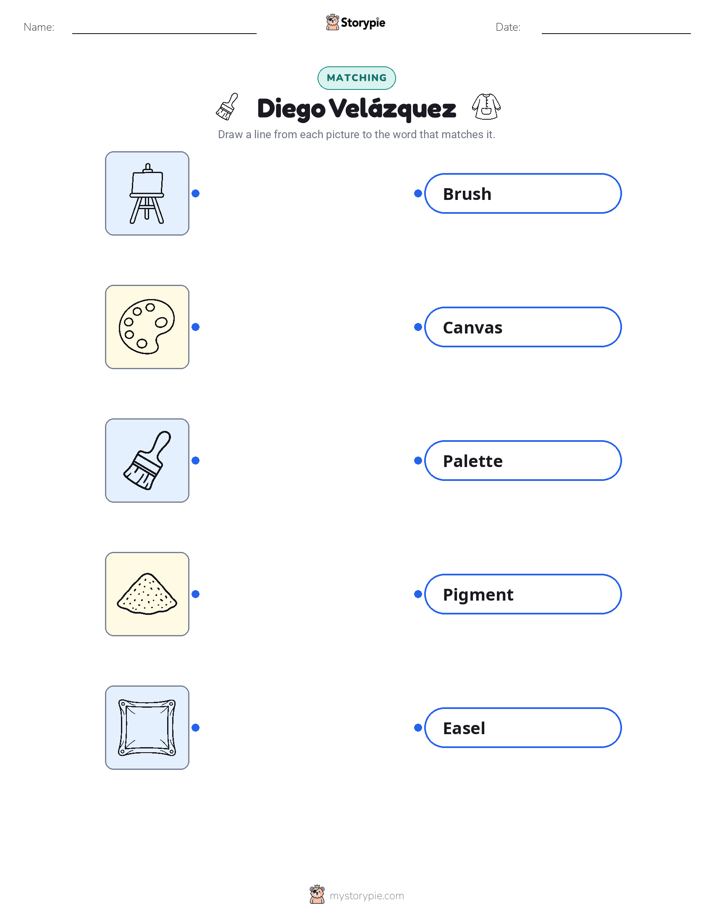
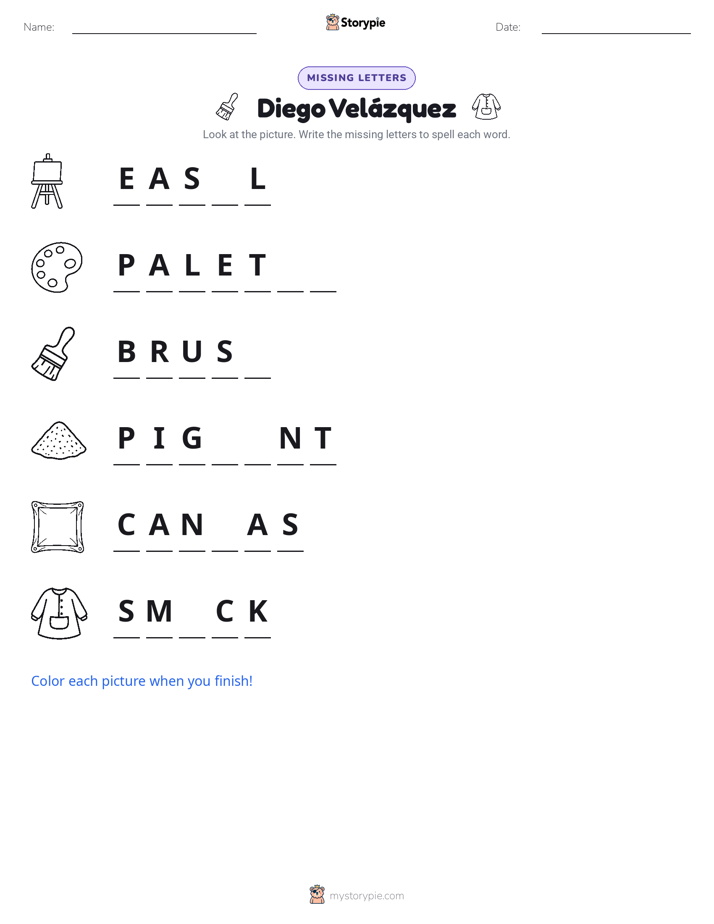
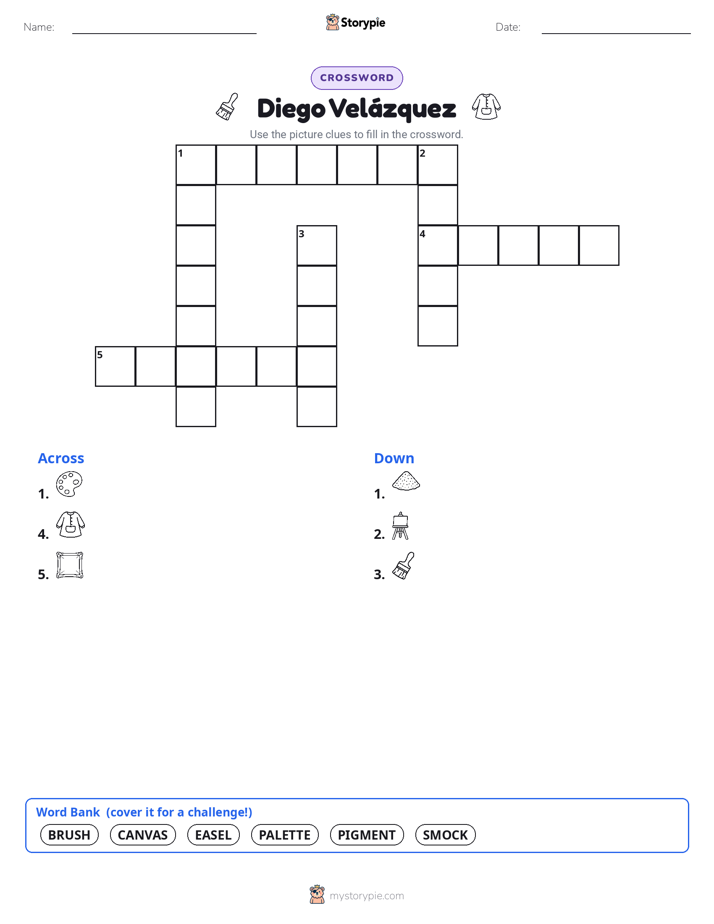
Print & create
Answer keys·No prep·Free with an account
28 worksheets · answer keys · full story · quiz · Ages 10-12 · CEFR B2
Plus adds 164,000+ more stories in 27 languages, audio for every one, and printables for all of them.
Just want Diego Velázquez?
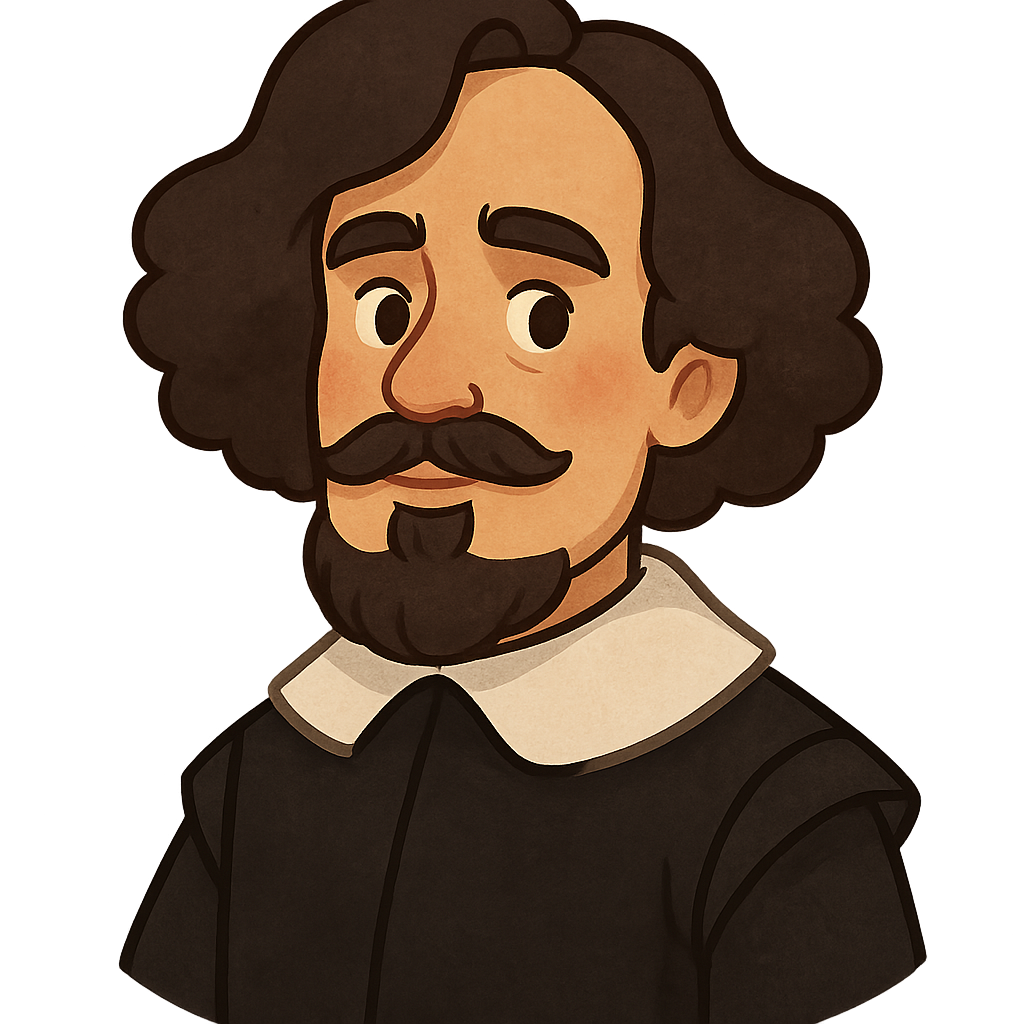
Hello, my name is Diego Velázquez, and I was a painter in a time known as the Spanish Golden Age. I was born in the beautiful city of Seville, Spain, on June 6th, 1599. From a very young age, I found my greatest joy in drawing and painting. I would spend hours sketching everything I saw. My parents noticed my passion and believed in my talent, and they made a decision that would shape my entire life. When I was just 12 years old, around the year 1611, they arranged for me to become an apprentice to a wonderful painter named Francisco Pacheco. He was more than just a painting instructor; he was a great thinker who taught me about philosophy and literature, which opened my mind to new ideas. His studio became my second home, and his family became mine, especially after I married his daughter, Juana.
As a young artist, I dreamed of something more. My ambition was to paint for the royal court in Madrid, the heart of Spain. In 1622, I moved to the bustling capital city, determined to make my mark. The court was a difficult place to enter, but I was persistent. My moment finally came in 1623 when I was asked to paint a portrait of the king himself, Philip IV. I poured all of my skill and concentration into that painting, trying to capture not just his likeness, but his personality. The king was so pleased with the result that he made a stunning declaration: from that day forward, only I would be allowed to paint his portrait. He appointed me as his official court painter, which was an incredible honor. We developed a close relationship, and he would often visit my studio in the palace to watch me work, treating me not just as an employee, but as a friend.
Diego Velázquez: A Painter's Life
Hello, my name is Diego Velázquez, and I was a painter in a time known as the Spanish Golden Age. I was born in the beautiful city of Seville, Spain, on June 6th, 1599. From a very young age, I found my greatest joy in drawing and painting. I would spend hours sketching everything I saw. My parents noticed my passion and believed in my talent, and they made a decision that would shape my entire life. When I was just 12 years old, around the year 1611, they arranged for me to become an apprentice to a wonderful painter named Francisco Pacheco. He was more than just a painting instructor; he was a great thinker who taught me about philosophy and literature, which opened my mind to new ideas. His studio became my second home, and his family became mine, especially after I married his daughter, Juana.
As a young artist, I dreamed of something more. My ambition was to paint for the royal court in Madrid, the heart of Spain. In 1622, I moved to the bustling capital city, determined to make my mark. The court was a difficult place to enter, but I was persistent. My moment finally came in 1623 when I was asked to paint a portrait of the king himself, Philip IV. I poured all of my skill and concentration into that painting, trying to capture not just his likeness, but his personality. The king was so pleased with the result that he made a stunning declaration: from that day forward, only I would be allowed to paint his portrait. He appointed me as his official court painter, which was an incredible honor. We developed a close relationship, and he would often visit my studio in the palace to watch me work, treating me not just as an employee, but as a friend.
Though I was honored to be the king's painter, I knew I still had much to learn. The center of the art world at that time was Italy, where the great masters had created their masterpieces. Just before my first trip, I had the pleasure of meeting the famous painter Peter Paul Rubens in Madrid, and he encouraged me to go and see the Italian art for myself. From 1629 to 1631, I traveled through Italy, studying the powerful sculptures of Michelangelo and the graceful paintings of Raphael. This journey changed the way I saw art. Many years later, from 1649 to 1651, I returned to Italy on a mission for the king. My task was to purchase paintings and sculptures for the royal collection. During this second visit, I was given the prestigious opportunity to paint a portrait of Pope Innocent X, a work that many consider to be one of my finest.
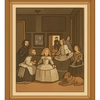
Throughout my career, I painted many portraits and scenes, but one painting stands above the rest: Las Meninas, which means 'The Maids of Honour.' I completed this work around 1656. It is a large, complex painting that shows a scene from inside the royal palace. At the center is the young princess, Infanta Margarita Teresa, surrounded by her attendants, her chaperone, a bodyguard, and two court dwarves. But the painting is full of clever tricks. If you look closely in the mirror on the back wall, you can see the reflection of the king and queen, which suggests they are standing where you, the viewer, are. And on the left, you can see me, standing before a giant canvas with my brush in hand. I wanted to create more than just a portrait; I wanted to capture a real, fleeting moment in time, playing with light, shadow, and perspective to make you feel as if you are standing right there in the room with us.
My role at the court expanded far beyond painting. As I grew older and more trusted by the king, I was given more responsibilities. I became a curator of the king's vast art collection and was in charge of decorating the royal palaces. These tasks took up much of my time, but they were a sign of the king's great faith in my judgment. My greatest personal achievement, however, came in 1659. After much effort, I was named a Knight of the Order of Santiago. This was a very high honor, one that was rarely given to an artist. It was a recognition not just of my art, but of my service to the crown. If you look at Las Meninas today, you will see a bright red cross painted on my chest. That symbol of my knighthood was actually added to the painting later, a final touch to mark this proud accomplishment.
I lived to be 61 years old, and my life came to an end in Madrid in the year 1660. I spent my career trying to paint the world with honesty and realism, to show people not as idealized figures, but as they truly were, with all their strength and vulnerability. I wanted to capture the dignity in every person, from the king to the humblest court jester. Many years after my time, my work was rediscovered by a new generation of artists. Great painters like Édouard Manet and Pablo Picasso studied my techniques and called me a 'painter of painters.' I am happy that my art continues to live on, offering a window into the world I knew and inspiring others to see the beauty in the truth.
Wow facts
About
Diego Velázquez was a leading Spanish painter of the Baroque period and a prominent artist at the court of King Philip IV of Spain. He is renowned for his realistic portraits, especially his masterpiece, *Las Meninas*.
Take a Quiz
Question 1 of 5
In your own words, describe the key events that led to me becoming the king's official painter.
Explore next




Want to do even more?
Go beyond exploring. Unlock tools that turn every story into real learning.

Storypie Plus for families
Full stories, quizzes, and printables. Nights and car rides, sorted.
- Unlimited audio stories
- Create Mode: your child stars in the story
- Offline downloads
- Printable worksheets & coloring pages

Why Storypie for Schools
Students engaged. Prep in seconds. Evenings back to you.
- Worksheets & Quizzes
- Classroom Management
- Formative Assessment
- Custom Curriculum & Lesson Plans
- 27 Languages

Why Storypie for Homeschool
Curriculum done. They'll ask for more. Hours back in your day.
- Worksheet Generator
- First-Person Audio Stories
- Built-in Comprehension Quizzes
- Custom Curriculum & Lesson Plans
- Print & Go Activities