English

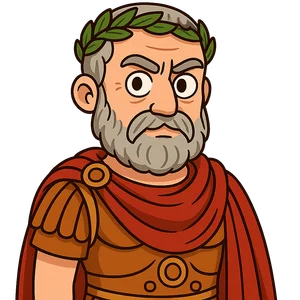
Diocletian
Roman emperor from 284 to 305 CE who stabilized the empire after a long period of crisis and established the…
Reads at Grades 6–8 Listens at Grades 4–8
Print & create
Answer keys·No prep·Free with an account
28 worksheets · answer keys · full story · quiz · Ages 10-12 · CEFR B2
Plus adds 244,000+ more stories in 27 languages, audio for every one, and printables for all of them.
Just want Diocletian?
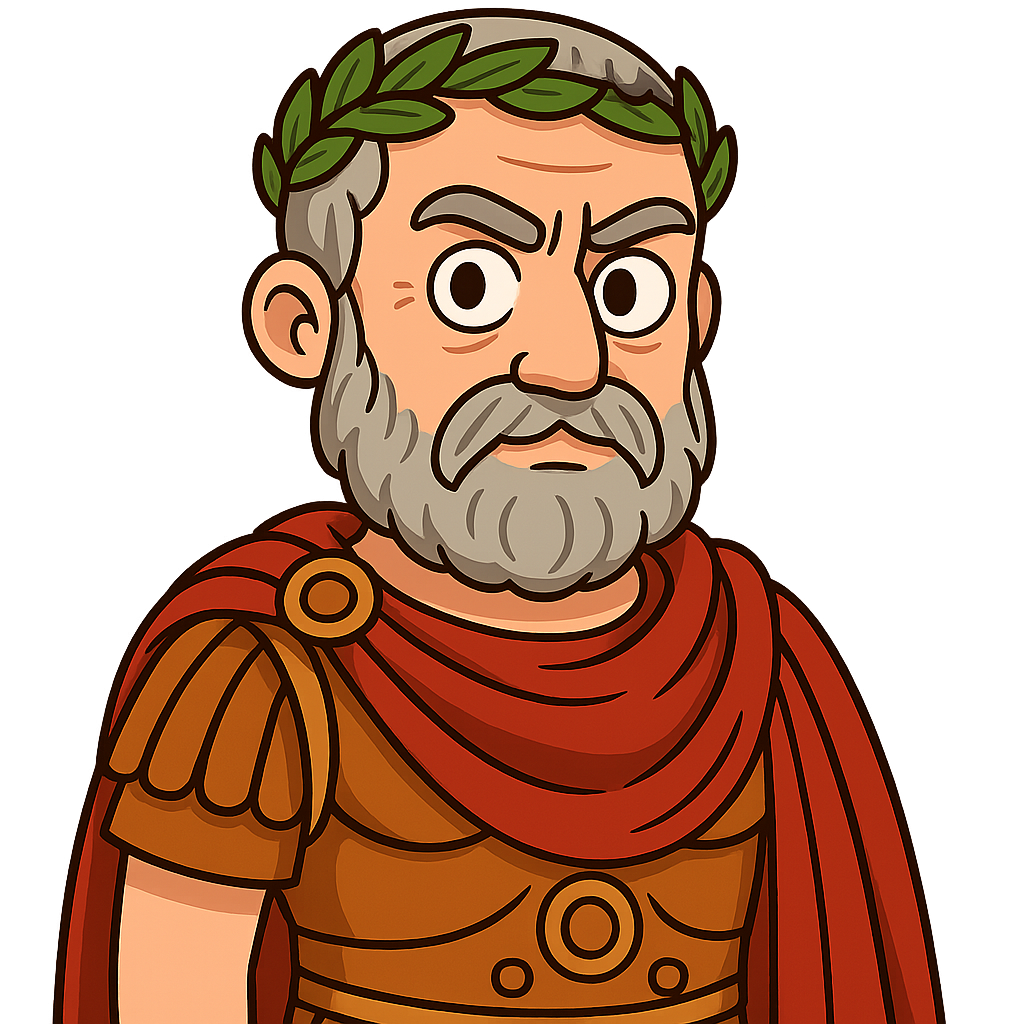
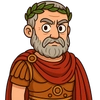
Hello! My name is Diocletian, but I wasn't always called that. I was born with the name Diocles around the year 244 in a Roman province called Dalmatia, which is part of modern-day Croatia. My family wasn't rich or famous, but I was ambitious and saw the Roman army as my path to a better life. I joined as soon as I could and proved to be a good soldier. I quickly began to rise through the ranks, serving different emperors and learning the essential skills of leadership along the way. I was determined to make my mark on the world.
My rise to power came during a chaotic period known as the Crisis of the Third Century. During this time, the Roman Empire was unstable, and emperors rarely ruled for long before being overthrown. While I was serving in the eastern part of the empire, the emperor, Numerian, died under mysterious circumstances in the year 284. The army trusted my experience and leadership. On November 20th, 284, my fellow soldiers showed their support by raising me on a shield and declaring me the new emperor. It was at this moment that I changed my name to the more traditional Roman name Gaius Aurelius Valerius Diocletianus. I knew I had a huge and difficult task ahead of me: to fix a broken empire.
I quickly realized the Roman Empire was simply too vast and its problems too complex for one person to rule alone. It was constantly under attack from all sides and filled with internal conflicts that threatened to tear it apart. To solve this, in 286, I appointed a trusted friend and fellow officer, Maximian, as my co-emperor. He became the Augustus of the West, while I remained the Augustus of the East. This division of labor worked well, but I wanted to create a system that would be even more stable and provide a clear plan for who would rule next. So, in 293, I established the Tetrarchy, which means 'rule of four.' We appointed two junior emperors, called Caesars, named Galerius and Constantius, to serve under us. Each of us had a specific portion of the empire to protect and govern, creating a team to manage Rome's immense territory.
Diocletian: The Emperor Who Saved Rome
Hello! My name is Diocletian, but I wasn't always called that. I was born with the name Diocles around the year 244 in a Roman province called Dalmatia, which is part of modern-day Croatia. My family wasn't rich or famous, but I was ambitious and saw the Roman army as my path to a better life. I joined as soon as I could and proved to be a good soldier. I quickly began to rise through the ranks, serving different emperors and learning the essential skills of leadership along the way. I was determined to make my mark on the world.
My rise to power came during a chaotic period known as the Crisis of the Third Century. During this time, the Roman Empire was unstable, and emperors rarely ruled for long before being overthrown. While I was serving in the eastern part of the empire, the emperor, Numerian, died under mysterious circumstances in the year 284. The army trusted my experience and leadership. On November 20th, 284, my fellow soldiers showed their support by raising me on a shield and declaring me the new emperor. It was at this moment that I changed my name to the more traditional Roman name Gaius Aurelius Valerius Diocletianus. I knew I had a huge and difficult task ahead of me: to fix a broken empire.
I quickly realized the Roman Empire was simply too vast and its problems too complex for one person to rule alone. It was constantly under attack from all sides and filled with internal conflicts that threatened to tear it apart. To solve this, in 286, I appointed a trusted friend and fellow officer, Maximian, as my co-emperor. He became the Augustus of the West, while I remained the Augustus of the East. This division of labor worked well, but I wanted to create a system that would be even more stable and provide a clear plan for who would rule next. So, in 293, I established the Tetrarchy, which means 'rule of four.' We appointed two junior emperors, called Caesars, named Galerius and Constantius, to serve under us. Each of us had a specific portion of the empire to protect and govern, creating a team to manage Rome's immense territory.
With the Tetrarchy in place, we could finally focus on the empire's other deep-rooted problems. To make the government more efficient, I created more provinces, but I made them smaller and easier to manage. I also expanded the army to better defend our long and vulnerable borders from invaders. The economy was a disaster, with runaway inflation making it hard for ordinary people to afford basic goods. To fight this, in 301, I issued the Edict on Maximum Prices, which set a legal limit on how much could be charged for everything from food to services. It was not completely successful, but it was a bold attempt to control the economic chaos. We also launched many public building projects to restore the glory of Rome, such as the massive Baths of Diocletian.
I was a man who deeply believed in the traditional Roman gods and our ancient traditions. I felt that religious unity was absolutely essential for the empire's strength and stability. At the time, a new religion, Christianity, was growing rapidly across the empire. To me and many other Romans, the Christians' refusal to participate in the public sacrifices to the Roman gods seemed like a rejection of our shared Roman identity and a dangerous source of disloyalty. Driven by my desire to restore what I saw as traditional Roman unity, I began what is now called the Great Persecution, starting in the year 303. It was a time when Christians faced terrible hardships because of their faith, and it remains a dark chapter in the empire's history.
After ruling for over 20 years and bringing a measure of stability back to the empire, I did something no Roman emperor had ever done before: I voluntarily retired. On May 1st, 305, both Maximian and I officially stepped down from power, allowing our Caesars, Galerius and Constantius, to become the new Augusti, just as we had planned. I had a magnificent palace built for my retirement in my homeland of Dalmatia, in a place we now call Split. I truly wanted a peaceful life. When some officials later tried to convince me to return to power and solve the empire's new problems, I famously told them that if they could see the wonderful cabbages I was growing in my garden, they wouldn't dare suggest I trade my happiness for the troubles of being emperor.
I lived in my palace by the sea until my death around the year 311. I lived to be about 67 years old. The Tetrarchy that I had worked so hard to create did not last long after I was gone, and the empire once again fell into civil wars. However, the many administrative and military reforms I made helped to stabilize the Roman Empire for another century. I am remembered as the emperor who brought an end to the Crisis of the Third Century and reshaped the very structure of the Roman government. My palace still stands today as the core of the city of Split, a lasting reminder of an old soldier who dedicated his life to saving an empire.
Wow facts
About
Roman emperor from 284 to 305 CE who stabilized the empire after a long period of crisis and established the Tetrarchy, a system of rule by four emperors.
Take a Quiz
Question 1 of 5
In your own words, explain the Tetrarchy and why I, Diocletian, created it.
Explore next






Want to do even more?
Go beyond exploring. Unlock tools that turn every story into real learning.

Storypie Plus for families
Full stories, quizzes, and printables. Nights and car rides, sorted.
- Unlimited audio stories
- Create Mode: your child stars in the story
- Offline downloads
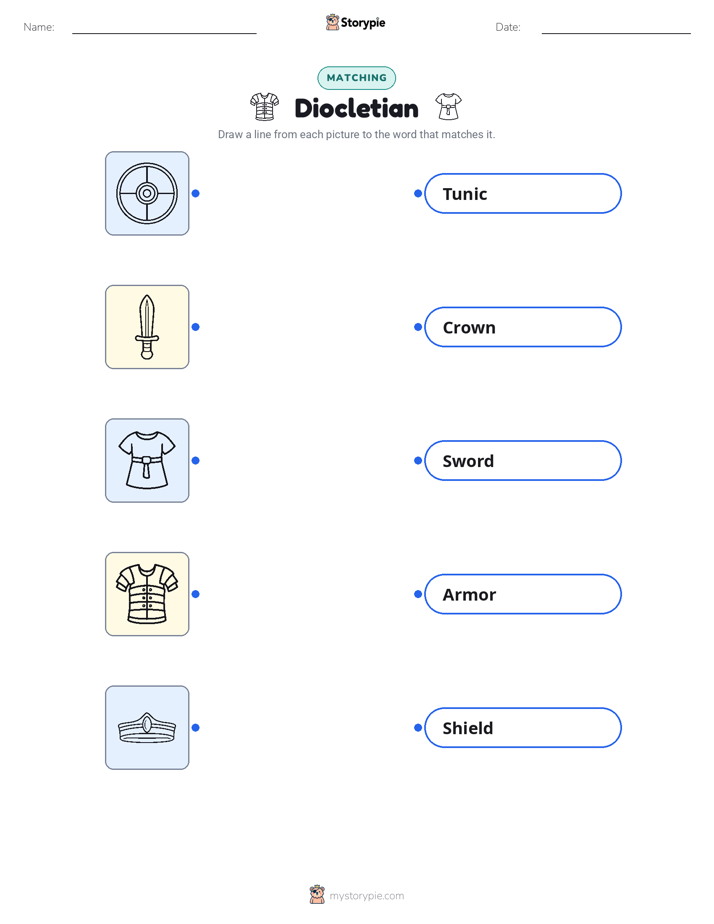
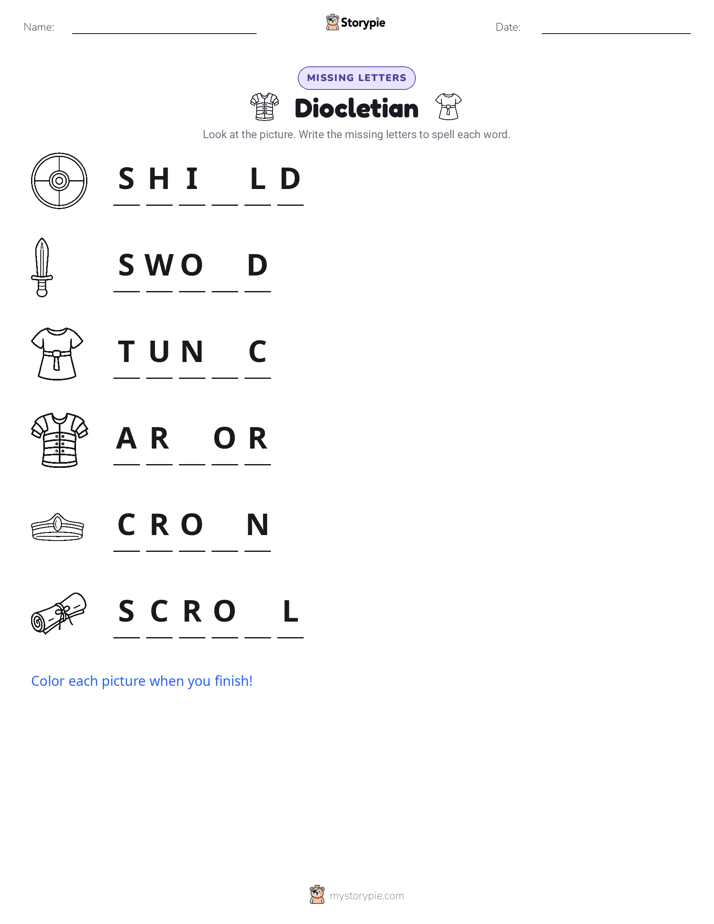
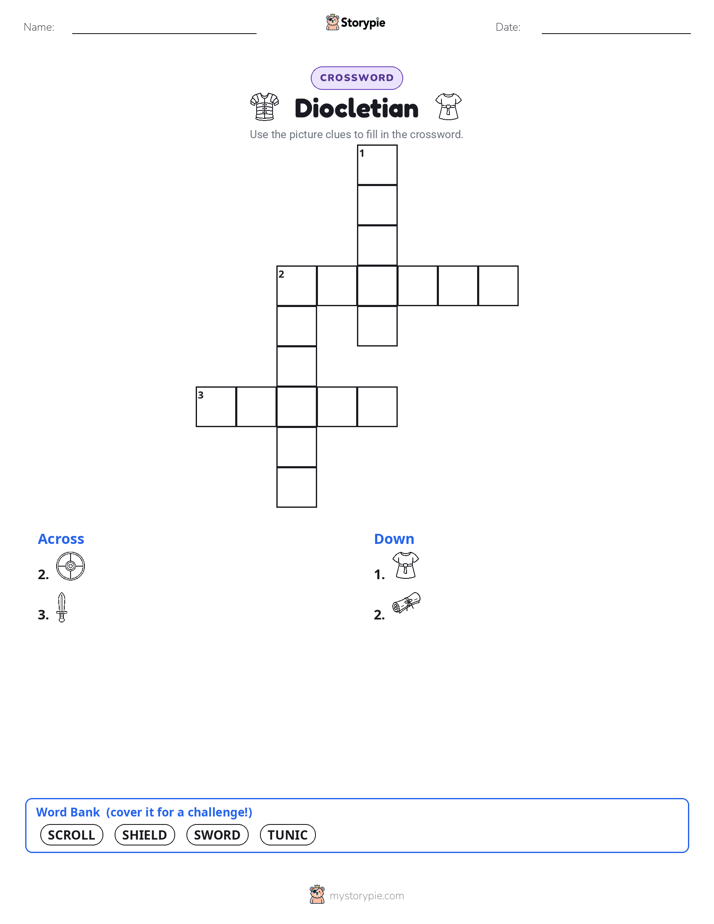
- Printable worksheets & coloring pages

Why Storypie for Schools
Students engaged. Prep in seconds. Evenings back to you.
- Worksheets & Quizzes
- Classroom Management
- Formative Assessment
- Custom Curriculum & Lesson Plans
- 27 Languages

Why Storypie for Homeschool
Curriculum done. They'll ask for more. Hours back in your day.
- Worksheet Generator
- First-Person Audio Stories
- Built-in Comprehension Quizzes
- Custom Curriculum & Lesson Plans
- Print & Go Activities