English

Inflation
Inflation is the rate at which the general level of prices for goods and services rises…
Reads at Grades 3–5 Listens at Grades 1–5
Print & create
Answer keys·No prep·Free with an account
28 worksheets · answer keys · full story · quiz · Ages 8-10 · CEFR B1
Plus adds 244,000+ more stories in 27 languages, audio for every one, and printables for all of them.
Just want Inflation?

Have you ever saved up all your allowance for that one special toy? You count your coins every day, imagining the moment you can finally buy it. You walk into the store, your money clutched in your hand, only to see that the price tag has changed. It costs more now. Your heart sinks a little. You need just a few more coins than you did last week for the very same thing. It can feel confusing and a little unfair, right? Well, that sneaky little price change is my doing. I’m the reason that sometimes, over time, your money doesn’t stretch as far as it used to. I am the invisible force that makes things cost more. Can you guess who I am? I am Inflation.
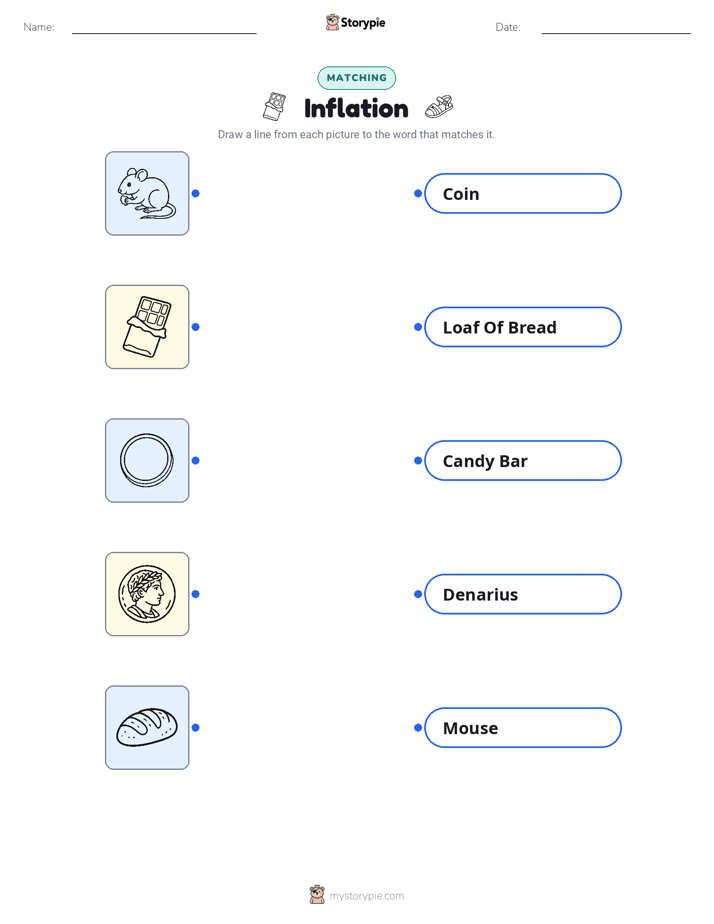
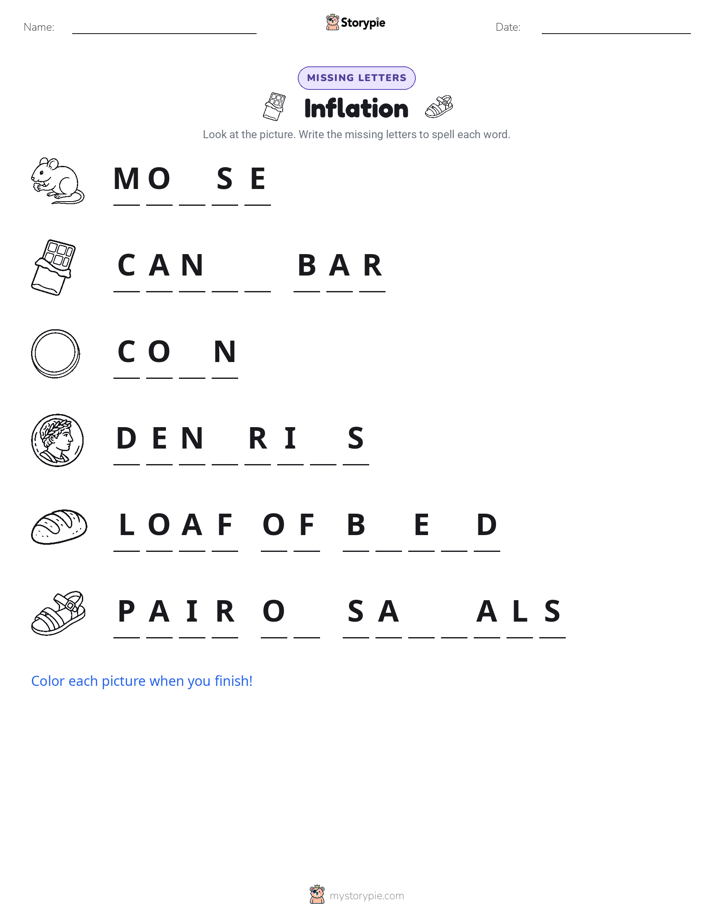
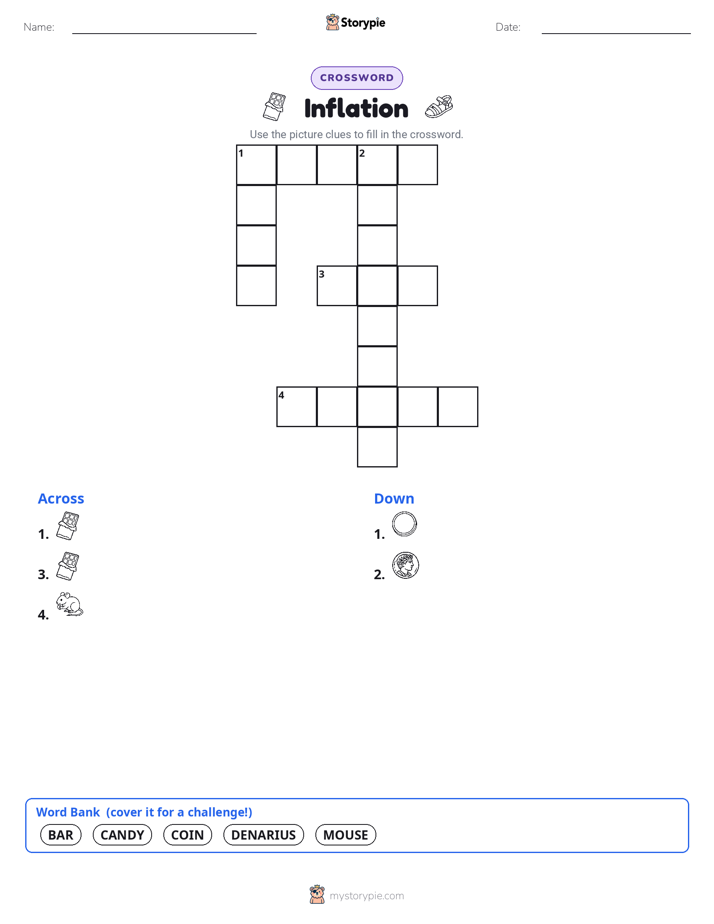
To see one of my first big appearances, we have to travel way back in time, all the way to the Roman Empire during the 3rd century CE. The Roman emperors had a huge army, and soldiers need to be paid. But the emperors were running out of money. So, they came up with a tricky plan. They took their pure silver coins, called the denarius, and started melting them down. Then, they mixed in cheaper metals, like copper, before making new coins. At first, nobody noticed, but soon there were more and more coins that were less and less silver. Imagine getting paid with a chocolate coin that was mostly wax. You'd feel cheated, right? People realized the coins weren't as valuable. So, to buy a loaf of bread or a new pair of sandals, they needed to hand over a lot more of these weaker coins than before. That was me, making my mark on one of the greatest empires in history.
The Sneaky Price Changer
Have you ever saved up all your allowance for that one special toy? You count your coins every day, imagining the moment you can finally buy it. You walk into the store, your money clutched in your hand, only to see that the price tag has changed. It costs more now. Your heart sinks a little. You need just a few more coins than you did last week for the very same thing. It can feel confusing and a little unfair, right? Well, that sneaky little price change is my doing. I’m the reason that sometimes, over time, your money doesn’t stretch as far as it used to. I am the invisible force that makes things cost more. Can you guess who I am? I am Inflation.
To see one of my first big appearances, we have to travel way back in time, all the way to the Roman Empire during the 3rd century CE. The Roman emperors had a huge army, and soldiers need to be paid. But the emperors were running out of money. So, they came up with a tricky plan. They took their pure silver coins, called the denarius, and started melting them down. Then, they mixed in cheaper metals, like copper, before making new coins. At first, nobody noticed, but soon there were more and more coins that were less and less silver. Imagine getting paid with a chocolate coin that was mostly wax. You'd feel cheated, right? People realized the coins weren't as valuable. So, to buy a loaf of bread or a new pair of sandals, they needed to hand over a lot more of these weaker coins than before. That was me, making my mark on one of the greatest empires in history.
Let's zoom forward in time to the 16th century. It was an age of adventure when Spanish explorers sailed across the ocean to the Americas and found mountains of gold and silver. They loaded up their ships and brought all that treasure back to Europe. Suddenly, there was a flood of money. Kings, queens, and merchants had more coins than they had ever dreamed of. You might think this made everyone rich and happy, but a strange thing happened. There was tons of new money, but there weren't tons of new things to buy. The number of farms, bakeries, and workshops stayed about the same. Since everyone had more money to spend, the people selling things realized they could charge higher prices. The value of each gold and silver coin went down. This didn't just happen overnight. For more than a hundred years, prices all across Europe kept creeping up. Historians even gave this long period a special name: the Price Revolution. I was the star of that show.
Usually I am slow and steady, but sometimes I get out of control. When that happens, it's called 'hyperinflation,' and it can be a real mess. One of the most famous times this happened was in Germany right after World War I, around the year 1923. I started growing so fast that prices didn't just change every week, or even every day, but sometimes every hour. Imagine going to the store for a loaf of bread in the morning and seeing one price, but if you waited until the afternoon, the price would be double. People had to carry their money around in suitcases and wheelbarrows just to go grocery shopping. A stack of bills that could have bought a house a few years earlier could now barely buy a postage stamp. It was a very difficult time, and it taught everyone an important lesson about how dangerous I can be when I'm not kept in check.
But don't worry, I'm not always a scary villain. In fact, a little bit of me is actually a sign that things are going well. A small, steady increase in prices shows that people have jobs, businesses are growing, and the economy is healthy. Think of me like the speed of a car. Driving way too fast is dangerous, but being completely stopped isn't very useful either. You want to move forward at a safe, steady speed. Today, very smart people in governments and special banks, called central banks, work hard to keep me in balance. They have tools to make sure I don't grow too fast or disappear completely. Understanding how I work helps everyone, from world leaders to you, make smart choices with money and plan for a happy future.
Wow facts
About
Inflation is the rate at which the general level of prices for goods and services rises, causing the purchasing power of currency to fall.
Take a Quiz
Question 1 of 5
In the story, the Roman emperors' coins were 'less valuable.' What does 'valuable' mean?
Explore next




Want to do even more?
Go beyond exploring. Unlock tools that turn every story into real learning.

Storypie Plus for families
Full stories, quizzes, and printables. Nights and car rides, sorted.
- Unlimited audio stories
- Create Mode: your child stars in the story
- Offline downloads
- Printable worksheets & coloring pages

Why Storypie for Schools
Students engaged. Prep in seconds. Evenings back to you.
- Worksheets & Quizzes
- Classroom Management
- Formative Assessment
- Custom Curriculum & Lesson Plans
- 27 Languages

Why Storypie for Homeschool
Curriculum done. They'll ask for more. Hours back in your day.
- Worksheet Generator
- First-Person Audio Stories
- Built-in Comprehension Quizzes
- Custom Curriculum & Lesson Plans
- Print & Go Activities