English

Dom Pedro I
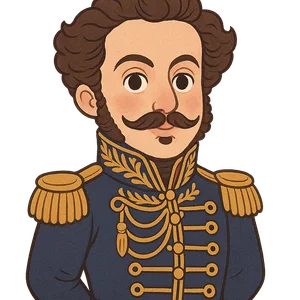
Dom Pedro I was the founder and first emperor of the Empire of Brazil.
Reads at Grades 6–8 Listens at Grades 4–8
Print & create
Answer keys·No prep·Free with an account
28 worksheets · answer keys · full story · quiz · Ages 10-12 · CEFR B2
Plus adds 208,000+ more stories in 27 languages, audio for every one, and printables for all of them.
Just want Dom Pedro I?
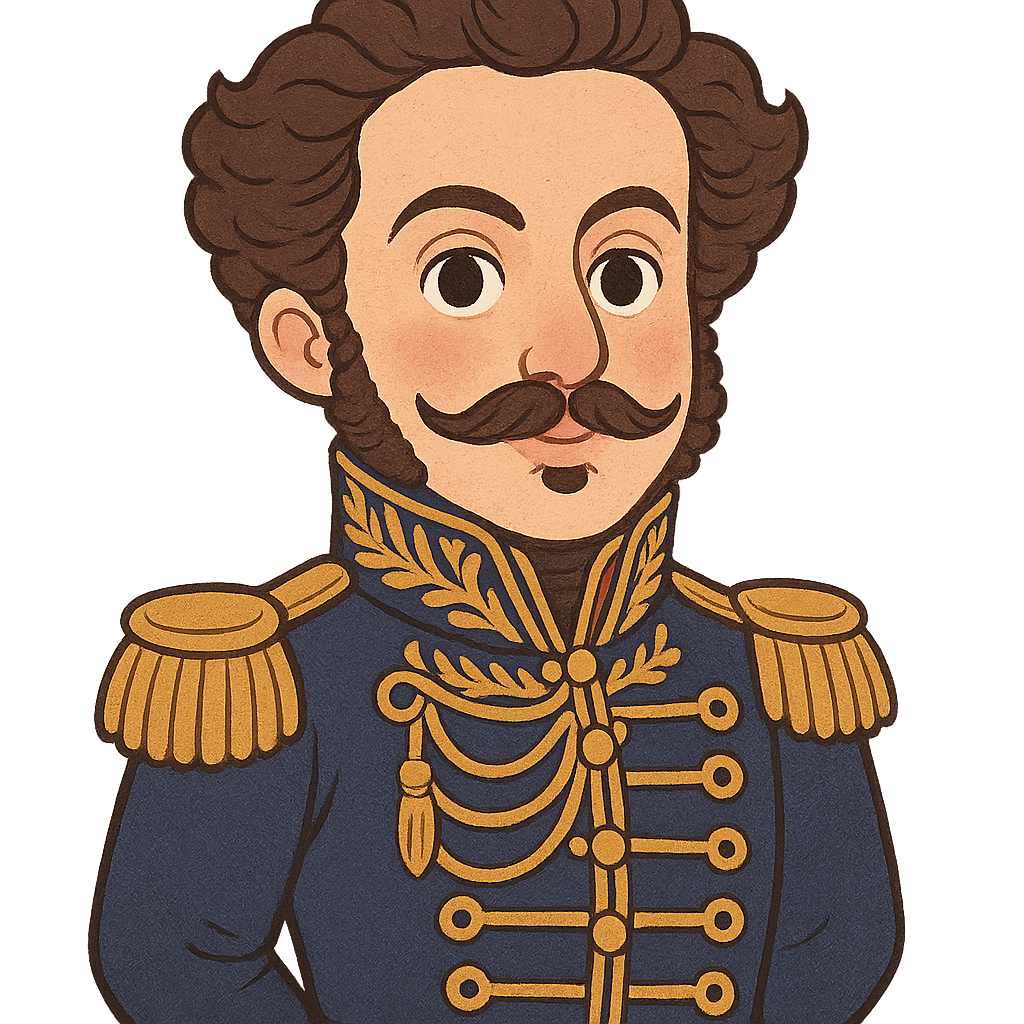
Hello, my name is Pedro, and I was born a prince of Portugal. My story, however, is the story of two nations. I was born on October 12th, 1798, in the grand Queluz Palace near Lisbon. My childhood was one of royal duties and comforts, but that all changed dramatically in 1807. The armies of Napoleon Bonaparte invaded my homeland, forcing my entire family and the royal court to make a difficult decision. We had to escape. We boarded ships and sailed across the vast Atlantic Ocean to Brazil, which was a Portuguese colony at the time. I was just a boy, and leaving my home behind was an overwhelming experience. The journey was long, but when we arrived, I found myself in a vibrant and beautiful new land. Brazil, with its rich culture and endless landscapes, would soon capture my heart and become my true home.
I grew up under the warm Brazilian sun, surrounded by new sights, sounds, and people. I came to love the music, the culture, and the spirit of this incredible place. It felt less like a colony and more like my own country. A major turning point came in 1821 when my father, King João VI, was called back to Portugal to handle political matters there. He left me in charge, naming me the Prince Regent of Brazil. This was a great responsibility for a young man. I suddenly found myself caught in a difficult position. The Portuguese government, known as the Cortes, wanted to reduce Brazil's importance and bring it back under their tight control. At the same time, the people of Brazil were beginning to voice their desire for freedom and to become a completely separate and independent nation. I had to navigate these competing demands while deciding where my own loyalty truly belonged.
Pedro I: A Prince of Two Worlds
Hello, my name is Pedro, and I was born a prince of Portugal. My story, however, is the story of two nations. I was born on October 12th, 1798, in the grand Queluz Palace near Lisbon. My childhood was one of royal duties and comforts, but that all changed dramatically in 1807. The armies of Napoleon Bonaparte invaded my homeland, forcing my entire family and the royal court to make a difficult decision. We had to escape. We boarded ships and sailed across the vast Atlantic Ocean to Brazil, which was a Portuguese colony at the time. I was just a boy, and leaving my home behind was an overwhelming experience. The journey was long, but when we arrived, I found myself in a vibrant and beautiful new land. Brazil, with its rich culture and endless landscapes, would soon capture my heart and become my true home.
I grew up under the warm Brazilian sun, surrounded by new sights, sounds, and people. I came to love the music, the culture, and the spirit of this incredible place. It felt less like a colony and more like my own country. A major turning point came in 1821 when my father, King João VI, was called back to Portugal to handle political matters there. He left me in charge, naming me the Prince Regent of Brazil. This was a great responsibility for a young man. I suddenly found myself caught in a difficult position. The Portuguese government, known as the Cortes, wanted to reduce Brazil's importance and bring it back under their tight control. At the same time, the people of Brazil were beginning to voice their desire for freedom and to become a completely separate and independent nation. I had to navigate these competing demands while deciding where my own loyalty truly belonged.
My heart was with Brazil, and the desire for independence grew stronger every day. The government in Portugal sent orders that the Brazilian people saw as unfair attempts to take away their autonomy. One of these orders demanded that I leave Brazil and return to Portugal immediately. The people begged me not to go. On January 9th, 1822, in a moment that became known as 'Fico Day,' I made my choice clear. I stood before a crowd and declared, 'Se é para o bem de todos e felicidade geral da Nação, estou pronto! Digam ao povo que fico!' which means, 'If it is for the good of all and the general happiness of the Nation, I am ready! Tell the people I shall stay!'. My defiance set us on the path to freedom. The final, decisive moment came a few months later. On September 7th, 1822, I was riding with my guards along the banks of the Ipiranga River when a messenger brought more demanding letters from Portugal. I could not tolerate their demands any longer. I drew my sword, raised it high, and shouted the famous words, 'Independência ou Morte!'—'Independence or Death!'. At that moment, Brazil was declared a free and independent nation.
Following my declaration, a wave of excitement and patriotism swept across the country. The Brazilian people were ready to build their new nation with me as their leader. On my 24th birthday, October 12th, 1822, I was officially acclaimed as the first Emperor of Brazil. My coronation followed on December 1st, 1822, a day of immense celebration and hope. But my work was just beginning. Declaring independence was one thing, but creating a stable and unified country was another challenge entirely. Brazil is an enormous land with many different regions and people. I worked to establish a new government, and in 1824, I approved Brazil's first constitution. This document laid the foundation for our laws and government structure. It was a difficult but rewarding task to unite such a diverse land under a single flag and give its people a shared sense of identity as Brazilians.
My life became complicated again when my father, the king of Portugal, passed away in 1826. This left the Portuguese throne to my eldest daughter, Maria. However, my younger brother, Miguel, attempted to seize power for himself. I was the Emperor of Brazil, a country I had fought to free, yet I felt a deep sense of duty to my daughter and my birth country. I was torn between my two worlds. For years, I tried to rule Brazil while managing the crisis in Portugal, but it became clear I could not do both. I had to make a heartbreaking choice. On April 7th, 1831, I decided to abdicate the Brazilian throne, leaving it to my beloved five-year-old son, who would one day rule as Emperor Pedro II. This decision allowed me to return to Europe, not as a king seeking power, but as a father fighting to restore his daughter to her rightful place as queen.
My journey was one of great change and difficult choices. After I returned to Portugal, I led an army and successfully won the war, securing the throne for my daughter, Maria. However, the years of conflict and travel had taken a toll on my health. My life came to an end in 1834, in the very same room of the Queluz Palace where I had been born. I lived to be 35 years old. Though my life was short, I believe it was filled with purpose. In Brazil, I am remembered as 'O Libertador,' the man who helped a great nation find its freedom. In Portugal, I am known as 'O Rei Soldado,' the Soldier King who fought for justice. My story shows that a single person, driven by love and a sense of duty, can help shape the destiny of two different nations.
Wow facts
About
Dom Pedro I was the founder and first emperor of the Empire of Brazil. As Prince Regent of Brazil, he declared the country's independence from Portugal in 1822 and also briefly reigned as King Pedro IV of Portugal.
Take a Quiz
Question 1 of 5
What is the main theme or lesson of Pedro's life story?
Explore next



Want to do even more?
Go beyond exploring. Unlock tools that turn every story into real learning.

Storypie Plus for families
Full stories, quizzes, and printables. Nights and car rides, sorted.
- Unlimited audio stories
- Create Mode: your child stars in the story
- Offline downloads
- Printable worksheets & coloring pages

Why Storypie for Schools
Students engaged. Prep in seconds. Evenings back to you.
- Worksheets & Quizzes
- Classroom Management
- Formative Assessment
- Custom Curriculum & Lesson Plans
- 27 Languages

Why Storypie for Homeschool
Curriculum done. They'll ask for more. Hours back in your day.
- Worksheet Generator
- First-Person Audio Stories
- Built-in Comprehension Quizzes
- Custom Curriculum & Lesson Plans
- Print & Go Activities