English

Arthur Wellesley, 1st Duke of Wellington
Arthur Wellesley, 1st Duke of Wellington…
Reads at Grades 6–8 Listens at Grades 4–8
Print & create
Answer keys·No prep·Free with an account
28 worksheets · answer keys · full story · quiz · Ages 10-12 · CEFR B2
Plus adds 280,000+ more stories in 27 languages, audio for every one, and printables for all of them.
Just want Arthur Wellesley, 1st Duke of Wellington?
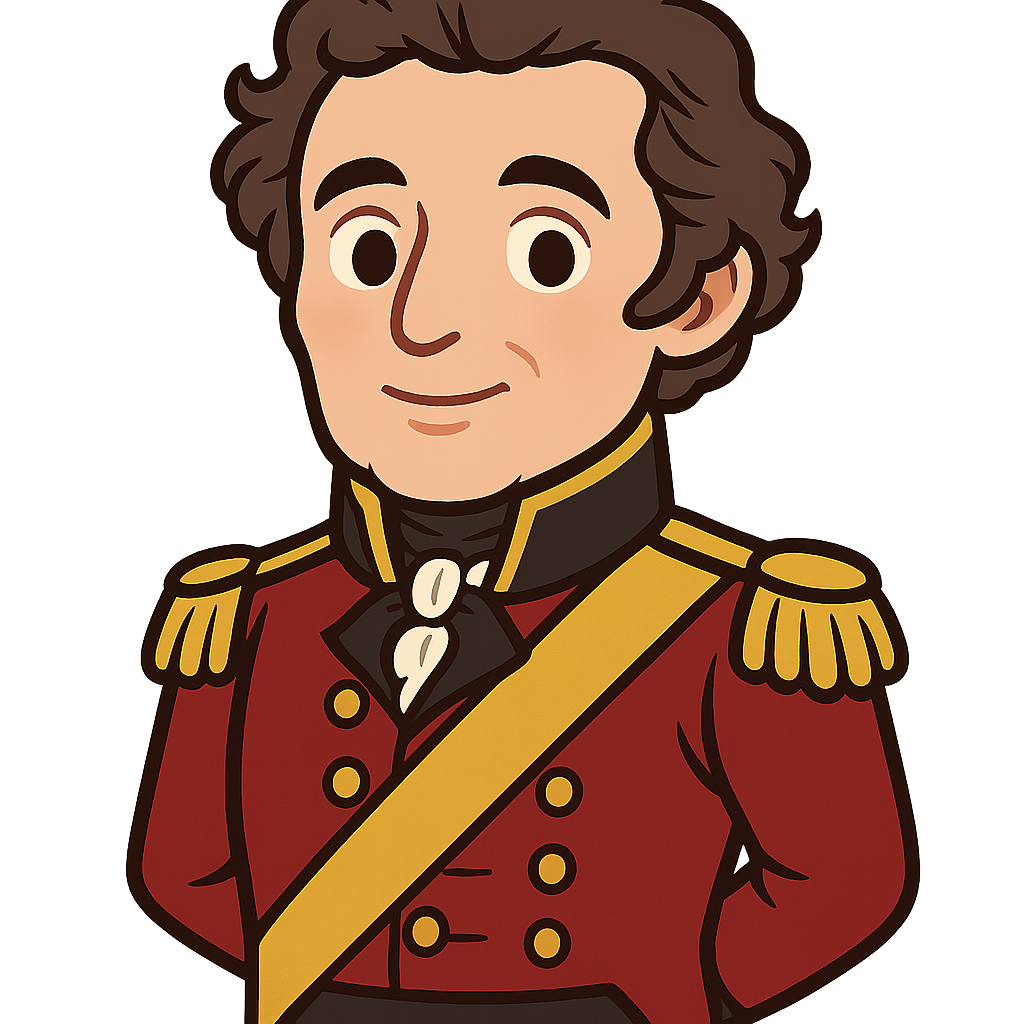
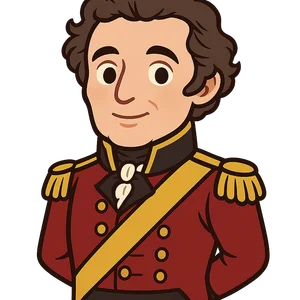
Hello. My name is Arthur Wellesley, but you may know me by my title, the Duke of Wellington. My story begins in Dublin, Ireland, where I was born around May 1st, 1769. My family was part of the nobility, but we were not especially wealthy. As a boy, I attended the famous school Eton, but I must admit I was not a star student. My family looked at my prospects and decided that a career in the army would be the best path for me. So, in 1787, I joined the British Army. That single decision set the course for my entire life, leading me down a path I could never have imagined as a young man who didn't much care for his studies.
My real education as a military leader began far from home. In 1796, I was sent to India as a young officer. It was there that I truly learned the art of warfare and command. India was a vast and challenging land, and I quickly discovered that winning battles was about more than just fighting. It involved the immense task of moving thousands of soldiers, along with all their food, equipment, and animals, across enormous distances. This experience taught me the critical importance of logistics and planning. My first great test came on September 23rd, 1803, at the Battle of Assaye. My forces were significantly outnumbered by the enemy, but through careful strategy and the discipline of my soldiers, we achieved a remarkable victory. The battle was incredibly fierce and difficult, but the lessons I learned there about strategy, courage, and perseverance would serve me for the rest of my military career.
Arthur Wellesley: The Iron Duke
Hello. My name is Arthur Wellesley, but you may know me by my title, the Duke of Wellington. My story begins in Dublin, Ireland, where I was born around May 1st, 1769. My family was part of the nobility, but we were not especially wealthy. As a boy, I attended the famous school Eton, but I must admit I was not a star student. My family looked at my prospects and decided that a career in the army would be the best path for me. So, in 1787, I joined the British Army. That single decision set the course for my entire life, leading me down a path I could never have imagined as a young man who didn't much care for his studies.
My real education as a military leader began far from home. In 1796, I was sent to India as a young officer. It was there that I truly learned the art of warfare and command. India was a vast and challenging land, and I quickly discovered that winning battles was about more than just fighting. It involved the immense task of moving thousands of soldiers, along with all their food, equipment, and animals, across enormous distances. This experience taught me the critical importance of logistics and planning. My first great test came on September 23rd, 1803, at the Battle of Assaye. My forces were significantly outnumbered by the enemy, but through careful strategy and the discipline of my soldiers, we achieved a remarkable victory. The battle was incredibly fierce and difficult, but the lessons I learned there about strategy, courage, and perseverance would serve me for the rest of my military career.
After my service in India, I returned to Europe to face an even greater challenge: the French emperor, Napoleon Bonaparte. He was a brilliant general who was conquering much of Europe. In 1808, I was given command of an army and sent to Portugal to help fight the French in a conflict that would become known as the Peninsular War. For six long years, until 1814, we fought a grueling campaign across the landscapes of Spain and Portugal. It was a war of endurance. I knew we couldn't always beat the French in a direct, head-on battle, so I relied on careful defensive strategies. To protect the capital city of Lisbon, I ordered the construction of a massive line of forts and defenses called the Lines of Torres Vedras. My focus was always on keeping my army well-supplied and disciplined. It was during these difficult years that my soldiers and the public began to call me 'the Iron Duke,' a name given to me because of my stern demeanor and unyielding determination.
Just when it seemed the wars were over, Napoleon escaped from his exile in 1815 and returned to power in France. The nations of Europe knew we had to face him one last time. This final confrontation took place on a rainy field in modern-day Belgium on June 18th, 1815. It was the Battle of Waterloo. The battlefield was soaked with rain, turning the ground to thick mud. All day long, Napoleon's powerful army launched fierce attacks against our lines. My soldiers showed incredible bravery, holding their positions against charge after charge. The battle hung in the balance for hours, and I worried we might not hold. But then, at a critical moment, our Prussian allies, commanded by General Blücher, arrived on the battlefield and attacked the French flank. Their arrival turned the tide, and together, we won the day. Looking back on the struggle, I later said it was 'the nearest-run thing you ever saw in your life,' because our victory had been so incredibly close.
With Napoleon finally defeated, my life changed direction completely. I entered the world of politics, trading the battlefield for the Houses of Parliament. In 1828, I was asked to serve as the Prime Minister of the United Kingdom, a role I held until 1830. I quickly learned that leading a country was a very different kind of challenge from leading an army. One of the most difficult tasks I faced was passing the Catholic Emancipation Act of 1829. This law granted more civil rights to Catholics, who had faced discrimination for many years. The act was very unpopular with many powerful people, but I was convinced it was necessary to ensure peace and fairness in the kingdom. I stood firm in my decision, believing it was my duty to do what was right for the country, even if it wasn't popular.
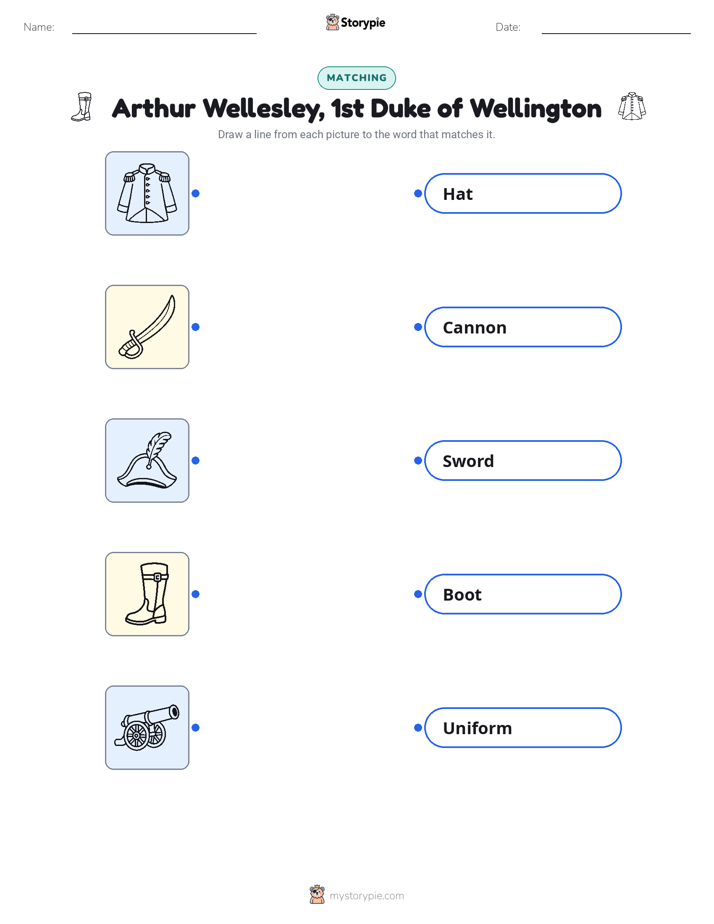
I lived a long and very full life. I lived to be 83 years old, passing away on September 14th, 1852. Today, I am remembered as the general who defeated Napoleon at Waterloo and as a statesman who served his country in times of peace as well as war. My name has been given to places and things all over the world, from the capital city of New Zealand, Wellington, to the rubber boots that I helped make popular. I hope my story shows that with a commitment to duty, discipline, and sheer determination, it is possible to face and overcome even the most daunting challenges life can present.
Wow facts
About
Arthur Wellesley, 1st Duke of Wellington, was a leading British military and political figure of the 19th century, best known for defeating Napoleon at the Battle of Waterloo in 1815 and later serving twice as Prime Minister.
Take a Quiz
Question 1 of 5
What does the nickname 'the Iron Duke' suggest about Arthur Wellesley's character?
Explore next






Want to do even more?
Go beyond exploring. Unlock tools that turn every story into real learning.

Storypie Plus for families
Full stories, quizzes, and printables. Nights and car rides, sorted.
- Unlimited audio stories
- Create Mode: your child stars in the story
- Offline downloads
- Printable worksheets & coloring pages

Why Storypie for Schools
Students engaged. Prep in seconds. Evenings back to you.
- Worksheets & Quizzes
- Classroom Management
- Formative Assessment
- Custom Curriculum & Lesson Plans
- 27 Languages

Why Storypie for Homeschool
Curriculum done. They'll ask for more. Hours back in your day.
- Worksheet Generator
- First-Person Audio Stories
- Built-in Comprehension Quizzes
- Custom Curriculum & Lesson Plans
- Print & Go Activities