English

Arthur Wellesley, 1st Duke of Wellington
Arthur Wellesley, 1st Duke of Wellington…
Reads at Grades 3–5 Listens at Grades 1–5
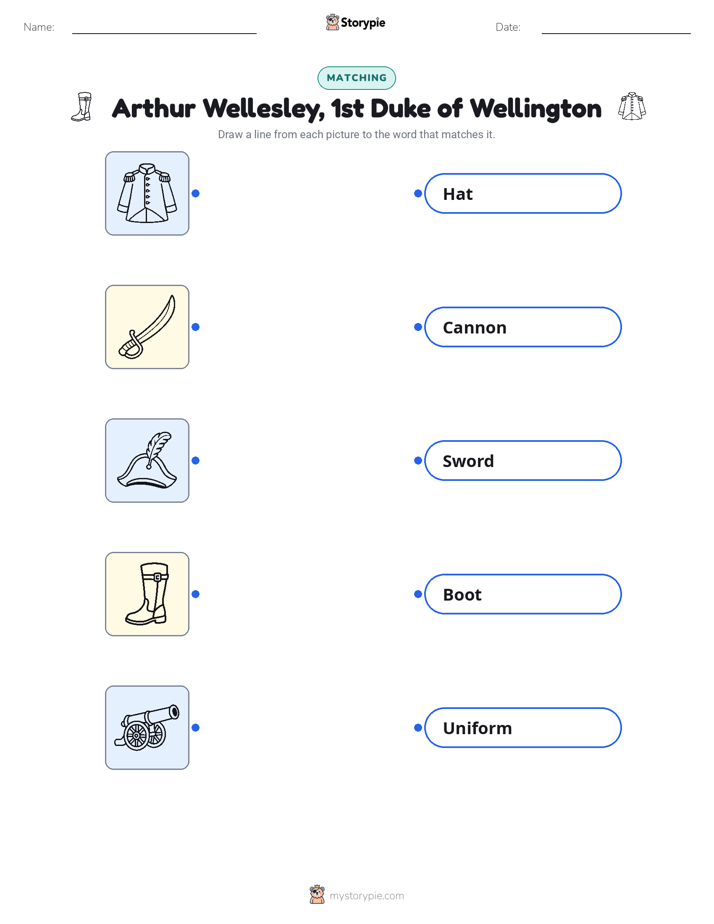
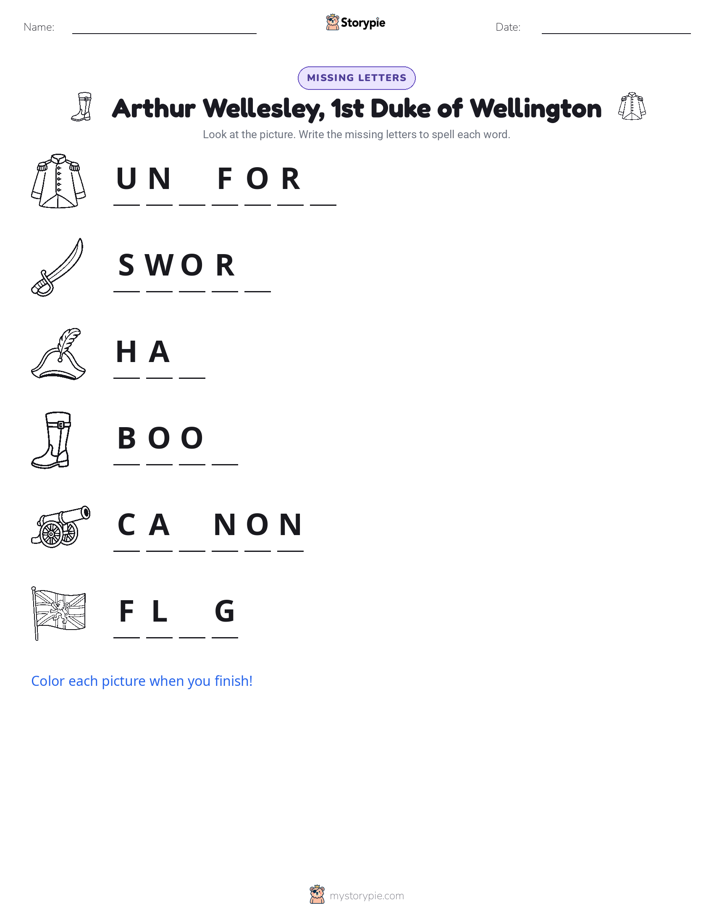
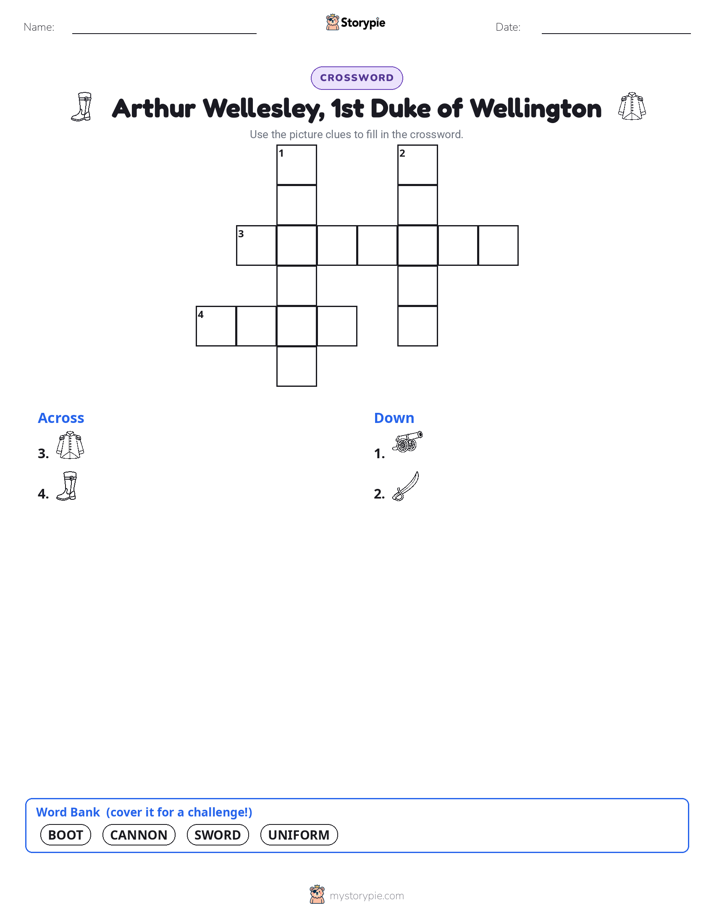
Print & create
Answer keys·No prep·Free with an account
28 worksheets · answer keys · full story · quiz · Ages 8-10 · CEFR B1
Plus adds 279,000+ more stories in 27 languages, audio for every one, and printables for all of them.
Just want Arthur Wellesley, 1st Duke of Wellington?
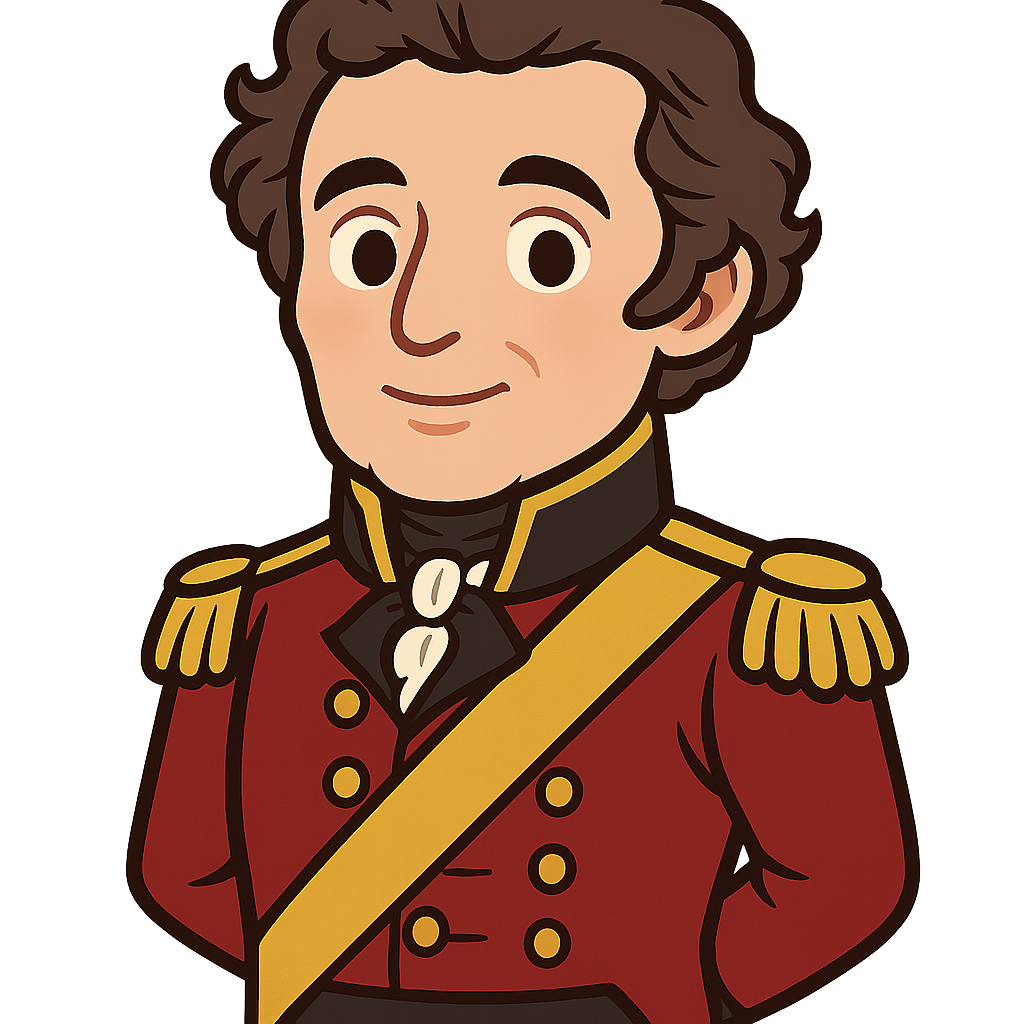
Hello there. My name is Arthur Wellesley, but you might know me better by my title, the Duke of Wellington. My story begins in Dublin, Ireland, where I was born around May 1st, 1769. When I was a boy in school, I must admit I wasn't the best student. I found my lessons a bit dull, but I did love playing music. As I grew older, I had to decide what to do with my life. In 1787, I made a choice that would shape my future: I decided to become a soldier. It just felt like my true calling, a path where I could serve my country and find my purpose.
My real training as a leader began far from home, during my years in the British Army serving in India. It was there I learned the most important lessons about being a commander. I discovered that winning battles wasn't just about being brave; it was about planning every detail carefully and, most importantly, taking care of the soldiers who depended on me. A great test of these lessons came in 1803 at the Battle of Assaye. My army was much smaller than the enemy's, and it looked like we might lose. But by using smart thinking and a well-laid plan, we defeated a much larger force. That day proved to me that a clever strategy is often more powerful than having the most soldiers.
After my time in India, I faced the greatest challenge of my life. A French Emperor named Napoleon Bonaparte was trying to take over all of Europe. It was my job to stop him. In 1808, I began leading the army in what became known as the Peninsular War, which was fought in Spain and Portugal. The fighting was difficult and lasted for many years. Instead of always attacking, I became known for my defensive tactics. I would find a strong position, force the enemy to come to us, and wear them down. It was a long, hard struggle, but we slowly pushed Napoleon's forces back. For our success, I was given a great honor in 1814. I was made the Duke of Wellington, a title I have carried with pride ever since.
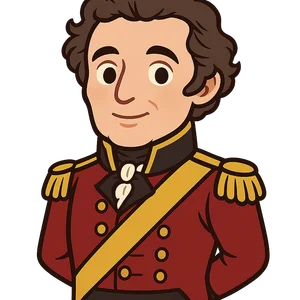
Arthur Wellesley, Duke of Wellington
Hello there. My name is Arthur Wellesley, but you might know me better by my title, the Duke of Wellington. My story begins in Dublin, Ireland, where I was born around May 1st, 1769. When I was a boy in school, I must admit I wasn't the best student. I found my lessons a bit dull, but I did love playing music. As I grew older, I had to decide what to do with my life. In 1787, I made a choice that would shape my future: I decided to become a soldier. It just felt like my true calling, a path where I could serve my country and find my purpose.
My real training as a leader began far from home, during my years in the British Army serving in India. It was there I learned the most important lessons about being a commander. I discovered that winning battles wasn't just about being brave; it was about planning every detail carefully and, most importantly, taking care of the soldiers who depended on me. A great test of these lessons came in 1803 at the Battle of Assaye. My army was much smaller than the enemy's, and it looked like we might lose. But by using smart thinking and a well-laid plan, we defeated a much larger force. That day proved to me that a clever strategy is often more powerful than having the most soldiers.
After my time in India, I faced the greatest challenge of my life. A French Emperor named Napoleon Bonaparte was trying to take over all of Europe. It was my job to stop him. In 1808, I began leading the army in what became known as the Peninsular War, which was fought in Spain and Portugal. The fighting was difficult and lasted for many years. Instead of always attacking, I became known for my defensive tactics. I would find a strong position, force the enemy to come to us, and wear them down. It was a long, hard struggle, but we slowly pushed Napoleon's forces back. For our success, I was given a great honor in 1814. I was made the Duke of Wellington, a title I have carried with pride ever since.
But Napoleon wasn't finished. In 1815, he returned to power, and all of Europe held its breath, wondering if the wars would start all over again. It all came down to one final, famous day: June 18th, 1815. My army gathered at a place in Belgium called Waterloo. The battle was huge and lasted all day. I ordered my soldiers to hold a strong defensive line on a ridge, and they stood firm against every attack. It was a very close fight, but late in the day, our allies, the Prussians, arrived to help us. Together, we won a great victory. That day at Waterloo finally ended the long wars and brought peace to Europe.
After the wars were over, my service to my country continued, but in a new way. I put away my uniform and entered the world of politics. In 1828, I became the Prime Minister of the United Kingdom. I quickly learned that leading a country during peacetime was a very different kind of challenge than leading an army in battle. The problems were complicated, and people didn't always agree. Even so, I worked hard every day to do what I believed was right for the people and for the nation.
Looking back, my life was long and full of purpose. I lived to be 83 years old and passed away on September 14th, 1852. I hope to be remembered as a soldier who fought hard to bring a long and lasting period of peace to Europe. There is one fun fact that has lived on: the waterproof rubber boots we wear on rainy days were named 'Wellington boots' after me. In the end, I believe my story is about the importance of always trying to do your duty, whether on the battlefield or in government.
Wow facts
About
Arthur Wellesley, 1st Duke of Wellington, was a leading British military and political figure of the 19th century, best known for defeating Napoleon at the Battle of Waterloo in 1815 and later serving twice as Prime Minister.
Take a Quiz
Question 1 of 5
In the story, what does the phrase 'it felt like my true calling' mean?
Explore next






Want to do even more?
Go beyond exploring. Unlock tools that turn every story into real learning.

Storypie Plus for families
Full stories, quizzes, and printables. Nights and car rides, sorted.
- Unlimited audio stories
- Create Mode: your child stars in the story
- Offline downloads
- Printable worksheets & coloring pages

Why Storypie for Schools
Students engaged. Prep in seconds. Evenings back to you.
- Worksheets & Quizzes
- Classroom Management
- Formative Assessment
- Custom Curriculum & Lesson Plans
- 27 Languages

Why Storypie for Homeschool
Curriculum done. They'll ask for more. Hours back in your day.
- Worksheet Generator
- First-Person Audio Stories
- Built-in Comprehension Quizzes
- Custom Curriculum & Lesson Plans
- Print & Go Activities