English


Dwight D. Eisenhower
Dwight D.
Reads at Grades 6–8 Listens at Grades 4–8
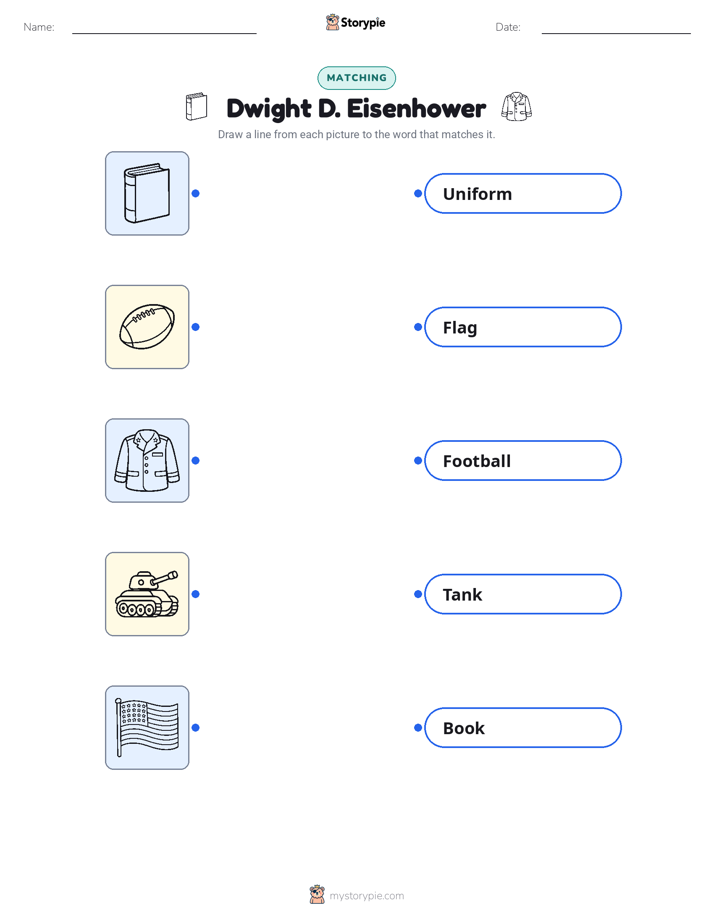
Print & create
Answer keys·No prep·Free with an account
28 worksheets · answer keys · full story · quiz · Ages 10-12 · CEFR B2
Plus adds 280,000+ more stories in 27 languages, audio for every one, and printables for all of them.
Just want Dwight D. Eisenhower?
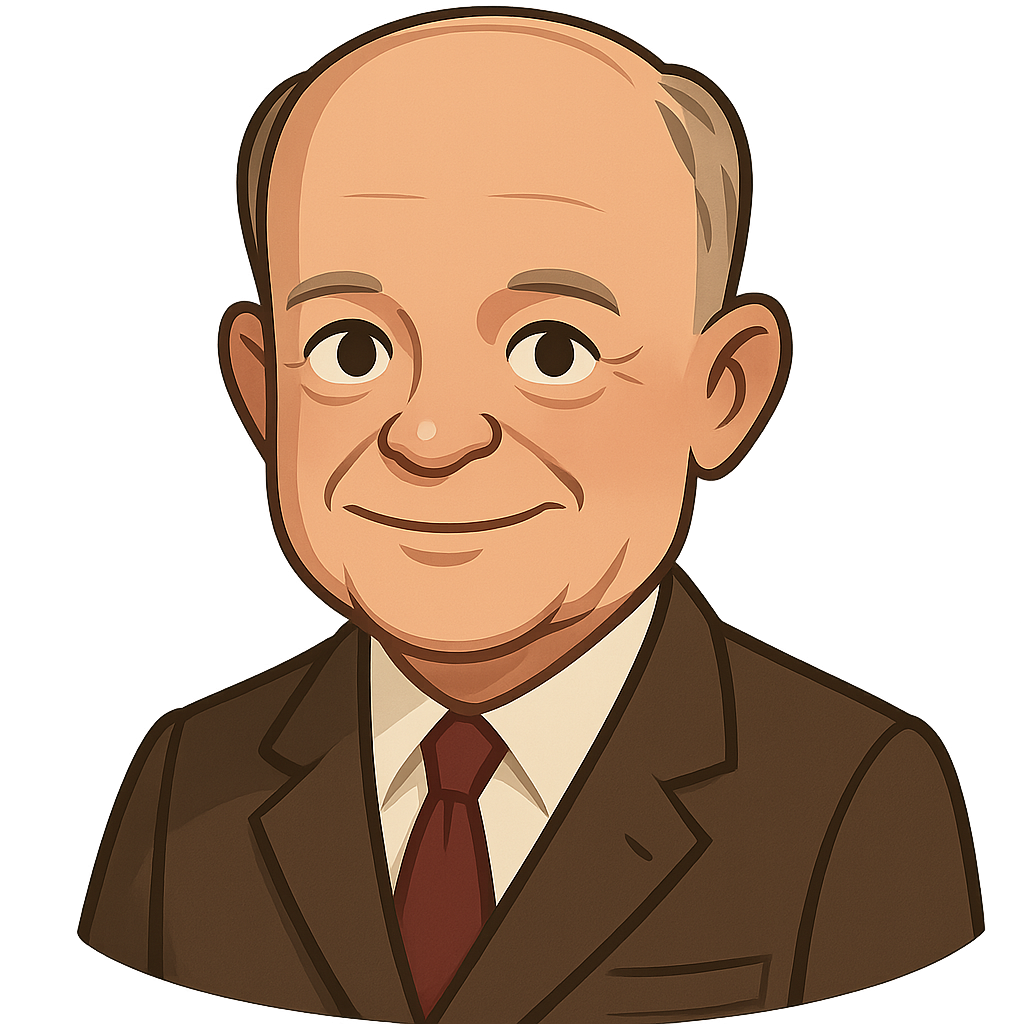
Hello, my name is Dwight D. Eisenhower, but most people throughout my life simply called me “Ike.” My story begins in a time of great change for America. I was born in Denison, Texas, on October 14th, 1890, but my family moved to Abilene, Kansas, when I was just a young boy. Abilene was a classic American small town, a place of dirt roads and big dreams, and it was there that I truly grew up. I was the third of seven boys, and our house was always full of energy and competition. We didn't have much money, but we had each other. I spent my days exploring the outdoors, playing sports like football and baseball with my brothers, and developing a deep love for my country. Inside, I was fascinated by books, especially history. I would spend hours reading about great military leaders of the past, studying their strategies and admiring their courage. I didn't know it then, but those stories were planting the seeds for my own future, a future that would take me far beyond the quiet fields of Kansas.
My fascination with military history eventually led me to a path of service. In 1911, I made the journey to the United States Military Academy at West Point. Life at the academy was nothing like my childhood in Kansas; it was a world of strict discipline, intense studies, and demanding physical training. The work was hard, but it forged me into a leader, teaching me the importance of order, responsibility, and teamwork. I graduated with the class of 1915, ready to serve my country as an officer in the United States Army. It was during this time that I also met the love of my life, a wonderful woman named Mamie Doud. We were married in 1916, and she was my partner through all the challenges and triumphs that lay ahead. When the United States entered World War I, I was eager to lead soldiers in Europe. However, the army had other plans for me. I was assigned to stay in the United States and train tank crews. It was a great disappointment not to fight overseas, but the experience taught me invaluable lessons about logistics, organization, and the immense importance of preparation for war.
Dwight D. Eisenhower: A Life of Service
Hello, my name is Dwight D. Eisenhower, but most people throughout my life simply called me “Ike.” My story begins in a time of great change for America. I was born in Denison, Texas, on October 14th, 1890, but my family moved to Abilene, Kansas, when I was just a young boy. Abilene was a classic American small town, a place of dirt roads and big dreams, and it was there that I truly grew up. I was the third of seven boys, and our house was always full of energy and competition. We didn't have much money, but we had each other. I spent my days exploring the outdoors, playing sports like football and baseball with my brothers, and developing a deep love for my country. Inside, I was fascinated by books, especially history. I would spend hours reading about great military leaders of the past, studying their strategies and admiring their courage. I didn't know it then, but those stories were planting the seeds for my own future, a future that would take me far beyond the quiet fields of Kansas.
My fascination with military history eventually led me to a path of service. In 1911, I made the journey to the United States Military Academy at West Point. Life at the academy was nothing like my childhood in Kansas; it was a world of strict discipline, intense studies, and demanding physical training. The work was hard, but it forged me into a leader, teaching me the importance of order, responsibility, and teamwork. I graduated with the class of 1915, ready to serve my country as an officer in the United States Army. It was during this time that I also met the love of my life, a wonderful woman named Mamie Doud. We were married in 1916, and she was my partner through all the challenges and triumphs that lay ahead. When the United States entered World War I, I was eager to lead soldiers in Europe. However, the army had other plans for me. I was assigned to stay in the United States and train tank crews. It was a great disappointment not to fight overseas, but the experience taught me invaluable lessons about logistics, organization, and the immense importance of preparation for war.
The years between the two world wars were a long and quiet period of my career, but they were critically important. During this time, I had the opportunity to learn from some of the Army's most brilliant minds, including General Douglas MacArthur. My service took me to many different posts, even as far away as the Philippines. This period wasn't filled with dramatic battles, but it was like being a student in the world's most advanced classroom for military strategy. I spent years studying, planning, and preparing for challenges I couldn't yet imagine. It was a time of quiet, steady work that built the foundation for my future responsibilities. When the United States was drawn into World War II after the attack on Pearl Harbor in 1941, my years of preparation paid off. I was recognized for my skills in planning and organization, and I was promoted quickly through the ranks. The biggest test of my life was about to begin, and I was ready for it.
In December 1943, I was given the most immense responsibility of my life: I was named the Supreme Commander of the Allied Expeditionary Force in Europe. This meant I was in charge of all the soldiers, sailors, and airmen from many different countries who were fighting to free Europe. My primary mission was to plan and lead the invasion of Normandy, an operation that would come to be known as D-Day. This was to be the most massive sea invasion in the history of the world. The pressure was enormous; the lives of thousands of young men and the fate of the free world rested on my decisions. After months of careful planning, I made the final, difficult call to launch the attack on June 6th, 1944. I will never forget the courage of the soldiers who stormed the beaches that day. Their bravery turned the tide of the war. The success of the D-Day invasion was the beginning of the end, and nearly a year later, in May 1945, the war in Europe was finally won.
Returning from the war, I was welcomed home as a national hero. My life in public service, however, was far from over. I served for a short time as the president of Columbia University and later became the first supreme commander of NATO, a new alliance created to keep the peace in Europe. Soon, many people encouraged me to run for the highest office in the land. In 1952, I was elected the 34th President of the United States. I served two terms, from 1953 to 1961, a period of great prosperity and change for America. During my presidency, I focused on building a secure and modern nation. I was proud to help bring an end to the Korean War in 1953. To connect our vast country, I championed the creation of the Interstate Highway System in 1956. As the world looked to the stars, I established NASA in 1958 to lead America's journey into space. I also believed deeply in justice for all citizens. In 1957, when nine African American students were blocked from entering their school, I upheld the law by sending federal troops to Little Rock, Arkansas, to ensure the schools were safely integrated.
After decades of service, I retired from public life in 1961. My wife, Mamie, and I returned to a place we loved, our farm in Gettysburg, Pennsylvania. There, I had time to reflect on my long journey, from a small boy in Kansas to a five-star general and president. My entire life was dedicated to serving my country, first as a soldier in war and then as a leader in peace. I lived to be 78 years old. Today, I hope people remember me not just for the battles we won, but for the peace we worked to build. I hope they remember a leader who helped protect freedom around the world and then worked to build a stronger, more connected, and more hopeful America for all the generations that would follow.
Wow facts
About
Dwight D. Eisenhower was a five-star general in the United States Army who served as Supreme Commander of the Allied Expeditionary Force in Europe during World War II and later became the 34th President of the United States from 1953 to 1961.
Take a Quiz
Question 1 of 5
In the story, Eisenhower says his time between the two world wars was "like being a student, preparing for the biggest test of my life." What does this comparison suggest about that period?
Explore next






Want to do even more?
Go beyond exploring. Unlock tools that turn every story into real learning.

Storypie Plus for families
Full stories, quizzes, and printables. Nights and car rides, sorted.
- Unlimited audio stories
- Create Mode: your child stars in the story
- Offline downloads
- Printable worksheets & coloring pages

Why Storypie for Schools
Students engaged. Prep in seconds. Evenings back to you.
- Worksheets & Quizzes
- Classroom Management
- Formative Assessment
- Custom Curriculum & Lesson Plans
- 27 Languages

Why Storypie for Homeschool
Curriculum done. They'll ask for more. Hours back in your day.
- Worksheet Generator
- First-Person Audio Stories
- Built-in Comprehension Quizzes
- Custom Curriculum & Lesson Plans
- Print & Go Activities