English

Edvard Munch
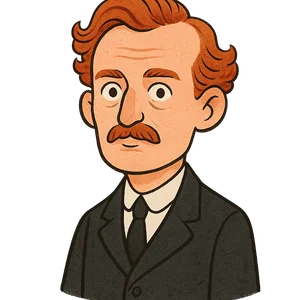
Edvard Munch was a Norwegian painter and printmaker whose emotionally charged work was a major influence on…
Reads at Grades 6–8 Listens at Grades 4–8
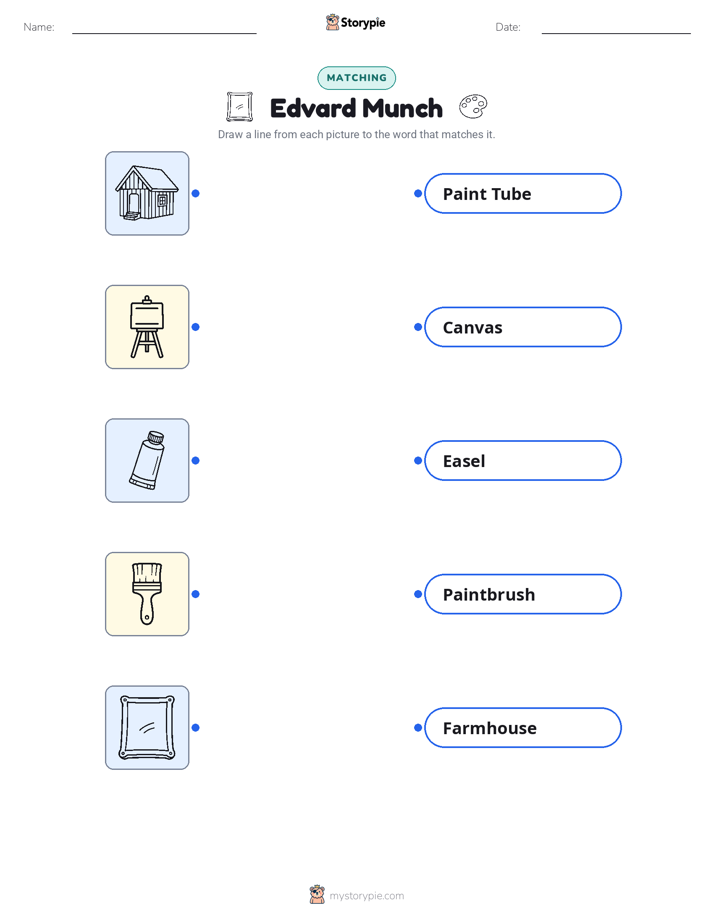
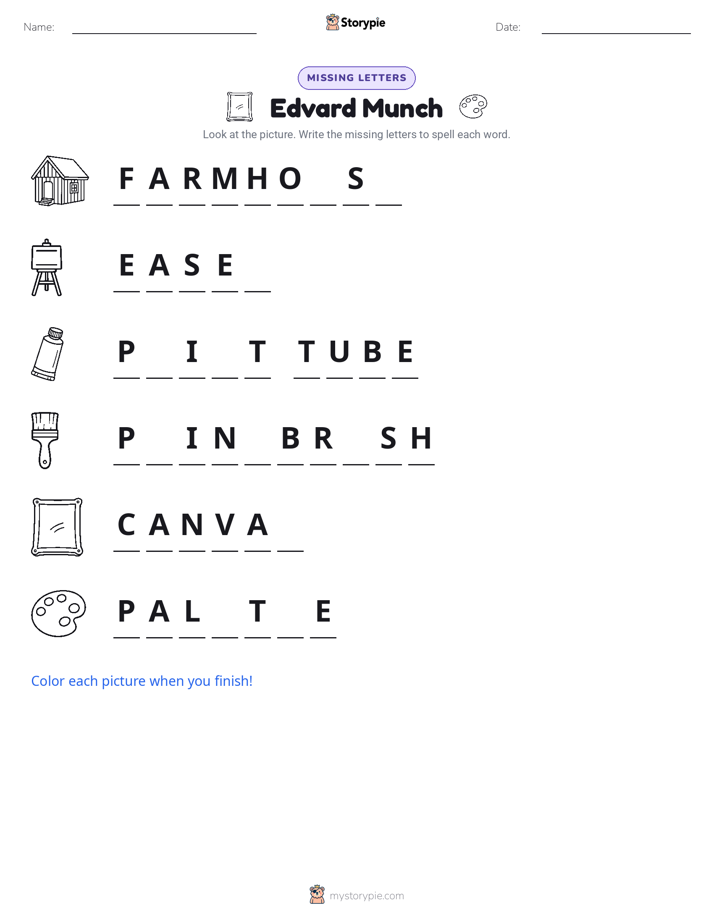
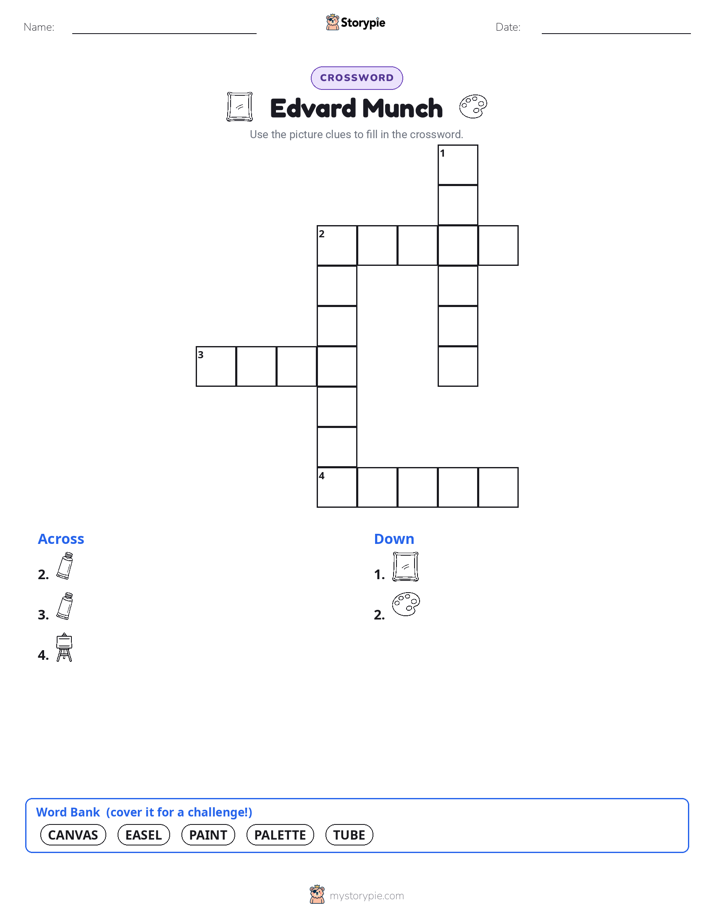
Print & create
Answer keys·No prep·Free with an account
28 worksheets · answer keys · full story · quiz · Ages 10-12 · CEFR B2
Plus adds 208,000+ more stories in 27 languages, audio for every one, and printables for all of them.
Just want Edvard Munch?
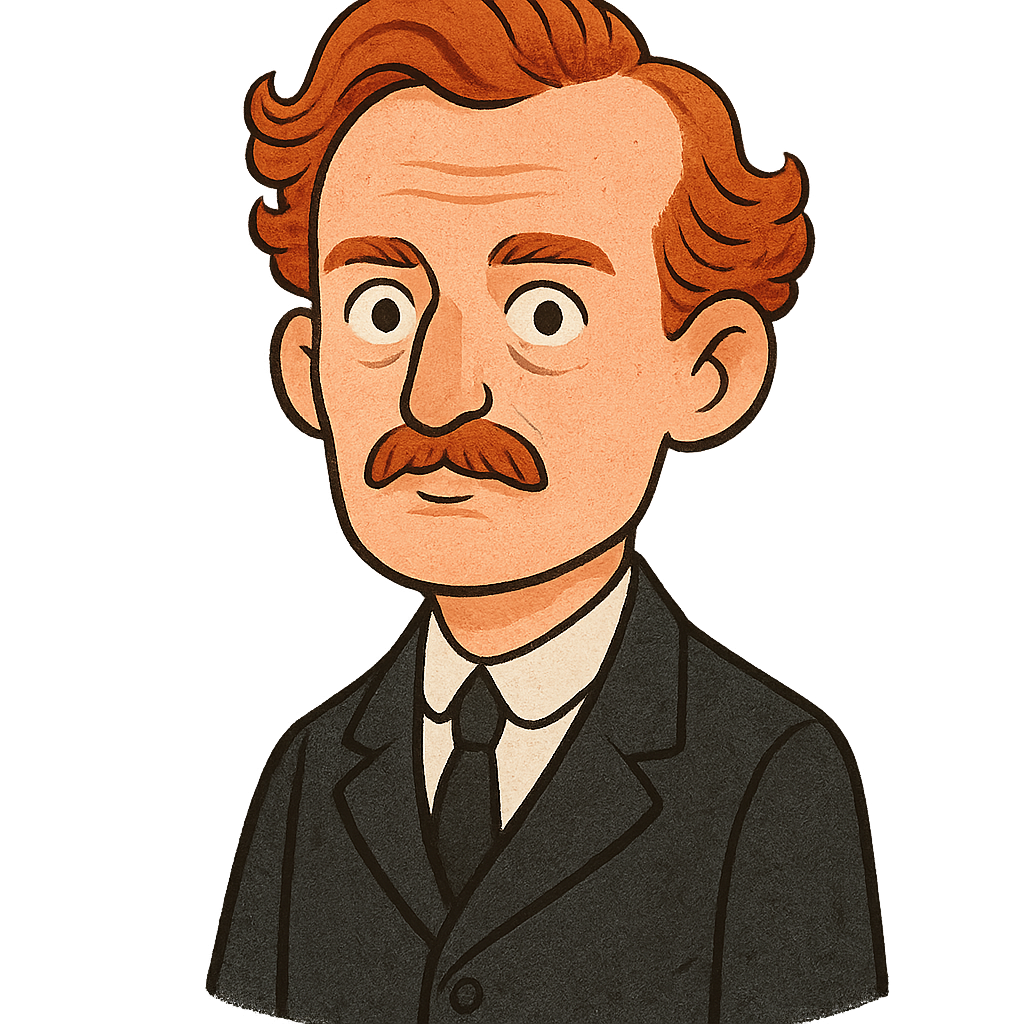
Hello, my name is Edvard Munch, and I am an artist known for painting the deep and powerful emotions of the human soul. I was born in a cozy farmhouse in a village called Løten, in Norway, on December 12th, 1863. From a very young age, I found comfort and expression in drawing. My family life was filled with a great deal of love, but it was also touched by profound sadness. When I was only five years old, in 1868, my dear mother passed away from illness. This was a deep wound for our family. Then, in 1877, my older sister Sophie, whom I adored, also grew very ill and left us. Experiencing these losses so early filled my heart with complex feelings. I began to understand that life was not just made of bright, happy moments but also had dark, sorrowful corners. It was then that I started to wonder how I could capture these powerful emotions—love, sadness, and worry—in my drawings and paintings.
My father, a practical man, hoped I would become an engineer, so in 1879, I dutifully enrolled in a technical college. However, my heart was not in the world of numbers and blueprints; it belonged to colors and canvases. All I truly wanted to do was paint. After a year of trying, I knew I had to be true to myself and follow my passion. In 1881, I made the bold decision to enroll at the Royal School of Art and Design in Kristiania, which you now know as Oslo. A few years later, in 1885, I had the opportunity to travel to Paris, France. The city was a whirlwind of artistic energy. I saw the work of the Impressionists, artists who masterfully painted light and fleeting moments. While I admired their skill, I knew my path was different. I didn't want to just paint what my eyes saw on the outside; my mission was to paint what my soul felt on the inside.
Edvard Munch: Painting the Soul
Hello, my name is Edvard Munch, and I am an artist known for painting the deep and powerful emotions of the human soul. I was born in a cozy farmhouse in a village called Løten, in Norway, on December 12th, 1863. From a very young age, I found comfort and expression in drawing. My family life was filled with a great deal of love, but it was also touched by profound sadness. When I was only five years old, in 1868, my dear mother passed away from illness. This was a deep wound for our family. Then, in 1877, my older sister Sophie, whom I adored, also grew very ill and left us. Experiencing these losses so early filled my heart with complex feelings. I began to understand that life was not just made of bright, happy moments but also had dark, sorrowful corners. It was then that I started to wonder how I could capture these powerful emotions—love, sadness, and worry—in my drawings and paintings.
My father, a practical man, hoped I would become an engineer, so in 1879, I dutifully enrolled in a technical college. However, my heart was not in the world of numbers and blueprints; it belonged to colors and canvases. All I truly wanted to do was paint. After a year of trying, I knew I had to be true to myself and follow my passion. In 1881, I made the bold decision to enroll at the Royal School of Art and Design in Kristiania, which you now know as Oslo. A few years later, in 1885, I had the opportunity to travel to Paris, France. The city was a whirlwind of artistic energy. I saw the work of the Impressionists, artists who masterfully painted light and fleeting moments. While I admired their skill, I knew my path was different. I didn't want to just paint what my eyes saw on the outside; my mission was to paint what my soul felt on the inside.
I dedicated myself to a collection of paintings I called 'The Frieze of Life.' This was my great project, a series of artworks that explored the universal experiences we all share: the joy of falling in love, the grip of anxiety, and the profound sadness of loss and saying goodbye. It was within this series that I created my most famous painting, one you may have seen before. It is called 'The Scream.' The idea for it came to me one evening in 1892, as I was walking along a path with two friends. The sun was setting, and it bathed the sky in a fiery, blood-red light. In that moment, I felt a great, silent scream passing through all of nature. I felt overwhelmed, small, and anxious. I knew I had to capture that intense feeling on canvas. In 1893, I painted the final version: the swirling, tormented sky, the ghostly figure with its hands pressed to its face, and the two distant figures walking away, preserving that moment of pure, raw emotion for all time.
Not everyone understood my art when I first began sharing it. In 1892, I was invited to exhibit my paintings in Berlin, Germany. The public was absolutely shocked. They were accustomed to seeing pretty, realistic paintings of landscapes and portraits. My art, filled with raw emotion, swirling colors, and sometimes unsettling figures, was completely new to them. Critics and viewers thought it was ugly, unfinished, and even disturbing. The exhibition caused such a scandal that it was forced to close after only one week. But a strange and wonderful thing happened. The scandal, which became known as the 'Munch Affair,' made me famous across Europe. It sparked a passionate debate about what art could be and what it should express. Unintentionally, I, along with other artists who felt the same way, was helping to start a new art movement called Expressionism, where the artist's inner feelings were more important than depicting external reality.
After the Berlin exhibition, the following years were a whirlwind of work, travel, and intense creation. Pouring all of my deep emotions into my art took a toll on me, and around 1908, I realized I needed to take time to rest and look after my health. Following this period of recovery, my artistic style shifted slightly, becoming a little more peaceful and colorful. In 1909, I made the decision to move back to my beloved homeland of Norway for good. I purchased a large and beautiful property called Ekely, located just outside of Oslo. It was there that I lived for the remainder of my life, surrounded by the Norwegian landscapes that I loved so much. Ekely became my sanctuary, a place where I could paint and create in my own world.
I lived to be 80 years old, passing away at my home in Ekely in 1944. Before my life ended, I made a very important decision that would shape my legacy. I gifted all of the artworks I still owned—thousands of paintings, drawings, and prints—to the city of Oslo. Because of this gift, a special museum, the Munch Museum, was opened in 1963 to house and share my life's work with the world. I hope that when people see my art, they feel a connection to the deep emotions that we all share as human beings. My goal was always to paint the human soul, and I hope that is what I am remembered for.
Wow facts
About
Edvard Munch was a Norwegian painter and printmaker whose emotionally charged work was a major influence on the Expressionist movement. He is best known for his iconic painting, The Scream.
Take a Quiz
Question 1 of 5
What was the initial reaction to Edvard Munch's 1892 Berlin exhibition, and what was the unexpected result?
Explore next





Want to do even more?
Go beyond exploring. Unlock tools that turn every story into real learning.

Storypie Plus for families
Full stories, quizzes, and printables. Nights and car rides, sorted.
- Unlimited audio stories
- Create Mode: your child stars in the story
- Offline downloads
- Printable worksheets & coloring pages

Why Storypie for Schools
Students engaged. Prep in seconds. Evenings back to you.
- Worksheets & Quizzes
- Classroom Management
- Formative Assessment
- Custom Curriculum & Lesson Plans
- 27 Languages

Why Storypie for Homeschool
Curriculum done. They'll ask for more. Hours back in your day.
- Worksheet Generator
- First-Person Audio Stories
- Built-in Comprehension Quizzes
- Custom Curriculum & Lesson Plans
- Print & Go Activities