English

Edvard Munch
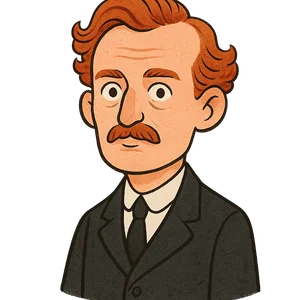
Edvard Munch was a Norwegian painter and printmaker whose emotionally charged work was a major influence on…
Reads at Grades 3–5 Listens at Grades 1–5
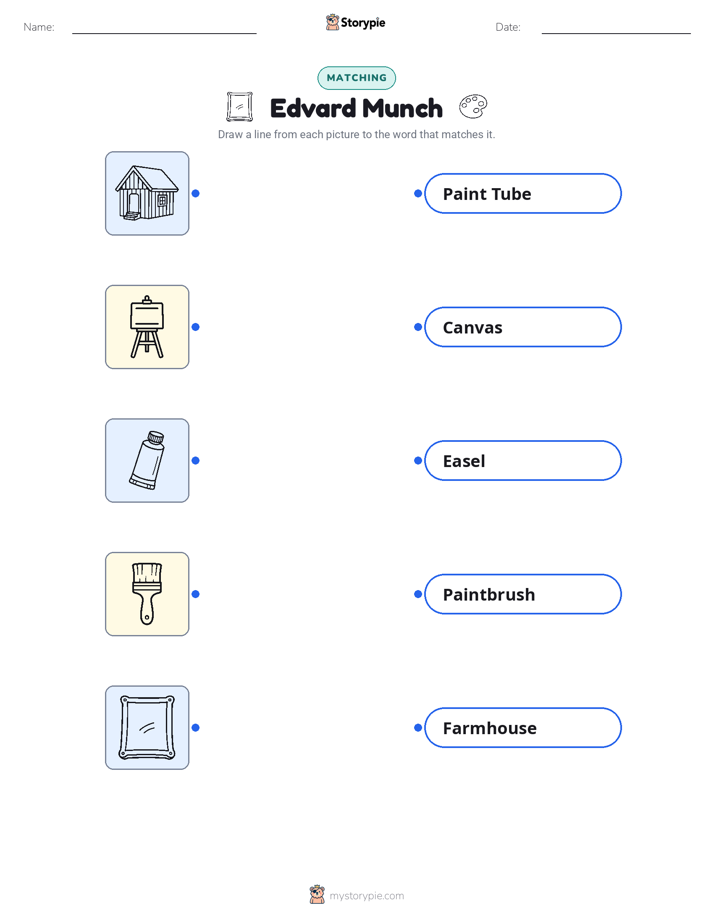
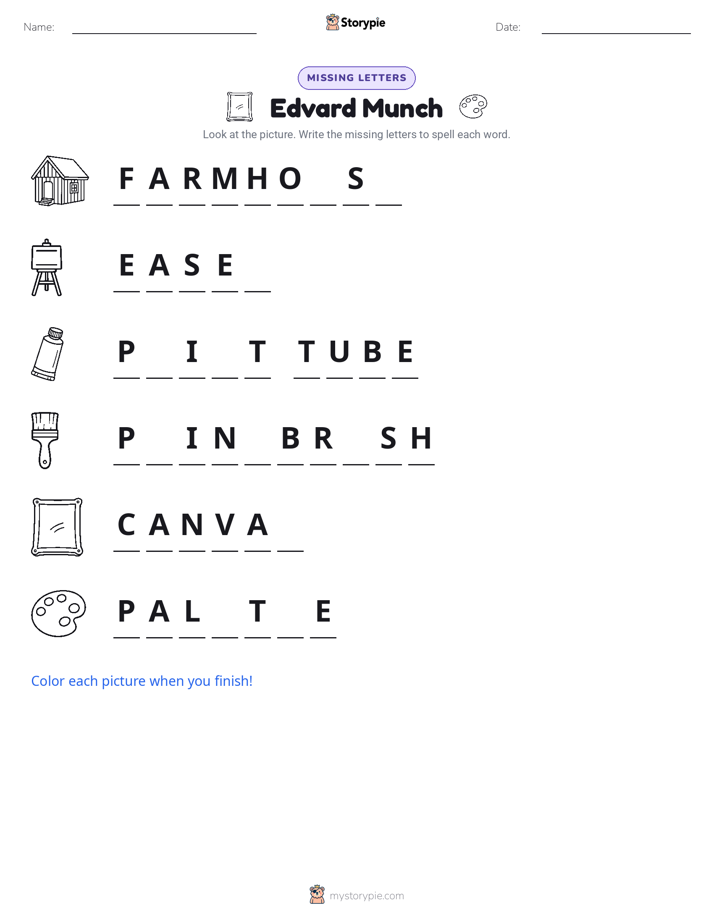
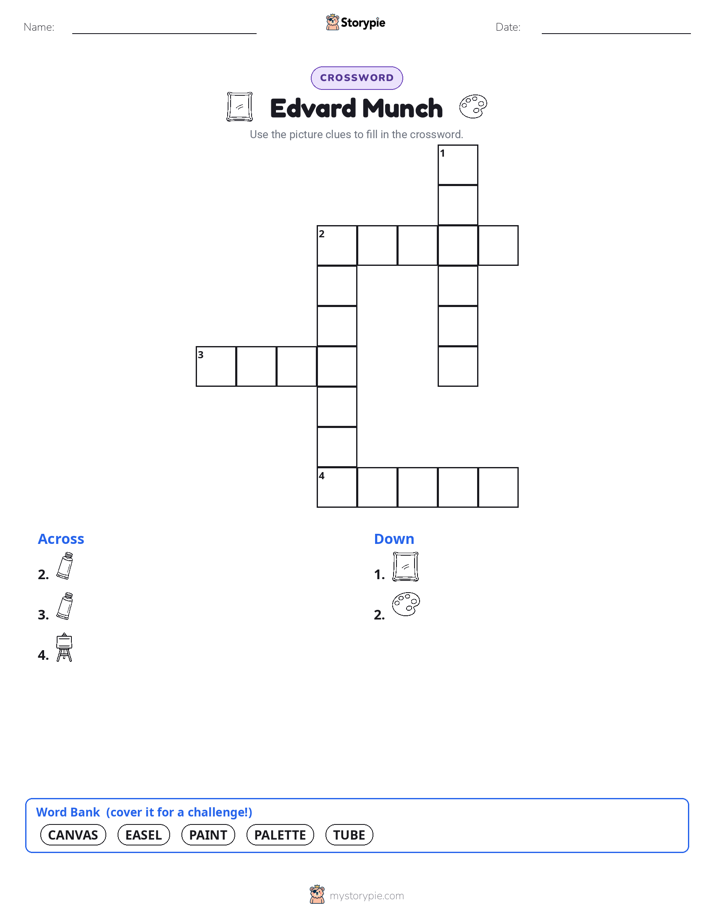
Print & create
Answer keys·No prep·Free with an account
28 worksheets · answer keys · full story · quiz · Ages 8-10 · CEFR B1
Plus adds 208,000+ more stories in 27 languages, audio for every one, and printables for all of them.
Just want Edvard Munch?
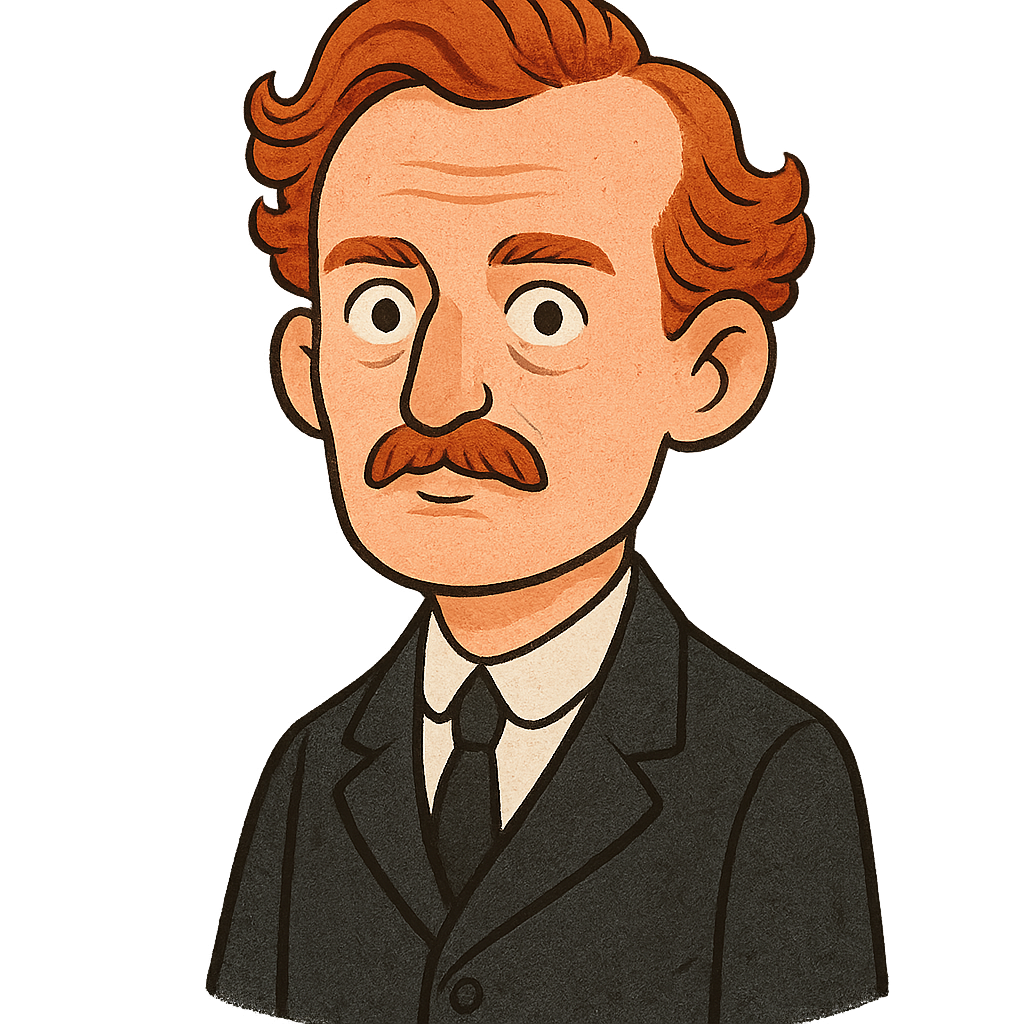
Hello, my name is Edvard Munch, and I am an artist who loved to paint the feelings deep inside my heart. I was born on a farm in the beautiful country of Norway on December 12th, 1863. From the time I was a little boy, I loved to draw. My pencil and paper were my best friends, and I would sketch everything I saw. My childhood, however, was not always full of sunshine. My dear mother and my older sister, Sophie, both became very ill and passed away when I was young. This filled my world with a deep sadness that I carried with me for a long time. Because of this, I didn't just want to paint pictures of what the world looked like on the outside. I felt a powerful need to create art that showed what the world felt like on the inside—all the joy, the worry, and the sorrow.
When I was a teenager, I first started to study to become an engineer, but my heart wasn't in it. By 1881, I knew that my true passion was art, and I decided to follow that dream. During the 1880s, I traveled to Paris, France, a city buzzing with creativity. There, I saw amazing paintings by artists who weren't afraid to use bold, bright colors and new styles that were completely different from the art I was used to. Seeing their bravery inspired me to be brave with my own work. In 1886, I created one of my first very important paintings, which I called 'The Sick Child.' It was my way of painting my memories and feelings about my sister Sophie. I wanted to show everyone that a painting could be more than just a pretty picture; it could hold powerful emotions and tell a story without using any words.
Edvard Munch: Painting My Feelings
Hello, my name is Edvard Munch, and I am an artist who loved to paint the feelings deep inside my heart. I was born on a farm in the beautiful country of Norway on December 12th, 1863. From the time I was a little boy, I loved to draw. My pencil and paper were my best friends, and I would sketch everything I saw. My childhood, however, was not always full of sunshine. My dear mother and my older sister, Sophie, both became very ill and passed away when I was young. This filled my world with a deep sadness that I carried with me for a long time. Because of this, I didn't just want to paint pictures of what the world looked like on the outside. I felt a powerful need to create art that showed what the world felt like on the inside—all the joy, the worry, and the sorrow.
When I was a teenager, I first started to study to become an engineer, but my heart wasn't in it. By 1881, I knew that my true passion was art, and I decided to follow that dream. During the 1880s, I traveled to Paris, France, a city buzzing with creativity. There, I saw amazing paintings by artists who weren't afraid to use bold, bright colors and new styles that were completely different from the art I was used to. Seeing their bravery inspired me to be brave with my own work. In 1886, I created one of my first very important paintings, which I called 'The Sick Child.' It was my way of painting my memories and feelings about my sister Sophie. I wanted to show everyone that a painting could be more than just a pretty picture; it could hold powerful emotions and tell a story without using any words.
I began working on a big project, a series of paintings I called 'The Frieze of Life.' This collection of art was all about the big, important feelings that every person experiences, like love, worry, and loss. My most famous painting, which you might have seen, came from this time. In 1893, I painted 'The Scream.' I can still remember the moment that inspired it. I was walking along a path with friends at sunset when the sky turned a fiery, blood-red. It felt as if a huge, silent scream was passing through all of nature, and I felt it in my soul. I had to paint that feeling. When I first showed my art, like at an exhibition in Berlin in 1892, some people were shocked. They had never seen paintings so full of raw, honest emotion. My art was different, and not everyone understood it at first.
After 1909, I moved back to Norway to live a quieter life. I found peace in painting the beautiful landscapes around me, from the snowy fields to the bright summer sun. But the world outside my home was changing. During a big war in Europe, some leaders in another country decided my art was 'degenerate,' which meant they thought it was bad or worthless simply because it was different. They even took my paintings out of museums. This worried me, and I wanted to make sure my life's work would be safe. I made a very important decision: I decided to give all of the art left in my studio—thousands of paintings, drawings, and prints—as a gift to the city of Oslo, the capital of Norway where I lived.
I lived to be 80 years old, passing away at my home in Norway on January 23rd, 1944. Because of my giant gift of art, the city of Oslo was able to open a special museum just for my work, called the Munch Museum. Today, people remember me as an artist who painted his heart and wasn't afraid to show his true feelings. My work shows that it's okay to have big, complicated emotions and that art can be a powerful and beautiful way to share what's deep inside all of us.
Wow facts
About
Edvard Munch was a Norwegian painter and printmaker whose emotionally charged work was a major influence on the Expressionist movement. He is best known for his iconic painting, The Scream.
Take a Quiz
Question 1 of 5
In the story, I say some people thought my art was 'degenerate.' What does the word 'degenerate' most likely mean in this context?
Explore next





Want to do even more?
Go beyond exploring. Unlock tools that turn every story into real learning.

Storypie Plus for families
Full stories, quizzes, and printables. Nights and car rides, sorted.
- Unlimited audio stories
- Create Mode: your child stars in the story
- Offline downloads
- Printable worksheets & coloring pages

Why Storypie for Schools
Students engaged. Prep in seconds. Evenings back to you.
- Worksheets & Quizzes
- Classroom Management
- Formative Assessment
- Custom Curriculum & Lesson Plans
- 27 Languages

Why Storypie for Homeschool
Curriculum done. They'll ask for more. Hours back in your day.
- Worksheet Generator
- First-Person Audio Stories
- Built-in Comprehension Quizzes
- Custom Curriculum & Lesson Plans
- Print & Go Activities