English

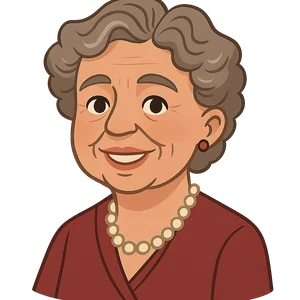
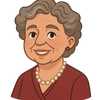
Eleanor Roosevelt
An American political figure, diplomat…
Reads at Grades 6–8 Listens at Grades 4–8
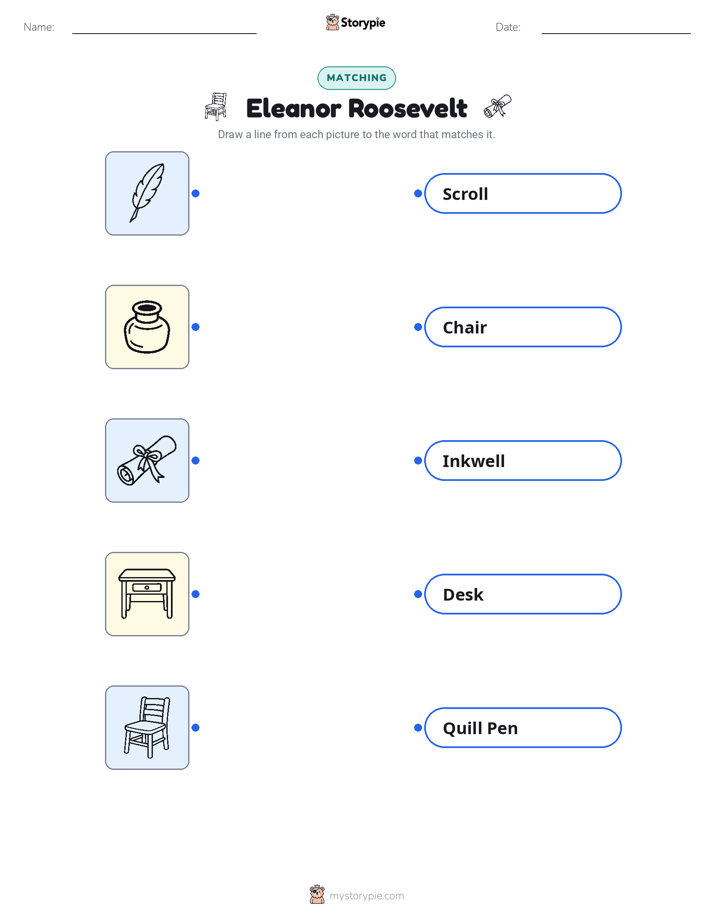
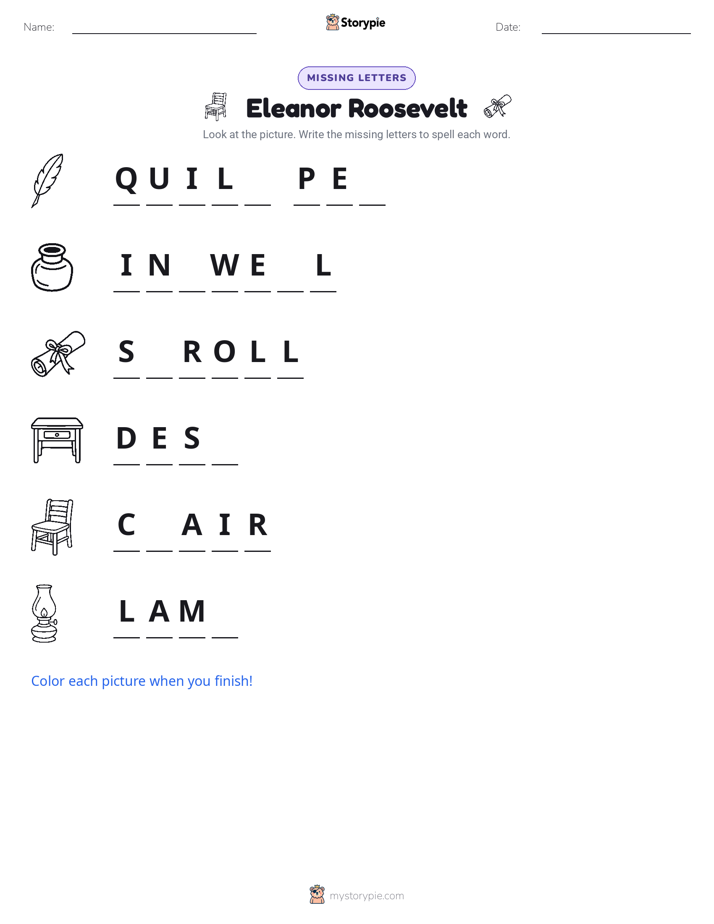
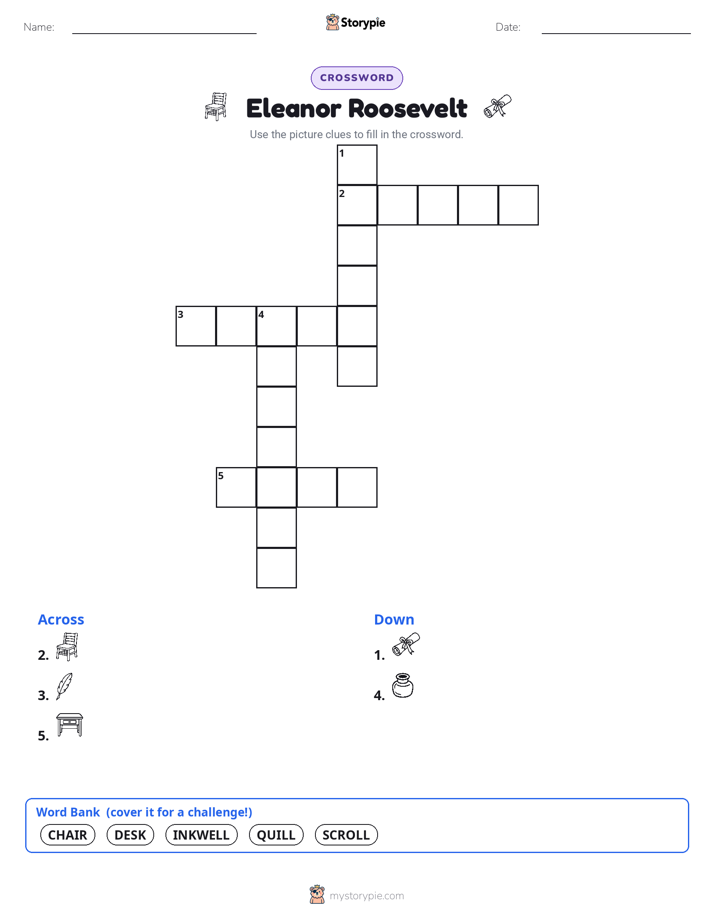
Print & create
Answer keys·No prep·Free with an account
28 worksheets · answer keys · full story · quiz · Ages 10-12 · CEFR B2
Plus adds 102,000+ more stories in 27 languages, audio for every one, and printables for all of them.
Just want Eleanor Roosevelt?
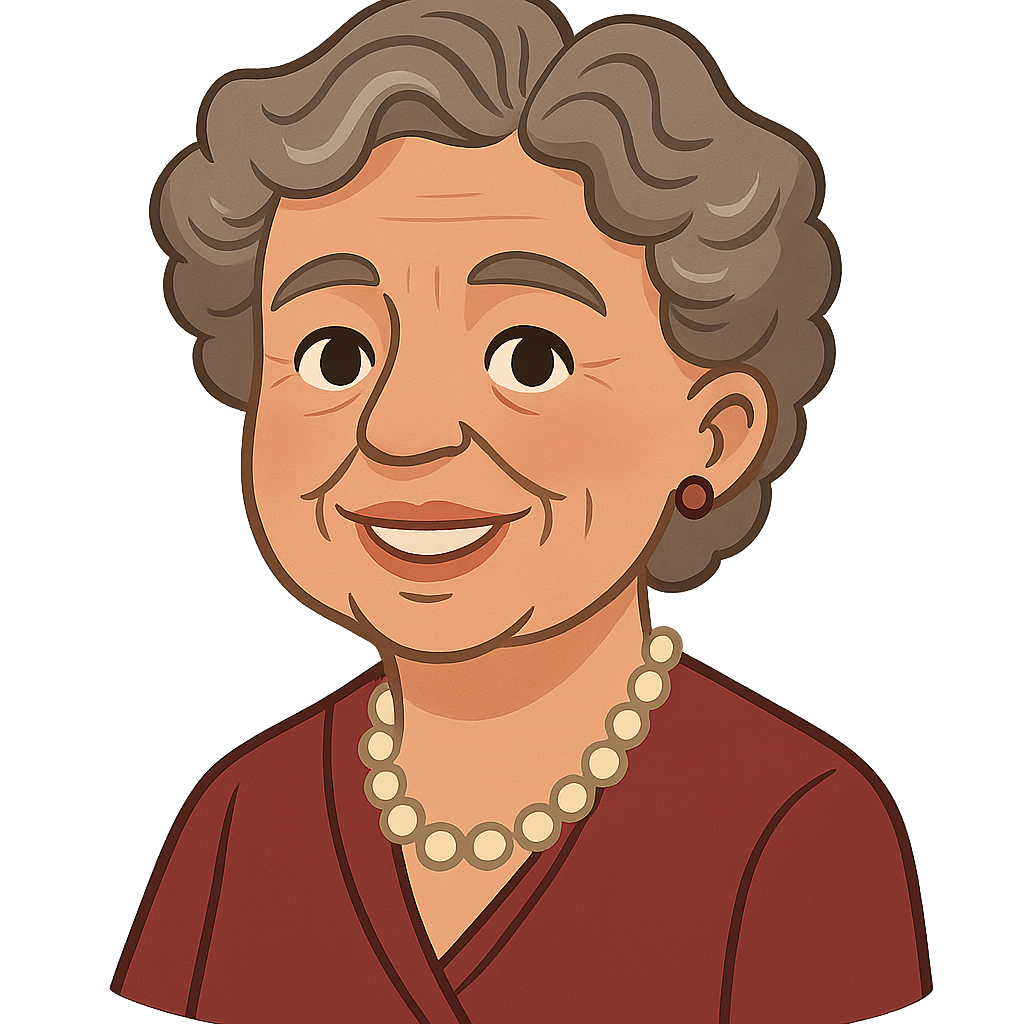
Hello, my name is Eleanor Roosevelt. I was born in New York City on October 11th, 1884. My early life was filled with quiet moments and a sense of unease. I was a very shy and serious girl, and I often felt quite lonely. My world changed dramatically when my mother passed away in 1892, followed by my dear father just two years later in 1894. After their deaths, I went to live with my grandmother. In that large house, I often felt like an 'ugly duckling,' as if I didn't quite belong anywhere. It was a challenging time where I was searching for my place in the world, unsure of what the future held for a quiet, awkward girl like me.
A turning point in my life came in 1899 when, at the age of fifteen, I was sent to Allenswood Academy, a school in England. The headmistress, Marie Souvestre, was a remarkable woman who saw a spark in me that I hadn't yet seen in myself. She challenged me to think critically, to ask questions, and to form my own opinions. For the first time, I felt that my ideas had value. I returned to the United States in 1902 with a newfound sense of confidence and purpose. A few years later, my life took another happy turn when I married my distant cousin, Franklin Delano Roosevelt, on March 17th, 1905. It was a special day, made even more memorable because my uncle, President Theodore Roosevelt, proudly walked me down the aisle.
Our life together took a sudden and difficult turn in 1921. My husband, Franklin, contracted polio, an illness that left him unable to walk easily. I knew his dreams of public service were far from over, and I was determined to help him continue his work. I became his 'eyes and ears,' traveling the country to places he could no longer easily visit. I would go into factories, schools, and down into coal mines, observing the conditions of American life and reporting everything back to him. When Franklin was elected president in 1932, I was prepared for my new role. We moved into the White House in 1933, and I decided I would not be a traditional First Lady. I wanted to use my position to be a voice for people who were often overlooked and unheard.
Eleanor Roosevelt
Hello, my name is Eleanor Roosevelt. I was born in New York City on October 11th, 1884. My early life was filled with quiet moments and a sense of unease. I was a very shy and serious girl, and I often felt quite lonely. My world changed dramatically when my mother passed away in 1892, followed by my dear father just two years later in 1894. After their deaths, I went to live with my grandmother. In that large house, I often felt like an 'ugly duckling,' as if I didn't quite belong anywhere. It was a challenging time where I was searching for my place in the world, unsure of what the future held for a quiet, awkward girl like me.
A turning point in my life came in 1899 when, at the age of fifteen, I was sent to Allenswood Academy, a school in England. The headmistress, Marie Souvestre, was a remarkable woman who saw a spark in me that I hadn't yet seen in myself. She challenged me to think critically, to ask questions, and to form my own opinions. For the first time, I felt that my ideas had value. I returned to the United States in 1902 with a newfound sense of confidence and purpose. A few years later, my life took another happy turn when I married my distant cousin, Franklin Delano Roosevelt, on March 17th, 1905. It was a special day, made even more memorable because my uncle, President Theodore Roosevelt, proudly walked me down the aisle.
Our life together took a sudden and difficult turn in 1921. My husband, Franklin, contracted polio, an illness that left him unable to walk easily. I knew his dreams of public service were far from over, and I was determined to help him continue his work. I became his 'eyes and ears,' traveling the country to places he could no longer easily visit. I would go into factories, schools, and down into coal mines, observing the conditions of American life and reporting everything back to him. When Franklin was elected president in 1932, I was prepared for my new role. We moved into the White House in 1933, and I decided I would not be a traditional First Lady. I wanted to use my position to be a voice for people who were often overlooked and unheard.
As First Lady, I served during two of the most challenging periods in American history: the Great Depression and World War II. I felt it was my duty to connect with the American people directly. I traveled thousands of miles across the nation to witness firsthand the hardships families were facing. To share what I was seeing and to discuss important social issues, I began writing a daily newspaper column called 'My Day' in 1935. Through my writing, I advocated for the rights of women, workers, and racial minorities. A moment that defined my commitment to justice occurred in 1939. The wonderfully talented African American singer, Marian Anderson, was denied the opportunity to perform at a large concert hall simply because of her race. I was deeply offended by this injustice. In protest, I resigned from the organization that made the decision and worked to arrange for her to sing at the Lincoln Memorial. Her performance before a huge, integrated crowd was a powerful statement for civil rights.
My husband Franklin’s presidency and life came to an end in 1945, just as World War II was concluding, but I knew my work was not finished. President Harry S. Truman appointed me as a delegate to the newly formed United Nations. It was an immense responsibility and a profound honor. At the UN, I served as the chairperson for the Commission on Human Rights. In this role, I had the privilege of helping to draft one of the most important documents of the 20th century: the Universal Declaration of Human Rights. This declaration, which was adopted by the UN on December 10th, 1948, proclaims that every person on Earth is born with fundamental rights and freedoms that must be protected by all nations.
I lived to be 78 years old, and my life was filled with purpose. For my work in human rights and diplomacy, I am often remembered as the 'First Lady of the World.' My greatest hope is that my story reminds you that it does not matter how you start in life. With courage and compassion, you can find your voice and use it to help build a world that is more just and fair for everyone.
Wow facts
About
An American political figure, diplomat, and activist who served as the longest-serving First Lady of the United States and later as a delegate to the United Nations, where she was instrumental in drafting the Universal Declaration of Human Rights.
Take a Quiz
Question 1 of 5
What does the story identify as the main turning point that helped Eleanor Roosevelt find her confidence?
Explore next



Want to do even more?
Go beyond exploring. Unlock tools that turn every story into real learning.

Storypie Plus for families
Full stories, quizzes, and printables. Nights and car rides, sorted.
- Unlimited audio stories
- Create Mode: your child stars in the story
- Offline downloads
- Printable worksheets & coloring pages

Why Storypie for Schools
Students engaged. Prep in seconds. Evenings back to you.
- Worksheets & Quizzes
- Classroom Management
- Formative Assessment
- Custom Curriculum & Lesson Plans
- 27 Languages

Why Storypie for Homeschool
Curriculum done. They'll ask for more. Hours back in your day.
- Worksheet Generator
- First-Person Audio Stories
- Built-in Comprehension Quizzes
- Custom Curriculum & Lesson Plans
- Print & Go Activities