English

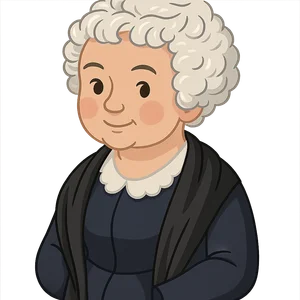
Elizabeth Cady Stanton
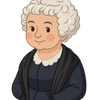
Elizabeth Cady Stanton was a leading figure of the early women's rights movement in the United States…
Reads at Grades 6–8 Listens at Grades 4–8
Print & create
Answer keys·No prep·Free with an account
28 worksheets · answer keys · full story · quiz · Ages 10-12 · CEFR B2
Plus adds 102,000+ more stories in 27 languages, audio for every one, and printables for all of them.
Just want Elizabeth Cady Stanton?
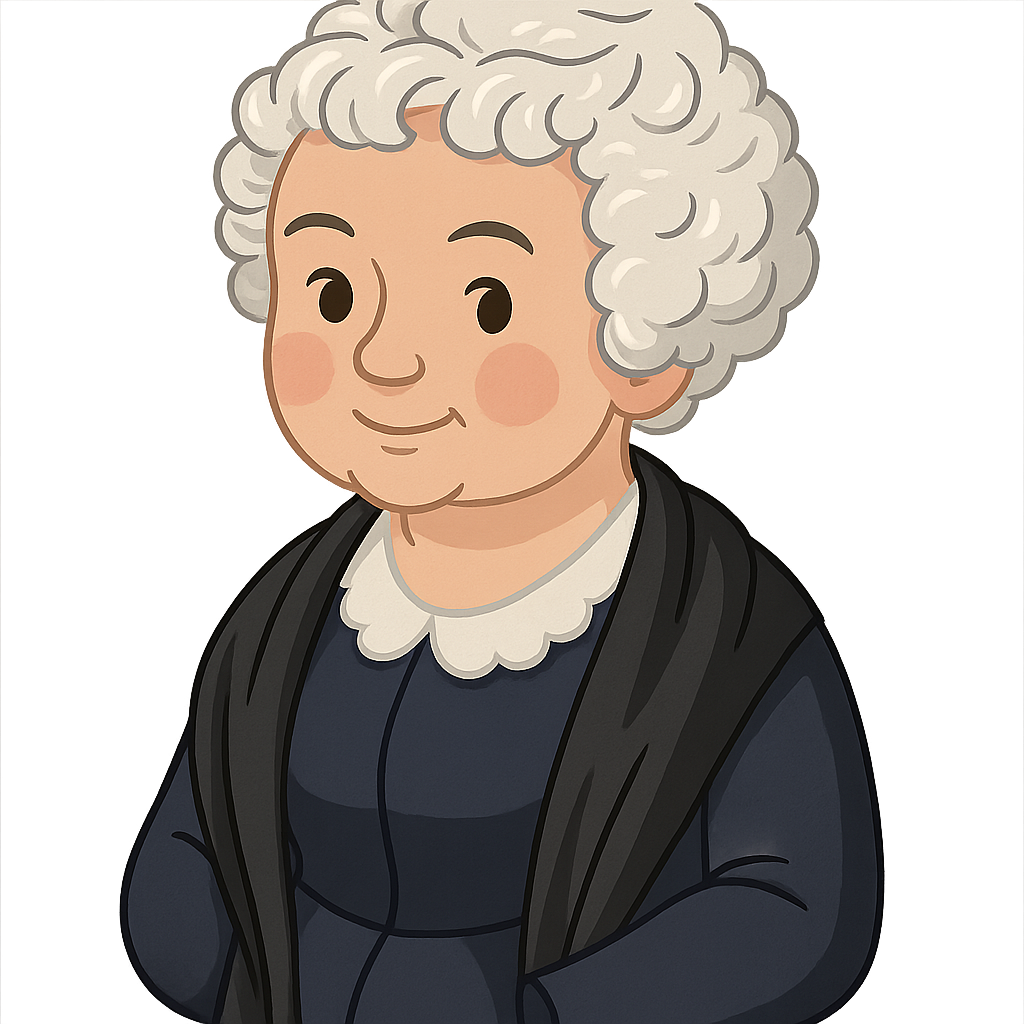
Hello, my name is Elizabeth Cady Stanton, and I want to tell you my story. I was born on November 12th, 1815, in Johnstown, New York. My father was a judge, and our home was filled with serious-looking law books. I spent many hours in his office listening to people discuss their problems, and I quickly realized that the laws were not fair, especially to women. I remember my father once told me he wished I had been born a boy. Those words stuck with me and lit a fire in my heart to prove that girls were just as capable as boys. I was fortunate to receive a good education at the Troy Female Seminary, where I graduated in 1832. I loved learning, but I knew I wanted to use my knowledge to change the world. In 1840, I married a wonderful man named Henry Stanton, who was an abolitionist—someone who worked to end slavery. For our wedding, I asked the minister to remove the promise for me to 'obey' my husband. I believed our marriage should be an equal partnership.
Right after our wedding in 1840, Henry and I traveled to London, England, for the World Anti-Slavery Convention. I was excited to join the fight against slavery, but when we arrived, the men in charge told the women delegates they were not allowed to speak or even sit with the men. I was furious. There, I met a kind Quaker woman named Lucretia Mott, who felt the same way. We sat together, hidden behind a curtain, and promised each other that when we returned to America, we would hold a convention to fight for the rights of women. A few years later, I was living in Seneca Falls, New York, raising my children. I loved my family, but I felt my world had become very small. I remembered my promise to Lucretia, and on July 19th and 20th, 1848, we held the very first women's rights convention in Seneca Falls. I wrote a document called the Declaration of Sentiments, which I modeled after the Declaration of Independence. In it, I listed all the ways women were treated unfairly and boldly demanded our rights as citizens—including the most shocking idea of all: the right to vote.
Elizabeth Cady Stanton: A Voice for Equality
Hello, my name is Elizabeth Cady Stanton, and I want to tell you my story. I was born on November 12th, 1815, in Johnstown, New York. My father was a judge, and our home was filled with serious-looking law books. I spent many hours in his office listening to people discuss their problems, and I quickly realized that the laws were not fair, especially to women. I remember my father once told me he wished I had been born a boy. Those words stuck with me and lit a fire in my heart to prove that girls were just as capable as boys. I was fortunate to receive a good education at the Troy Female Seminary, where I graduated in 1832. I loved learning, but I knew I wanted to use my knowledge to change the world. In 1840, I married a wonderful man named Henry Stanton, who was an abolitionist—someone who worked to end slavery. For our wedding, I asked the minister to remove the promise for me to 'obey' my husband. I believed our marriage should be an equal partnership.
Right after our wedding in 1840, Henry and I traveled to London, England, for the World Anti-Slavery Convention. I was excited to join the fight against slavery, but when we arrived, the men in charge told the women delegates they were not allowed to speak or even sit with the men. I was furious. There, I met a kind Quaker woman named Lucretia Mott, who felt the same way. We sat together, hidden behind a curtain, and promised each other that when we returned to America, we would hold a convention to fight for the rights of women. A few years later, I was living in Seneca Falls, New York, raising my children. I loved my family, but I felt my world had become very small. I remembered my promise to Lucretia, and on July 19th and 20th, 1848, we held the very first women's rights convention in Seneca Falls. I wrote a document called the Declaration of Sentiments, which I modeled after the Declaration of Independence. In it, I listed all the ways women were treated unfairly and boldly demanded our rights as citizens—including the most shocking idea of all: the right to vote.
In 1851, my life changed again when I met Susan B. Anthony. We became the best of friends and the strongest of partners. We liked to say that I forged the thunderbolts and she fired them. Because I was often at home raising my seven children, I would do the research and writing. I wrote speeches, articles, and petitions. Then, Susan, who was a brilliant organizer and speaker, would travel across the country to deliver the speeches and gather support. We worked together to end slavery during the Civil War, but we were deeply disappointed when the 14th and 15th Amendments gave the right to vote to Black men but not to any women. This was a painful moment, but it made us more determined. In 1869, Susan and I founded the National Woman Suffrage Association, or NWSA. Our goal was simple but enormous: to change the Constitution of the United States to give all women the right to vote.
I spent the rest of my life traveling, speaking, and writing. With Susan and others, I wrote the first volumes of a massive book called the History of Woman Suffrage to make sure the story of our struggle would never be forgotten. My ideas were not always popular, even within our own movement, because I believed women deserved more than just the vote—I believed we deserved complete equality in every part of society. I lived to be 86 years old, passing away in my home in New York City on October 26th, 1902. I did not live to see women win the right to vote, which finally happened with the 19th Amendment in 1920, eighteen years after my death. But I was never discouraged. I knew that the words I wrote, the speeches I crafted, and the conventions I organized had planted the seeds of change. My work helped inspire generations to continue the fight for fairness and equality, and that is a legacy I will forever be proud of.
Wow facts
About
Elizabeth Cady Stanton was a leading figure of the early women's rights movement in the United States, an author, and a primary organizer of the 1848 Seneca Falls Convention.
Take a Quiz
Question 1 of 5
In your own words, describe the partnership between Elizabeth Cady Stanton and Susan B. Anthony.
Explore next




Want to do even more?
Go beyond exploring. Unlock tools that turn every story into real learning.

Storypie Plus for families
Full stories, quizzes, and printables. Nights and car rides, sorted.
- Unlimited audio stories
- Create Mode: your child stars in the story
- Offline downloads
- Printable worksheets & coloring pages

Why Storypie for Schools
Students engaged. Prep in seconds. Evenings back to you.
- Worksheets & Quizzes
- Classroom Management
- Formative Assessment
- Custom Curriculum & Lesson Plans
- 27 Languages

Why Storypie for Homeschool
Curriculum done. They'll ask for more. Hours back in your day.
- Worksheet Generator
- First-Person Audio Stories
- Built-in Comprehension Quizzes
- Custom Curriculum & Lesson Plans
- Print & Go Activities