English

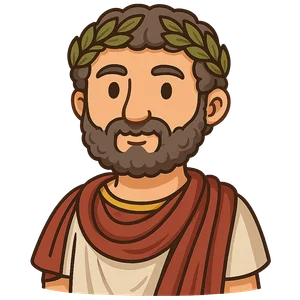
Emperor Hadrian
Roman emperor from 117 to 138 CE, known for his extensive travels…
Reads at Grades 6–8 Listens at Grades 4–8
Print & create
Answer keys·No prep·Free with an account
28 worksheets · answer keys · full story · quiz · Ages 10-12 · CEFR B2
Plus adds 244,000+ more stories in 27 languages, audio for every one, and printables for all of them.
Just want Emperor Hadrian?
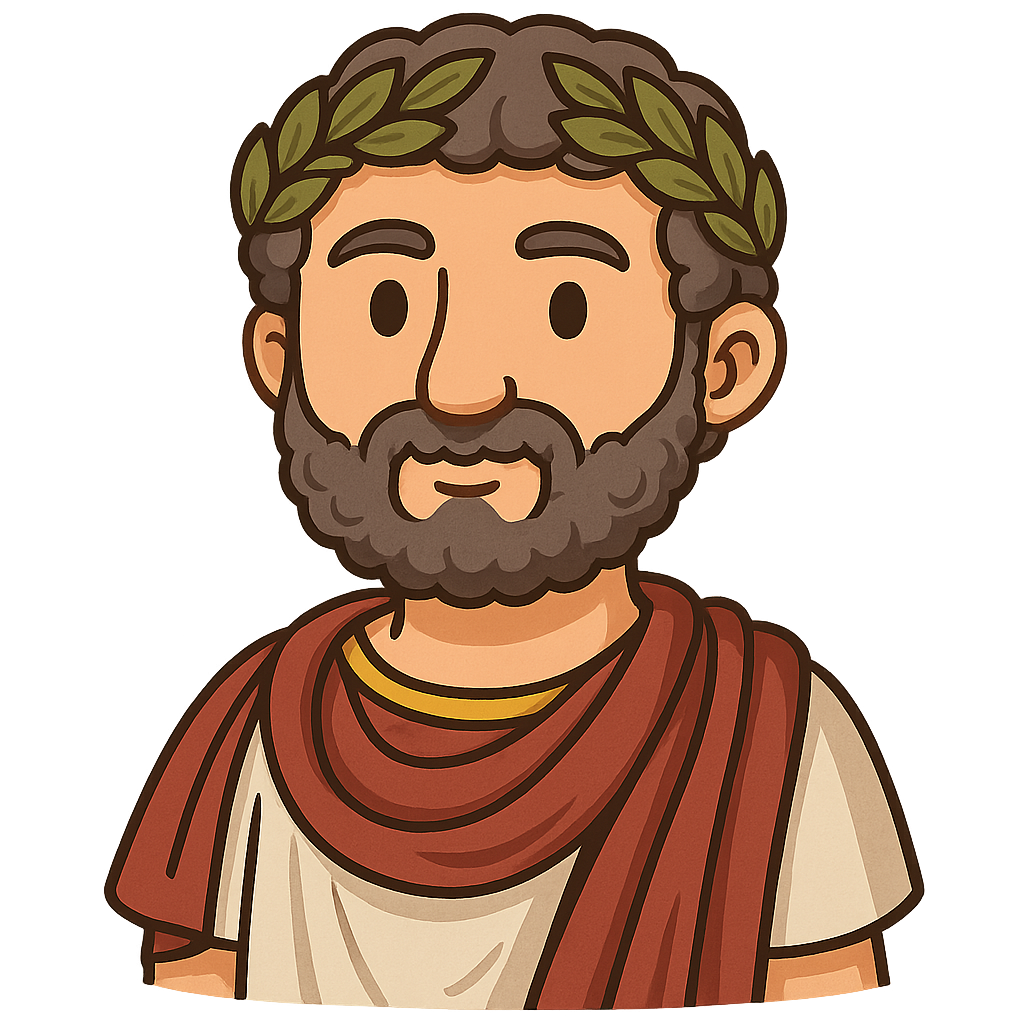
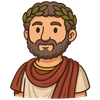
Greetings. My name is Publius Aelius Hadrianus, but you may know me simply as Hadrian. I was born on January 24th, 76 CE, in a Roman city called Italica, located in the province of Hispania, which is very far from the grand capital of Rome. Life in the provinces was different, but it was where my story began. My childhood took a difficult turn when both of my parents passed away around 85 CE, when I was only about ten years old. In that moment of loss, I was placed under the care of a cousin who would shape my entire future: a powerful and respected general named Trajan. I devoted myself to my studies, developing a great love for learning. I was especially fascinated by Greek culture—its philosophy, its art, and its literature. This passion was so well-known that I earned the nickname 'Graeculus,' which means 'Little Greek.' This deep education was more than just a hobby; it was the foundation that prepared me for a life of service to the Roman Empire.
As I grew older, I followed in Trajan's footsteps, building a career in service to Rome. I served in the army and held important positions in the government, learning how our vast empire was managed. Over the years, Trajan's own power grew until he became the emperor of Rome itself. I remained a trusted member of his circle. Then came the most important moment of my life. Just before he passed away, Emperor Trajan named me as his successor. On August 11th, 117 CE, I officially became the new emperor of the Roman Empire. My first major decision was a surprise to many. For centuries, Rome had been constantly expanding, conquering new lands. I decided to stop this. I believed it was far more important to strengthen and protect the lands we already controlled than to keep fighting for more. This idea of securing our borders, rather than endlessly expanding them, was very different from the emperors who came before me.
A Biography of Hadrian
Greetings. My name is Publius Aelius Hadrianus, but you may know me simply as Hadrian. I was born on January 24th, 76 CE, in a Roman city called Italica, located in the province of Hispania, which is very far from the grand capital of Rome. Life in the provinces was different, but it was where my story began. My childhood took a difficult turn when both of my parents passed away around 85 CE, when I was only about ten years old. In that moment of loss, I was placed under the care of a cousin who would shape my entire future: a powerful and respected general named Trajan. I devoted myself to my studies, developing a great love for learning. I was especially fascinated by Greek culture—its philosophy, its art, and its literature. This passion was so well-known that I earned the nickname 'Graeculus,' which means 'Little Greek.' This deep education was more than just a hobby; it was the foundation that prepared me for a life of service to the Roman Empire.
As I grew older, I followed in Trajan's footsteps, building a career in service to Rome. I served in the army and held important positions in the government, learning how our vast empire was managed. Over the years, Trajan's own power grew until he became the emperor of Rome itself. I remained a trusted member of his circle. Then came the most important moment of my life. Just before he passed away, Emperor Trajan named me as his successor. On August 11th, 117 CE, I officially became the new emperor of the Roman Empire. My first major decision was a surprise to many. For centuries, Rome had been constantly expanding, conquering new lands. I decided to stop this. I believed it was far more important to strengthen and protect the lands we already controlled than to keep fighting for more. This idea of securing our borders, rather than endlessly expanding them, was very different from the emperors who came before me.
I was not an emperor who was content to sit in a palace in Rome. I had a deep desire to see the empire with my own eyes, and so I began a series of journeys that would take up more than half of my 21-year reign. I traveled to nearly every province, from the hot deserts of the east to the forests of the north. I wanted to inspect the soldiers defending our frontiers, walk through the markets in bustling cities, and understand the needs of the diverse people under my rule. One of my most famous journeys took me to the cold, rainy province of Britannia. After seeing the northern frontier for myself, I made a major decision in 122 CE. I ordered the construction of a great wall to be built all the way across the land. This structure, which you now call Hadrian's Wall, was not just a barrier. It was designed to be a clear, permanent border for the Roman Empire, a place where we could manage trade with the northern tribes, and a powerful symbol of Roman strength and organization.
Beyond securing our borders, I had a great passion for architecture. I dreamed of creating buildings that would be so beautiful and well-engineered that they would last for centuries, long after I was gone. My most famous project was in Rome itself, where I oversaw the rebuilding of the Pantheon, a magnificent temple dedicated to all the Roman gods. Its most amazing feature was its huge, unsupported dome, which remains an architectural marvel. At the very top of the dome, we left a circular opening called an oculus, which allows a beam of sunlight to move through the temple during the day. We completed this masterpiece around 126 CE. My love for building didn't stop there. I also constructed a grand country home for myself, a villa at Tivoli, filled with pools and gardens. And to honor the culture I had loved since I was a boy, I funded the construction of new buildings in my favorite city, Athens, blending Roman power with Greek elegance.
In my later years, my focus turned to ensuring a peaceful future for the empire I had worked so hard to strengthen. To prevent any conflict over who would rule next, I carefully chose and adopted a wise and respected man named Antoninus Pius to be the emperor after me. I lived to be 62 years old and passed away on July 10th, 138 CE. My time as emperor is often remembered as a golden age of peace and stability for the Roman people. I am not remembered for great military conquests, but for the strong borders I secured, the many provinces I united through my travels, and the beautiful structures I built. My wall in Britannia and the Pantheon in Rome still stand today, reminders of a time when the Roman Empire chose to build and protect rather than only to conquer.
Wow facts
About
Roman emperor from 117 to 138 CE, known for his extensive travels, major building projects like Hadrian's Wall and the Pantheon, and for consolidating the empire's borders. He is considered one of the 'Five Good Emperors.'
Take a Quiz
Question 1 of 5
Why was Hadrian's decision to stop expanding the Roman Empire a significant change in policy?
Explore next


Want to do even more?
Go beyond exploring. Unlock tools that turn every story into real learning.

Storypie Plus for families
Full stories, quizzes, and printables. Nights and car rides, sorted.
- Unlimited audio stories
- Create Mode: your child stars in the story
- Offline downloads
- Printable worksheets & coloring pages

Why Storypie for Schools
Students engaged. Prep in seconds. Evenings back to you.
- Worksheets & Quizzes
- Classroom Management
- Formative Assessment
- Custom Curriculum & Lesson Plans
- 27 Languages

Why Storypie for Homeschool
Curriculum done. They'll ask for more. Hours back in your day.
- Worksheet Generator
- First-Person Audio Stories
- Built-in Comprehension Quizzes
- Custom Curriculum & Lesson Plans
- Print & Go Activities