English

Ernest Rutherford
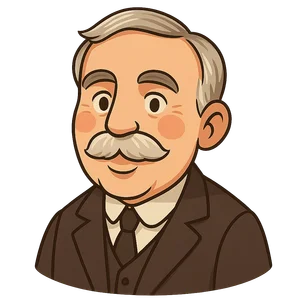
Ernest Rutherford was a New Zealand-born physicist who became known as the 'father of nuclear physics' for…
Reads at Grades 3–5 Listens at Grades 1–5
Print & create
Answer keys·No prep·Free with an account
28 worksheets · answer keys · full story · quiz · Ages 8-10 · CEFR B1
Plus adds 208,000+ more stories in 27 languages, audio for every one, and printables for all of them.
Just want Ernest Rutherford?
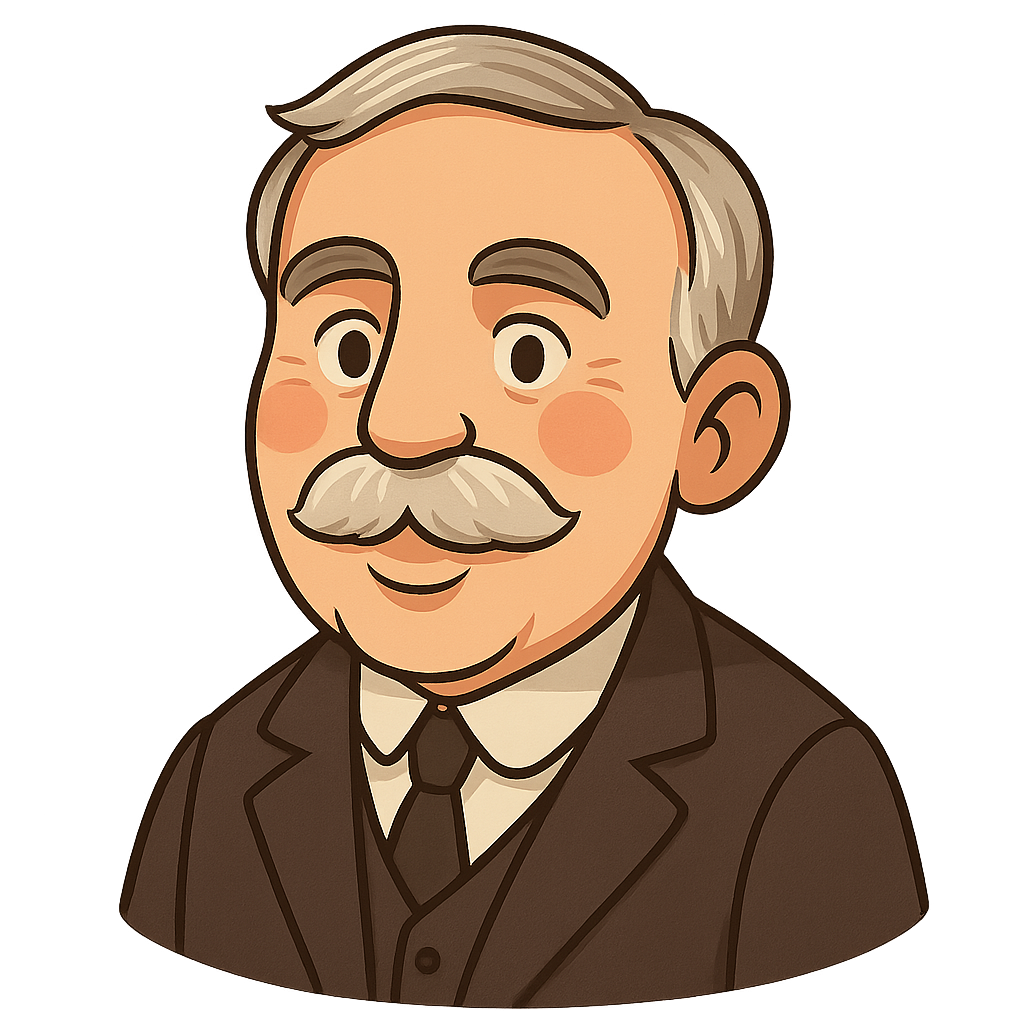
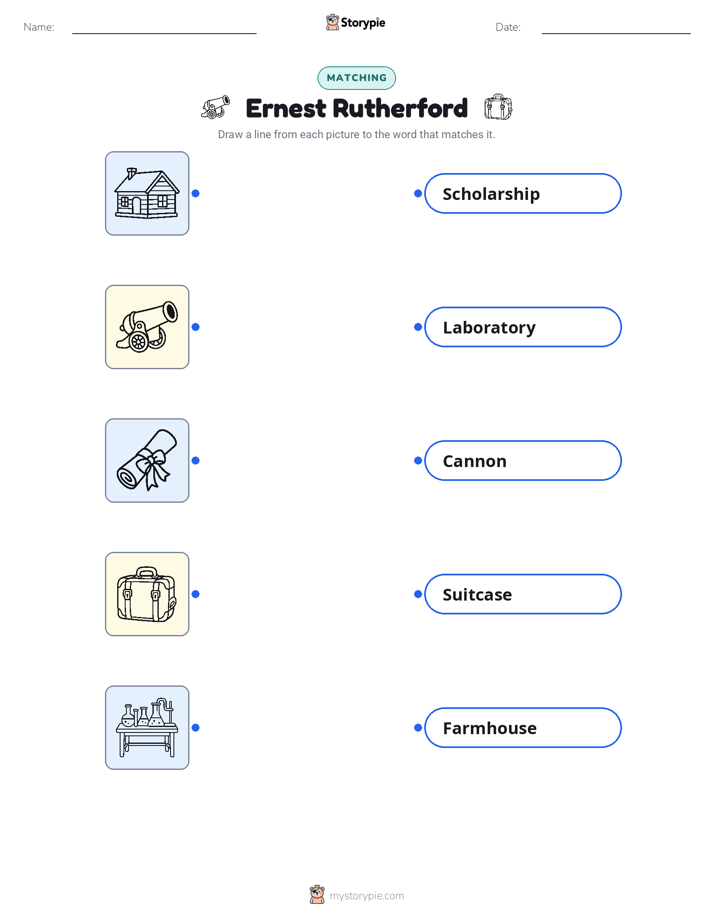
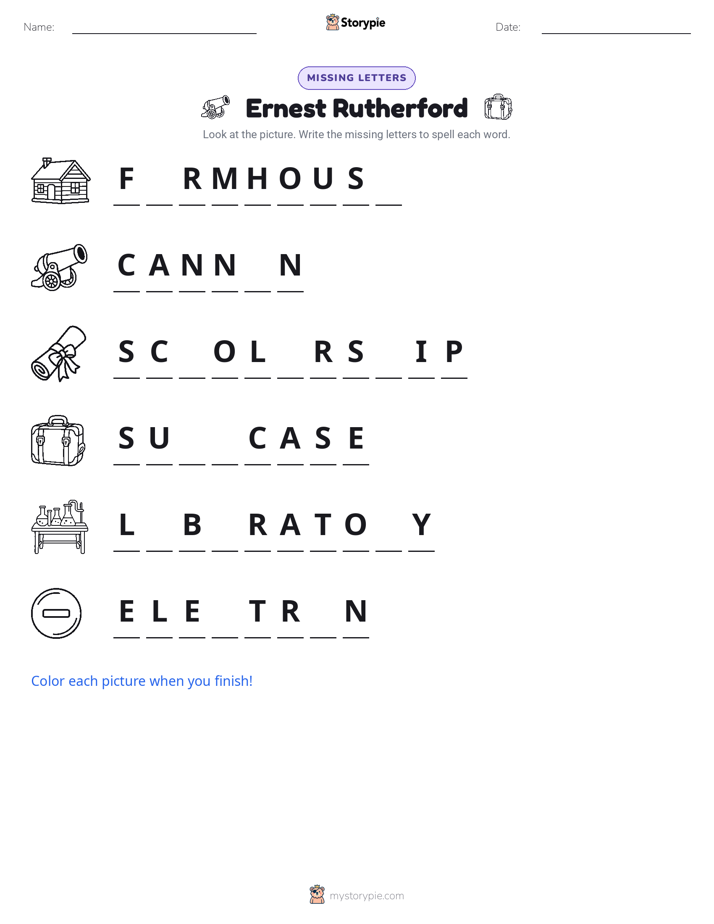
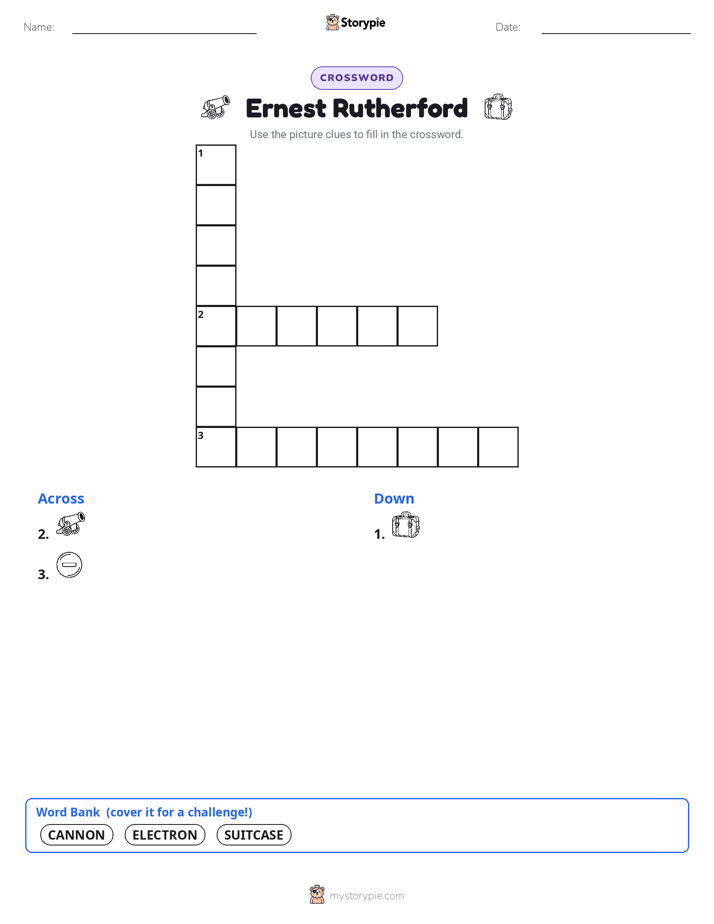
Hello! My name is Ernest Rutherford, and I want to tell you the story of how my curiosity helped me discover the tiny world inside the atom. I was born on August 30th, 1871, in a beautiful country called New Zealand. I grew up on a farm with my eleven brothers and sisters, so our home was always busy! I loved exploring and figuring out how things worked. When I was just a boy, I built my own cannon and was fascinated by science. My family didn't have much money, but my parents knew education was important. I worked hard in school and earned a scholarship in 1895 to travel all the way to England to study at the famous University of Cambridge. I couldn't wait to start my scientific adventure!
At Cambridge, I worked in a laboratory with a brilliant scientist named J.J. Thomson. It was an exciting time because scientists had just discovered something amazing called radioactivity—invisible energy that came from certain materials. I was fascinated by it. I started doing my own experiments to understand this mysterious energy. I found that it wasn't just one type of energy, but two! In 1899, I named them 'alpha' rays and 'beta' rays. Alpha rays were like tiny, positive particles, and beta rays were like even tinier, negative ones. It was like discovering two secret messengers coming from inside the atom. This discovery was a big clue that there was much more going on inside atoms than anyone had ever imagined.
In 1907, I moved to the University of Manchester to lead my own laboratory. This is where I did my most famous experiment, with the help of my students Hans Geiger and Ernest Marsden. We wanted to see what was inside an atom. So, between 1908 and 1913, we took a super-thin sheet of gold foil—thinner than a piece of paper—and fired those tiny alpha particles at it, like shooting tiny bullets. We expected them all to zip straight through. And most of them did! But something incredible happened: some of the particles bounced right back at us! I was completely shocked. I later said, 'It was almost as incredible as if you fired a 15-inch shell at a piece of tissue paper and it came back and hit you.' This surprising result meant there had to be something small, hard, and dense inside the atom.
Ernest Rutherford: Father of Nuclear Physics
Hello! My name is Ernest Rutherford, and I want to tell you the story of how my curiosity helped me discover the tiny world inside the atom. I was born on August 30th, 1871, in a beautiful country called New Zealand. I grew up on a farm with my eleven brothers and sisters, so our home was always busy! I loved exploring and figuring out how things worked. When I was just a boy, I built my own cannon and was fascinated by science. My family didn't have much money, but my parents knew education was important. I worked hard in school and earned a scholarship in 1895 to travel all the way to England to study at the famous University of Cambridge. I couldn't wait to start my scientific adventure!
At Cambridge, I worked in a laboratory with a brilliant scientist named J.J. Thomson. It was an exciting time because scientists had just discovered something amazing called radioactivity—invisible energy that came from certain materials. I was fascinated by it. I started doing my own experiments to understand this mysterious energy. I found that it wasn't just one type of energy, but two! In 1899, I named them 'alpha' rays and 'beta' rays. Alpha rays were like tiny, positive particles, and beta rays were like even tinier, negative ones. It was like discovering two secret messengers coming from inside the atom. This discovery was a big clue that there was much more going on inside atoms than anyone had ever imagined.
In 1907, I moved to the University of Manchester to lead my own laboratory. This is where I did my most famous experiment, with the help of my students Hans Geiger and Ernest Marsden. We wanted to see what was inside an atom. So, between 1908 and 1913, we took a super-thin sheet of gold foil—thinner than a piece of paper—and fired those tiny alpha particles at it, like shooting tiny bullets. We expected them all to zip straight through. And most of them did! But something incredible happened: some of the particles bounced right back at us! I was completely shocked. I later said, 'It was almost as incredible as if you fired a 15-inch shell at a piece of tissue paper and it came back and hit you.' This surprising result meant there had to be something small, hard, and dense inside the atom.
After thinking about that surprising experiment for a long time, I had a big idea. In 1911, I announced my discovery: the atom must have a tiny, positively charged center where most of its weight is packed. I called this center the nucleus. The rest of the atom, I explained, was mostly empty space with electrons flying around the nucleus, like planets orbiting the sun. This completely changed how everyone pictured the atom. For all my work with radioactivity and atoms, I was awarded the Nobel Prize in Chemistry in 1908. It was a great honor, but the thrill of discovery was always my biggest reward. Then, in 1917, I did something even more amazing—I became the first person to split the atom!
I spent the rest of my career teaching and leading other scientists, becoming the head of the same laboratory where I started in Cambridge in 1919. I lived to be 66 years old. My discoveries about the atom opened up a whole new world for science. They helped other scientists understand nuclear energy and are the reason we have things like nuclear power today. People often call me the 'father of nuclear physics,' and I am so proud that my endless curiosity helped uncover the powerful secrets hidden inside the tiny atom.
Wow facts
About
Ernest Rutherford was a New Zealand-born physicist who became known as the 'father of nuclear physics' for his discovery of the atomic nucleus and for being the first person to split the atom.
Take a Quiz
Question 1 of 5
In the story, I said the result of the gold foil experiment was 'incredible.' What does the word 'incredible' mean in that sentence?
Explore next





Want to do even more?
Go beyond exploring. Unlock tools that turn every story into real learning.

Storypie Plus for families
Full stories, quizzes, and printables. Nights and car rides, sorted.
- Unlimited audio stories
- Create Mode: your child stars in the story
- Offline downloads
- Printable worksheets & coloring pages

Why Storypie for Schools
Students engaged. Prep in seconds. Evenings back to you.
- Worksheets & Quizzes
- Classroom Management
- Formative Assessment
- Custom Curriculum & Lesson Plans
- 27 Languages

Why Storypie for Homeschool
Curriculum done. They'll ask for more. Hours back in your day.
- Worksheet Generator
- First-Person Audio Stories
- Built-in Comprehension Quizzes
- Custom Curriculum & Lesson Plans
- Print & Go Activities