English

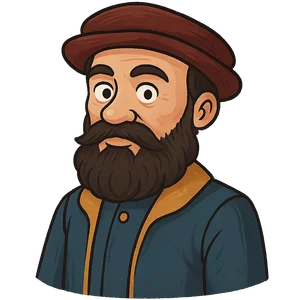
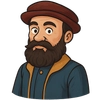
Ferdinand Magellan
A Portuguese explorer who organized the Spanish expedition to the East Indies from 1519 to 1522…
Reads at Grades 6–8 Listens at Grades 4–8
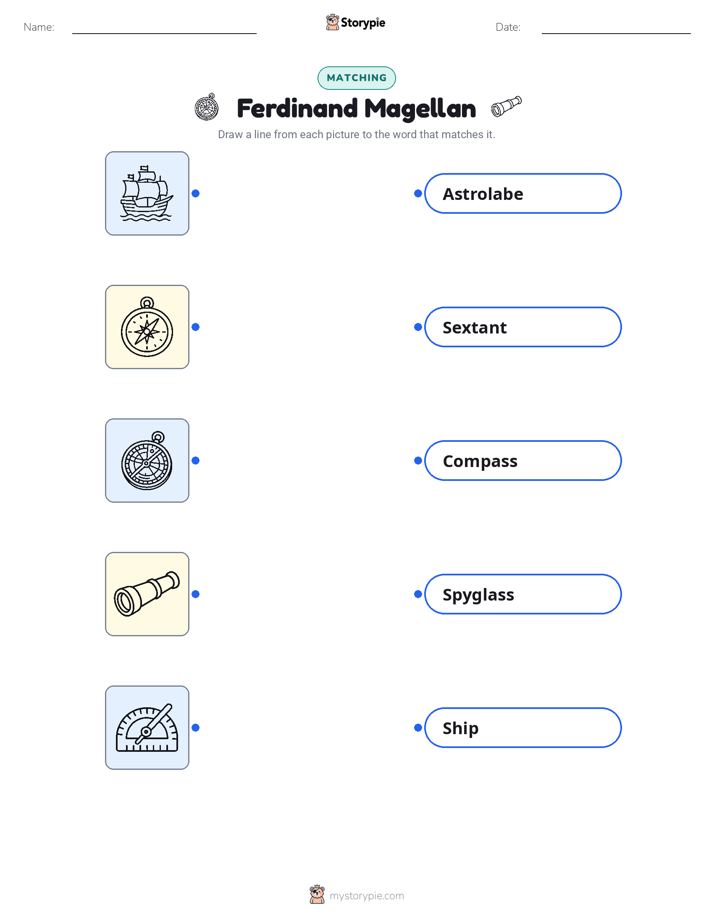
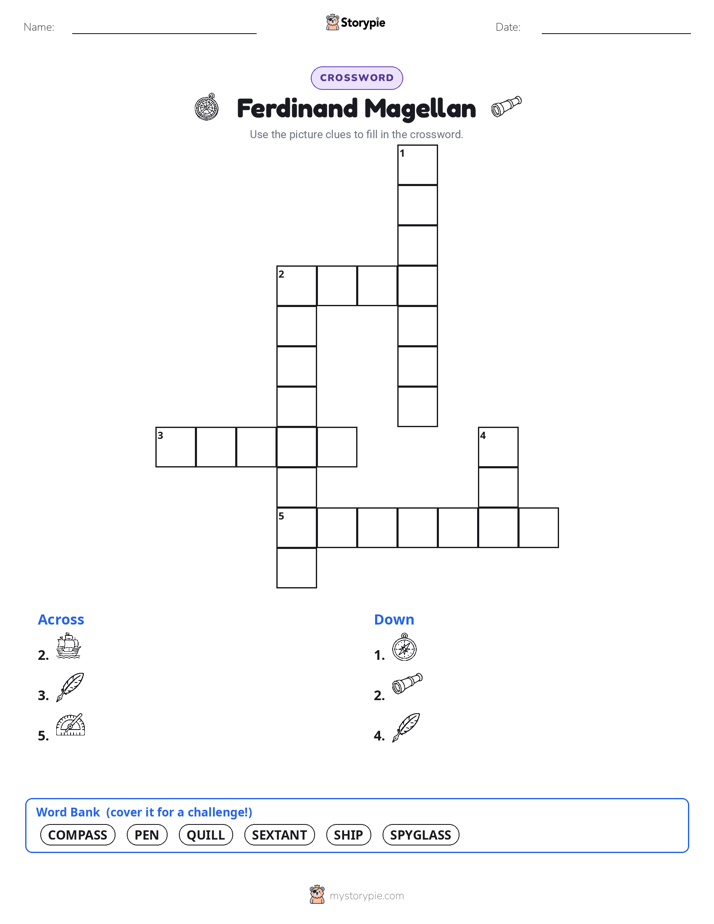
Print & create
Answer keys·No prep·Free with an account
28 worksheets · answer keys · full story · quiz · Ages 10-12 · CEFR B2
Plus adds 102,000+ more stories in 27 languages, audio for every one, and printables for all of them.
Just want Ferdinand Magellan?
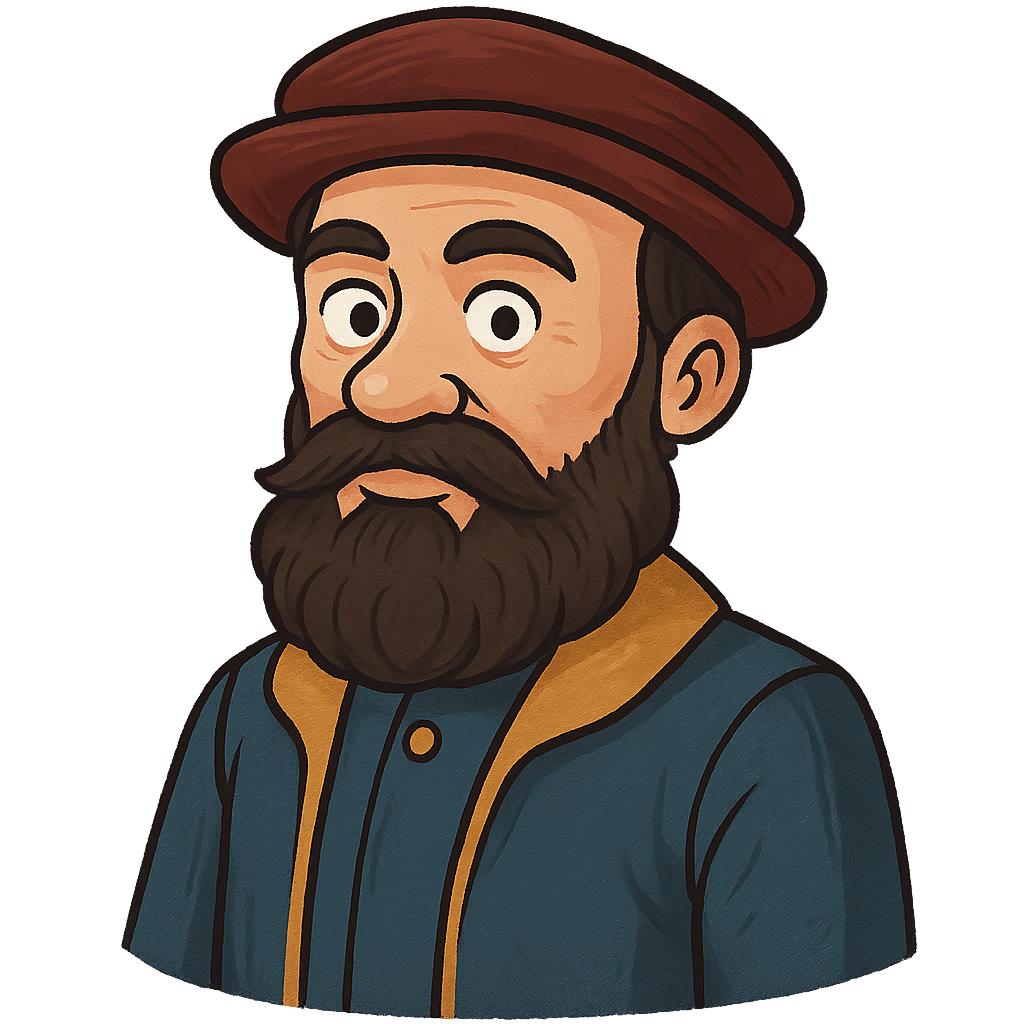
Hello, my name is Ferdinand Magellan, and I am known for leading the first expedition to sail all the way around the world. I was born around the year 1480 in a small town in Portugal. My world was one of discovery, and from a young age, I was drawn to the sea. I served as a page in the royal court in Lisbon, a bustling hub where I heard incredible stories about explorers searching for new sea routes to faraway lands filled with riches. These tales sparked a fire in me. In 1505, when I was a young man, I joined my first voyage, sailing for the Portuguese king to India. For years, I served in the East, participating in battles and learning the complex art of navigation. It was during this time that I became obsessed with the idea of reaching the valuable Spice Islands, known as the Moluccas, which were the source of rare and expensive spices like cloves and nutmeg.
I developed a bold idea that went against the common thinking of the time. While most explorers sailed east to reach the Spice Islands, I was convinced that the world was round. Therefore, I believed I could reach the East by sailing west, across the vast and unknown Atlantic Ocean. I presented my plan to the king of Portugal, but he was not interested and dismissed my theory. Unwilling to give up, I made a life-changing decision. In 1517, I moved to Spain to seek support from their young king, Charles I. To my relief, he was fascinated by my ambitious plan. In 1518, the king agreed to fund my expedition, giving me five ships and a crew to make the voyage a reality. My fleet consisted of the Trinidad, my flagship, along with the San Antonio, Concepción, Victoria, and Santiago. We were finally ready to test my theory and find a new path to the riches of the East.
Ferdinand Magellan: A Voyage Around the World
Hello, my name is Ferdinand Magellan, and I am known for leading the first expedition to sail all the way around the world. I was born around the year 1480 in a small town in Portugal. My world was one of discovery, and from a young age, I was drawn to the sea. I served as a page in the royal court in Lisbon, a bustling hub where I heard incredible stories about explorers searching for new sea routes to faraway lands filled with riches. These tales sparked a fire in me. In 1505, when I was a young man, I joined my first voyage, sailing for the Portuguese king to India. For years, I served in the East, participating in battles and learning the complex art of navigation. It was during this time that I became obsessed with the idea of reaching the valuable Spice Islands, known as the Moluccas, which were the source of rare and expensive spices like cloves and nutmeg.
I developed a bold idea that went against the common thinking of the time. While most explorers sailed east to reach the Spice Islands, I was convinced that the world was round. Therefore, I believed I could reach the East by sailing west, across the vast and unknown Atlantic Ocean. I presented my plan to the king of Portugal, but he was not interested and dismissed my theory. Unwilling to give up, I made a life-changing decision. In 1517, I moved to Spain to seek support from their young king, Charles I. To my relief, he was fascinated by my ambitious plan. In 1518, the king agreed to fund my expedition, giving me five ships and a crew to make the voyage a reality. My fleet consisted of the Trinidad, my flagship, along with the San Antonio, Concepción, Victoria, and Santiago. We were finally ready to test my theory and find a new path to the riches of the East.
On September 20th, 1519, my fleet of five ships and about 270 men set sail from Spain, heading out into the vast, open ocean. The journey across the Atlantic was long and arduous. As we sailed down the coast of South America searching for a passage to the west, the weather grew intensely cold, and our food supplies began to dwindle. The difficult conditions tested the will of my crew. Some of my Spanish captains and their men lost hope and started a mutiny against me in April of 1520, attempting to take control of the fleet and turn back. I had to act decisively to regain command and keep our mission alive. After weathering that crisis, we faced another when one of our ships, the Santiago, was lost in a storm. Despite these setbacks, we pressed on, and in October 1520, we finally found a waterway cutting through the continent. It was a treacherous and winding passage that took us 38 days to navigate, but it led us out of the Atlantic. Today, that waterway is called the Strait of Magellan in my honor.
In November 1520, we emerged from the storm-tossed strait into a huge, calm body of water. The sea was so remarkably still and gentle that I named it the 'Mar Pacífico,' which means the 'Peaceful Sea,' or the Pacific Ocean. We had no idea how massive this ocean truly was. We sailed for 99 days without seeing a speck of land. It was a brutal test of endurance. We ran out of fresh food and water, forced to eat leather and drink foul water to survive. Many of my men grew terribly sick with scurvy, a disease caused by a lack of vitamin C. It was one of the most challenging parts of our entire journey. At last, in March of 1521, we reached the island of Guam, where we could finally rest and resupply. A little later, we sailed on to a group of islands that would one day be known as the Philippines.
In the Philippines, I managed to establish friendly relations with some of the local rulers and even converted some of them to Christianity. However, I soon became involved in a local conflict between them. I believed that I could help my new allies by using our superior European weapons to defeat a rival chieftain named Lapulapu, who ruled the nearby island of Mactan. On April 27th, 1521, I led a small force of my men ashore to confront him and his warriors. I had underestimated their strength and fighting skill. We were badly outnumbered, and the battle turned against us. During the fighting on the beach, I was struck by a spear and killed. My personal journey ended there on that island, but the mission I had started was not yet over.
After my death, my remaining crew knew they had to continue the voyage. Under the command of Juan Sebastián Elcano, the last of my ships, the Victoria, sailed on. They crossed the vast Indian Ocean, rounded the tip of Africa, and finally made their way back to Spain on September 6th, 1522, nearly three years after we had departed. Only 18 of the original 270 crew members survived the incredible journey, but they had achieved the impossible. They had completed the first circumnavigation of the Earth. I was about 41 years old when I died, but my expedition proved that the world was round, revealed the true vastness of the Pacific Ocean, and forever changed our understanding of the globe. My story shows that even when a journey is difficult, the discoveries made along the way can change the world.
Wow facts
About
A Portuguese explorer who organized the Spanish expedition to the East Indies from 1519 to 1522, resulting in the first circumnavigation of the Earth, which was completed by Juan Sebastián Elcano after Magellan's death.
Take a Quiz
Question 1 of 5
What was the main goal of Ferdinand Magellan's expedition when it began in 1519?
Explore next



Want to do even more?
Go beyond exploring. Unlock tools that turn every story into real learning.

Storypie Plus for families
Full stories, quizzes, and printables. Nights and car rides, sorted.
- Unlimited audio stories
- Create Mode: your child stars in the story
- Offline downloads
- Printable worksheets & coloring pages

Why Storypie for Schools
Students engaged. Prep in seconds. Evenings back to you.
- Worksheets & Quizzes
- Classroom Management
- Formative Assessment
- Custom Curriculum & Lesson Plans
- 27 Languages

Why Storypie for Homeschool
Curriculum done. They'll ask for more. Hours back in your day.
- Worksheet Generator
- First-Person Audio Stories
- Built-in Comprehension Quizzes
- Custom Curriculum & Lesson Plans
- Print & Go Activities