English

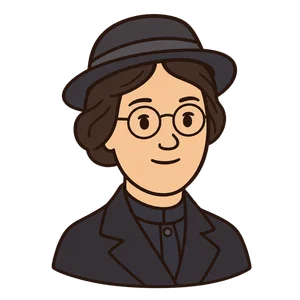
Frances Perkins
Frances Perkins was the U.S.
Reads at Grades 6–8 Listens at Grades 4–8
Print & create
Answer keys·No prep·Free with an account
28 worksheets · answer keys · full story · quiz · Ages 10-12 · CEFR B2
Plus adds 290,000+ more stories in 27 languages, audio for every one, and printables for all of them.
Just want Frances Perkins?
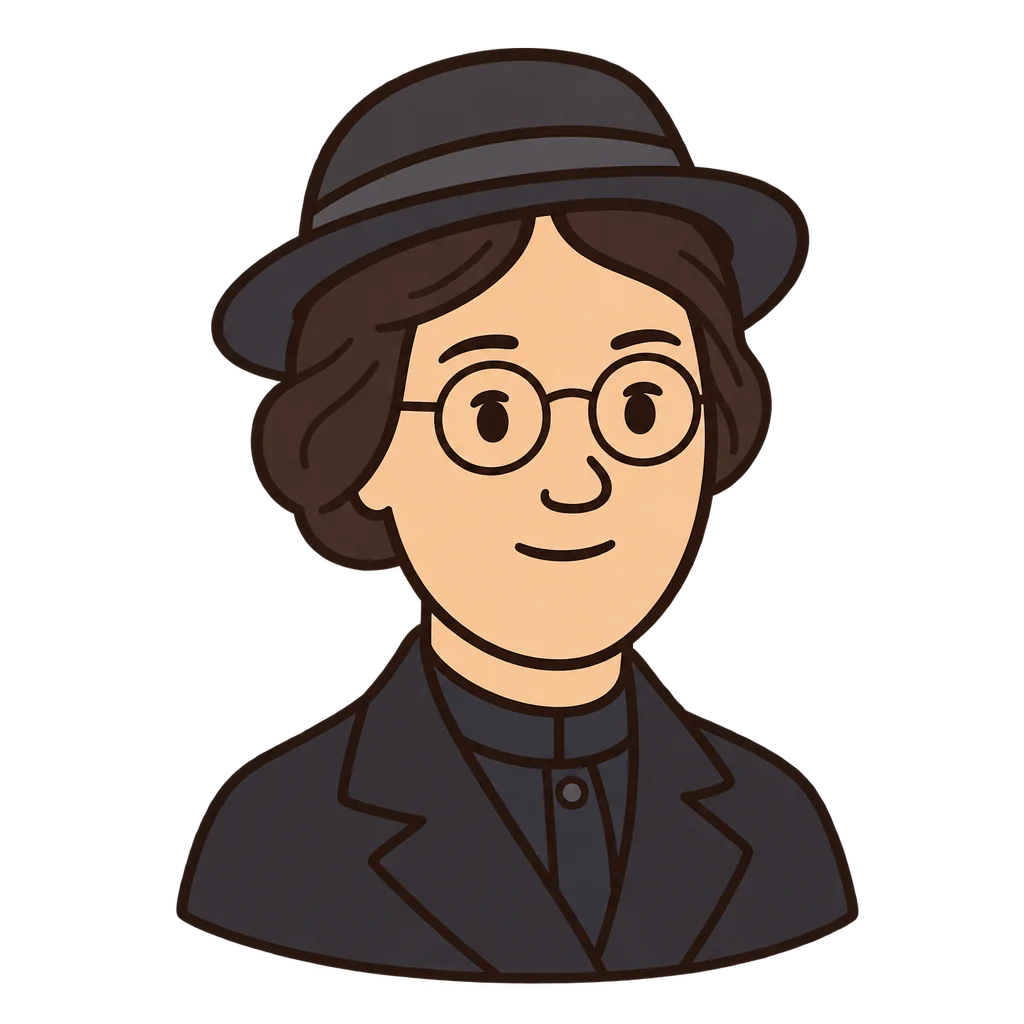
Hello, my name is Frances Perkins, and I believe that one person can make a difference in the lives of many. My story begins in Boston, Massachusetts, where I was born on April 10th, 1880. I spent my childhood in Worcester, where a love for learning, especially history, took root in my heart. My grandmother was a great influence on me; she taught me that it was important to use my advantages to help people who had fewer opportunities. This idea stayed with me as I grew. I attended Mount Holyoke College, a school dedicated to educating women, and it was there that my path began to take shape. I graduated in 1902, but my most important lessons came from outside the classroom. I learned about the difficult and often dangerous conditions faced by people working in factories. Hearing their stories sparked a fire in me—a passion for social justice that would guide the rest of my life.
After college, I moved to New York City to become a social worker, determined to help people directly. But one particular day changed my life and the course of American history forever. On March 25th, 1911, I was having tea with friends in a neighborhood not far from the Triangle Shirtwaist Factory. Suddenly, we heard fire engines and saw smoke pouring into the sky. We rushed to the scene and witnessed a horror I would never forget. The factory was engulfed in flames, and the workers inside were trapped. The factory owners had locked the exit doors to prevent them from taking breaks. That day, 146 people, most of them young immigrant women and girls, lost their lives. Seeing this preventable tragedy made it clear to me that charity was not enough. I knew I had to dedicate my life to changing the laws to protect workers from such terrible fates.
Frances Perkins
Hello, my name is Frances Perkins, and I believe that one person can make a difference in the lives of many. My story begins in Boston, Massachusetts, where I was born on April 10th, 1880. I spent my childhood in Worcester, where a love for learning, especially history, took root in my heart. My grandmother was a great influence on me; she taught me that it was important to use my advantages to help people who had fewer opportunities. This idea stayed with me as I grew. I attended Mount Holyoke College, a school dedicated to educating women, and it was there that my path began to take shape. I graduated in 1902, but my most important lessons came from outside the classroom. I learned about the difficult and often dangerous conditions faced by people working in factories. Hearing their stories sparked a fire in me—a passion for social justice that would guide the rest of my life.
After college, I moved to New York City to become a social worker, determined to help people directly. But one particular day changed my life and the course of American history forever. On March 25th, 1911, I was having tea with friends in a neighborhood not far from the Triangle Shirtwaist Factory. Suddenly, we heard fire engines and saw smoke pouring into the sky. We rushed to the scene and witnessed a horror I would never forget. The factory was engulfed in flames, and the workers inside were trapped. The factory owners had locked the exit doors to prevent them from taking breaks. That day, 146 people, most of them young immigrant women and girls, lost their lives. Seeing this preventable tragedy made it clear to me that charity was not enough. I knew I had to dedicate my life to changing the laws to protect workers from such terrible fates.
That fire became my personal mission. I knew that fighting for safer workplaces was the only way to honor the people who had died. I joined the New York Factory Investigating Commission, where I worked tirelessly to study working conditions and propose new laws. Our work led to some of the most advanced workplace safety regulations in the entire country, setting new standards for fire safety, factory inspections, and sanitation. It was during this time that I began working with an up-and-coming politician named Franklin D. Roosevelt, who was serving as the governor of New York. He saw my passion and expertise, and in 1929, he appointed me as the state's Industrial Commissioner. In this powerful role, I had the authority to push for even greater reforms, such as shorter work hours and better conditions for all laborers in the state.
My life took its most unexpected turn in 1933. My friend, Franklin D. Roosevelt, had just been elected President of the United States during the worst economic crisis the country had ever seen, the Great Depression. He called me to his home and asked me to serve as his Secretary of Labor. The request was stunning. At that time, no woman had ever held a position in a president's cabinet. I knew this was a historic opportunity, but I also knew I had to use it to achieve real change. Before I agreed, I presented him with a list of policies I wanted to pursue: financial help for the unemployed, pensions for the elderly, federal laws to end child labor, and a national minimum wage. President Roosevelt looked at my list and agreed to support my goals. On March 4th, 1933, I proudly accepted the position, ready to get to work.
I served as Secretary of Labor for twelve years, from 1933 to 1945, right through the Great Depression and World War II. It was a time of incredible hardship, but also a time of great change. I was the principal architect behind much of the 'New Deal' legislation that reshaped American society. My greatest achievement was the Social Security Act, which we passed on August 14th, 1935. This law created a promise from the government to its citizens, providing unemployment insurance and a retirement pension for the elderly. It was a safety net that had never existed before. Then, in 1938, we passed the Fair Labor Standards Act. This landmark law established the first national minimum wage, created the standard 40-hour work week, and finally made most forms of child labor illegal across the country. These were more than just laws; they were a declaration that every worker deserved dignity, security, and a fair chance.
I served as Secretary of Labor until 1945, when President Roosevelt passed away. After leaving my post in Washington, I spent the rest of my years teaching at universities and writing about my experiences. I lived to be 85 years old. The protections I fought so hard for became a fundamental part of American life, and many of them are still in place today. Social Security, the minimum wage, and rules for a safe workplace are all part of my legacy. I hope my story shows you that when you see something wrong in the world, you have the power to work tirelessly to make it right, creating a better and fairer future for millions of people you may never even meet.
Wow facts
About
Frances Perkins was the U.S. Secretary of Labor from 1933 to 1945 and the first woman ever appointed to the U.S. Cabinet. She was a key architect of the New Deal, playing an important role in the development and passage of the Social Security Act in 1935, advocating for unemployment insurance, and being a key figure in establishing the federal minimum wage through her support for the Fair Labor Standards Act of 1938.
Take a Quiz
Question 1 of 5
Based on the text, what was the 'turning point' that made Frances Perkins dedicate her life to changing labor laws?
Explore next






Want to do even more?
Go beyond exploring. Unlock tools that turn every story into real learning.

Storypie Plus for families
Full stories, quizzes, and printables. Nights and car rides, sorted.
- Unlimited audio stories
- Create Mode: your child stars in the story
- Offline downloads
- Printable worksheets & coloring pages

Why Storypie for Schools
Students engaged. Prep in seconds. Evenings back to you.
- Worksheets & Quizzes
- Classroom Management
- Formative Assessment
- Custom Curriculum & Lesson Plans
- 27 Languages

Why Storypie for Homeschool
Curriculum done. They'll ask for more. Hours back in your day.
- Worksheet Generator
- First-Person Audio Stories
- Built-in Comprehension Quizzes
- Custom Curriculum & Lesson Plans
- Print & Go Activities