English

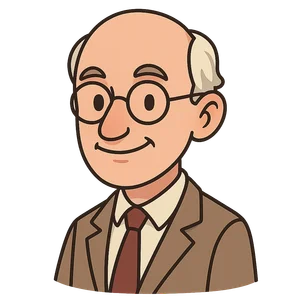
Francis Crick
Francis Crick was a British molecular biologist and biophysicist who, with James Watson…
Reads at Grades 3–5 Listens at Grades 1–5
Print & create
Answer keys·No prep·Free with an account
28 worksheets · answer keys · full story · quiz · Ages 8-10 · CEFR B1
Plus adds 208,000+ more stories in 27 languages, audio for every one, and printables for all of them.
Just want Francis Crick?
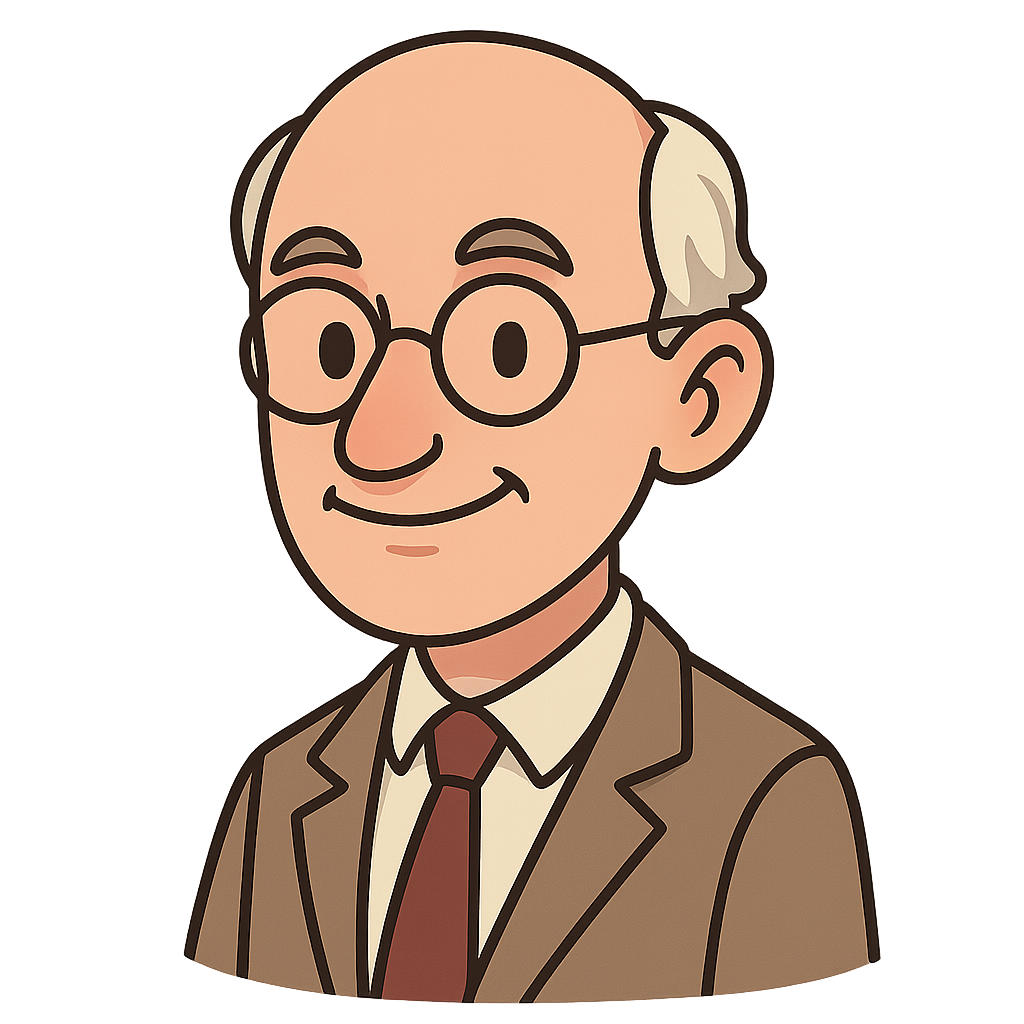
Hello! My name is Francis Crick. I was born on June 8th, 1916, in a small town in England. From a very young age, I was completely fascinated by science and how the world worked. I was always asking questions, trying to figure things out. My parents were very supportive and encouraged my curious mind. I read every science book I could get my hands on and even turned a room in my house into a little laboratory where I could conduct my own experiments and search for answers.
When I grew up, I went to University College London to study physics, which is the science of matter and energy. But my path changed after World War II ended in 1945. I found myself drawn to biology because I wanted to solve one of the biggest mysteries of all: what is the secret of life itself? I felt a new sense of purpose, a pull toward understanding the building blocks of living things. So, in 1949, I joined Cambridge University, a place known for its brilliant scientists, to begin my quest for this incredible secret.
It was at Cambridge, in 1951, that I met a young American scientist named James Watson. We clicked right away and became fast friends. What brought us together was that we were both chasing the answer to the exact same big question. We both wanted to understand a special molecule found inside every living cell called DNA. At the time, scientists knew that DNA carried the instructions, like a recipe book, for how plants, animals, and people grow and what they look like. But nobody knew what the DNA molecule's shape was. We believed that if we could just figure out its shape, we could understand how it worked. It felt like we were trying to solve the most important puzzle in the world.
Francis Crick: The Secret of Life
Hello! My name is Francis Crick. I was born on June 8th, 1916, in a small town in England. From a very young age, I was completely fascinated by science and how the world worked. I was always asking questions, trying to figure things out. My parents were very supportive and encouraged my curious mind. I read every science book I could get my hands on and even turned a room in my house into a little laboratory where I could conduct my own experiments and search for answers.
When I grew up, I went to University College London to study physics, which is the science of matter and energy. But my path changed after World War II ended in 1945. I found myself drawn to biology because I wanted to solve one of the biggest mysteries of all: what is the secret of life itself? I felt a new sense of purpose, a pull toward understanding the building blocks of living things. So, in 1949, I joined Cambridge University, a place known for its brilliant scientists, to begin my quest for this incredible secret.
It was at Cambridge, in 1951, that I met a young American scientist named James Watson. We clicked right away and became fast friends. What brought us together was that we were both chasing the answer to the exact same big question. We both wanted to understand a special molecule found inside every living cell called DNA. At the time, scientists knew that DNA carried the instructions, like a recipe book, for how plants, animals, and people grow and what they look like. But nobody knew what the DNA molecule's shape was. We believed that if we could just figure out its shape, we could understand how it worked. It felt like we were trying to solve the most important puzzle in the world.
James and I worked day and night, building models of the molecule out of wire and metal plates to test our ideas. We knew we weren't alone in this race; other talented scientists were also working on the puzzle, including the brilliant Rosalind Franklin and Maurice Wilkins. Rosalind was an expert at using X-rays to take special pictures of molecules, a technique that could reveal their structure. One of her images, which became known as 'Photo 51,' was a major clue for us. When we saw it, the picture helped us see the pattern we had been looking for. Finally, in February of 1953, we had our breakthrough! We figured out that DNA was shaped like a twisted ladder. We called this shape a 'double helix.' We were so excited to share our discovery, and our paper was published for the whole world to see on April 25th, 1953.
Our discovery of the double helix was a huge moment in the history of science. It changed everything we thought we knew about life. In 1962, James Watson, Maurice Wilkins, and I were awarded the Nobel Prize in Physiology or Medicine, which is one of the highest honors a scientist can receive. Understanding the shape of DNA helped create a whole new field of science called genetics. After our big discovery, I didn't stop asking questions. I continued my scientific journey and became fascinated by another great mystery: the human brain and the nature of consciousness.
I lived a long and exciting life filled with questions and discoveries, and I lived to be 88 years old. Today, the discovery of the double helix helps doctors understand and treat diseases, and it allows scientists to learn more about the amazing code of life that connects every living creature on Earth. I hope my story reminds you to always stay curious, ask big questions, and never stop searching for answers.
Wow facts
About
Francis Crick was a British molecular biologist and biophysicist who, with James Watson, co-discovered the double helix structure of the DNA molecule in 1953.
Take a Quiz
Question 1 of 5
What did I call the twisted ladder shape of the DNA molecule?
Explore next



Want to do even more?
Go beyond exploring. Unlock tools that turn every story into real learning.

Storypie Plus for families
Full stories, quizzes, and printables. Nights and car rides, sorted.
- Unlimited audio stories
- Create Mode: your child stars in the story
- Offline downloads
- Printable worksheets & coloring pages

Why Storypie for Schools
Students engaged. Prep in seconds. Evenings back to you.
- Worksheets & Quizzes
- Classroom Management
- Formative Assessment
- Custom Curriculum & Lesson Plans
- 27 Languages

Why Storypie for Homeschool
Curriculum done. They'll ask for more. Hours back in your day.
- Worksheet Generator
- First-Person Audio Stories
- Built-in Comprehension Quizzes
- Custom Curriculum & Lesson Plans
- Print & Go Activities