English

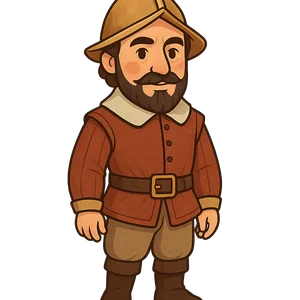
Francisco Vásquez de Coronado
A Spanish conquistador and explorer who led a large expedition from Mexico into the present-day American…
Reads at Grades 6–8 Listens at Grades 4–8
Print & create
Answer keys·No prep·Free with an account
28 worksheets · answer keys · full story · quiz · Ages 10-12 · CEFR B2
Plus adds 102,000+ more stories in 27 languages, audio for every one, and printables for all of them.
Just want Francisco Vásquez de Coronado?
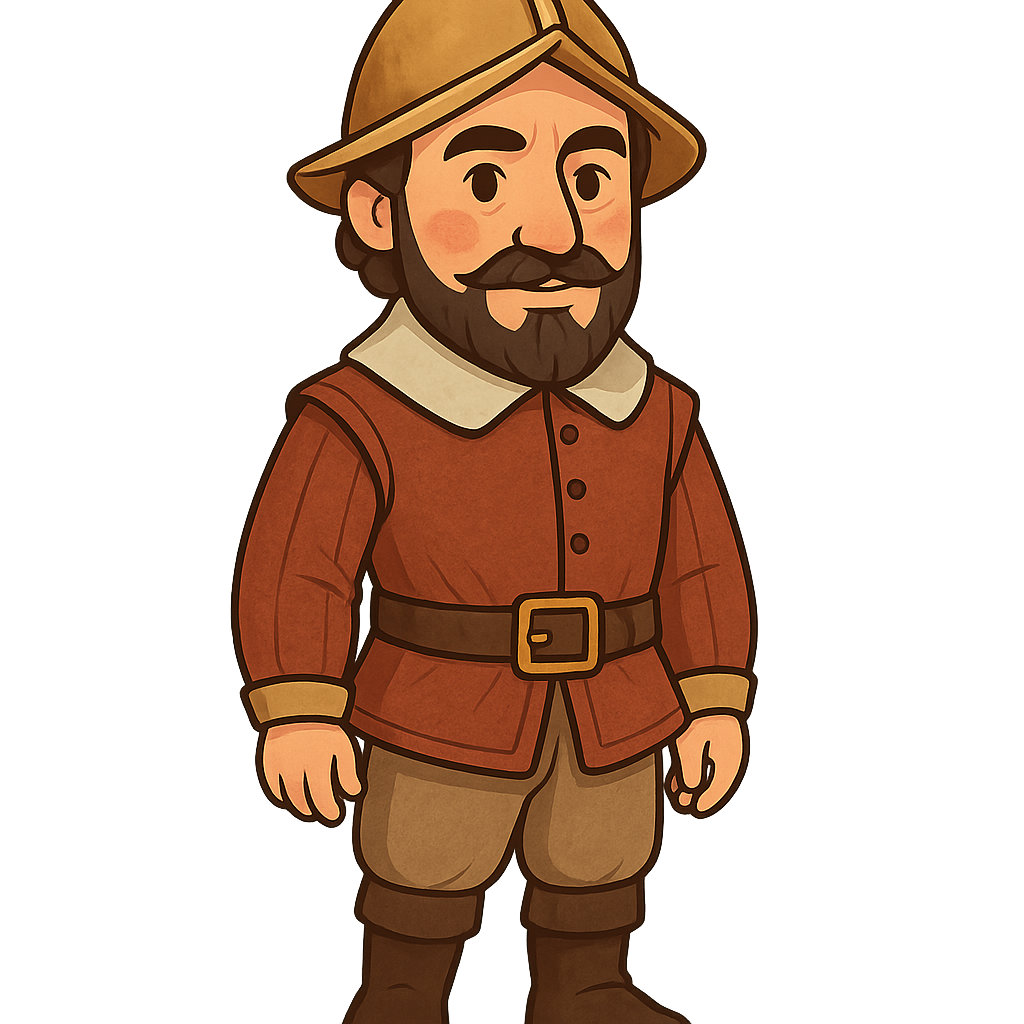
My name is Francisco Vázquez de Coronado, and I was an explorer whose life was defined by a great quest. I was born around the year 1510 in the beautiful Spanish city of Salamanca. As a nobleman in a time of great discovery, I longed for adventure and the chance to make my mark on the world. In 1535, I took my ambitions across the vast Atlantic Ocean to the Americas, a land my countrymen called New Spain. It was a place teeming with mystery and opportunity. There, I built a new life, marrying a woman named Beatriz de Estrada and applying myself to my duties. My hard work paid off, and in 1538, I was appointed governor of a territory known as Nueva Galicia.
In those days, New Spain was alive with incredible stories. The most captivating of all were the rumors of the Seven Cities of Cíbola, which were said to lie to the north, filled with unimaginable quantities of gold and precious jewels. These tales gained credibility when a friar, Marcos de Niza, returned from a journey north and claimed he had seen one of these golden cities shimmering in the distance. His report ignited the imagination of everyone, including the most powerful man in New Spain, Viceroy Antonio de Mendoza. The Viceroy decided to fund a grand expedition to find these cities and claim their riches for Spain. He chose me to lead it, and I felt a great sense of honor and excitement. This was the adventure I had dreamed of my entire life.
On February 23rd, 1540, my massive expedition departed from the town of Compostela. It was an impressive sight to behold. Our party consisted of over 300 Spanish soldiers, many mounted on fine horses, accompanied by hundreds of native allies who had joined our cause. To support such a large group, we brought with us more than a thousand horses, mules, and other livestock to carry our supplies and serve as a source of food. Our journey north was incredibly challenging. We trekked across sun-scorched deserts and navigated rugged, unforgiving mountains. We often struggled to find enough food and water, and the harsh conditions tested our resolve every single day as we marched into a vast, uncharted wilderness, guided only by hope and rumored maps.
Francisco Vázquez de Coronado: The Quest for Gold
My name is Francisco Vázquez de Coronado, and I was an explorer whose life was defined by a great quest. I was born around the year 1510 in the beautiful Spanish city of Salamanca. As a nobleman in a time of great discovery, I longed for adventure and the chance to make my mark on the world. In 1535, I took my ambitions across the vast Atlantic Ocean to the Americas, a land my countrymen called New Spain. It was a place teeming with mystery and opportunity. There, I built a new life, marrying a woman named Beatriz de Estrada and applying myself to my duties. My hard work paid off, and in 1538, I was appointed governor of a territory known as Nueva Galicia.
In those days, New Spain was alive with incredible stories. The most captivating of all were the rumors of the Seven Cities of Cíbola, which were said to lie to the north, filled with unimaginable quantities of gold and precious jewels. These tales gained credibility when a friar, Marcos de Niza, returned from a journey north and claimed he had seen one of these golden cities shimmering in the distance. His report ignited the imagination of everyone, including the most powerful man in New Spain, Viceroy Antonio de Mendoza. The Viceroy decided to fund a grand expedition to find these cities and claim their riches for Spain. He chose me to lead it, and I felt a great sense of honor and excitement. This was the adventure I had dreamed of my entire life.
On February 23rd, 1540, my massive expedition departed from the town of Compostela. It was an impressive sight to behold. Our party consisted of over 300 Spanish soldiers, many mounted on fine horses, accompanied by hundreds of native allies who had joined our cause. To support such a large group, we brought with us more than a thousand horses, mules, and other livestock to carry our supplies and serve as a source of food. Our journey north was incredibly challenging. We trekked across sun-scorched deserts and navigated rugged, unforgiving mountains. We often struggled to find enough food and water, and the harsh conditions tested our resolve every single day as we marched into a vast, uncharted wilderness, guided only by hope and rumored maps.
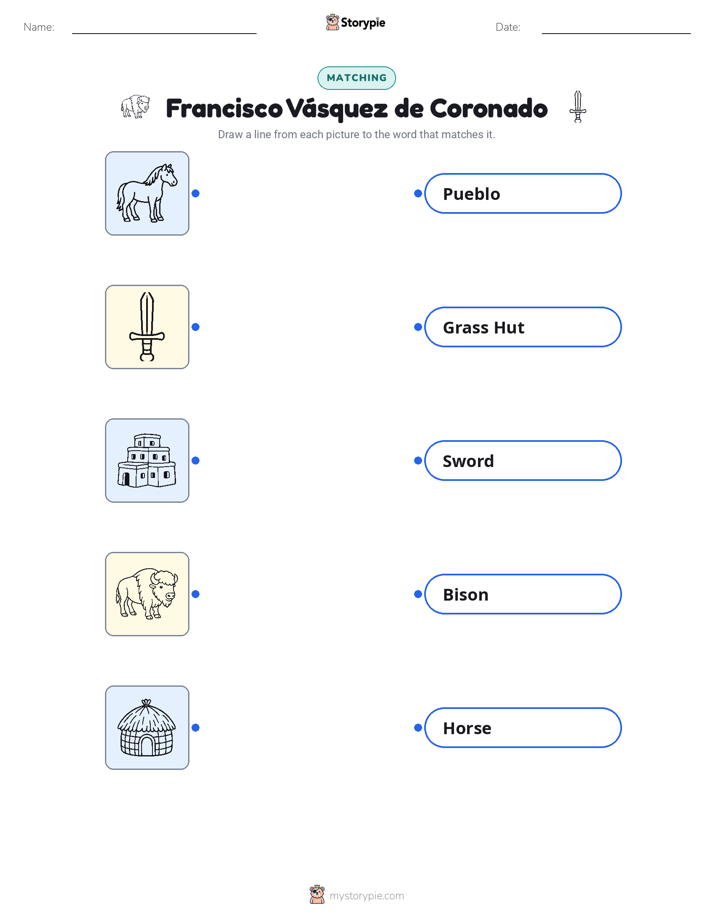
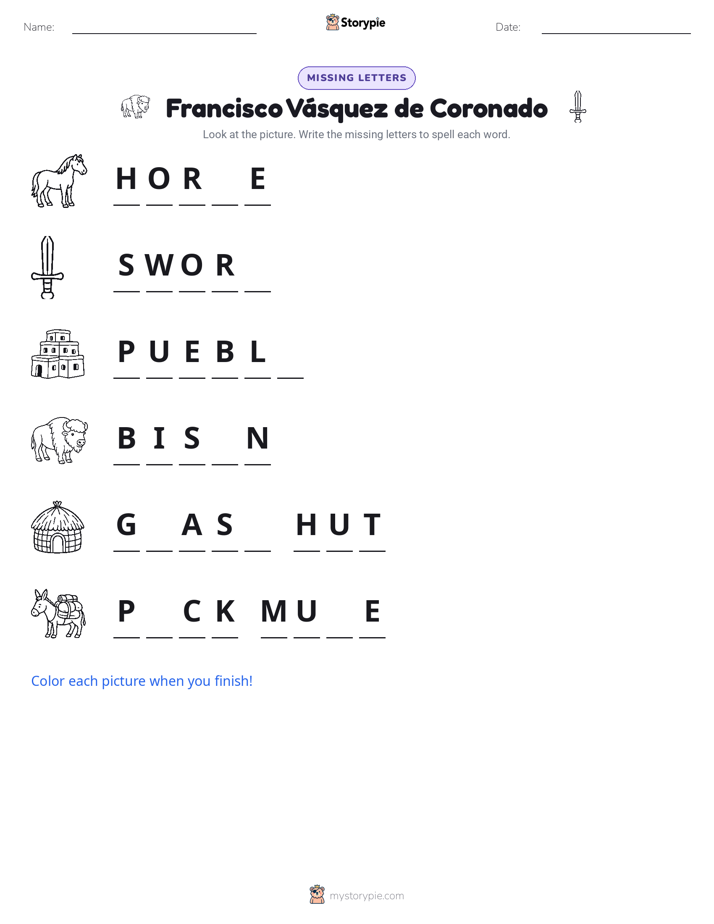
After months of arduous travel, in July of 1540, we finally arrived at the location we believed was Cíbola. What we found was a village belonging to the Zuni people, which they called Hawikuh. My heart sank as I looked upon it. Instead of a majestic city of gold, we saw a modest pueblo constructed from stone and mud. It was a well-built community, but it was not the legendary treasure we had risked so much to find. A fierce battle erupted as the Zuni people bravely defended their homes from our intrusion. It was a moment of profound disappointment for me and my men, but I knew our journey was not over. This was a vast continent, and there was still so much more to explore.
Although we did not find the golden cities we sought, our expedition led to discoveries of wonders beyond anything we could have imagined. I dispatched smaller groups to explore the surrounding lands, hoping to map the territory. One of my captains, García López de Cárdenas, led his men to the edge of an immense canyon that had been carved over ages by a powerful river. They became the first Europeans to witness the breathtaking sight of the Grand Canyon. They were so awestruck by its scale and beauty that they struggled to find words to describe it. Another scouting party, led by Pedro de Tovar, visited the villages of the Hopi people. We were charting a territory no European had ever laid eyes on, creating the first maps and records of its rivers, mountains, and inhabitants.
Just as our hopes began to fade, a Native American guide, whom my men nicknamed 'the Turk,' reignited our quest with a new story. He spoke of a land far to the east called Quivira, ruled by a king who rested under a tree decorated with golden bells. Filled with renewed purpose, I led a smaller, faster-moving group eastward in the spring of 1541. We crossed enormous, flat grasslands that seemed to stretch on forever. For weeks, the landscape was nothing but an endless sea of grass under a vast, open sky. It was here that we encountered enormous herds of what we called 'hump-backed cows'—the American bison. Witnessing thousands of these powerful animals thundering across the plains was a truly stunning and unforgettable sight.
We finally reached Quivira, located in what is now the state of Kansas, only to face our final disappointment. It was not a wealthy kingdom but a simple village where the Wichita people lived in grass huts. Under questioning, the Turk confessed that he had been instructed by other native leaders to lead us astray, hoping we would get lost in the vast plains. With a heavy heart, I accepted that our search for treasure was officially over. We had marched for thousands of miles over the course of two years. Exhausted and with our supplies dwindling, we began the long and difficult journey back to New Spain, finally arriving in 1542.
Upon my return, my expedition was largely viewed as a failure because we had found no gold or great riches. I had to face official investigations into my leadership and even lost my position as governor for a period of time. I lived until the year 1554, passing away in Mexico City at the age of 44. Though I never found the treasures I sought, my journey was not for nothing. My expedition was the first to explore a vast portion of North America, from the Grand Canyon to the Great Plains of Kansas. We created the first maps and wrote the first descriptions of these incredible lands and the people who called them home, opening a new chapter in the story of the continent.
Wow facts
About
A Spanish conquistador and explorer who led a large expedition from Mexico into the present-day American Southwest between 1540 and 1542, searching for the mythical Seven Cities of Gold.
Take a Quiz
Question 1 of 5
What was Francisco Vázquez de Coronado's main motivation for leading the expedition to find Cíbola?
Explore next



Want to do even more?
Go beyond exploring. Unlock tools that turn every story into real learning.

Storypie Plus for families
Full stories, quizzes, and printables. Nights and car rides, sorted.
- Unlimited audio stories
- Create Mode: your child stars in the story
- Offline downloads
- Printable worksheets & coloring pages

Why Storypie for Schools
Students engaged. Prep in seconds. Evenings back to you.
- Worksheets & Quizzes
- Classroom Management
- Formative Assessment
- Custom Curriculum & Lesson Plans
- 27 Languages

Why Storypie for Homeschool
Curriculum done. They'll ask for more. Hours back in your day.
- Worksheet Generator
- First-Person Audio Stories
- Built-in Comprehension Quizzes
- Custom Curriculum & Lesson Plans
- Print & Go Activities