English

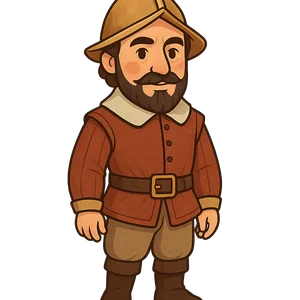
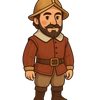
Francisco Vásquez de Coronado
A Spanish conquistador and explorer who led a large expedition from Mexico into the present-day American…
Reads at Grades 3–5 Listens at Grades 1–5
Print & create
Answer keys·No prep·Free with an account
28 worksheets · answer keys · full story · quiz · Ages 8-10 · CEFR B1
Plus adds 102,000+ more stories in 27 languages, audio for every one, and printables for all of them.
Just want Francisco Vásquez de Coronado?
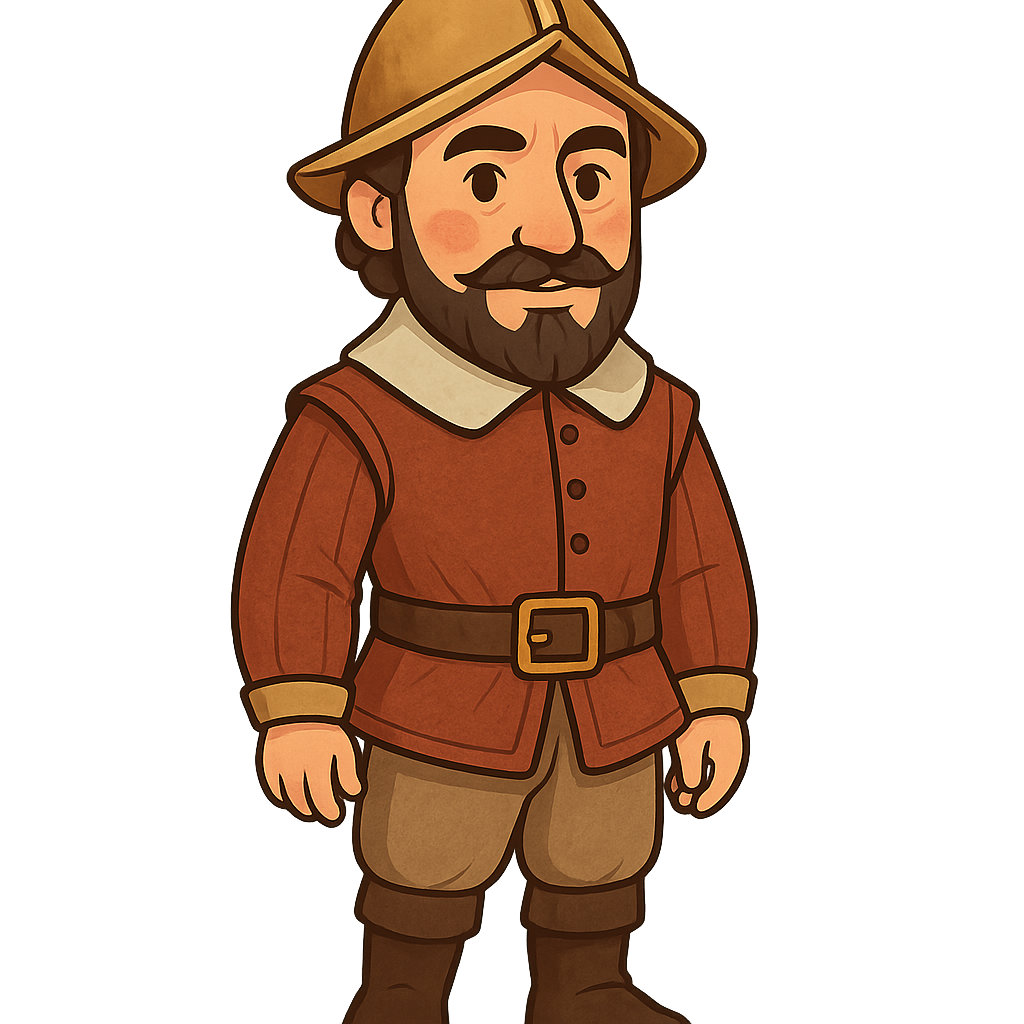
Hello! My name is Francisco Vásquez de Coronado. I was born in a beautiful city called Salamanca, in Spain, around the year 1510. When I was a young man, I listened to many exciting stories about the New World, a land of mystery and opportunity across the great ocean. I dreamed of having my own adventure. In 1535, I finally got my chance and sailed to what is now Mexico, which was called New Spain back then. I was full of hope and ready for whatever came next.
In New Spain, the air buzzed with a fantastic legend—the Seven Cities of Cíbola. People whispered that these cities were made of pure gold and filled with unbelievable treasures. The leader of the land, a powerful man named Viceroy Antonio de Mendoza, heard these tales and was determined to find them. He needed a brave leader for the journey. In 1540, he chose me to lead a huge expedition to search for these amazing, treasure-filled cities. I felt so proud and honored to be given such an important task. My great adventure was about to begin.
In February of 1540, my expedition set off from Mexico on our grand journey north. It was an incredible sight! I was in charge of hundreds of Spanish soldiers on horseback, more than a thousand native allies who joined to help us, and large herds of horses, sheep, and cattle to provide us with food. We marched into lands that no European had ever set foot in before. The journey was long and very difficult. We crossed scorching hot deserts where the sun beat down on us and climbed over tall, rocky mountains that seemed to touch the sky.
Francisco Vásquez de Coronado: A Journey for Gold
Hello! My name is Francisco Vásquez de Coronado. I was born in a beautiful city called Salamanca, in Spain, around the year 1510. When I was a young man, I listened to many exciting stories about the New World, a land of mystery and opportunity across the great ocean. I dreamed of having my own adventure. In 1535, I finally got my chance and sailed to what is now Mexico, which was called New Spain back then. I was full of hope and ready for whatever came next.
In New Spain, the air buzzed with a fantastic legend—the Seven Cities of Cíbola. People whispered that these cities were made of pure gold and filled with unbelievable treasures. The leader of the land, a powerful man named Viceroy Antonio de Mendoza, heard these tales and was determined to find them. He needed a brave leader for the journey. In 1540, he chose me to lead a huge expedition to search for these amazing, treasure-filled cities. I felt so proud and honored to be given such an important task. My great adventure was about to begin.
In February of 1540, my expedition set off from Mexico on our grand journey north. It was an incredible sight! I was in charge of hundreds of Spanish soldiers on horseback, more than a thousand native allies who joined to help us, and large herds of horses, sheep, and cattle to provide us with food. We marched into lands that no European had ever set foot in before. The journey was long and very difficult. We crossed scorching hot deserts where the sun beat down on us and climbed over tall, rocky mountains that seemed to touch the sky.
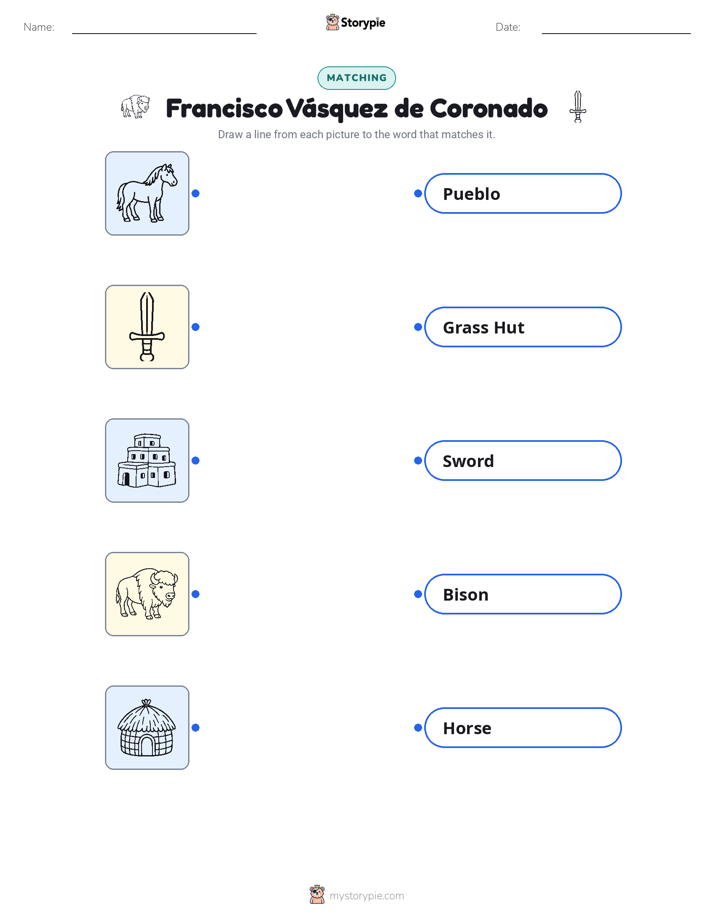
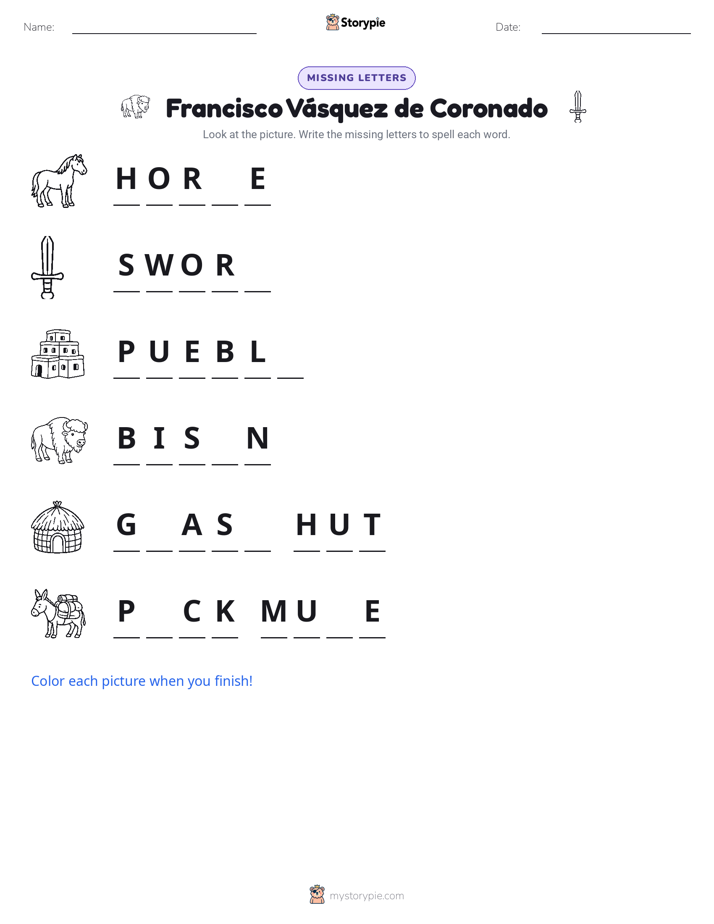
After months of hard travel, in July of 1540, we finally reached the place that the stories called Cíbola. My heart pounded with excitement, but what we found was not a city of gold. Instead, we saw a village of simple houses made from adobe, which is a mix of mud and straw. This was a pueblo belonging to the Zuni people. We were very disappointed, and our arrival unfortunately led to a fight with the people who lived there. This was certainly not the treasure we had been promised.
Even though the golden city of Cíbola was just a story, I was not ready to give up. I soon heard new tales about another rich land far to the east, a place called Quivira. I decided to press on, taking a smaller group of my best men with me. We marched for many more weeks, crossing vast, flat grasslands that stretched as far as the eye could see. It was on these plains that we saw something incredible—huge herds of what we called 'shaggy cows.' You know them today as bison! During this part of our journey in 1540, a separate group of my men traveled west and became the first Europeans to gaze upon the magnificent and awe-inspiring Grand Canyon.
We finally reached Quivira, in the land that is now the state of Kansas, in 1541. But my heart sank once more. It was not a city of gold. It was a simple village where the Wichita people lived in homes made of grass. I finally understood that our search for treasure was over. We had traveled thousands of miles and faced so many dangers, all for nothing but stories. With heavy hearts, in 1542, we began the long and tiring journey back to Mexico.
I returned to Mexico without any gold, and many people were unhappy with my leadership. But over time, people realized how important my expedition truly was. We were among the first Europeans to explore the American Southwest. We created maps and wrote reports about the enormous lands we crossed, the amazing Grand Canyon, the giant herds of bison, and the different groups of people who called those lands home. I lived to be about 44 years old. Though I never found the golden cities I searched for, I am remembered for opening up a whole new part of the world to be explored.
Wow facts
About
A Spanish conquistador and explorer who led a large expedition from Mexico into the present-day American Southwest between 1540 and 1542, searching for the mythical Seven Cities of Gold.
Take a Quiz
Question 1 of 5
Why was Francisco Vásquez de Coronado's expedition considered important even though he didn't find any gold?
Explore next






Want to do even more?
Go beyond exploring. Unlock tools that turn every story into real learning.

Storypie Plus for families
Full stories, quizzes, and printables. Nights and car rides, sorted.
- Unlimited audio stories
- Create Mode: your child stars in the story
- Offline downloads
- Printable worksheets & coloring pages

Why Storypie for Schools
Students engaged. Prep in seconds. Evenings back to you.
- Worksheets & Quizzes
- Classroom Management
- Formative Assessment
- Custom Curriculum & Lesson Plans
- 27 Languages

Why Storypie for Homeschool
Curriculum done. They'll ask for more. Hours back in your day.
- Worksheet Generator
- First-Person Audio Stories
- Built-in Comprehension Quizzes
- Custom Curriculum & Lesson Plans
- Print & Go Activities