English

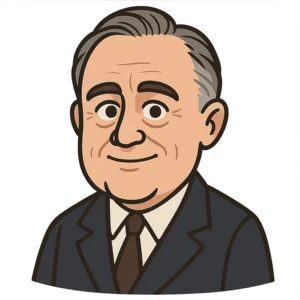
Franklin D. Roosevelt
Franklin D.
Reads at Grades 6–8 Listens at Grades 4–8
Print & create
Answer keys·No prep·Free with an account
28 worksheets · answer keys · full story · quiz · Ages 10-12 · CEFR B2
Plus adds 244,000+ more stories in 27 languages, audio for every one, and printables for all of them.
Just want Franklin D. Roosevelt?
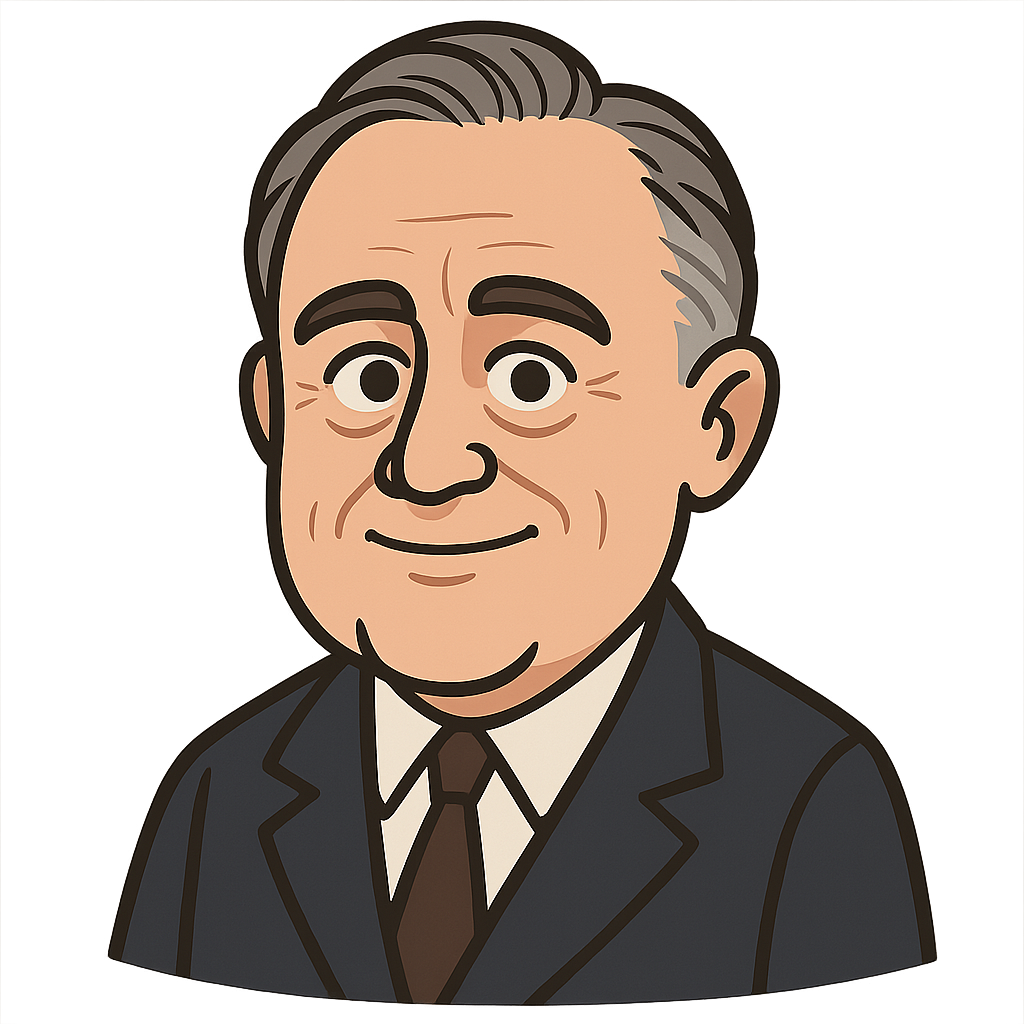
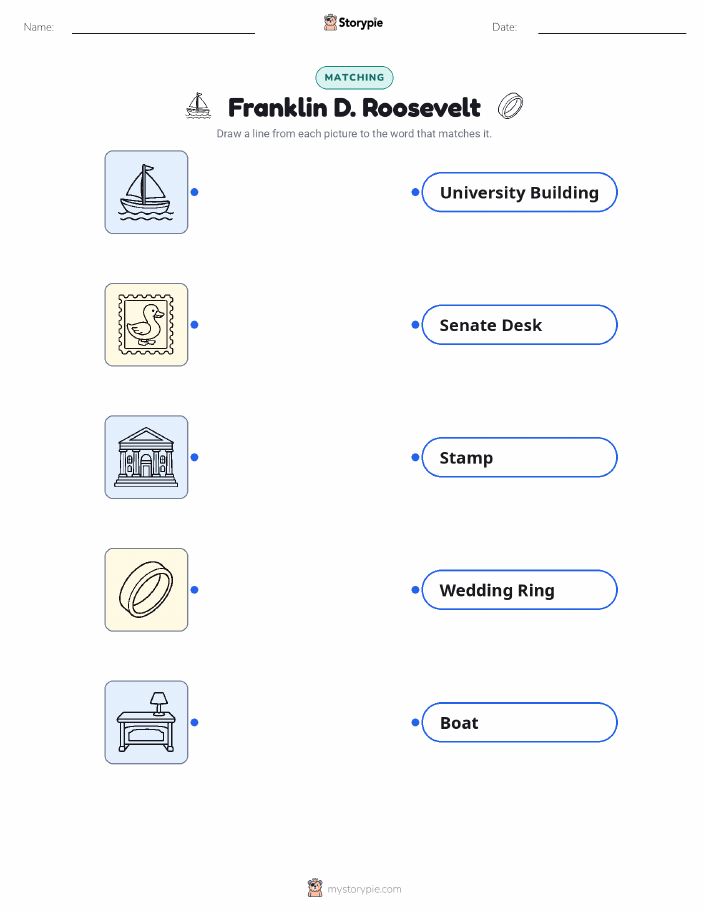
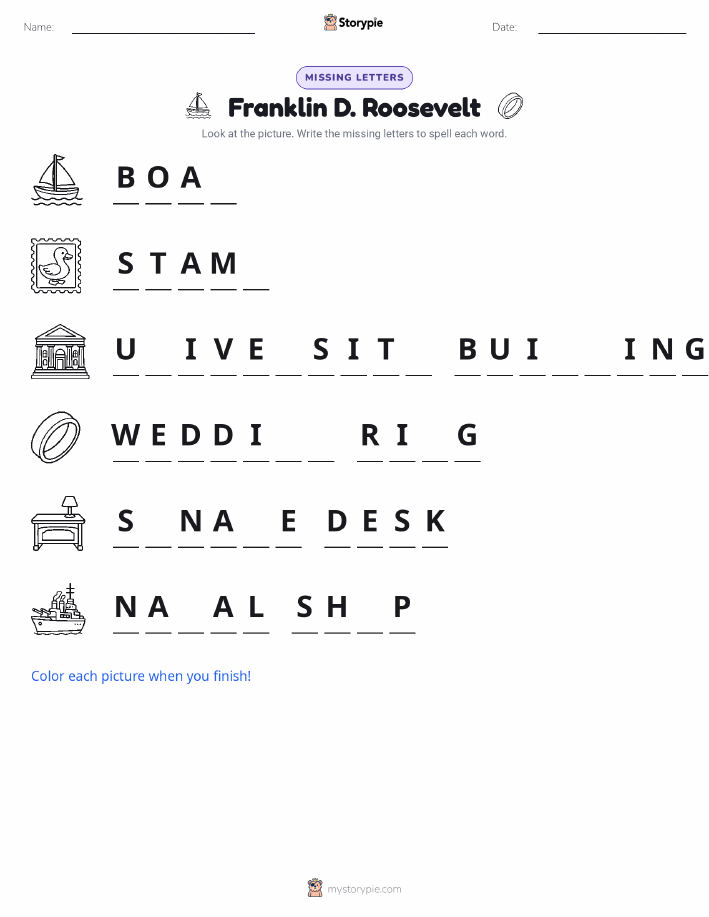
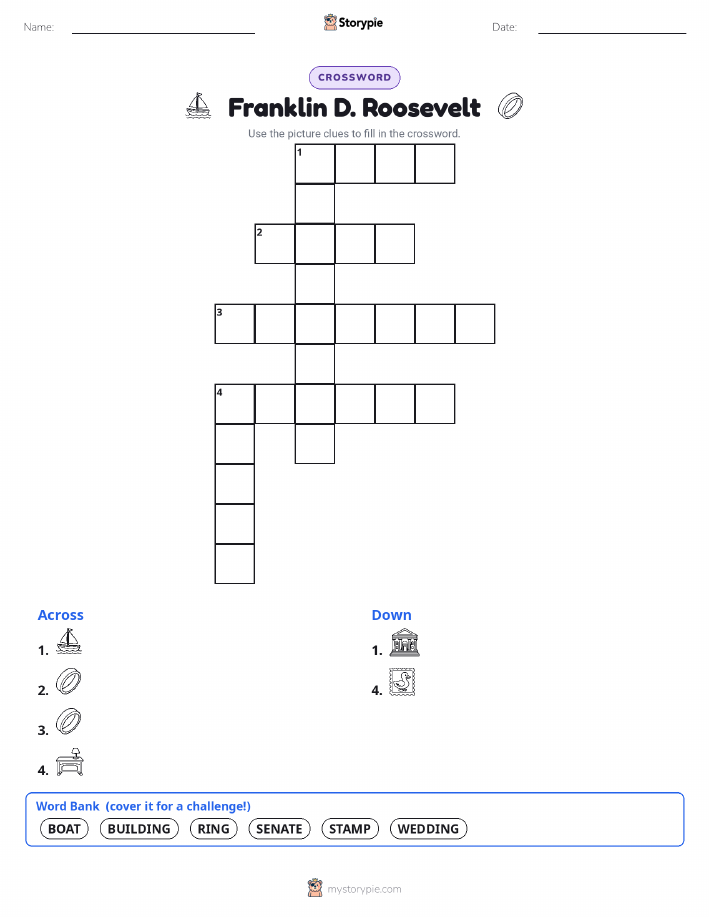
Hello there. My name is Franklin Delano Roosevelt, and I'd like to tell you my story. My journey began in a big, beautiful house in Hyde Park, New York, where I was born on January 30, 1882. My childhood was filled with adventure. I loved the great outdoors more than anything. I learned to sail a boat on the Hudson River before I could even ride a bicycle, feeling the wind catch the sails and push me forward. I spent countless hours exploring the woods and fields around my home, collecting bird nests and learning the names of every tree. I also started collections that I kept my whole life, like my stamp collection, which was like having a tiny window to every country in the world.
Even as a boy, I looked up to a man who shared my last name: my fifth cousin, Theodore Roosevelt. When he became president, I was fascinated. He showed me that one person, full of energy and big ideas, could truly change a nation for the better. His example planted a seed in my mind that maybe, just maybe, I could also serve my country one day. I went away to school, first to a place called Groton and then to Harvard University, where I studied history and government. But the most important chapter of my young life began on March 17, 1905. That was the day I married the most wonderful woman I had ever met, my dear Anna Eleanor Roosevelt. We were distant cousins, but she became my partner in everything, my trusted advisor, and the heart of our family.
After Eleanor and I started our family, I felt that old pull toward public service that my cousin Theodore had inspired in me. I decided to run for the New York State Senate in 1910 and, to my surprise, I won. It was thrilling to work on laws that could help farmers, protect forests, and make life better for the people of my state. A few years later, in 1913, I was asked to serve as the Assistant Secretary of the Navy in Washington, D.C. I loved the challenge of strengthening our country’s ships and supporting our sailors. I thought my life was on a clear and steady course. But in the summer of 1921, everything changed forever. While on vacation with my family, I suddenly fell terribly ill. The doctors diagnosed it as poliomyelitis, or polio. The disease attacked my body, and when the fever finally broke, I could no longer move my legs.
Franklin D. Roosevelt
Hello there. My name is Franklin Delano Roosevelt, and I'd like to tell you my story. My journey began in a big, beautiful house in Hyde Park, New York, where I was born on January 30, 1882. My childhood was filled with adventure. I loved the great outdoors more than anything. I learned to sail a boat on the Hudson River before I could even ride a bicycle, feeling the wind catch the sails and push me forward. I spent countless hours exploring the woods and fields around my home, collecting bird nests and learning the names of every tree. I also started collections that I kept my whole life, like my stamp collection, which was like having a tiny window to every country in the world.
Even as a boy, I looked up to a man who shared my last name: my fifth cousin, Theodore Roosevelt. When he became president, I was fascinated. He showed me that one person, full of energy and big ideas, could truly change a nation for the better. His example planted a seed in my mind that maybe, just maybe, I could also serve my country one day. I went away to school, first to a place called Groton and then to Harvard University, where I studied history and government. But the most important chapter of my young life began on March 17, 1905. That was the day I married the most wonderful woman I had ever met, my dear Anna Eleanor Roosevelt. We were distant cousins, but she became my partner in everything, my trusted advisor, and the heart of our family.
After Eleanor and I started our family, I felt that old pull toward public service that my cousin Theodore had inspired in me. I decided to run for the New York State Senate in 1910 and, to my surprise, I won. It was thrilling to work on laws that could help farmers, protect forests, and make life better for the people of my state. A few years later, in 1913, I was asked to serve as the Assistant Secretary of the Navy in Washington, D.C. I loved the challenge of strengthening our country’s ships and supporting our sailors. I thought my life was on a clear and steady course. But in the summer of 1921, everything changed forever. While on vacation with my family, I suddenly fell terribly ill. The doctors diagnosed it as poliomyelitis, or polio. The disease attacked my body, and when the fever finally broke, I could no longer move my legs.
At first, the diagnosis was devastating. I was only 39 years old, and I couldn't walk. The pain was immense, and the future seemed dark and uncertain. There were many days when I felt like giving up. But my wife, Eleanor, would not let me. She encouraged me, helped me with my exercises, and became my eyes and ears in the political world, traveling and speaking on my behalf. Slowly, painfully, I learned to live with my new reality. I taught myself to stand using heavy steel braces on my legs and a cane for support. This terrible illness taught me things I never could have learned otherwise. It gave me a deeper understanding of suffering, a patience I never knew I had, and a powerful empathy for all people who face hardships. I realized that true strength wasn't just in the body, but in the spirit and the will to keep going.
After years of rehabilitation, I returned to public life, becoming Governor of New York in 1929. Just as I took office, the country fell into the Great Depression. It was a time of terrible fear and hardship. By 1932, when I ran for president, millions of Americans had lost their jobs, their savings, and even their homes. People were standing in lines for bread, and many families felt that all hope was lost. When I was elected, I knew I had to act boldly. On the day I became president, I told the American people, “The only thing we have to fear is fear itself.” I promised them a “New Deal,” a series of programs designed to fight the Depression and bring back hope.
We started immediately. We created programs like the Civilian Conservation Corps, which gave young men jobs planting trees and building trails in our national parks. We launched the Public Works Administration to build huge projects like bridges, airports, and dams, creating millions more jobs. To protect families in the future, we created Social Security in 1935, a system to help support Americans when they grew old or could no longer work. I knew it wasn’t enough just to create programs; I needed to speak directly to the American people and restore their confidence. So, I began giving regular radio addresses that we called “fireside chats.” I would sit in a room in the White House and speak into a microphone as if I were a guest in every family’s living room, explaining what we were doing and why, and reassuring everyone that we would get through this crisis together.
Just as our nation was beginning to heal from the Great Depression, a new and terrifying storm was gathering across the ocean. In Europe and Asia, powerful dictators were taking over countries and threatening the peace of the world. For years, I warned that this threat would one day reach our shores, and on December 7, 1941, it did. The nation of Japan launched a surprise attack on our naval base at Pearl Harbor in Hawaii. The next day, I asked Congress to declare war. Leading the country as commander-in-chief during World War II was the most difficult task of my life. I worked closely with our allies, like Prime Minister Winston Churchill of Great Britain, to plan the strategy that would win the war and free the world from tyranny.
Even in the darkest days of the war, I dreamed of a better world that could rise from the ashes. I spoke of a future founded on Four Freedoms for all people everywhere: freedom of speech, freedom of worship, freedom from want, and freedom from fear. This vision helped guide our country and our allies toward victory. My journey, however, came to an end before I could see that final victory. After years of leading the country through its greatest trials, my body grew tired. I passed away on April 12, 1945, just a few weeks before the war in Europe ended. My life taught me that our greatest challenges can become our greatest strengths. I hope you remember that no obstacle is too great to overcome if you have courage, determination, and faith in one another.
Wow facts
About
Franklin D. Roosevelt, often called FDR, was the 32nd President of the United States. He led the country through the Great Depression and World War II and is the only president to have served more than two terms.
Take a Quiz
Question 1 of 5
Franklin Roosevelt said that contracting polio gave him 'a deeper empathy for all people facing hardships.' What does the word 'empathy' mean, and how did his actions as president show that he had it?
Explore next





Want to do even more?
Go beyond exploring. Unlock tools that turn every story into real learning.

Storypie Plus for families
Full stories, quizzes, and printables. Nights and car rides, sorted.
- Unlimited audio stories
- Create Mode: your child stars in the story
- Offline downloads
- Printable worksheets & coloring pages

Why Storypie for Schools
Students engaged. Prep in seconds. Evenings back to you.
- Worksheets & Quizzes
- Classroom Management
- Formative Assessment
- Custom Curriculum & Lesson Plans
- 27 Languages

Why Storypie for Homeschool
Curriculum done. They'll ask for more. Hours back in your day.
- Worksheet Generator
- First-Person Audio Stories
- Built-in Comprehension Quizzes
- Custom Curriculum & Lesson Plans
- Print & Go Activities