English


Frédéric Auguste Bartholdi
Frédéric Auguste Bartholdi was a French sculptor and painter, renowned for designing the Statue of Liberty…
Reads at Grades 6–8 Listens at Grades 4–8
Print & create
Answer keys·No prep·Free with an account
28 worksheets · answer keys · full story · quiz · Ages 10-12 · CEFR B2
Plus adds 208,000+ more stories in 27 languages, audio for every one, and printables for all of them.
Just want Frédéric Auguste Bartholdi?
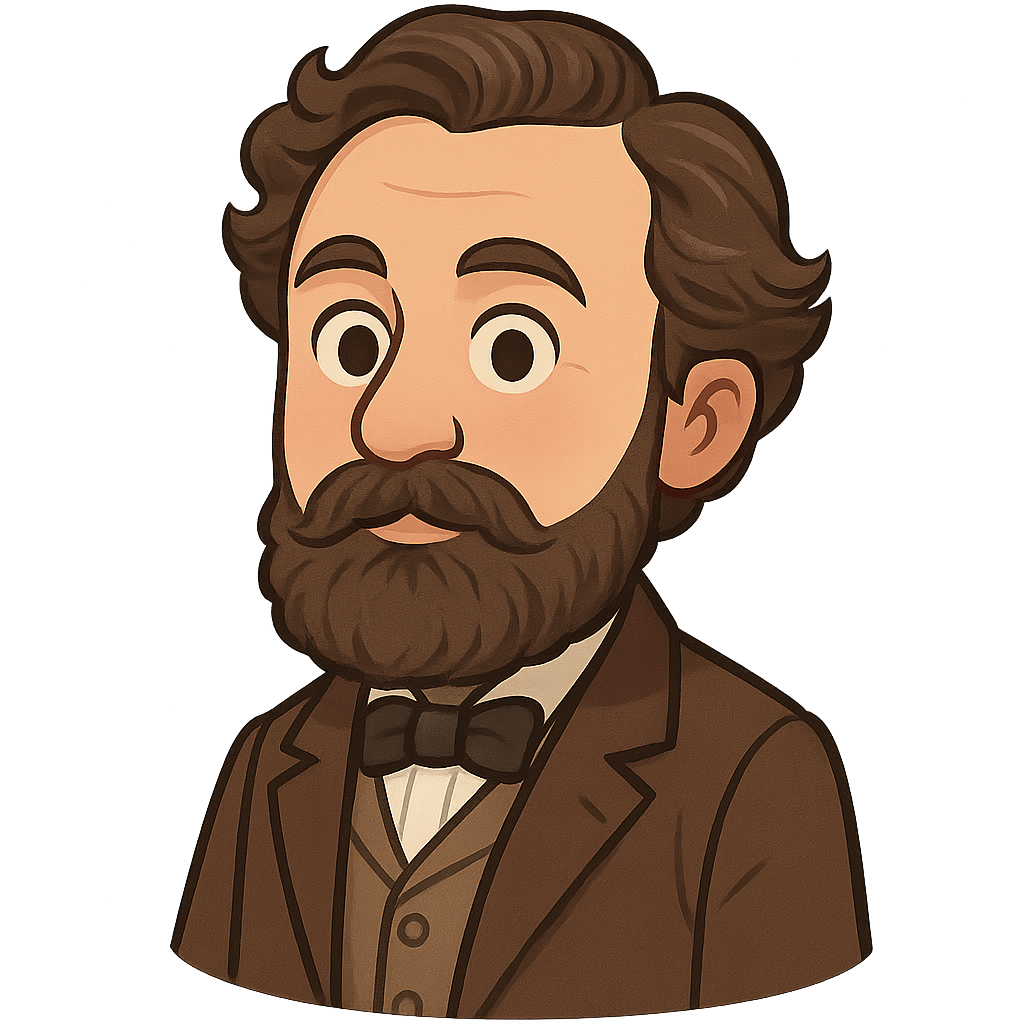
Hello, my name is Frédéric Auguste Bartholdi, and I am a sculptor from France. I was born on August 2nd, 1834, in a town called Colmar. My life changed when I was very young, as my father passed away. My dear mother, Charlotte, saw that I had a passion for creating things, and she encouraged my love for art with all her heart. We moved to Paris so I could receive the best education, and there I studied both architecture and art. Even as a young man, I didn't just want to create small sculptures for museums. I dreamed of creating enormous, meaningful statues that would stand for centuries and inspire everyone who saw them. I wanted my work to tell a story and carry a powerful message through time.
In 1855, I embarked on a journey that would change my artistic vision forever: I traveled to Egypt. Standing before the ancient pyramids and the giant statues like the Great Sphinx, I was completely amazed. These were not just large stone figures; they were monuments that had carried their power and mystery across thousands of years. This trip filled my mind with grand ideas about what monumental art could achieve. I realized that a huge statue could be more than just an impressive sight; it could embody an idea, a value, or a shared history. I knew then that my life's purpose was to create something with that same kind of lasting impact, a sculpture that would speak to future generations.
My greatest project began with a conversation in 1865. My friend, a French historian and thinker named Édouard de Laboulaye, had a grand idea. He believed that France should give a magnificent gift to the United States to celebrate 100 years of American independence. This gift would also honor the strong friendship between our two nations. The timing was significant, as America had just emerged from its Civil War and had abolished slavery. Monsieur de Laboulaye wanted a monument that celebrated liberty and the bond between our countries. I was incredibly honored when he chose me, a sculptor, to be the one to bring this powerful and inspiring idea to life.
Frédéric Auguste Bartholdi: The Man Who Built Liberty
Hello, my name is Frédéric Auguste Bartholdi, and I am a sculptor from France. I was born on August 2nd, 1834, in a town called Colmar. My life changed when I was very young, as my father passed away. My dear mother, Charlotte, saw that I had a passion for creating things, and she encouraged my love for art with all her heart. We moved to Paris so I could receive the best education, and there I studied both architecture and art. Even as a young man, I didn't just want to create small sculptures for museums. I dreamed of creating enormous, meaningful statues that would stand for centuries and inspire everyone who saw them. I wanted my work to tell a story and carry a powerful message through time.
In 1855, I embarked on a journey that would change my artistic vision forever: I traveled to Egypt. Standing before the ancient pyramids and the giant statues like the Great Sphinx, I was completely amazed. These were not just large stone figures; they were monuments that had carried their power and mystery across thousands of years. This trip filled my mind with grand ideas about what monumental art could achieve. I realized that a huge statue could be more than just an impressive sight; it could embody an idea, a value, or a shared history. I knew then that my life's purpose was to create something with that same kind of lasting impact, a sculpture that would speak to future generations.
My greatest project began with a conversation in 1865. My friend, a French historian and thinker named Édouard de Laboulaye, had a grand idea. He believed that France should give a magnificent gift to the United States to celebrate 100 years of American independence. This gift would also honor the strong friendship between our two nations. The timing was significant, as America had just emerged from its Civil War and had abolished slavery. Monsieur de Laboulaye wanted a monument that celebrated liberty and the bond between our countries. I was incredibly honored when he chose me, a sculptor, to be the one to bring this powerful and inspiring idea to life.
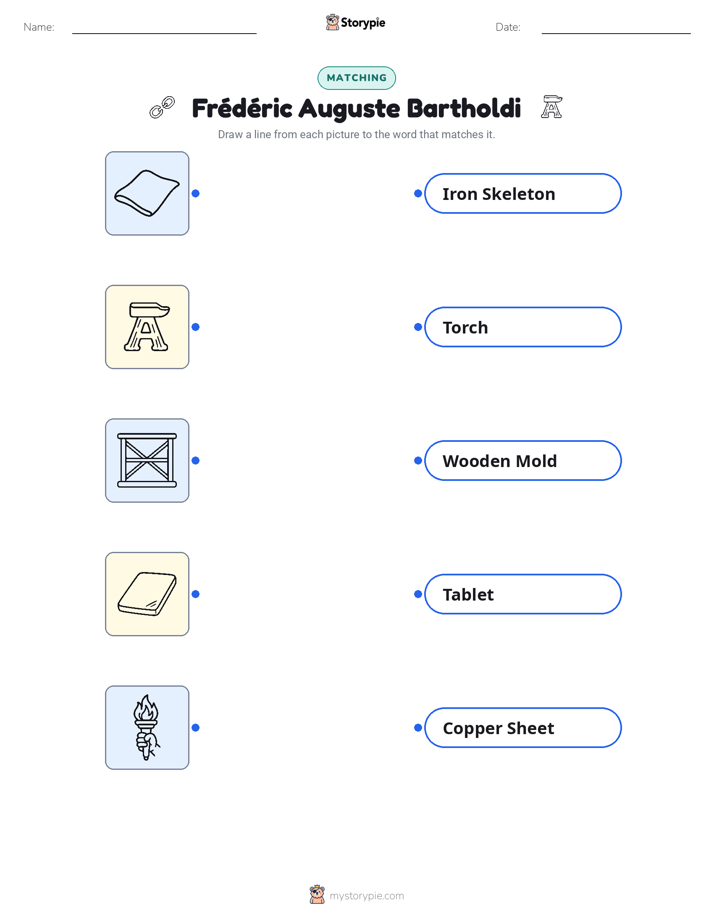
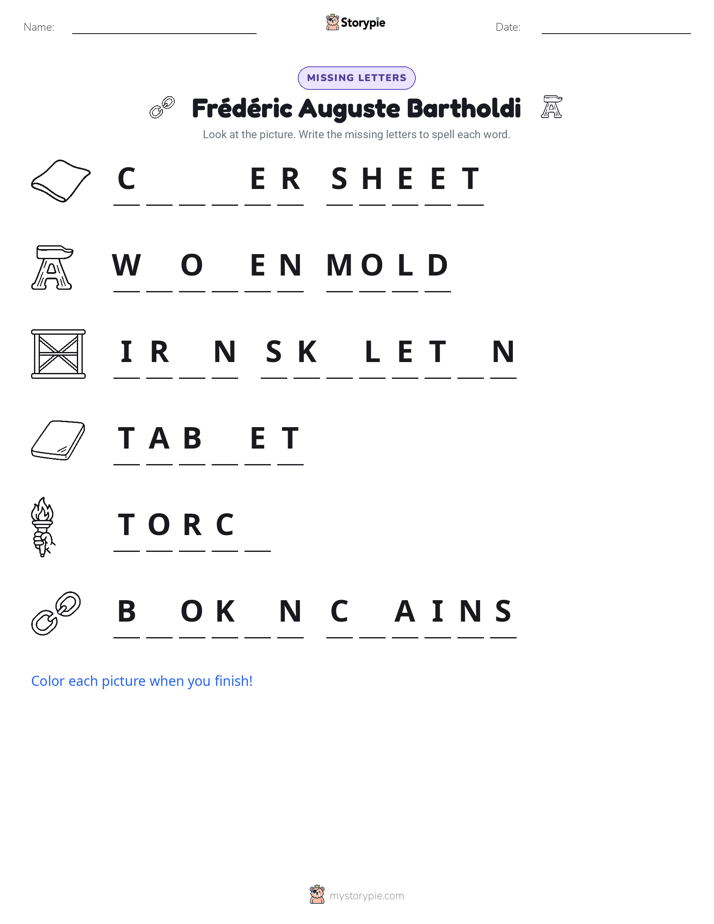
To begin, I knew I had to see America for myself. I traveled to the United States in 1871 to find the perfect location for such an important statue. As my ship sailed into New York Harbor, I saw a small piece of land called Bedloe's Island. Instantly, I knew it was the right place. It was the gateway to America, a place where everyone arriving by sea would see our gift. My mind began to fill with designs. I decided she would hold a torch high in the air, a symbol of enlightenment and progress. In her other arm, she would hold a tablet inscribed with the date of American Independence: July 4th, 1776. To symbolize freedom from oppression and tyranny, I designed broken chains to lie at her feet. For her face, I wanted a look that was strong, calm, and determined, so I modeled her expression after my own mother.
Bringing this vision to life was an enormous challenge. A statue so large could not support its own weight, so I needed the help of a brilliant engineer. I worked with Gustave Eiffel, the very same man who would later build the famous Eiffel Tower. He designed an ingenious iron skeleton inside the statue, which would be both strong and flexible enough to withstand the harbor winds. In our workshop in Paris, my team and I built her piece by piece, hammering thin sheets of copper over wooden molds to create her skin. To help raise money for the project, we displayed her completed torch and hand at the Centennial Exposition in Philadelphia in 1876. It was a joint effort: the people of France paid for the statue, and the people of America raised the money for her giant pedestal.
The statue, which we named 'Liberty Enlightening the World,' was finally completed in Paris in 1884. But her journey was far from over. To transport her across the Atlantic Ocean, she had to be taken apart into over 350 pieces. These pieces were carefully packed into 214 crates for the long sea voyage. Once she arrived in New York, it took many months to reassemble her on the newly built pedestal. Finally, on October 28th, 1886, we held a grand dedication ceremony in New York Harbor. Seeing her stand tall, a symbol of the friendship between our nations, was a moment of immense pride that I will never forget. It was a true celebration of liberty and our shared ideals.
While the Statue of Liberty is my most famous work, I created other monuments, including the massive Lion of Belfort in France, which I finished in 1880. Over the years, the Statue of Liberty became more than just a symbol of friendship between two countries. She became a beacon of hope for millions of immigrants who sailed past her on their way to a new life in America. I lived to be 70 years old, and my greatest hope was always that my art would inspire people. I am so proud that 'Liberty Enlightening the World' continues to stand tall as a symbol of freedom, hope, and friendship for all people.
Wow facts
About
Frédéric Auguste Bartholdi was a French sculptor and painter, renowned for designing the Statue of Liberty, a gift from the people of France to the United States.
Take a Quiz
Question 1 of 5
According to the story, what was the main reason France wanted to give a gift to the United States?
Explore next






Want to do even more?
Go beyond exploring. Unlock tools that turn every story into real learning.

Storypie Plus for families
Full stories, quizzes, and printables. Nights and car rides, sorted.
- Unlimited audio stories
- Create Mode: your child stars in the story
- Offline downloads
- Printable worksheets & coloring pages

Why Storypie for Schools
Students engaged. Prep in seconds. Evenings back to you.
- Worksheets & Quizzes
- Classroom Management
- Formative Assessment
- Custom Curriculum & Lesson Plans
- 27 Languages

Why Storypie for Homeschool
Curriculum done. They'll ask for more. Hours back in your day.
- Worksheet Generator
- First-Person Audio Stories
- Built-in Comprehension Quizzes
- Custom Curriculum & Lesson Plans
- Print & Go Activities