English

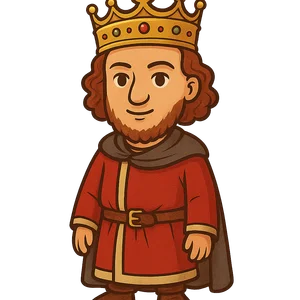
Frederick II, Holy Roman Emperor
Frederick II was a Holy Roman Emperor and King of Sicily in the 13th century…
Reads at Grades 6–8 Listens at Grades 4–8
Print & create
Answer keys·No prep·Free with an account
28 worksheets · answer keys · full story · quiz · Ages 10-12 · CEFR B2
Plus adds 244,000+ more stories in 27 languages, audio for every one, and printables for all of them.
Just want Frederick II, Holy Roman Emperor?
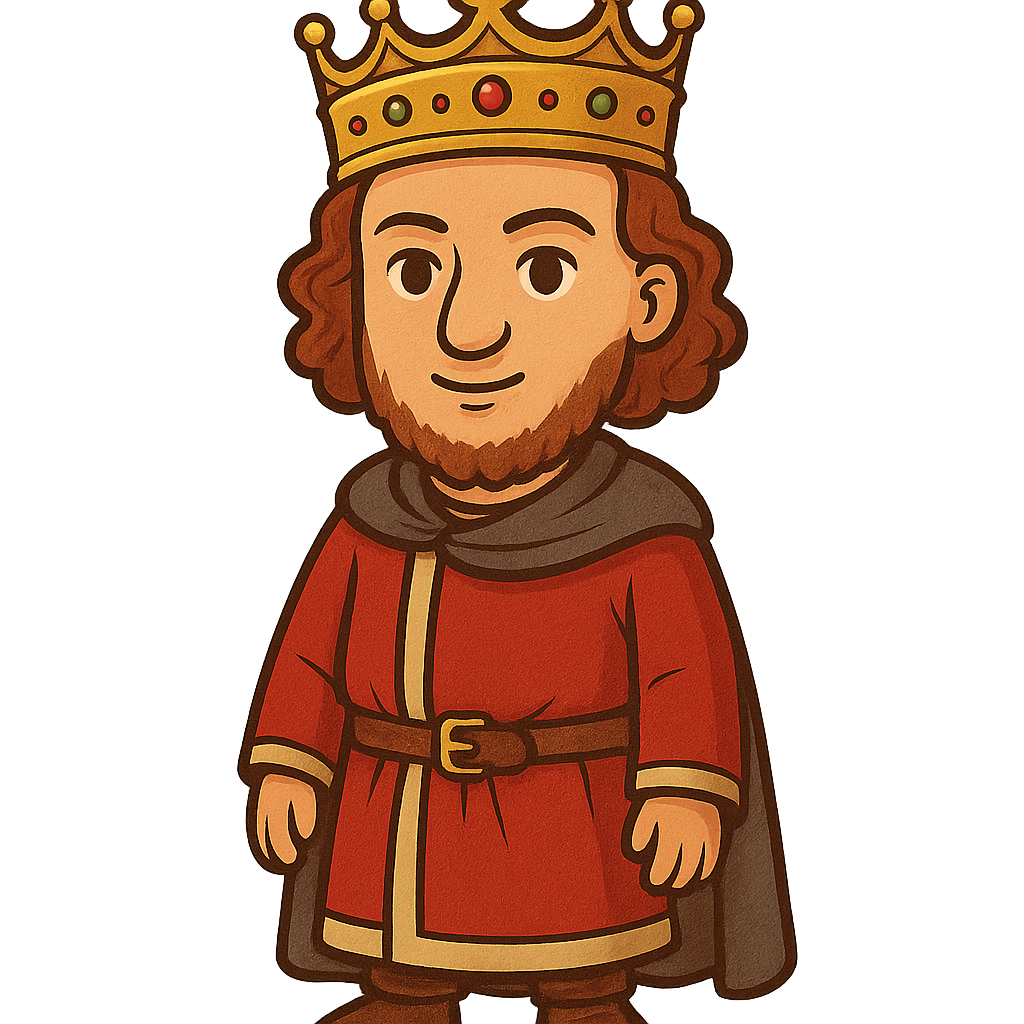
Hello, my name is Frederick II, and I was once known as the Holy Roman Emperor. My life was a journey that stretched across different cultures, from the vibrant markets of Sicily to the grand halls of Germany. I was born on December 26th, 1194, into a world of great power, but my childhood was marked by loss. My father, Emperor Henry VI, passed away in 1197 when I was just a toddler, and my mother, Empress Constance, followed him in 1198. Suddenly an orphan, I was placed under the guardianship of Pope Innocent III. I grew up in the Kingdom of Sicily, a remarkable place where people from Christian, Muslim, and Jewish cultures lived and worked together. This diverse world ignited a fire in me—a deep curiosity for knowledge. I spent my youth learning different languages, studying science, and reading everything I could find. My unique upbringing in Sicily shaped me into a ruler who valued learning and understood the importance of different perspectives.
My path to becoming an emperor began when I was very young. In 1198, the same year my mother passed away, I was crowned King of Sicily. Though I had the title, I had to fight to secure my power as I grew older. The greatest challenge came in 1212 when I embarked on a dangerous journey north across the Alps to Germany to claim the lands my father had ruled. It was a long and difficult struggle, but I was determined to unite my inheritance. Three years later, in 1215, my efforts were rewarded when I was officially crowned King of Germany. My ambition didn't stop there. The ultimate prize was the imperial crown. On November 22nd, 1220, in a magnificent ceremony in Rome, I was finally crowned Holy Roman Emperor. I now ruled over a vast territory that included parts of modern-day Germany, Italy, and beyond, a responsibility I took very seriously.
Frederick II: The Wonder of the World
Hello, my name is Frederick II, and I was once known as the Holy Roman Emperor. My life was a journey that stretched across different cultures, from the vibrant markets of Sicily to the grand halls of Germany. I was born on December 26th, 1194, into a world of great power, but my childhood was marked by loss. My father, Emperor Henry VI, passed away in 1197 when I was just a toddler, and my mother, Empress Constance, followed him in 1198. Suddenly an orphan, I was placed under the guardianship of Pope Innocent III. I grew up in the Kingdom of Sicily, a remarkable place where people from Christian, Muslim, and Jewish cultures lived and worked together. This diverse world ignited a fire in me—a deep curiosity for knowledge. I spent my youth learning different languages, studying science, and reading everything I could find. My unique upbringing in Sicily shaped me into a ruler who valued learning and understood the importance of different perspectives.
My path to becoming an emperor began when I was very young. In 1198, the same year my mother passed away, I was crowned King of Sicily. Though I had the title, I had to fight to secure my power as I grew older. The greatest challenge came in 1212 when I embarked on a dangerous journey north across the Alps to Germany to claim the lands my father had ruled. It was a long and difficult struggle, but I was determined to unite my inheritance. Three years later, in 1215, my efforts were rewarded when I was officially crowned King of Germany. My ambition didn't stop there. The ultimate prize was the imperial crown. On November 22nd, 1220, in a magnificent ceremony in Rome, I was finally crowned Holy Roman Emperor. I now ruled over a vast territory that included parts of modern-day Germany, Italy, and beyond, a responsibility I took very seriously.
One of the most defining moments of my reign was the Sixth Crusade. For years, Pope Gregory IX had urged me to lead an army to the Holy Land to reclaim Jerusalem. I prepared to go, but in 1227, a serious illness swept through my camp, and I had to delay the voyage. The Pope, not believing I was truly sick, excommunicated me from the church. Despite this, I was determined to fulfill my promise. In 1228, I sailed for the Holy Land, but I chose a different path than the emperors before me. Instead of seeking victory through war, I sought it through words. I began negotiations with the Sultan of Egypt, Al-Kamil, a wise and respected leader. We found that we had much in common, including a love for science and philosophy. In 1229, we signed a historic peace treaty. Through diplomacy alone, Jerusalem was returned to Christian control for ten years, proving that understanding could be more powerful than battle.
My reign was not just about politics and crusades; it was about building a better, more organized world. People began to call me 'Stupor Mundi,' a Latin phrase meaning 'Wonder of the World,' because of my endless curiosity and my modern ideas. In 1231, I introduced a groundbreaking set of laws called the Constitutions of Melfi. This was a single, comprehensive legal code for my entire kingdom, ensuring justice was applied more fairly to everyone, from nobles to commoners. My passion for learning also led me to establish the University of Naples in 1224, one of the first public universities in the world, created to train skilled administrators for my kingdom. I was a scholar myself and an avid falconer. I poured my knowledge of birds into a detailed scientific book called 'De Arte Venandi cum Avibus' ('The Art of Hunting with Birds'), which is still studied today for its precise observations of anatomy and behavior.
My later years were filled with constant struggles against the popes and the self-governing cities of Italy, who often challenged my authority. My life came to an end on December 13th, 1250. I lived to be 55 years old. I am remembered as a ruler who was ahead of his time. I was a curious scholar who believed in the power of knowledge, a diplomat who chose peace over war, and a leader who brought together people from many cultures. My ideas about law, science, and government were seeds planted long ago, which helped shape the future of Europe for centuries to come.
Wow facts
About
Frederick II was a Holy Roman Emperor and King of Sicily in the 13th century, known for his patronage of science and the arts, his diplomatic success in the Sixth Crusade, and his long-running conflict with the papacy. He was called 'Stupor Mundi,' or 'Wonder of the World.'
Take a Quiz
Question 1 of 5
Why do you think Frederick II was called 'Stupor Mundi,' or 'Wonder of the World'?
Explore next




Want to do even more?
Go beyond exploring. Unlock tools that turn every story into real learning.

Storypie Plus for families
Full stories, quizzes, and printables. Nights and car rides, sorted.
- Unlimited audio stories
- Create Mode: your child stars in the story
- Offline downloads
- Printable worksheets & coloring pages

Why Storypie for Schools
Students engaged. Prep in seconds. Evenings back to you.
- Worksheets & Quizzes
- Classroom Management
- Formative Assessment
- Custom Curriculum & Lesson Plans
- 27 Languages

Why Storypie for Homeschool
Curriculum done. They'll ask for more. Hours back in your day.
- Worksheet Generator
- First-Person Audio Stories
- Built-in Comprehension Quizzes
- Custom Curriculum & Lesson Plans
- Print & Go Activities