English

Frederick Sanger
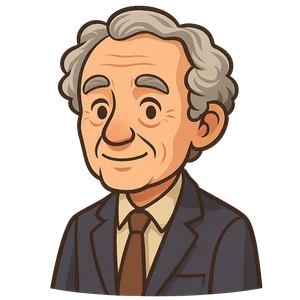
Frederick Sanger was a British biochemist who twice won the Nobel Prize in Chemistry.
Reads at Grades 6–8 Listens at Grades 4–8
Print & create
Answer keys·No prep·Free with an account
28 worksheets · answer keys · full story · quiz · Ages 10-12 · CEFR B2
Plus adds 273,000+ more stories in 27 languages, audio for every one, and printables for all of them.
Just want Frederick Sanger?
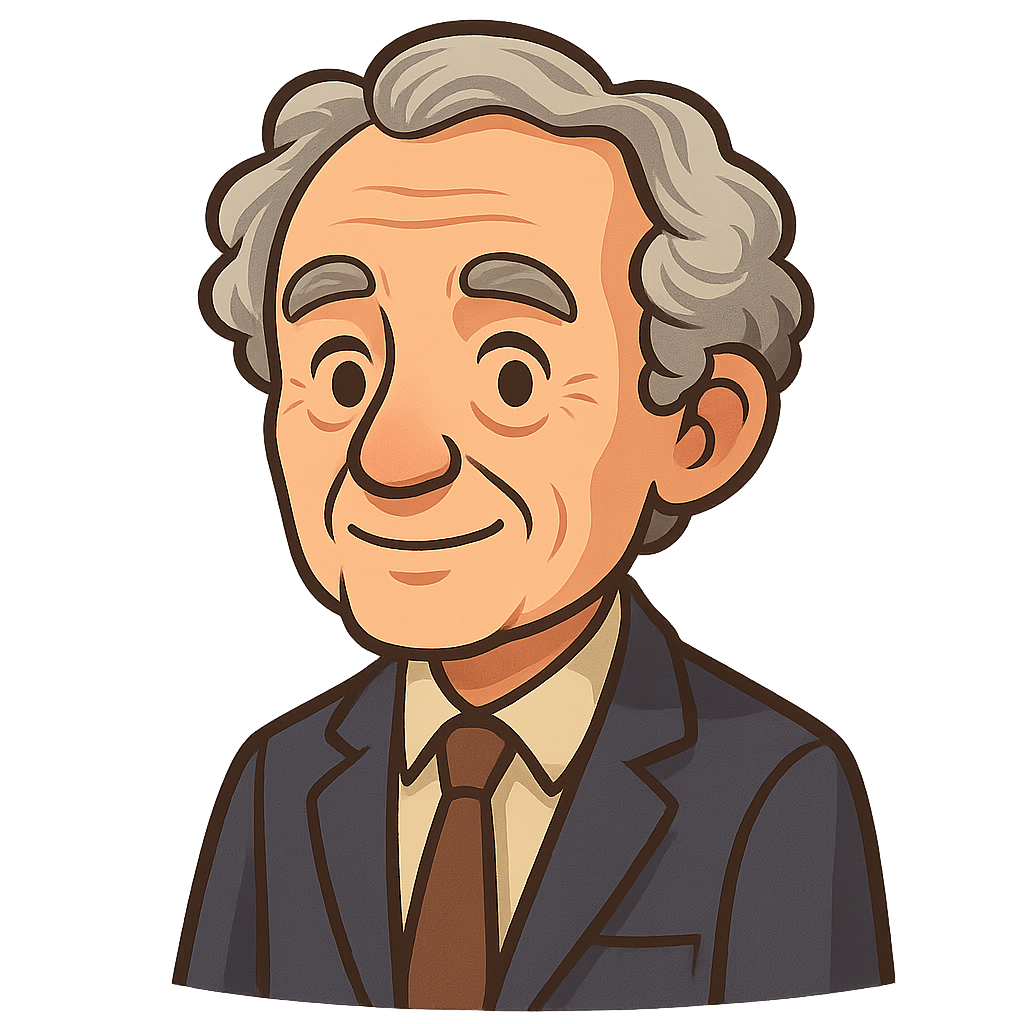
Hello, my name is Frederick Sanger, but my friends called me Fred. I want to tell you the story of how my curiosity about the world led me to solve some of science's biggest puzzles. I was born on August 13th, 1918, in a quiet village in Gloucestershire, England. My father was a doctor, and growing up in the countryside, I developed a great love for nature. I was always fascinated by how living things worked. This early curiosity guided my path. In 1936, I enrolled at the University of Cambridge to study science. At first, I thought I might follow in my father's footsteps and become a doctor. However, during my studies, I discovered a subject called biochemistry—the chemistry of life. I was completely captivated by the idea of tiny molecules acting as the building blocks for every living organism. I knew then that I wanted to spend my life understanding these fundamental components of life.
After completing my studies at Cambridge in 1943, I chose to stay and work as a researcher. I set a monumental goal for myself: to determine the exact structure of a protein. Proteins are like tiny, complex machines that perform all the essential jobs inside our bodies. Back in the 1940s, scientists knew proteins were important, but no one knew their precise structure. I chose to focus on insulin, a protein vital for controlling sugar in our blood. The work felt like trying to solve an enormous jigsaw puzzle without having the picture on the box to guide me. For nearly a decade, I worked patiently in my laboratory. I developed methods to carefully break the insulin molecule into smaller, manageable pieces and then identify each piece one by one. It was slow and meticulous work. Finally, in 1955, I succeeded. I had mapped out the complete amino acid sequence of insulin. This was a historic achievement, as it was the first time anyone had ever fully sequenced a protein. For this discovery, I was awarded my first Nobel Prize in Chemistry in 1958. It was an incredible honor, but for me, the true reward was the deep satisfaction of solving the puzzle.
Frederick Sanger: The Scientist Who Read the Code of Life
Hello, my name is Frederick Sanger, but my friends called me Fred. I want to tell you the story of how my curiosity about the world led me to solve some of science's biggest puzzles. I was born on August 13th, 1918, in a quiet village in Gloucestershire, England. My father was a doctor, and growing up in the countryside, I developed a great love for nature. I was always fascinated by how living things worked. This early curiosity guided my path. In 1936, I enrolled at the University of Cambridge to study science. At first, I thought I might follow in my father's footsteps and become a doctor. However, during my studies, I discovered a subject called biochemistry—the chemistry of life. I was completely captivated by the idea of tiny molecules acting as the building blocks for every living organism. I knew then that I wanted to spend my life understanding these fundamental components of life.
After completing my studies at Cambridge in 1943, I chose to stay and work as a researcher. I set a monumental goal for myself: to determine the exact structure of a protein. Proteins are like tiny, complex machines that perform all the essential jobs inside our bodies. Back in the 1940s, scientists knew proteins were important, but no one knew their precise structure. I chose to focus on insulin, a protein vital for controlling sugar in our blood. The work felt like trying to solve an enormous jigsaw puzzle without having the picture on the box to guide me. For nearly a decade, I worked patiently in my laboratory. I developed methods to carefully break the insulin molecule into smaller, manageable pieces and then identify each piece one by one. It was slow and meticulous work. Finally, in 1955, I succeeded. I had mapped out the complete amino acid sequence of insulin. This was a historic achievement, as it was the first time anyone had ever fully sequenced a protein. For this discovery, I was awarded my first Nobel Prize in Chemistry in 1958. It was an incredible honor, but for me, the true reward was the deep satisfaction of solving the puzzle.
After my work with proteins, I was ready for an even bigger challenge: DNA. DNA is the master instruction book for all life, holding the genetic code that makes every living thing unique. This code is written using just four chemical 'letters': A, T, C, and G. My new goal was to invent a reliable method to read the precise order, or sequence, of these letters. My team and I moved to the new Laboratory of Molecular Biology in Cambridge, which was a wonderfully collaborative environment filled with brilliant scientists. We spent years experimenting with different approaches. Finally, in 1977, we had a major breakthrough. We developed a fast and accurate method for reading long stretches of DNA, which became known around the world as 'Sanger sequencing.' This invention was revolutionary. It gave scientists everywhere a powerful tool to read the genetic code of any organism, from the simplest bacteria to complex human beings. It opened up an entirely new world of possibilities in biology and medicine.
The impact of my DNA sequencing method was so significant that in 1980, I was awarded a second Nobel Prize in Chemistry. I was completely astonished to receive such an honor again. I shared this prize with two other remarkable scientists, Walter Gilbert and Paul Berg, who had also made groundbreaking contributions to understanding DNA. At that time, I became one of only four people to have ever won two Nobel Prizes, which was something I had never dreamed of achieving. A few years later, in 1983, I decided it was time to retire. I was never a person who sought fame or the spotlight. My true happiness was found in the quiet focus of my lab, methodically working on a scientific problem, or at home, tending to my garden. The thrill of discovery itself was always my greatest and most fulfilling reward.
I lived a long and very full life, filled with the excitement of scientific exploration, and I lived to be 95 years old. The sequencing methods my teams and I developed helped launch the entire field of genomics and made enormous undertakings like the Human Genome Project possible. Today, when doctors screen for genetic diseases, or when scientists study the evolutionary history of life on Earth, they are often using technologies and ideas that grew from the puzzles I worked so hard to solve in my laboratory. I hope my story encourages you to always stay curious, to ask big questions, and to have the patience to work toward finding the answers. You never know what amazing things you might discover.
Wow facts
About
Frederick Sanger was a British biochemist who twice won the Nobel Prize in Chemistry. He is known for his pioneering work on the structure of proteins, especially insulin, and for developing the 'Sanger method' for DNA sequencing.
Take a Quiz
Question 1 of 5
What was the lesson of this story about achieving something great?
Explore next





Want to do even more?
Go beyond exploring. Unlock tools that turn every story into real learning.

Storypie Plus for families
Full stories, quizzes, and printables. Nights and car rides, sorted.
- Unlimited audio stories
- Create Mode: your child stars in the story
- Offline downloads
- Printable worksheets & coloring pages

Why Storypie for Schools
Students engaged. Prep in seconds. Evenings back to you.
- Worksheets & Quizzes
- Classroom Management
- Formative Assessment
- Custom Curriculum & Lesson Plans
- 27 Languages

Why Storypie for Homeschool
Curriculum done. They'll ask for more. Hours back in your day.
- Worksheet Generator
- First-Person Audio Stories
- Built-in Comprehension Quizzes
- Custom Curriculum & Lesson Plans
- Print & Go Activities