English

Frederick Sanger
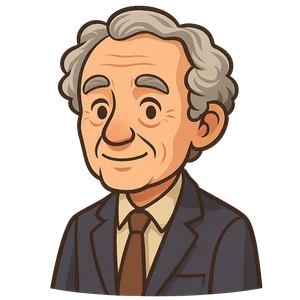
Frederick Sanger was a British biochemist who twice won the Nobel Prize in Chemistry.
Reads at Grades 3–5 Listens at Grades 1–5
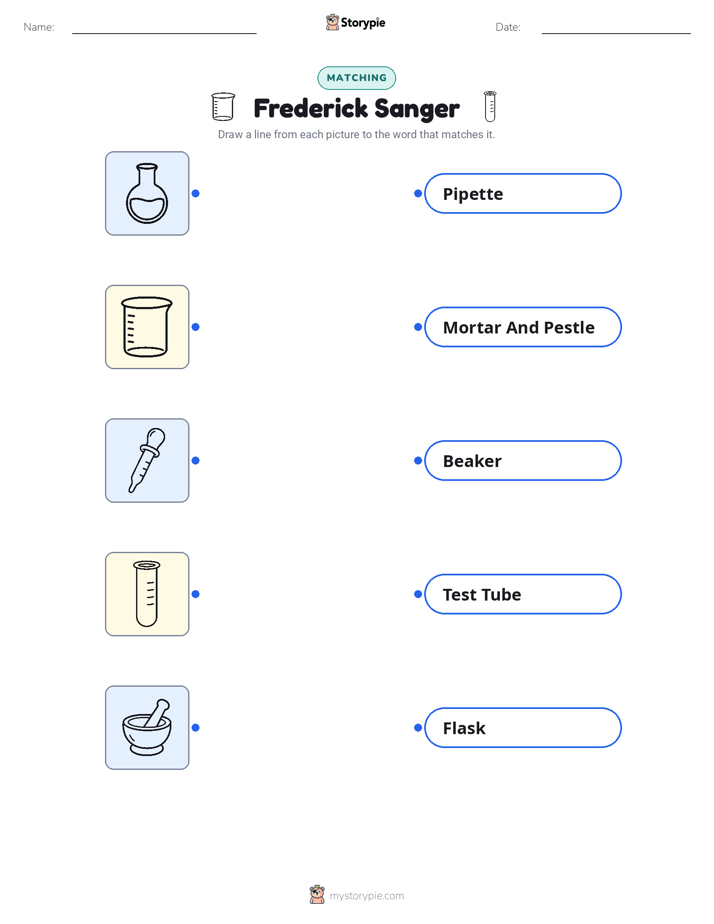
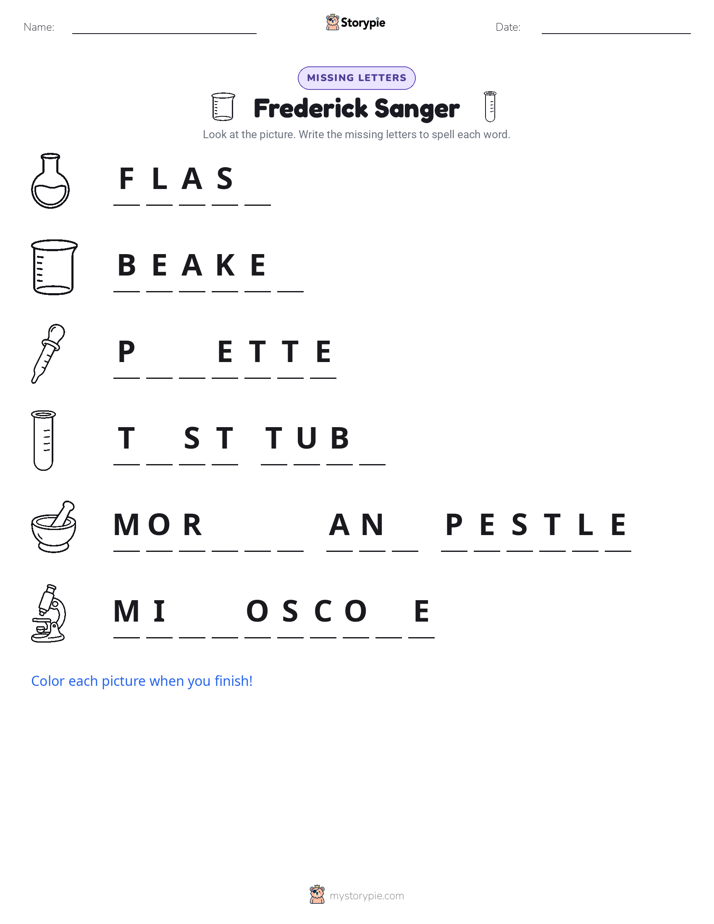
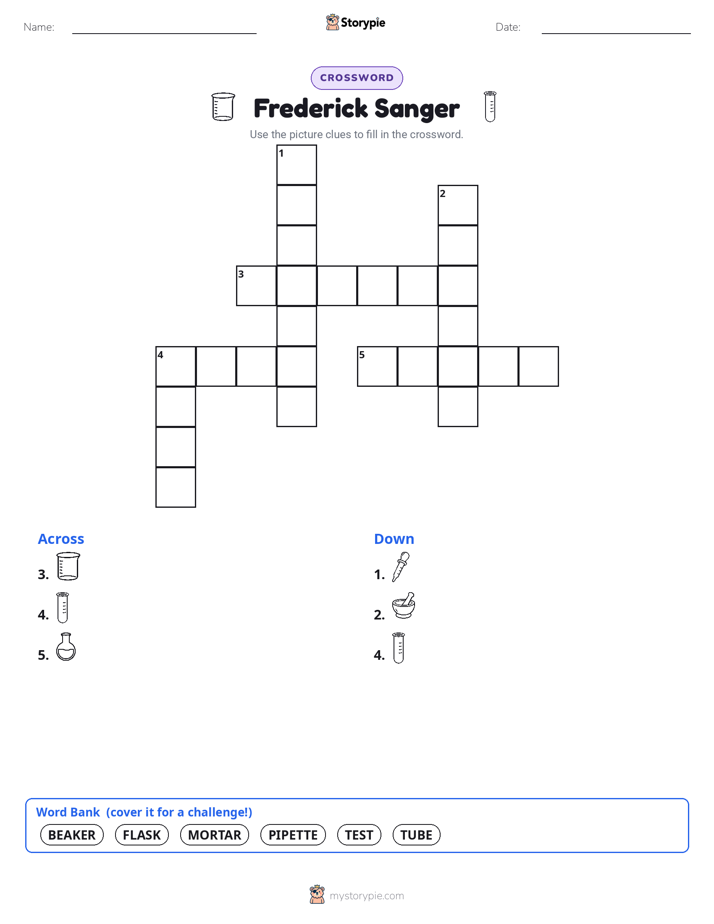
Print & create
Answer keys·No prep·Free with an account
28 worksheets · answer keys · full story · quiz · Ages 8-10 · CEFR B1
Plus adds 273,000+ more stories in 27 languages, audio for every one, and printables for all of them.
Just want Frederick Sanger?
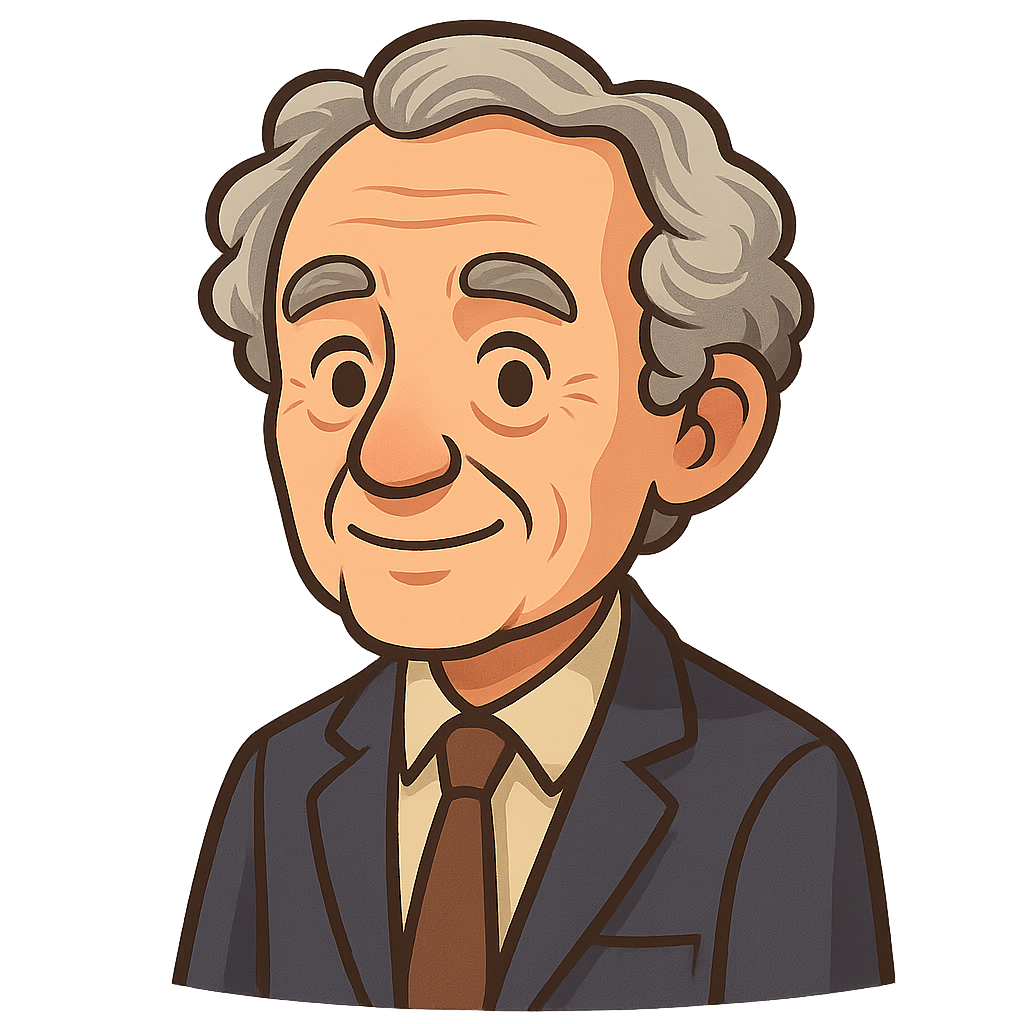
Hello! My name is Frederick Sanger, but you can call me Fred. I was born on August 13th, 1918, in a small village in Gloucestershire, England. Growing up, I wasn't always inside reading books. Instead, I loved being outdoors, exploring nature and learning about all the living things around me. My father was a doctor, and for a while, I thought maybe I would be one too. But when I went to the University of Cambridge in 1936, I fell in love with a different kind of science: biochemistry. That’s the chemistry of life. I realized I wanted to understand the tiniest building blocks that make up every living creature on Earth.
After I finished my studies in 1943, I started working on a very important puzzle. Scientists knew about a protein called insulin, which is incredibly important for controlling sugar in our bodies, but nobody knew exactly what it was made of or how it was put together. Imagine trying to figure out how a giant LEGO castle is built without any instructions. That’s what it felt like. For ten long years, I carefully broke insulin apart piece by piece and figured out the exact order of its building blocks, which are called amino acids. In 1955, I finally did it. I had discovered the complete 'instruction manual' for insulin. This was a huge discovery because it proved that proteins had a specific, predictable structure, which was a brand new idea at the time.
For my work on insulin, I was given a very special award in 1958 called the Nobel Prize in Chemistry. It was a wonderful honor and I felt so proud of the work my team and I had done. But I wasn't done being curious. In fact, that big achievement made me want to tackle an even bigger challenge. I soon became fascinated by an even more complicated puzzle inside our bodies: DNA. You can think of DNA as the master instruction book for all living things. It tells our bodies how to grow and work. At the time, we knew DNA existed, but reading the instructions written in it was almost impossible. I wanted to find a way to read the code of life itself.
Frederick Sanger: The Man Who Read the Book of Life
Hello! My name is Frederick Sanger, but you can call me Fred. I was born on August 13th, 1918, in a small village in Gloucestershire, England. Growing up, I wasn't always inside reading books. Instead, I loved being outdoors, exploring nature and learning about all the living things around me. My father was a doctor, and for a while, I thought maybe I would be one too. But when I went to the University of Cambridge in 1936, I fell in love with a different kind of science: biochemistry. That’s the chemistry of life. I realized I wanted to understand the tiniest building blocks that make up every living creature on Earth.
After I finished my studies in 1943, I started working on a very important puzzle. Scientists knew about a protein called insulin, which is incredibly important for controlling sugar in our bodies, but nobody knew exactly what it was made of or how it was put together. Imagine trying to figure out how a giant LEGO castle is built without any instructions. That’s what it felt like. For ten long years, I carefully broke insulin apart piece by piece and figured out the exact order of its building blocks, which are called amino acids. In 1955, I finally did it. I had discovered the complete 'instruction manual' for insulin. This was a huge discovery because it proved that proteins had a specific, predictable structure, which was a brand new idea at the time.
For my work on insulin, I was given a very special award in 1958 called the Nobel Prize in Chemistry. It was a wonderful honor and I felt so proud of the work my team and I had done. But I wasn't done being curious. In fact, that big achievement made me want to tackle an even bigger challenge. I soon became fascinated by an even more complicated puzzle inside our bodies: DNA. You can think of DNA as the master instruction book for all living things. It tells our bodies how to grow and work. At the time, we knew DNA existed, but reading the instructions written in it was almost impossible. I wanted to find a way to read the code of life itself.
My team and I worked for many years in our lab, trying all sorts of clever ideas to read the long strings of code in DNA. It was a very difficult task that required a lot of patience. Finally, in 1977, we invented a new way to do it. We called it the 'dideoxy method,' but most people today just call it 'Sanger sequencing.' Our method was a fast and accurate way to read the letters of the DNA code. It was like finally learning the alphabet for the language of life. This invention was so important that in 1980, I was awarded a second Nobel Prize in Chemistry. I am one of the very few people in history to have ever received two.
After a long career of discovery, I retired in 1983 to spend more time gardening and being with my family. I lived to be 95 years old. The methods I helped create opened up a whole new world for scientists. They used my sequencing technique to complete the Human Genome Project, which read the entire human instruction book for the first time. Today, doctors and scientists use my work every day to understand diseases, find cures, and learn more about the amazing world of living things. I'm so happy that my curiosity helped give us a way to read the book of life.
Wow facts
About
Frederick Sanger was a British biochemist who twice won the Nobel Prize in Chemistry. He is known for his pioneering work on the structure of proteins, especially insulin, and for developing the 'Sanger method' for DNA sequencing.
Take a Quiz
Question 1 of 5
What problem did Frederick Sanger solve in 1955 after ten years of work?
Explore next



Want to do even more?
Go beyond exploring. Unlock tools that turn every story into real learning.

Storypie Plus for families
Full stories, quizzes, and printables. Nights and car rides, sorted.
- Unlimited audio stories
- Create Mode: your child stars in the story
- Offline downloads
- Printable worksheets & coloring pages

Why Storypie for Schools
Students engaged. Prep in seconds. Evenings back to you.
- Worksheets & Quizzes
- Classroom Management
- Formative Assessment
- Custom Curriculum & Lesson Plans
- 27 Languages

Why Storypie for Homeschool
Curriculum done. They'll ask for more. Hours back in your day.
- Worksheet Generator
- First-Person Audio Stories
- Built-in Comprehension Quizzes
- Custom Curriculum & Lesson Plans
- Print & Go Activities