English

Friedrich Schiller
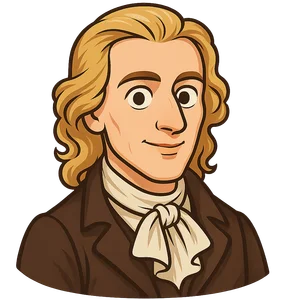
A celebrated German poet, philosopher, historian, and playwright…
Reads at Grades 6–8 Listens at Grades 4–8
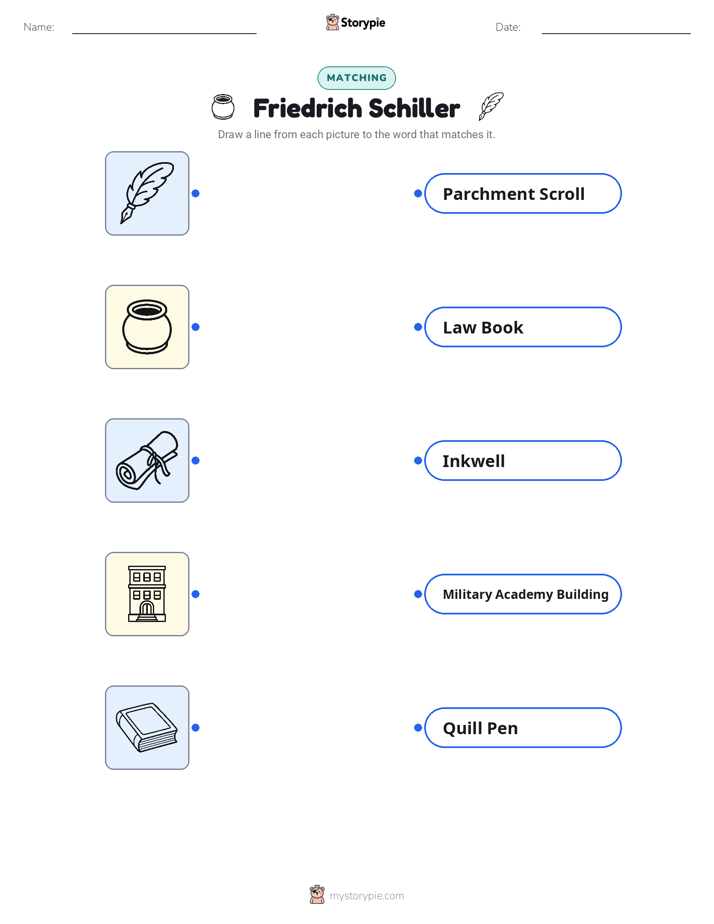
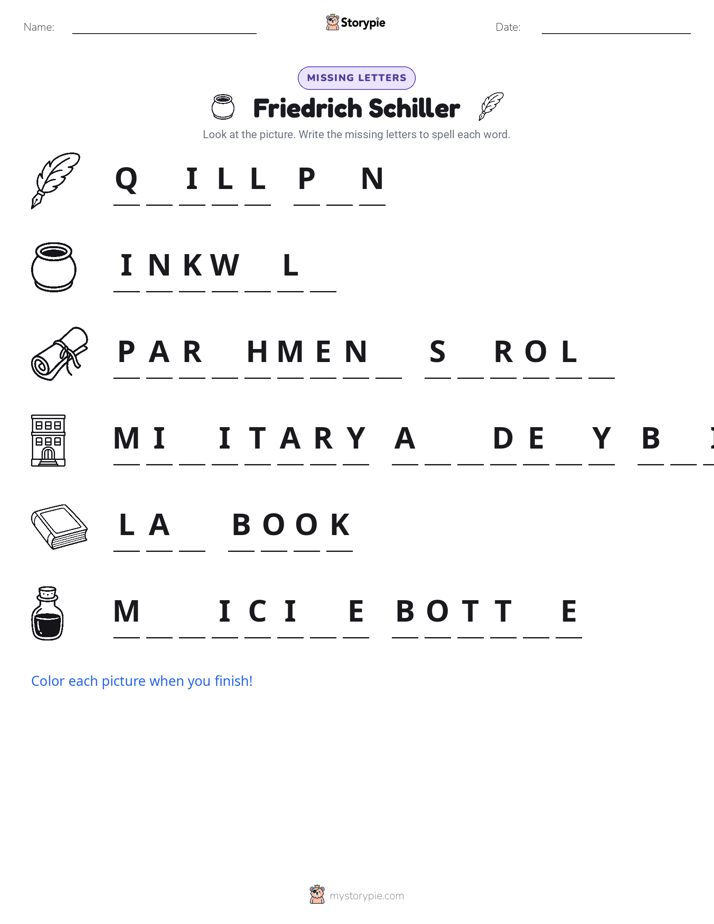
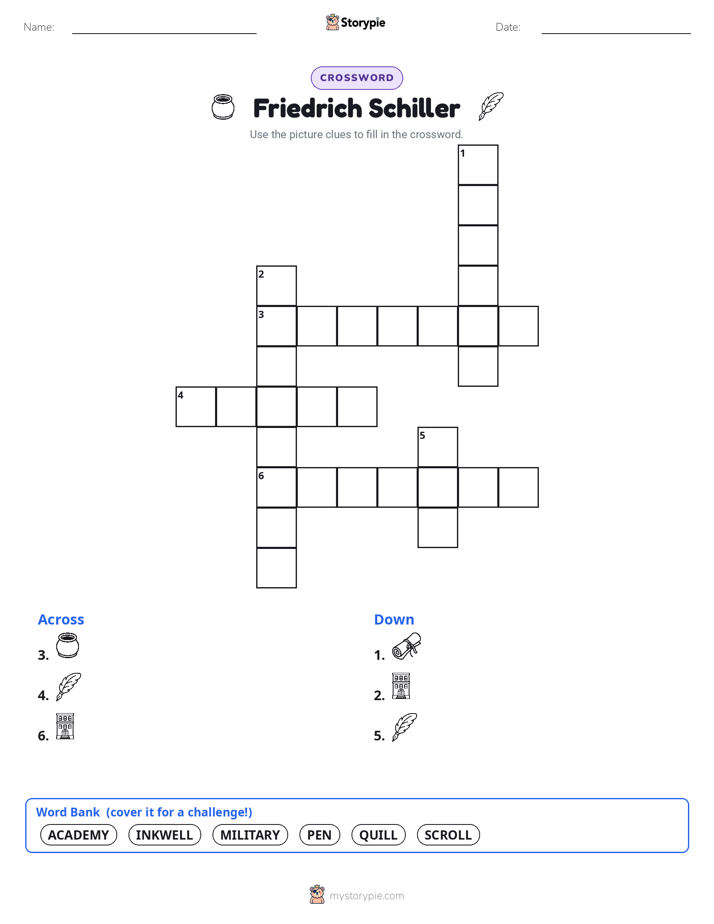
Print & create
Answer keys·No prep·Free with an account
28 worksheets · answer keys · full story · quiz · Ages 10-12 · CEFR B2
Plus adds 244,000+ more stories in 27 languages, audio for every one, and printables for all of them.
Just want Friedrich Schiller?
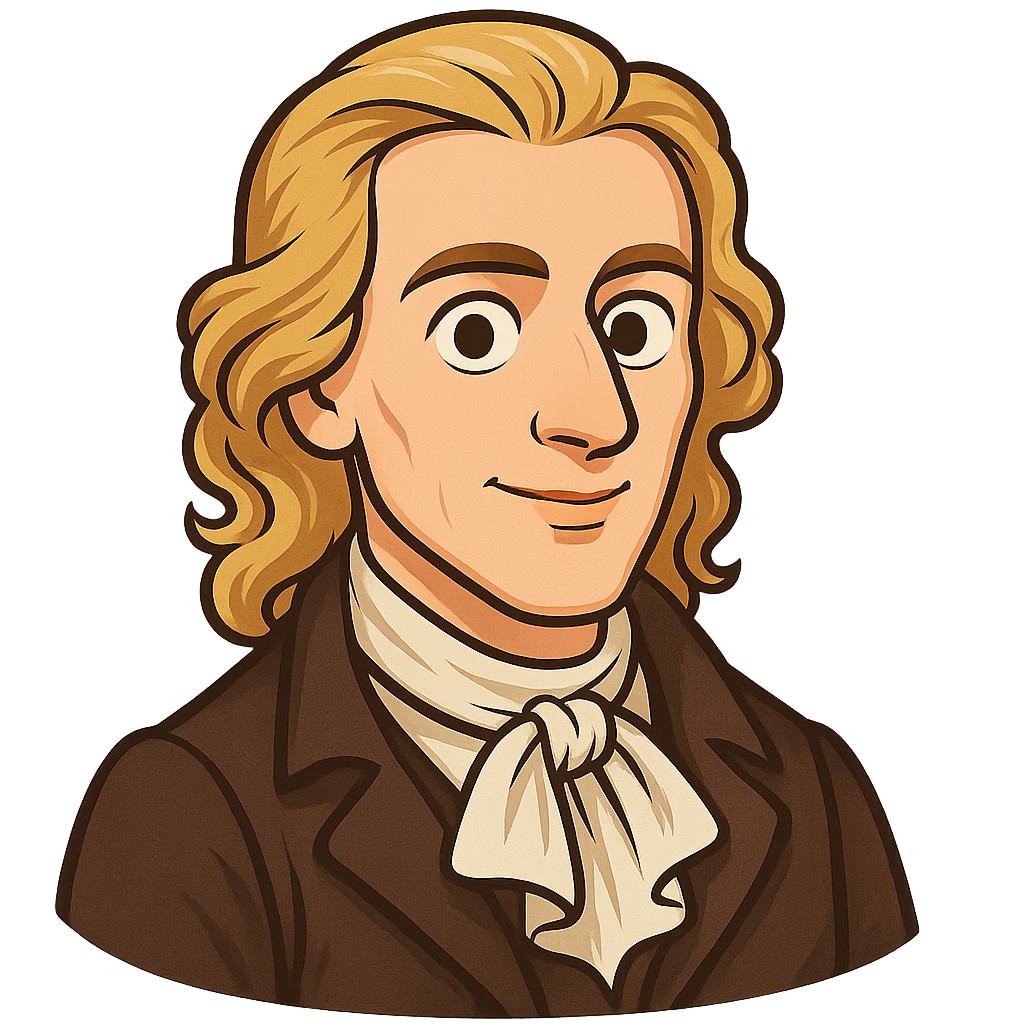
Hello, my name is Friedrich Schiller, and I am known as one of Germany's most important playwrights and poets. My story is one of chasing dreams, even when the world tries to hold you back. I was born on November 10th, 1759, in a small German town called Marbach. My father served as an army officer, so our household was one of order and discipline. My own spirit, however, was filled with a love for stories and poems. I dreamed of becoming a writer, but the powerful ruler of our region, Duke Karl Eugen, had very different ideas for my future. In 1773, when I was a young boy, he commanded that I enroll in his strict military academy. My own wish was to study religion and become a pastor, but the Duke forced me first into the study of law, and later, medicine. I felt like a bird trapped in a cage, so I found my freedom in secret. Late at night, I would read books and write my own stories, dreaming of a world filled with art and liberty.
During my time at the military academy, I secretly poured all my frustrations and hopes into my first play, which I called 'The Robbers.' It was a passionate story about freedom, rebellion, and the fight against unjust authority. The play was finally performed in the city of Mannheim on January 13th, 1782, and the reaction was incredible. The audience was electrified; they had never experienced a story with such raw emotion and bold ideas. However, this great success brought me great trouble. Duke Karl Eugen was furious. Not only had I left my post without permission to attend the premiere, but I had also written a work he considered dangerously rebellious. As punishment, he forbade me from writing anything other than medical essays and even placed me under arrest for a short time. I knew then that I could not live under his control. In 1782, I made the most difficult decision of my life: I escaped from the Duke’s territory to pursue a life of freedom where I could write as I pleased.
Friedrich Schiller
Hello, my name is Friedrich Schiller, and I am known as one of Germany's most important playwrights and poets. My story is one of chasing dreams, even when the world tries to hold you back. I was born on November 10th, 1759, in a small German town called Marbach. My father served as an army officer, so our household was one of order and discipline. My own spirit, however, was filled with a love for stories and poems. I dreamed of becoming a writer, but the powerful ruler of our region, Duke Karl Eugen, had very different ideas for my future. In 1773, when I was a young boy, he commanded that I enroll in his strict military academy. My own wish was to study religion and become a pastor, but the Duke forced me first into the study of law, and later, medicine. I felt like a bird trapped in a cage, so I found my freedom in secret. Late at night, I would read books and write my own stories, dreaming of a world filled with art and liberty.
During my time at the military academy, I secretly poured all my frustrations and hopes into my first play, which I called 'The Robbers.' It was a passionate story about freedom, rebellion, and the fight against unjust authority. The play was finally performed in the city of Mannheim on January 13th, 1782, and the reaction was incredible. The audience was electrified; they had never experienced a story with such raw emotion and bold ideas. However, this great success brought me great trouble. Duke Karl Eugen was furious. Not only had I left my post without permission to attend the premiere, but I had also written a work he considered dangerously rebellious. As punishment, he forbade me from writing anything other than medical essays and even placed me under arrest for a short time. I knew then that I could not live under his control. In 1782, I made the most difficult decision of my life: I escaped from the Duke’s territory to pursue a life of freedom where I could write as I pleased.
My first years of freedom were filled with hardship and uncertainty, but I was finally able to dedicate myself to my passion. In 1785, I wrote a poem called 'Ode to Joy,' which was a powerful celebration of friendship, unity, and brotherhood. I hoped its message would inspire people to find common ground and overcome their differences. My life took another significant turn in 1787 when I moved to the city of Weimar. At the time, Weimar was a vibrant center for artists, philosophers, and thinkers. It was there that I met another famous writer, Johann Wolfgang von Goethe. At first, we were rivals, each with our own strong ideas about literature. But in 1794, we began a deep conversation that grew into one of the most important friendships in literary history. We pushed each other to think in new ways, and our collaboration marked a period that became known as Weimar Classicism. My world expanded further in 1789 when I accepted a position as a professor of history at the University of Jena, where I had the chance to share my ideas with a new generation.
My friendship with Goethe and my deep dive into the study of history provided me with endless inspiration for my plays. I became fascinated with stories of brave heroes who faced impossible choices in the name of justice and freedom. One of my most famous plays from this period is 'William Tell,' which I completed in 1804. It tells the legendary tale of a Swiss hero who refuses to bow to a cruel tyrant, ultimately leading his people to freedom. This story, like many of my works, explored the struggle between the power of the individual and the demands of society. Throughout my life, I was often plagued by poor health and illness, but I never allowed it to extinguish my creative fire. For me, writing was not just a profession; it was the way I made sense of the world and explored the deepest parts of the human heart.
I lived a life filled with passion and creativity, though it was often a battle against illness. I lived to be 45 years old, passing away in 1805. While my time on Earth was short, my words and ideas continued to resonate long after I was gone. Today, people remember me as one of Germany’s greatest playwrights and poets, a writer who championed the ideals of freedom, beauty, and human dignity. And that poem I wrote in 1785, 'Ode to Joy'? Many years later, the brilliant composer Ludwig van Beethoven used my words for the final movement of his magnificent Ninth Symphony. Now, my celebration of brotherhood is heard around the world as a timeless anthem of hope and unity.
Wow facts
About
A celebrated German poet, philosopher, historian, and playwright, Friedrich Schiller is a central figure in German literature, known for his works on freedom and his friendship with Johann Wolfgang von Goethe.
Take a Quiz
Question 1 of 5
What was the central conflict that forced Friedrich Schiller to escape from his home region in 1782?
Explore next




Want to do even more?
Go beyond exploring. Unlock tools that turn every story into real learning.

Storypie Plus for families
Full stories, quizzes, and printables. Nights and car rides, sorted.
- Unlimited audio stories
- Create Mode: your child stars in the story
- Offline downloads
- Printable worksheets & coloring pages

Why Storypie for Schools
Students engaged. Prep in seconds. Evenings back to you.
- Worksheets & Quizzes
- Classroom Management
- Formative Assessment
- Custom Curriculum & Lesson Plans
- 27 Languages

Why Storypie for Homeschool
Curriculum done. They'll ask for more. Hours back in your day.
- Worksheet Generator
- First-Person Audio Stories
- Built-in Comprehension Quizzes
- Custom Curriculum & Lesson Plans
- Print & Go Activities