
 English

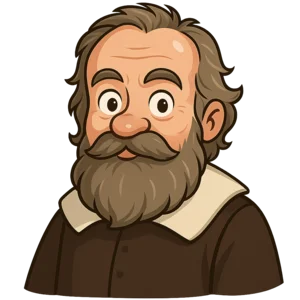
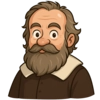
Galileo Galilei
Galileo Galilei was an Italian astronomer, physicist…
Reads at Grades K-2 Listens at K–3
 Screen-free speaker. Built for your kids.
No card, no commitment. One email when there is real news, and one click to stop.
Print & create
Answer keys·No prep·Free with an account
28 worksheets · answer keys · full story · quiz · Ages 6-8 · CEFR A2
Plus adds 102,000+ more stories in 27 languages, audio for every one, and printables for all of them.
Just want Galileo Galilei?
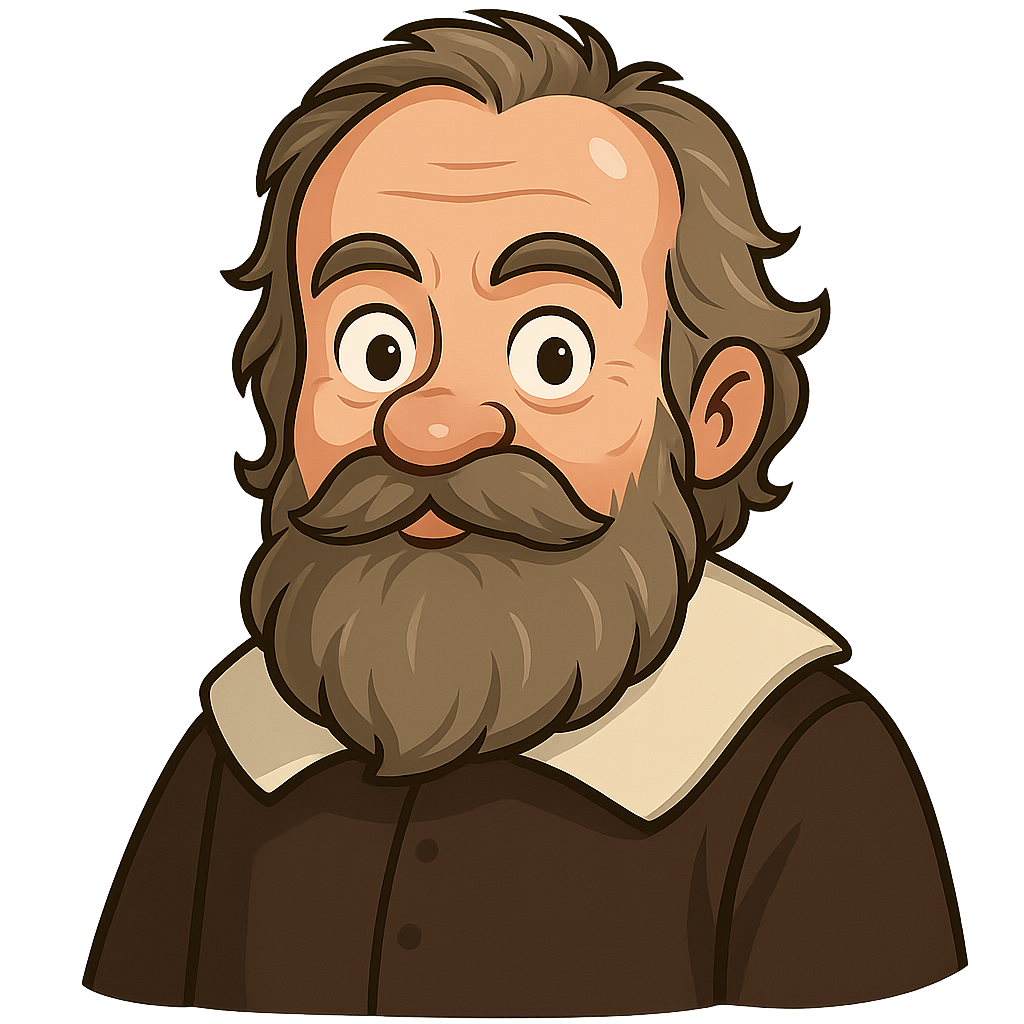
Hello there. My name is Galileo Galilei, and my story begins in a beautiful town called Pisa, in Italy, a very long time ago in the year 1564. Even when I was a little boy, my head was always full of questions. I wanted to know why the wind blew, how birds could fly, and what the stars were made of. One day, I was sitting in a big, quiet church. I looked up and saw a heavy lamp swinging back and forth on a long chain. I noticed something amazing. No matter how wide or short the swing was, it always took the same amount of time to go back and forth. I even used my own pulse to time it. That moment felt like magic. It made me realize that the world was full of wonderful secrets, and I wanted to use math and science to figure them all out.
As I grew up, I heard about a new invention from a faraway land called a spyglass. It could make faraway things look closer. I thought, 'I can make one of those, but even better.'. So, I got to work, grinding and polishing pieces of glass called lenses. I made a spyglass that was so powerful it was like having a super-powered eye. I called it a telescope. One night in 1609, I did something no one had ever done before. I pointed my telescope toward the night sky. The moon wasn't a smooth, glowing ball like everyone thought. It was covered in mountains and bumpy craters, just like the Earth. A little later, in 1610, I pointed my telescope at the giant planet Jupiter. I saw four tiny, twinkling lights dancing around it. They were its moons. This was a huge discovery. I realized that not everything in the universe circled around our Earth. It was as if the sky was telling me a brand new story.
Galileo Galilei: A Look at the Stars
Hello there. My name is Galileo Galilei, and my story begins in a beautiful town called Pisa, in Italy, a very long time ago in the year 1564. Even when I was a little boy, my head was always full of questions. I wanted to know why the wind blew, how birds could fly, and what the stars were made of. One day, I was sitting in a big, quiet church. I looked up and saw a heavy lamp swinging back and forth on a long chain. I noticed something amazing. No matter how wide or short the swing was, it always took the same amount of time to go back and forth. I even used my own pulse to time it. That moment felt like magic. It made me realize that the world was full of wonderful secrets, and I wanted to use math and science to figure them all out.
As I grew up, I heard about a new invention from a faraway land called a spyglass. It could make faraway things look closer. I thought, 'I can make one of those, but even better.'. So, I got to work, grinding and polishing pieces of glass called lenses. I made a spyglass that was so powerful it was like having a super-powered eye. I called it a telescope. One night in 1609, I did something no one had ever done before. I pointed my telescope toward the night sky. The moon wasn't a smooth, glowing ball like everyone thought. It was covered in mountains and bumpy craters, just like the Earth. A little later, in 1610, I pointed my telescope at the giant planet Jupiter. I saw four tiny, twinkling lights dancing around it. They were its moons. This was a huge discovery. I realized that not everything in the universe circled around our Earth. It was as if the sky was telling me a brand new story.
My amazing discoveries made me believe an idea from a very smart man who lived before me, named Nicolaus Copernicus. He thought that the Earth and all the other planets actually traveled around the Sun. Imagine that. Our big Earth was on a journey through space. I was so excited, and I wrote books to share what I had seen. But this idea was very shocking to people back then. For hundreds of years, everyone had been taught that the Earth was the center of everything. Some very important people got angry with me. They told me I was wrong and that I had to stop talking about my ideas. It was a difficult and scary time for me. But I knew what I had seen with my own two eyes through my telescope. I had to be brave and believe in the truth.
Even though I faced many challenges and was told to be quiet, I never stopped looking up at the sky with wonder. My journey wasn't always easy, and I passed away in 1642 after a long life of learning. But my work with the telescope opened up a whole new window to the universe for everyone. It helped people understand our real place among the stars. I hope my story inspires you to always stay curious. Never stop asking questions, and when you look up at the night sky, remember to wonder about all the beautiful stars and planets. That's how we learn, grow, and make amazing discoveries of our own.
Wow facts
About
Galileo Galilei was an Italian astronomer, physicist, and engineer whose pioneering use of the telescope led to revolutionary discoveries about the cosmos and provided crucial evidence for the theory that the Earth revolves around the Sun.
Take a Quiz
Question 1 of 4
Why did some important people get angry at Galileo for his ideas?
Explore next


Want to do even more?
Go beyond exploring. Unlock tools that turn every story into real learning.

Storypie Plus for families
Full stories, quizzes, and printables. Nights and car rides, sorted.
- Unlimited audio stories
- Create Mode: your child stars in the story
- Offline downloads
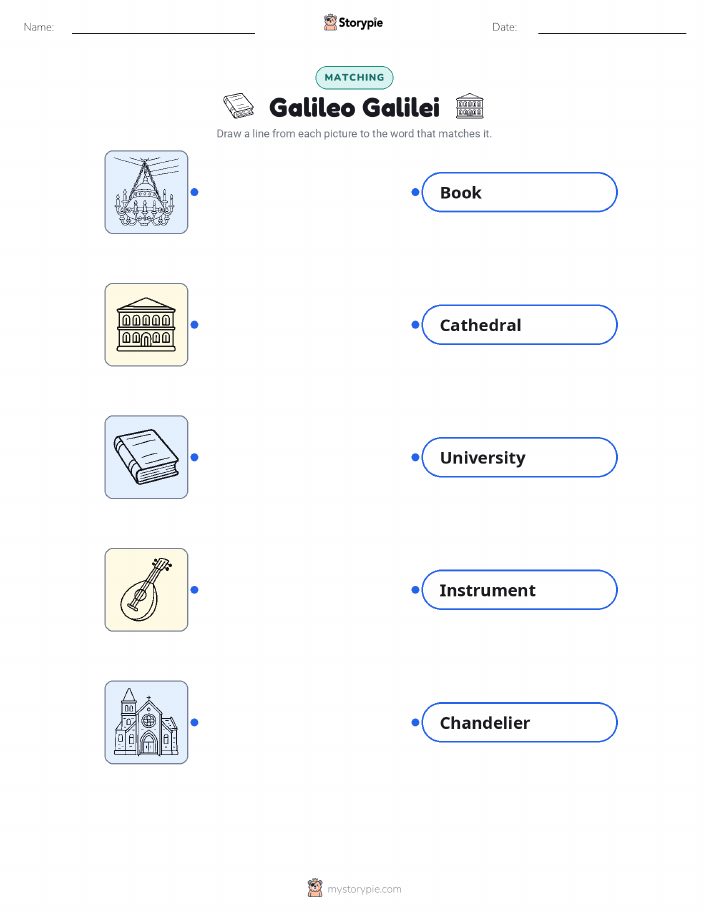
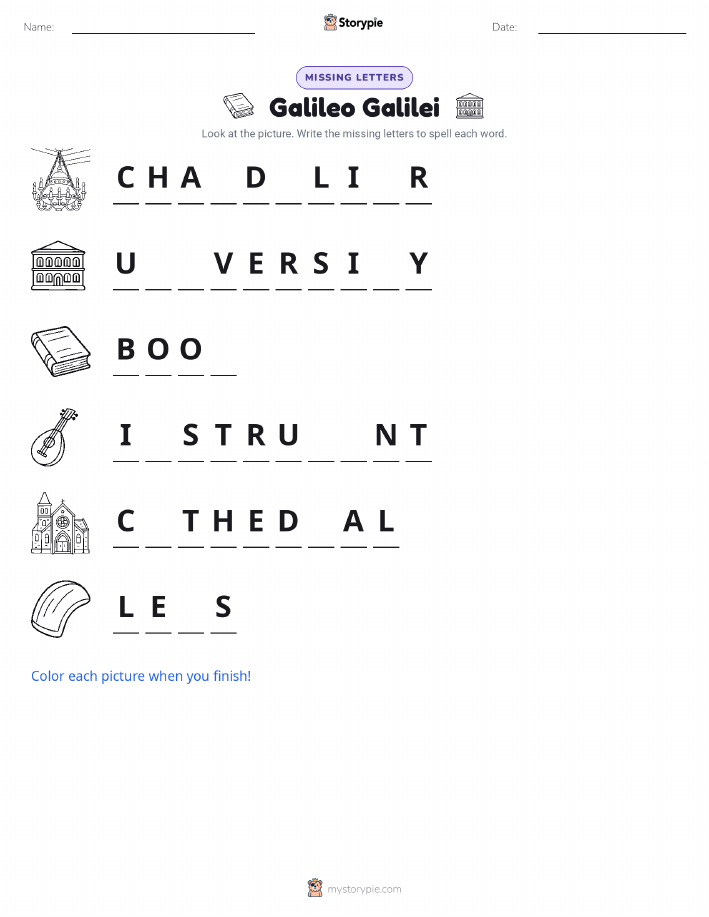
- Printable worksheets & coloring pages

Why Storypie for Schools
Students engaged. Prep in seconds. Evenings back to you.
- Worksheets & Quizzes
- Classroom Management
- Formative Assessment
- Custom Curriculum & Lesson Plans
- 27 Languages

Why Storypie for Homeschool
Curriculum done. They'll ask for more. Hours back in your day.
- Worksheet Generator
- First-Person Audio Stories
- Built-in Comprehension Quizzes
- Custom Curriculum & Lesson Plans
- Print & Go Activities