English

Georgia O'Keeffe
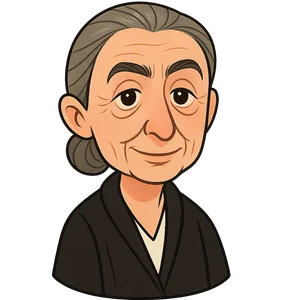
Georgia O'Keeffe was a pioneering American modernist painter…
Reads at Grades 6–8 Listens at Grades 4–8
Print & create
Answer keys·No prep·Free with an account
28 worksheets · answer keys · full story · quiz · Ages 10-12 · CEFR B2
Plus adds 244,000+ more stories in 27 languages, audio for every one, and printables for all of them.
Just want Georgia O'Keeffe?
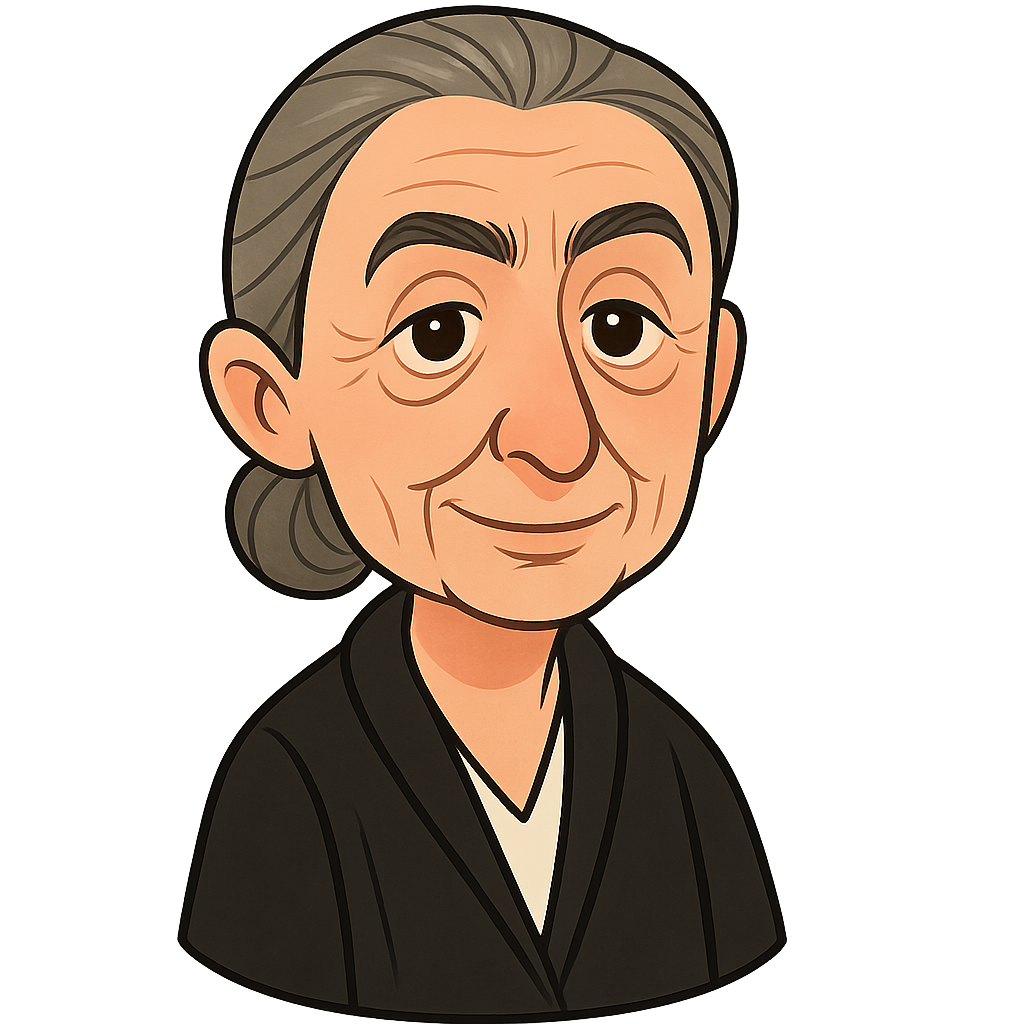
Hello, my name is Georgia O’Keeffe. I want to tell you the story of my life, a life filled with color, light, and the courage to see the world differently. I was born on a big dairy farm near Sun Prairie, Wisconsin, on November 15th, 1887. The world around me was a vast, open prairie, and it taught me to look closely at the details of nature. Even as a little girl, I knew exactly what I wanted to do with my life. By the time I was ten years old, I had firmly decided that I would become an artist. While other children played, I spent my time sketching, noticing the unique shapes of clouds and the delicate lines on a flower petal. I learned to see the bigness in small things.
To become the artist I dreamed of being, I knew I had to leave the farm and seek formal training. In 1905, I went to study at the School of the Art Institute of Chicago, and later, in 1907, I moved to New York City to continue my studies at the Art Students League. The teachers there wanted me to paint in the traditional, realistic style that was popular in Europe, but it never felt true to who I was. I felt so disconnected from that kind of art that I even stopped painting with oils for a time. I took a job teaching art in Texas, and it was there, under the enormous sky, that I started to find my own artistic voice again. I began creating abstract charcoal drawings, focusing on capturing my own ideas and feelings rather than just copying what I saw. In 1916, a friend showed these drawings to a famous photographer and gallery owner in New York named Alfred Stieglitz, and he saw something special in them without me even knowing.
Georgia O’Keeffe: A Life in Color
Hello, my name is Georgia O’Keeffe. I want to tell you the story of my life, a life filled with color, light, and the courage to see the world differently. I was born on a big dairy farm near Sun Prairie, Wisconsin, on November 15th, 1887. The world around me was a vast, open prairie, and it taught me to look closely at the details of nature. Even as a little girl, I knew exactly what I wanted to do with my life. By the time I was ten years old, I had firmly decided that I would become an artist. While other children played, I spent my time sketching, noticing the unique shapes of clouds and the delicate lines on a flower petal. I learned to see the bigness in small things.
To become the artist I dreamed of being, I knew I had to leave the farm and seek formal training. In 1905, I went to study at the School of the Art Institute of Chicago, and later, in 1907, I moved to New York City to continue my studies at the Art Students League. The teachers there wanted me to paint in the traditional, realistic style that was popular in Europe, but it never felt true to who I was. I felt so disconnected from that kind of art that I even stopped painting with oils for a time. I took a job teaching art in Texas, and it was there, under the enormous sky, that I started to find my own artistic voice again. I began creating abstract charcoal drawings, focusing on capturing my own ideas and feelings rather than just copying what I saw. In 1916, a friend showed these drawings to a famous photographer and gallery owner in New York named Alfred Stieglitz, and he saw something special in them without me even knowing.
Alfred Stieglitz believed in my work so much that he gave me my very first solo exhibition at his famous gallery, 291, in 1917. He saw the unique vision in my art and encouraged me to move back to New York to dedicate myself to painting full-time. He became my greatest champion and supporter, and eventually my greatest love. We were married in 1924. During those years, I painted the world around me in a new and different way. I created paintings of giant, close-up flowers, so large that you could feel as if you were walking right inside them. I wanted people to stop and truly look at the beauty in nature that they so often rushed past. I also painted the towering skyscrapers of New York City, capturing both their immense power and their sense of loneliness against the sky.
As much as I was part of the bustling art world in New York, a different part of the country began to call to me. In the summer of 1929, I took a trip to New Mexico, and that journey changed my life forever. The moment I arrived, I felt an incredible sense of belonging, as if I had finally come home. The landscape was breathtaking. The sky was a brilliant, endless blue, and the land itself was painted in stunning shades of red, yellow, and white. It was a place of stark, powerful beauty. I spent my days walking for miles across the desert, collecting sun-bleached animal bones and smooth stones that caught my eye. This dramatic landscape—the flat-topped mesas, the rolling hills, and the distant mountains—became my new and most profound inspiration. I knew I had to paint this place.
For many years after that first visit, I spent my summers painting in New Mexico, returning to New York in the winter. But eventually, I knew I needed to make the desert my permanent home. In 1940, I bought a small house at a place called Ghost Ranch, which was surrounded by magnificent, colorful cliffs that I painted over and over again. Then, in 1945, I bought a second, ruined adobe house in the nearby village of Abiquiú and spent years carefully rebuilding it. This home, with its simple patio and iconic black door, became one of my favorite subjects to paint. After Alfred passed away in 1946, I settled his affairs and made my final move to my beloved New Mexico in 1949. Here, the desert became my quiet companion and my endless muse.
I continued to paint for many more decades, always finding new ways to see the world. My subjects were the things I loved most: the red hills of Ghost Ranch, the simple wooden crosses I saw against the sky, and the animal skulls I found on my walks. I didn't see these skulls as symbols of death, but as beautiful, enduring forms that represented the spirit of the desert. In the 1950s, I began to travel the world, and this opened up a whole new perspective for me—the view from an airplane window. I created a series of paintings of the sky and clouds, capturing the feeling of floating peacefully above the world. As I grew older, my eyesight began to fail in the early 1970s, which made it very difficult to paint. But an artist's spirit never stops creating. With the help of an assistant, I learned to work with clay, shaping pots with my hands and feeling the forms instead of seeing them.
I lived a long and very full life, creating art almost every day. I lived to be 98 years old. Today, people often call me the 'Mother of American Modernism' because I helped create a new, truly American style of art that was separate from the old European rules. My paintings of flowers, bones, and landscapes hang in museums all over the world. I hope that when you look at my work, you are reminded to slow down, look closely, and find the incredible beauty that exists all around you, whether in a simple flower, a weathered bone, or a vast desert sky.
Wow facts
About
Georgia O'Keeffe was a pioneering American modernist painter, best known for her large-scale paintings of flowers, though she also created notable works depicting New York skyscrapers and New Mexico landscapes.
Take a Quiz
Question 1 of 5
Which event from Georgia O'Keeffe's life best shows her independent spirit?
Explore next





Want to do even more?
Go beyond exploring. Unlock tools that turn every story into real learning.

Storypie Plus for families
Full stories, quizzes, and printables. Nights and car rides, sorted.
- Unlimited audio stories
- Create Mode: your child stars in the story
- Offline downloads
- Printable worksheets & coloring pages

Why Storypie for Schools
Students engaged. Prep in seconds. Evenings back to you.
- Worksheets & Quizzes
- Classroom Management
- Formative Assessment
- Custom Curriculum & Lesson Plans
- 27 Languages

Why Storypie for Homeschool
Curriculum done. They'll ask for more. Hours back in your day.
- Worksheet Generator
- First-Person Audio Stories
- Built-in Comprehension Quizzes
- Custom Curriculum & Lesson Plans
- Print & Go Activities