English

Giuseppe Piazzi
Giuseppe Piazzi was an Italian Catholic priest, mathematician…
Reads at Grades 6–8 Listens at Grades 4–8
Print & create
Answer keys·No prep·Free with an account
28 worksheets · answer keys · full story · quiz · Ages 10-12 · CEFR B2
Plus adds 244,000+ more stories in 27 languages, audio for every one, and printables for all of them.
Just want Giuseppe Piazzi?
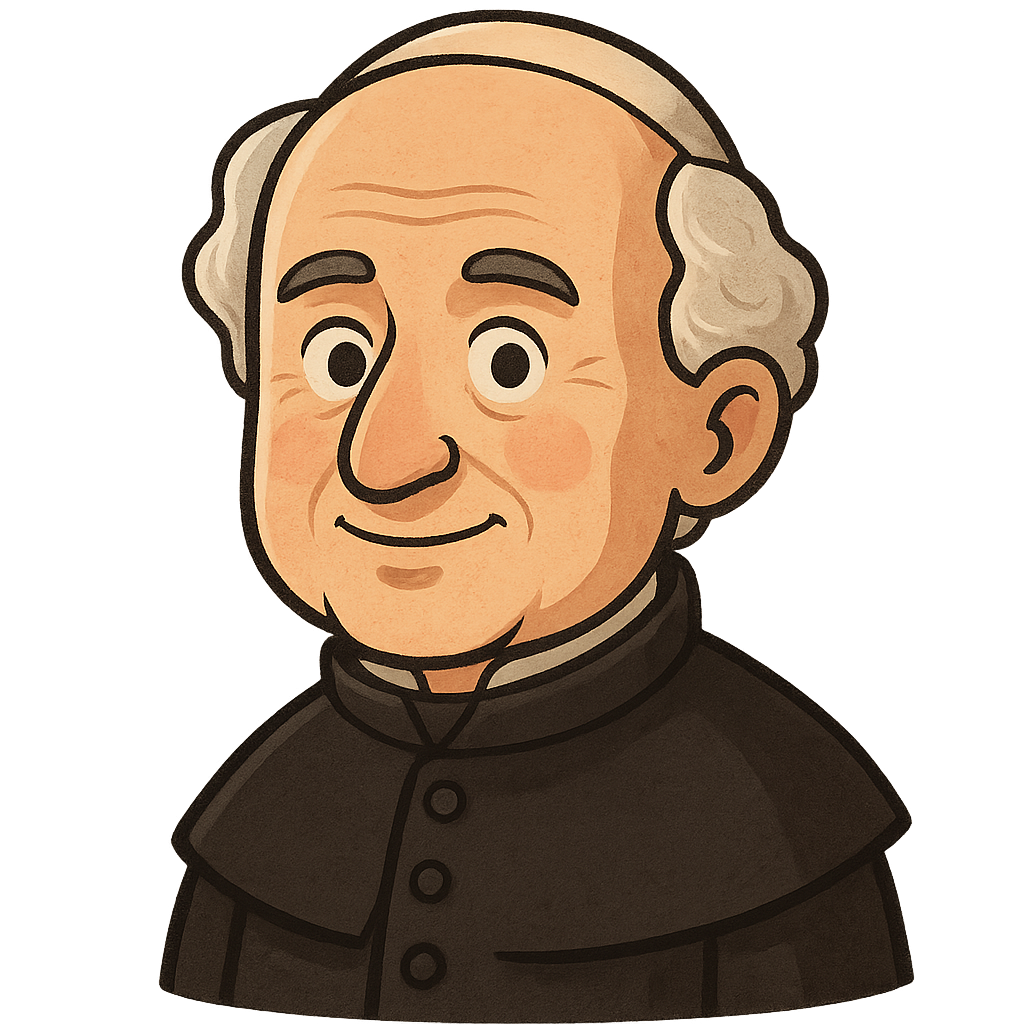
Hello, my name is Giuseppe Piazzi, and I am an astronomer who discovered a new world hiding in our solar system. My story begins in a small town nestled in the Italian Alps, where I was born on July 16th, 1746. From a young age, I was fascinated by two powerful forces: my religious faith and the logical beauty of science. I felt a deep calling to understand both the heavens above and the mathematical laws that governed them. It seemed to me that studying the universe was another way of appreciating its creator. In 1764, when I was eighteen years old, I made a decision that would shape my entire life. I joined the Theatine Order, becoming a priest. This path was special because it didn't ask me to choose between my two passions; instead, it encouraged me to pursue them both. My superiors saw my talent for numbers and logic, so they allowed me to focus on my scientific studies. For many years, I traveled across Italy, teaching mathematics and science at various universities. Each city and every student taught me something new, and my knowledge of the cosmos grew deeper. This journey prepared me for the greatest work of my life, which I would conduct from a special island in the middle of the Mediterranean Sea.
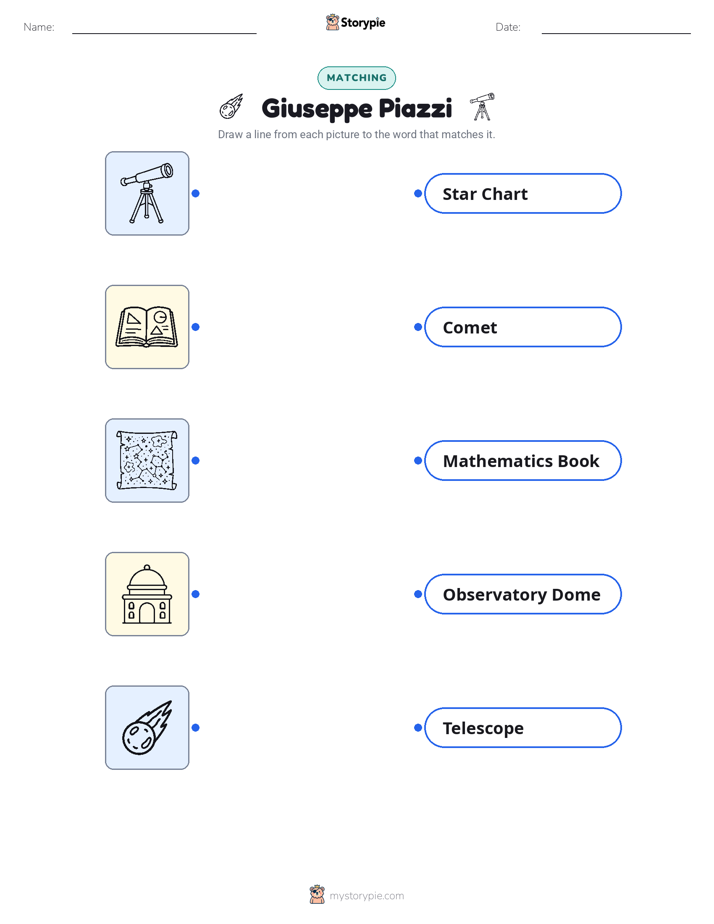
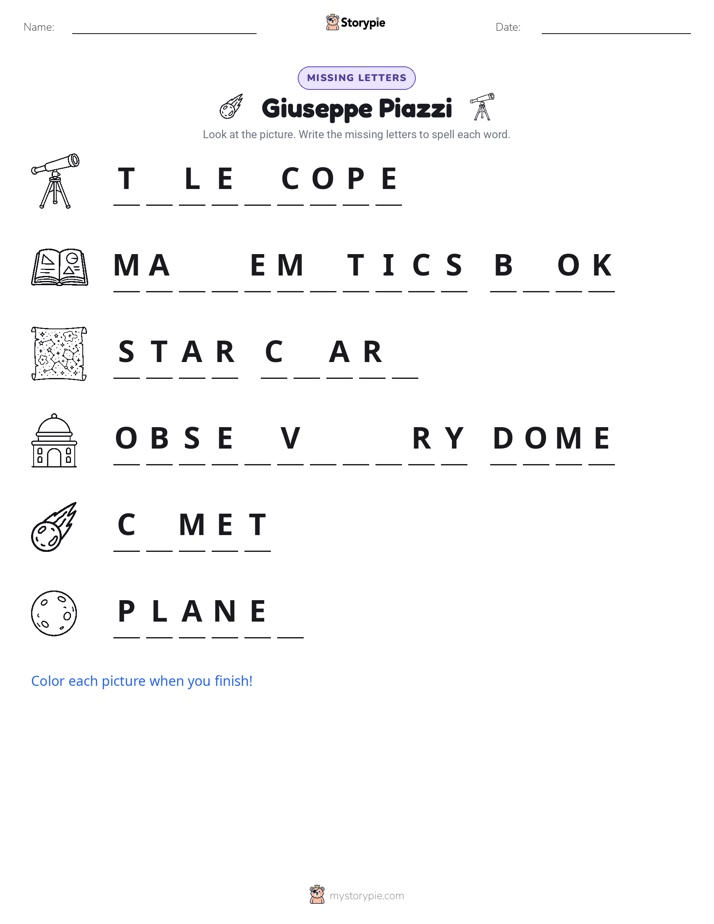
In the year 1781, I accepted a position as a professor of mathematics in the beautiful city of Palermo, on the island of Sicily. While I enjoyed teaching, I had a much grander ambition. I dreamed of building a state-of-the-art observatory, a special building with powerful telescopes pointed at the sky. Palermo, with its clear nights, was the perfect location. At that time, Sicily did not have such a facility, and I was determined to create one that would rival the best in Europe. To make this dream a reality, I knew I needed the finest instruments available. I embarked on a journey to the great cities of Paris and London, the centers of scientific innovation. There, I met with the most skilled instrument makers of the age. My most important purchase was a magnificent telescope built by the famous Jesse Ramsden in London. It was a masterpiece of engineering, capable of measuring the positions of stars with incredible precision. After years of hard work, planning, and securing the right equipment, the Palermo Observatory was finally completed around 1790. From its dome, I had a breathtaking window to the stars. Now, my true life's work could begin: to meticulously map the night sky and create a comprehensive star catalogue that would be more accurate than any before it.
Giuseppe Piazzi: The Man Who Found a Missing Planet
Hello, my name is Giuseppe Piazzi, and I am an astronomer who discovered a new world hiding in our solar system. My story begins in a small town nestled in the Italian Alps, where I was born on July 16th, 1746. From a young age, I was fascinated by two powerful forces: my religious faith and the logical beauty of science. I felt a deep calling to understand both the heavens above and the mathematical laws that governed them. It seemed to me that studying the universe was another way of appreciating its creator. In 1764, when I was eighteen years old, I made a decision that would shape my entire life. I joined the Theatine Order, becoming a priest. This path was special because it didn't ask me to choose between my two passions; instead, it encouraged me to pursue them both. My superiors saw my talent for numbers and logic, so they allowed me to focus on my scientific studies. For many years, I traveled across Italy, teaching mathematics and science at various universities. Each city and every student taught me something new, and my knowledge of the cosmos grew deeper. This journey prepared me for the greatest work of my life, which I would conduct from a special island in the middle of the Mediterranean Sea.
In the year 1781, I accepted a position as a professor of mathematics in the beautiful city of Palermo, on the island of Sicily. While I enjoyed teaching, I had a much grander ambition. I dreamed of building a state-of-the-art observatory, a special building with powerful telescopes pointed at the sky. Palermo, with its clear nights, was the perfect location. At that time, Sicily did not have such a facility, and I was determined to create one that would rival the best in Europe. To make this dream a reality, I knew I needed the finest instruments available. I embarked on a journey to the great cities of Paris and London, the centers of scientific innovation. There, I met with the most skilled instrument makers of the age. My most important purchase was a magnificent telescope built by the famous Jesse Ramsden in London. It was a masterpiece of engineering, capable of measuring the positions of stars with incredible precision. After years of hard work, planning, and securing the right equipment, the Palermo Observatory was finally completed around 1790. From its dome, I had a breathtaking window to the stars. Now, my true life's work could begin: to meticulously map the night sky and create a comprehensive star catalogue that would be more accurate than any before it.
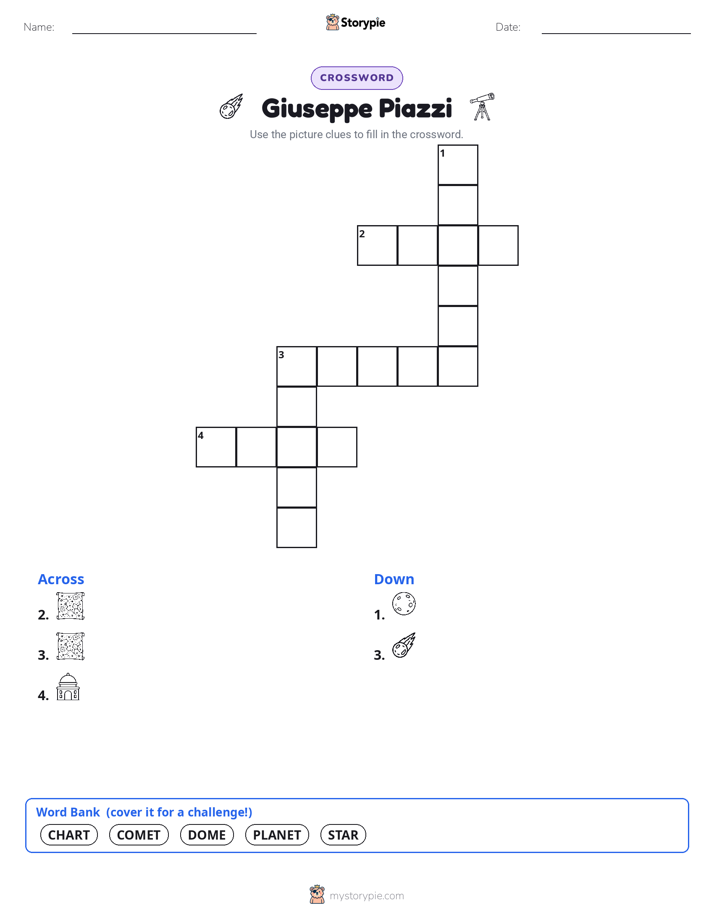
My work at the observatory required immense patience. Night after night, I would stand at my telescope, carefully observing and recording the exact position of each star in a specific region of the sky. It was on a very special night, the first night of a new century, January 1st, 1801, that my careful routine was interrupted by something extraordinary. While I was cross-referencing my observations with existing star charts, I noticed a tiny point of light that was not supposed to be there. It was faint, and my first thought was that I had made a mistake. Perhaps it was a flaw in my telescope or a distant, fuzzy object like a comet. But a good scientist must be thorough. So, I decided to watch it. I returned to my telescope the next night, and the next, and the night after that. I saw that the small light was moving. However, its movement was not erratic and fast like a comet's. It was slow, steady, and deliberate, following a predictable path across the background of fixed stars. This was not a comet. This was something else entirely, something that behaved like a planet. I continued to track it for weeks, carefully recording its position each night. I knew I had found something significant, but I was cautious. I wrote to other astronomers, initially suggesting I had found a strange comet, not wanting to announce a new planet until I was absolutely certain.
My discovery caused a great deal of excitement among astronomers in Europe. For years, many scientists had been thinking about a mathematical pattern known as the Titius-Bode law. This idea suggested that planets were arranged in the solar system at specific, predictable distances from the sun. The law worked almost perfectly for all the known planets, but it predicted that there should be another planet orbiting in the large gap between Mars and Jupiter. And now, my discovery seemed to fit perfectly into that empty space. The final piece of the puzzle was put into place by a brilliant young German mathematician named Carl Friedrich Gauss. Using my observation data, Gauss was able to calculate the object's precise orbit. His calculations proved it was not a comet; it was a small, planet-like body circling the sun exactly where the Titius-Bode law said a planet should be. To honor the land from which I made the discovery, I decided to name it Ceres, after the ancient Roman goddess who was the patron of Sicily. For a time, it was celebrated as the eighth planet. Today, science has advanced, and we now classify Ceres as a dwarf planet. It is the largest object in the asteroid belt, a vast ring of rocky bodies between Mars and Jupiter that no one had known existed before my discovery.
I continued my work at the Palermo Observatory for many years, dedicating myself to mapping the stars. In 1814, I finally completed my great work, the Palermo Star Catalogue, a detailed map of the heavens that astronomers relied on for decades. I lived a long and fulfilling life, balanced between my devotion to my faith and my endless curiosity about the universe. I lived to be 80 years old. My discovery of Ceres on that fateful night in 1801 did more than just add a new object to our solar system; it opened up an entirely new region for exploration—the asteroid belt. My story is a reminder that the universe is filled with wonders, and sometimes, all it takes to find them is to look up at the sky with patience, care, and an open mind.
Wow facts
About
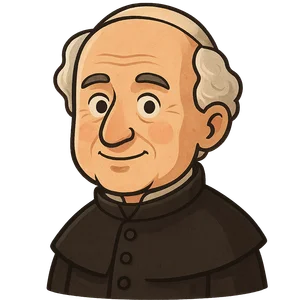
Giuseppe Piazzi was an Italian Catholic priest, mathematician, and astronomer who discovered the dwarf planet Ceres on January 1st, 1801.
Take a Quiz
Question 1 of 5
In your own words, describe the key steps Giuseppe Piazzi took that led to the discovery of Ceres.
Explore next






Want to do even more?
Go beyond exploring. Unlock tools that turn every story into real learning.

Storypie Plus for families
Full stories, quizzes, and printables. Nights and car rides, sorted.
- Unlimited audio stories
- Create Mode: your child stars in the story
- Offline downloads
- Printable worksheets & coloring pages

Why Storypie for Schools
Students engaged. Prep in seconds. Evenings back to you.
- Worksheets & Quizzes
- Classroom Management
- Formative Assessment
- Custom Curriculum & Lesson Plans
- 27 Languages

Why Storypie for Homeschool
Curriculum done. They'll ask for more. Hours back in your day.
- Worksheet Generator
- First-Person Audio Stories
- Built-in Comprehension Quizzes
- Custom Curriculum & Lesson Plans
- Print & Go Activities