English

Guglielmo Marconi
Guglielmo Marconi was an Italian inventor and electrical engineer…
Reads at Grades 3–5 Listens at Grades 1–5
Print & create
Answer keys·No prep·Free with an account
28 worksheets · answer keys · full story · quiz · Ages 8-10 · CEFR B1
Plus adds 279,000+ more stories in 27 languages, audio for every one, and printables for all of them.
Just want Guglielmo Marconi?
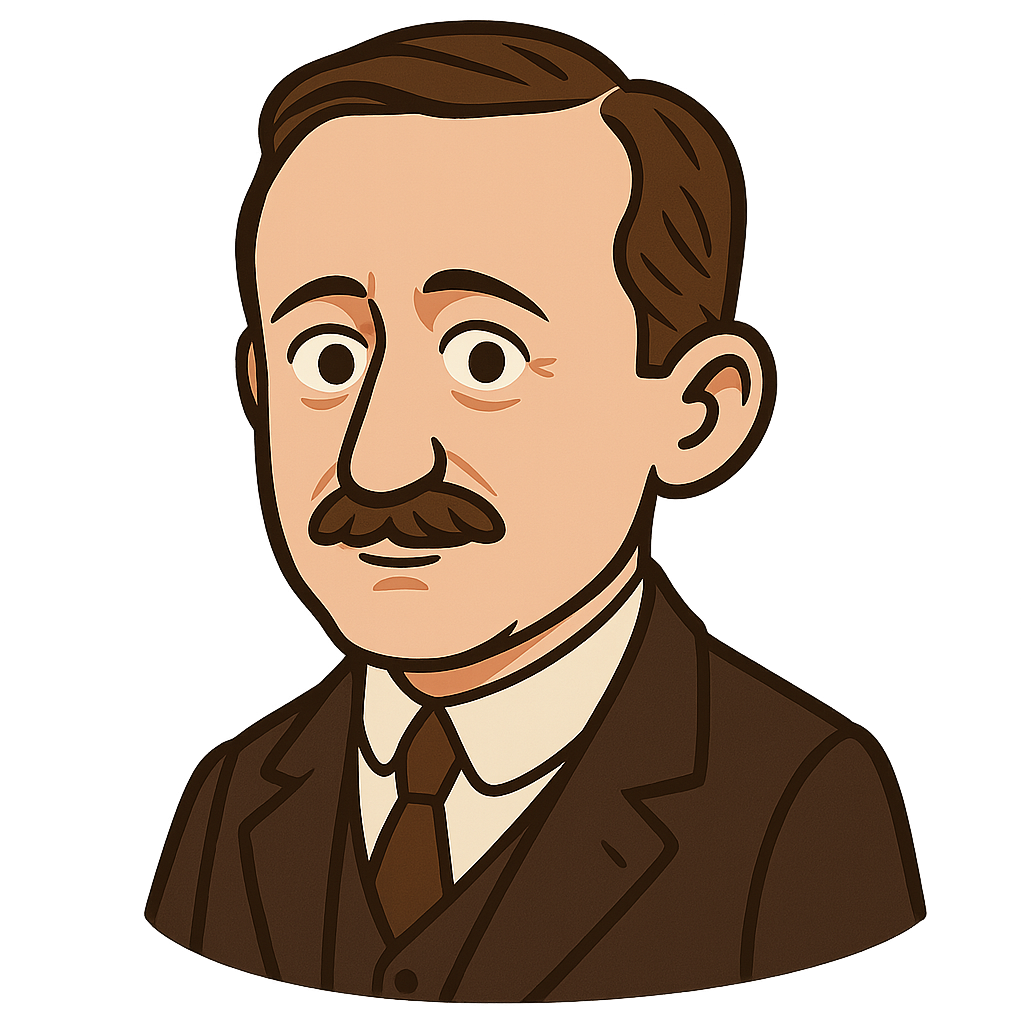
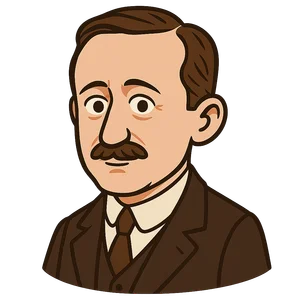
Hello! My name is Guglielmo Marconi. I was born on April 25th, 1874, in a beautiful city called Bologna, in Italy. As a boy, I was fascinated by electricity and all things science. I read every book I could find and was especially interested in the work of a scientist named Heinrich Hertz, who had discovered invisible waves in the air back in 1888. I wondered, could these 'Hertzian waves' be used to send messages without wires? It was a question that sparked a great adventure for me.
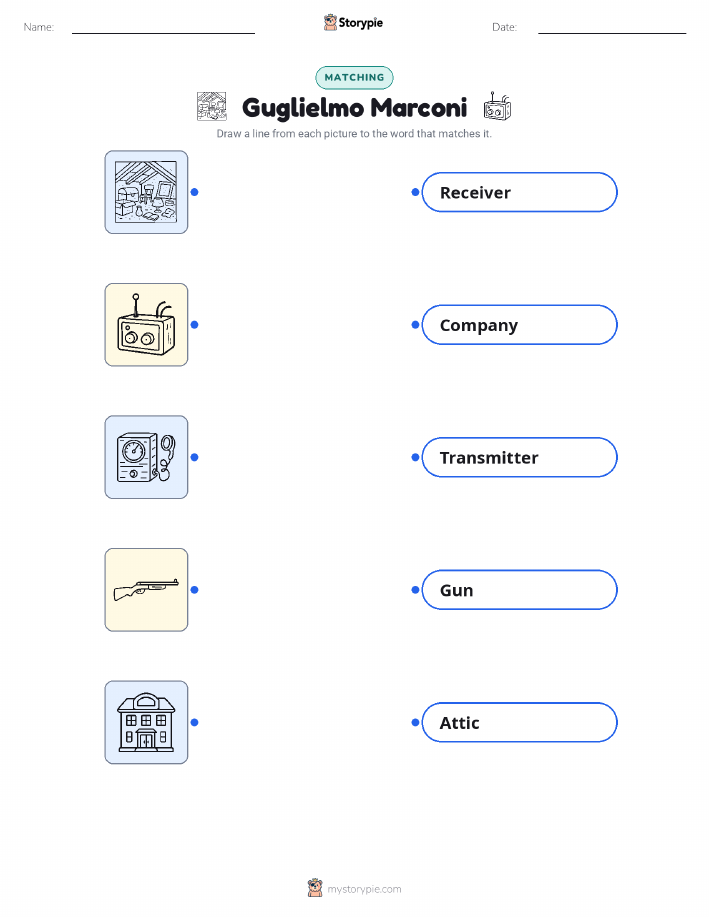
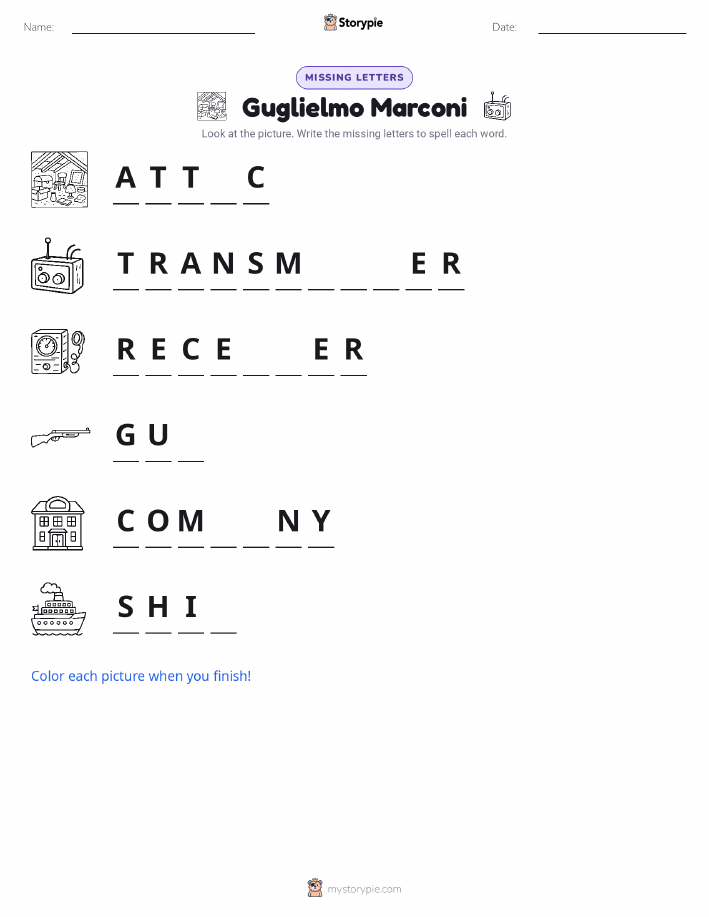
When I was about twenty years old, around 1894, I turned the attic of my family home, Villa Griffone, into my own personal laboratory. I filled it with wires, batteries, and strange-looking gadgets. My goal was simple: to make a bell ring from across the room without any wires connecting it. After many tries, it worked! I was so excited. I kept making my invention better and better, and in 1895, I achieved something amazing. I sent a signal from my house all the way over a hill to my brother, who was waiting almost two miles away. He fired a hunting rifle to let me know the message had arrived. I had proven that wireless messages were possible!
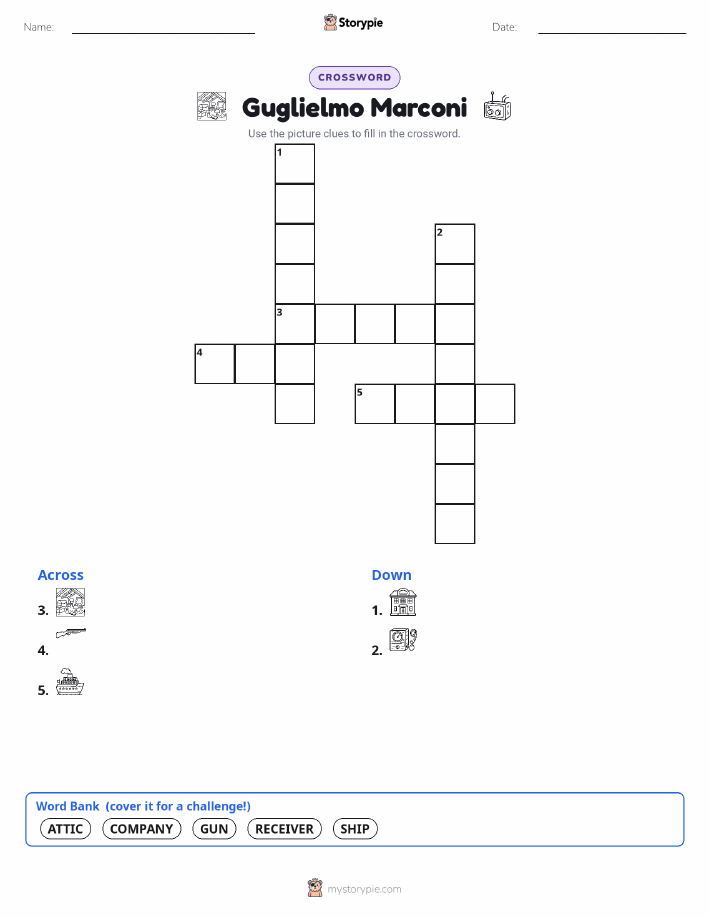
My invention needed more support, so in 1896, I traveled to England. A year later, in 1897, I started my own company to build and sell my wireless telegraph machines. But I had an even bigger dream: to send a message across the entire Atlantic Ocean! Many people thought it was impossible because the Earth is curved. But I believed it could be done. On December 12th, 1901, I stood on Signal Hill in Newfoundland, Canada, holding a special receiver to my ear. All the way from Poldhu, in Cornwall, England, my team sent a signal. It was just three little dots—the Morse code for the letter 'S'. Click-click-click... I heard it! The invisible waves had traveled over 2,000 miles across the ocean.
Guglielmo Marconi
Hello! My name is Guglielmo Marconi. I was born on April 25th, 1874, in a beautiful city called Bologna, in Italy. As a boy, I was fascinated by electricity and all things science. I read every book I could find and was especially interested in the work of a scientist named Heinrich Hertz, who had discovered invisible waves in the air back in 1888. I wondered, could these 'Hertzian waves' be used to send messages without wires? It was a question that sparked a great adventure for me.
When I was about twenty years old, around 1894, I turned the attic of my family home, Villa Griffone, into my own personal laboratory. I filled it with wires, batteries, and strange-looking gadgets. My goal was simple: to make a bell ring from across the room without any wires connecting it. After many tries, it worked! I was so excited. I kept making my invention better and better, and in 1895, I achieved something amazing. I sent a signal from my house all the way over a hill to my brother, who was waiting almost two miles away. He fired a hunting rifle to let me know the message had arrived. I had proven that wireless messages were possible!
My invention needed more support, so in 1896, I traveled to England. A year later, in 1897, I started my own company to build and sell my wireless telegraph machines. But I had an even bigger dream: to send a message across the entire Atlantic Ocean! Many people thought it was impossible because the Earth is curved. But I believed it could be done. On December 12th, 1901, I stood on Signal Hill in Newfoundland, Canada, holding a special receiver to my ear. All the way from Poldhu, in Cornwall, England, my team sent a signal. It was just three little dots—the Morse code for the letter 'S'. Click-click-click... I heard it! The invisible waves had traveled over 2,000 miles across the ocean.
My wireless telegraph quickly became very important. It allowed ships at sea to talk to each other and to people on land. This was a huge deal for safety. In 1912, a famous ship called the RMS Titanic hit an iceberg and began to sink. The ship's wireless operator was able to send out distress signals, and because of my invention, another ship heard the call and came to rescue hundreds of people who would have otherwise been lost. For my work in developing wireless communication, I was honored to share the Nobel Prize in Physics with another scientist, Karl Ferdinand Braun, in 1909. It was one of the proudest moments of my life.
I lived to be 63 years old, spending my life improving my inventions and exploring the power of radio waves. My work was just the beginning. The wireless signals I first sent through the air paved the way for so many things you use today, like radio, television, and even the cell phones and Wi-Fi that connect you to the world. So next time you listen to music on the radio or video chat with a friend, remember the curious boy in Italy who wondered if we could send messages on invisible waves.
Wow facts
About
Guglielmo Marconi was an Italian inventor and electrical engineer, known for his pioneering work on long-distance radio transmission and for his development of Marconi's law and a radio telegraph system.
Take a Quiz
Question 1 of 5
In what year did I send the first wireless signal across the Atlantic Ocean?
Explore next




Want to do even more?
Go beyond exploring. Unlock tools that turn every story into real learning.

Storypie Plus for families
Full stories, quizzes, and printables. Nights and car rides, sorted.
- Unlimited audio stories
- Create Mode: your child stars in the story
- Offline downloads
- Printable worksheets & coloring pages

Why Storypie for Schools
Students engaged. Prep in seconds. Evenings back to you.
- Worksheets & Quizzes
- Classroom Management
- Formative Assessment
- Custom Curriculum & Lesson Plans
- 27 Languages

Why Storypie for Homeschool
Curriculum done. They'll ask for more. Hours back in your day.
- Worksheet Generator
- First-Person Audio Stories
- Built-in Comprehension Quizzes
- Custom Curriculum & Lesson Plans
- Print & Go Activities