English

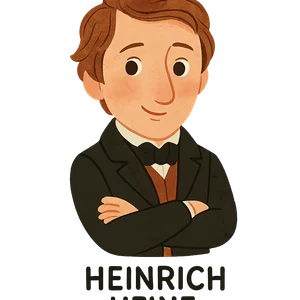
Heinrich Heine
Heinrich Heine was a German poet, writer, and literary critic of the early 19th century.
Reads at Grades 6–8 Listens at Grades 4–8
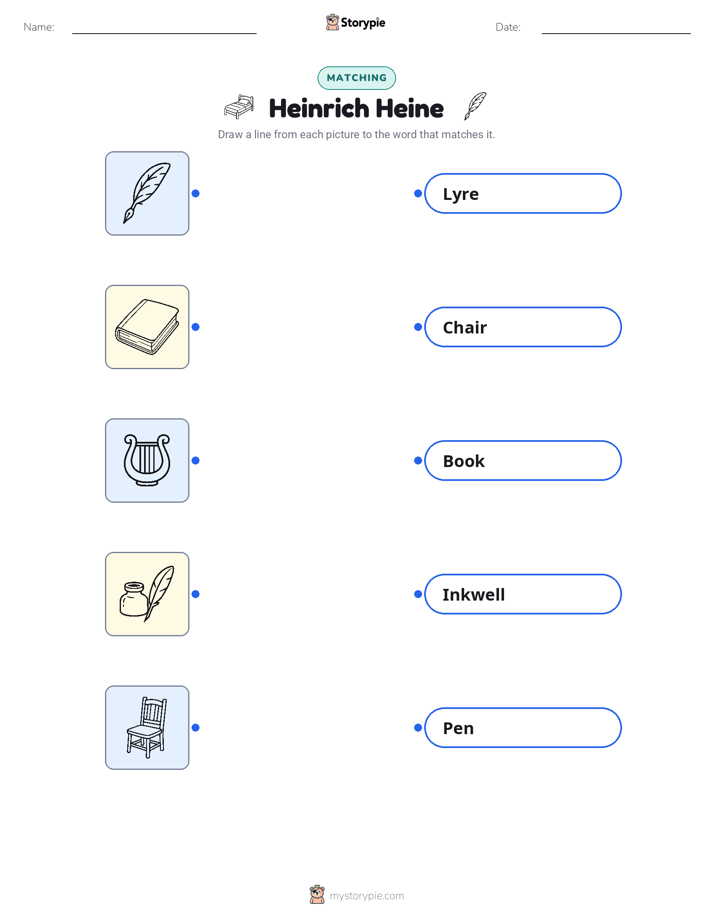
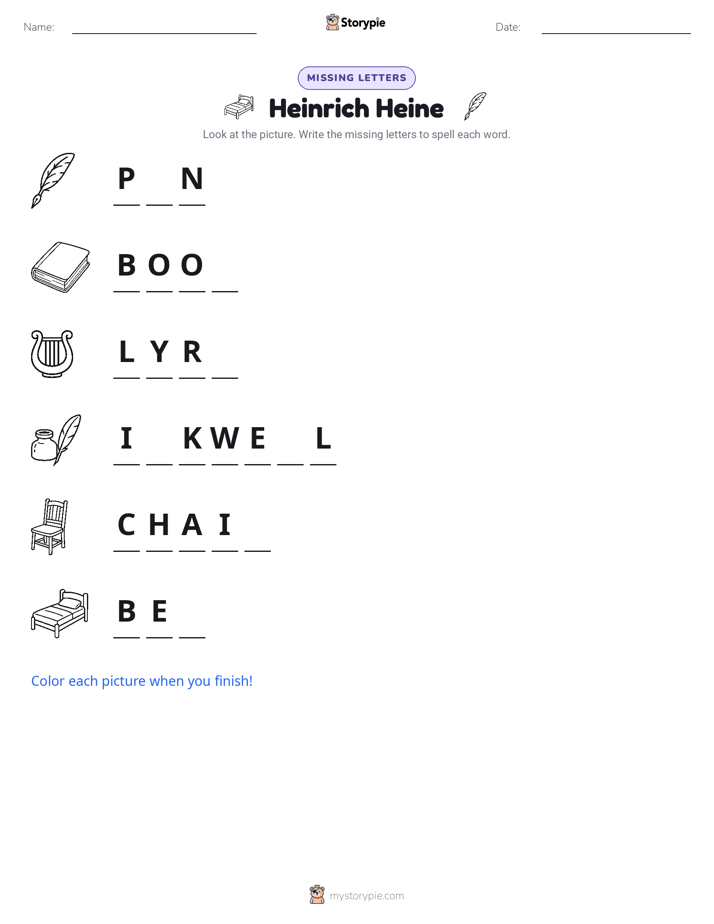
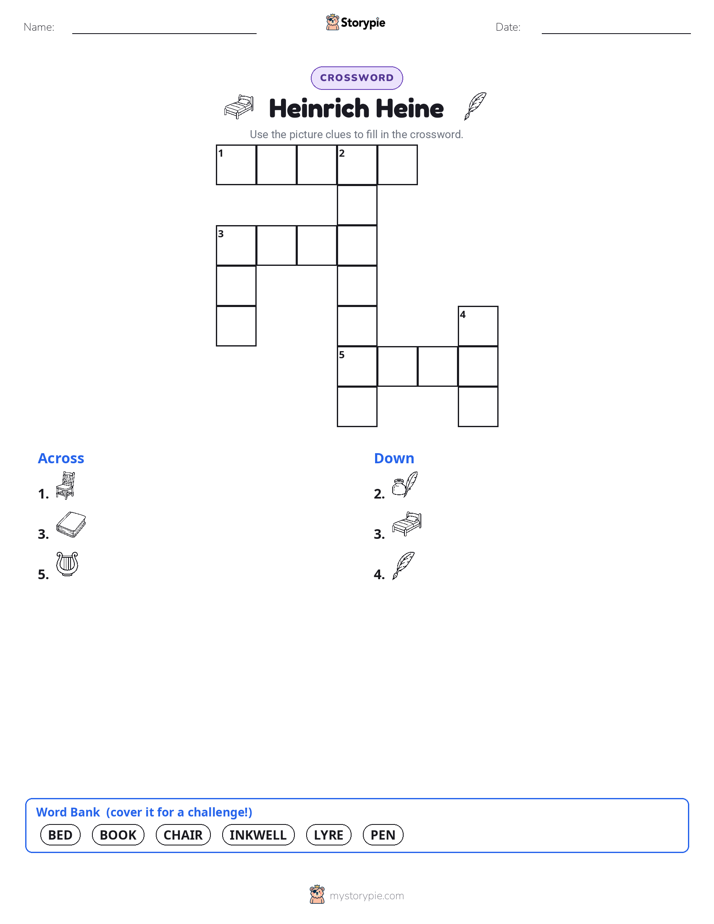
Print & create
Answer keys·No prep·Free with an account
28 worksheets · answer keys · full story · quiz · Ages 10-12 · CEFR B2
Plus adds 244,000+ more stories in 27 languages, audio for every one, and printables for all of them.
Just want Heinrich Heine?
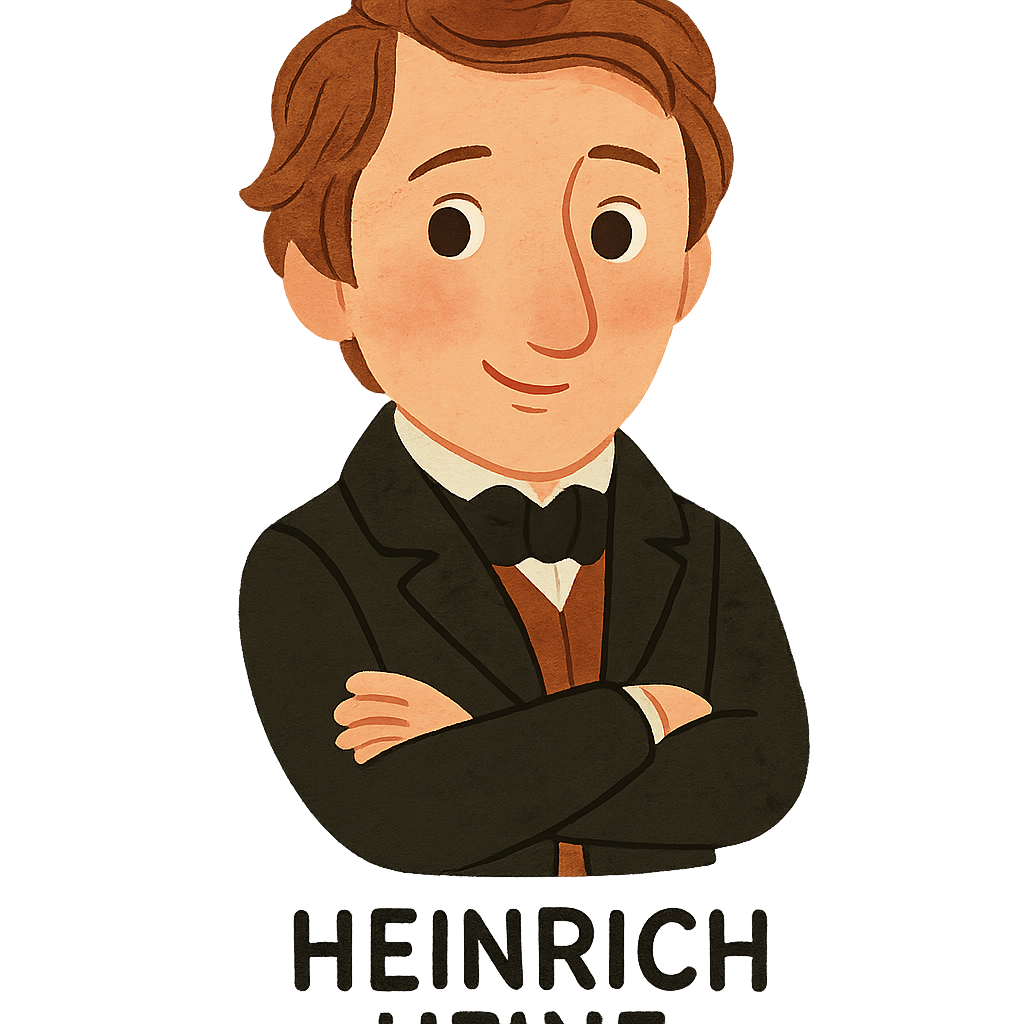
Hello, my name is Heinrich Heine. I was born on December 13th, 1797, in Düsseldorf, a city that was then part of a land called the Duchy of Berg. Growing up in a Jewish family, I found my greatest joy in the world of books. I would lose myself for hours in stories of brave knights and grand adventures. The world outside my window was just as dramatic as my books. The armies of Napoleon Bonaparte were marching across Europe, and their presence brought a mix of excitement and uncertainty to my childhood. These early years, filled with stories and the rumblings of history, shaped the writer I would become.
My family hoped I would pursue a more practical and respectable career than writing stories. So, between the years 1819 and 1825, I attended university to study law. While I applied myself to my legal studies, my true passions were always poetry and philosophy. In 1825, I came to a crossroads that would define much of my life. At that time in Germany, a person's religion could determine their future, and many professions were closed to Jewish people. In order to have a better chance at a career, I made the difficult decision to convert to Protestantism. It was a choice that I carried with me and reflected upon for the rest of my days.
My heart truly belonged to writing, and in 1827, I shared that heart with the world. I published a collection of my poems titled 'Buch der Lieder,' which translates to 'Book of Songs.' I poured my feelings about love, the beauty of nature, and the pain of heartache into those pages, and to my great joy, the book became incredibly popular all across Germany. The poems had a natural rhythm and musicality to them, which caught the attention of famous composers. Men like Robert Schumann and Franz Schubert took my words and set them to beautiful melodies. My poems were no longer just on the page; they became songs that people could sing, and many are still sung today.
Heinrich Heine: A Poet's Voice
Hello, my name is Heinrich Heine. I was born on December 13th, 1797, in Düsseldorf, a city that was then part of a land called the Duchy of Berg. Growing up in a Jewish family, I found my greatest joy in the world of books. I would lose myself for hours in stories of brave knights and grand adventures. The world outside my window was just as dramatic as my books. The armies of Napoleon Bonaparte were marching across Europe, and their presence brought a mix of excitement and uncertainty to my childhood. These early years, filled with stories and the rumblings of history, shaped the writer I would become.
My family hoped I would pursue a more practical and respectable career than writing stories. So, between the years 1819 and 1825, I attended university to study law. While I applied myself to my legal studies, my true passions were always poetry and philosophy. In 1825, I came to a crossroads that would define much of my life. At that time in Germany, a person's religion could determine their future, and many professions were closed to Jewish people. In order to have a better chance at a career, I made the difficult decision to convert to Protestantism. It was a choice that I carried with me and reflected upon for the rest of my days.
My heart truly belonged to writing, and in 1827, I shared that heart with the world. I published a collection of my poems titled 'Buch der Lieder,' which translates to 'Book of Songs.' I poured my feelings about love, the beauty of nature, and the pain of heartache into those pages, and to my great joy, the book became incredibly popular all across Germany. The poems had a natural rhythm and musicality to them, which caught the attention of famous composers. Men like Robert Schumann and Franz Schubert took my words and set them to beautiful melodies. My poems were no longer just on the page; they became songs that people could sing, and many are still sung today.
While I wrote many poems about love, I also felt it was my duty to write about the world around me, particularly about politics and the importance of freedom. I held a strong belief that every person deserved to be treated with fairness and respect. I used my writing, often with a dose of sharp wit and humor, to criticize the powerful rulers in Germany who I felt were unjust. This did not make me popular with the government. The authorities began to censor my work, trying to silence my opinions. I knew I could not write with a free mind under such conditions. So, in 1831, I made the monumental decision to leave my homeland and move to Paris, France, a city known for its revolutionary spirit.
Paris became my new home, and I spent the last 25 years of my life there. The city was alive with energy and ideas, and I thrived in that environment. I worked as a journalist, writing articles for newspapers. I saw myself as a kind of bridge between Germany and France. Through my writing, I tried to help the German people understand French culture and politics, and I did the same for the French people about Germany. It was in Paris that I also found love. I met Augustine Crescence Mirat, a wonderful woman whom I lovingly called Mathilde. We were married in 1841, and she remained by my side through all the challenges that were to come.
The final chapter of my life was marked by a great personal struggle. Around the year 1848, a severe illness began to take hold of my body, eventually leaving me paralyzed. For the last eight years of my life, I was confined to my bed. I gave my bed a rather grim name: my 'mattress-grave.' But while my body was failing, my mind and my spirit remained as sharp and active as ever. I refused to stop creating. When I grew too weak to hold a pen myself, I dictated my thoughts, continuing to write poems, articles, and memoirs. My imagination was a place my illness could not touch.
I lived to be 58 years old, and my life came to a peaceful end in Paris on February 17th, 1856. Though my journey ended, my words traveled on. I am remembered today as one of Germany's greatest poets, someone who combined beautiful language with a passion for freedom and a sharp, witty humor. My poems, especially one called 'Die Lorelei,' are still read in schools and sung as songs, carrying my voice and my ideas into the future.
Wow facts
About
Heinrich Heine was a German poet, writer, and literary critic of the early 19th century. He is best known for his lyric poetry, which was set to music by many famous composers, and for his satirical prose and political commentary.
Take a Quiz
Question 1 of 5
Which statement best summarizes Heinrich Heine's life story?
Explore next






Want to do even more?
Go beyond exploring. Unlock tools that turn every story into real learning.

Storypie Plus for families
Full stories, quizzes, and printables. Nights and car rides, sorted.
- Unlimited audio stories
- Create Mode: your child stars in the story
- Offline downloads
- Printable worksheets & coloring pages

Why Storypie for Schools
Students engaged. Prep in seconds. Evenings back to you.
- Worksheets & Quizzes
- Classroom Management
- Formative Assessment
- Custom Curriculum & Lesson Plans
- 27 Languages

Why Storypie for Homeschool
Curriculum done. They'll ask for more. Hours back in your day.
- Worksheet Generator
- First-Person Audio Stories
- Built-in Comprehension Quizzes
- Custom Curriculum & Lesson Plans
- Print & Go Activities