English

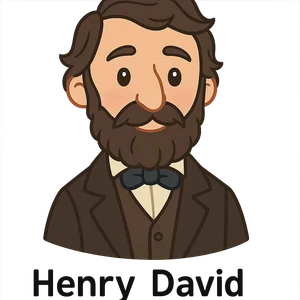
Henry David Thoreau
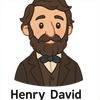
Henry David Thoreau was an American naturalist, essayist, poet, and philosopher…
Reads at Grades 6–8 Listens at Grades 4–8
Print & create
Answer keys·No prep·Free with an account
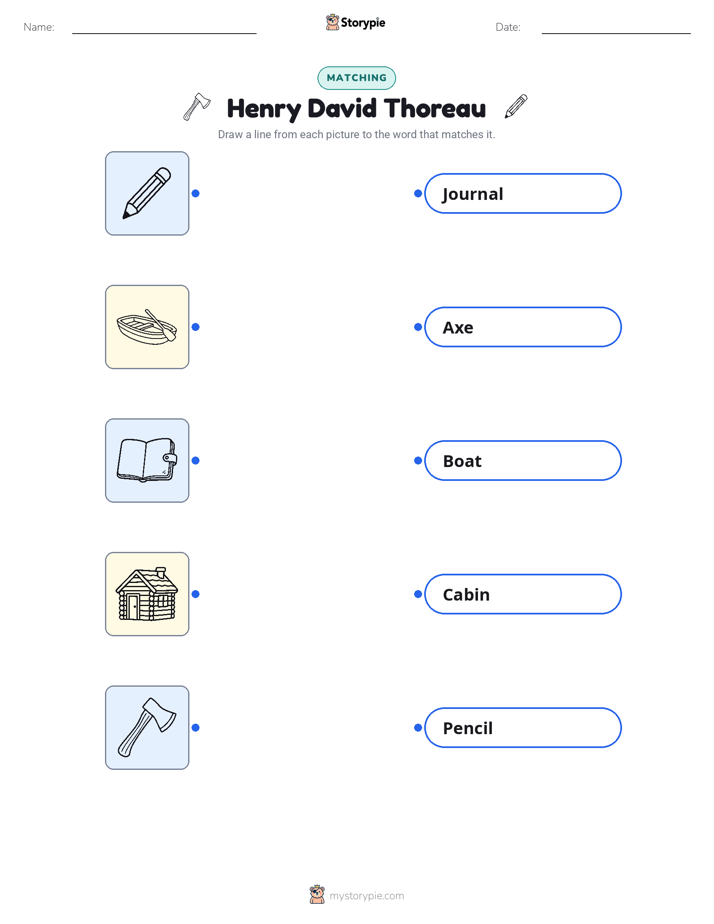
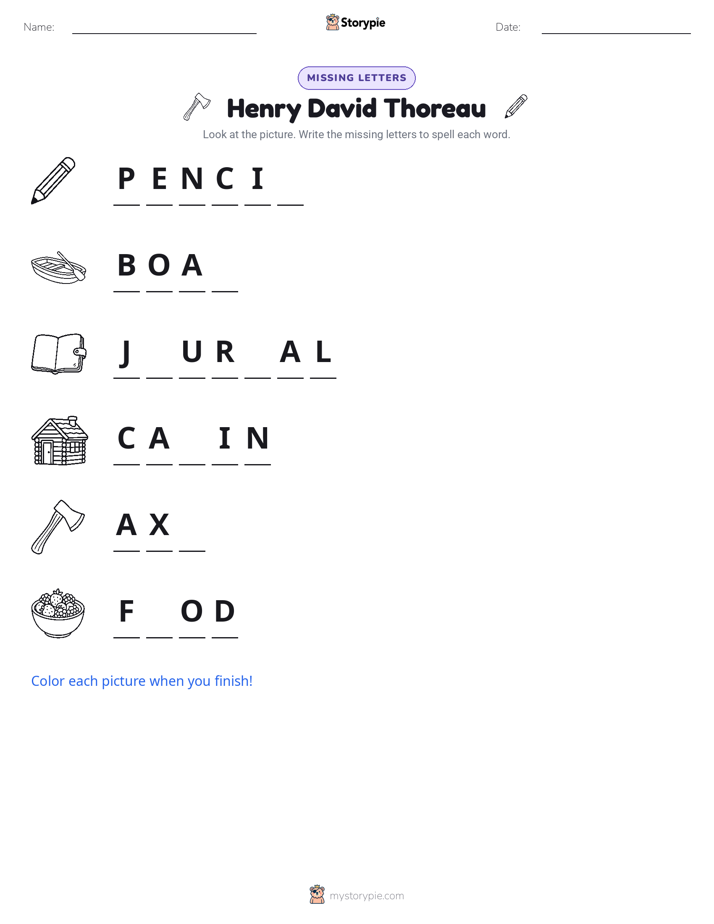
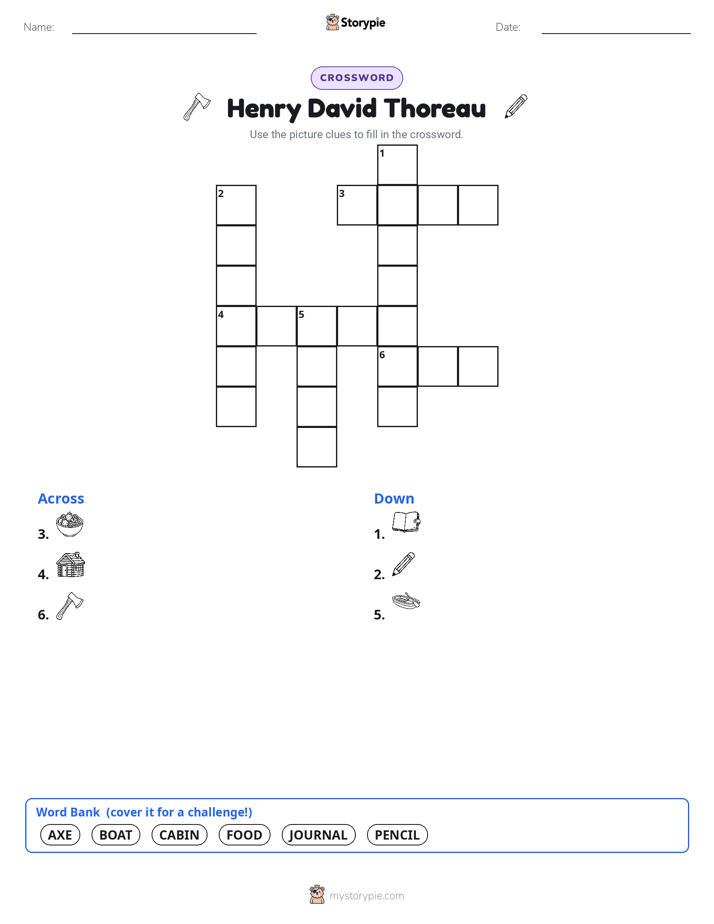
28 worksheets · answer keys · full story · quiz · Ages 10-12 · CEFR B2
Plus adds 244,000+ more stories in 27 languages, audio for every one, and printables for all of them.
Just want Henry David Thoreau?
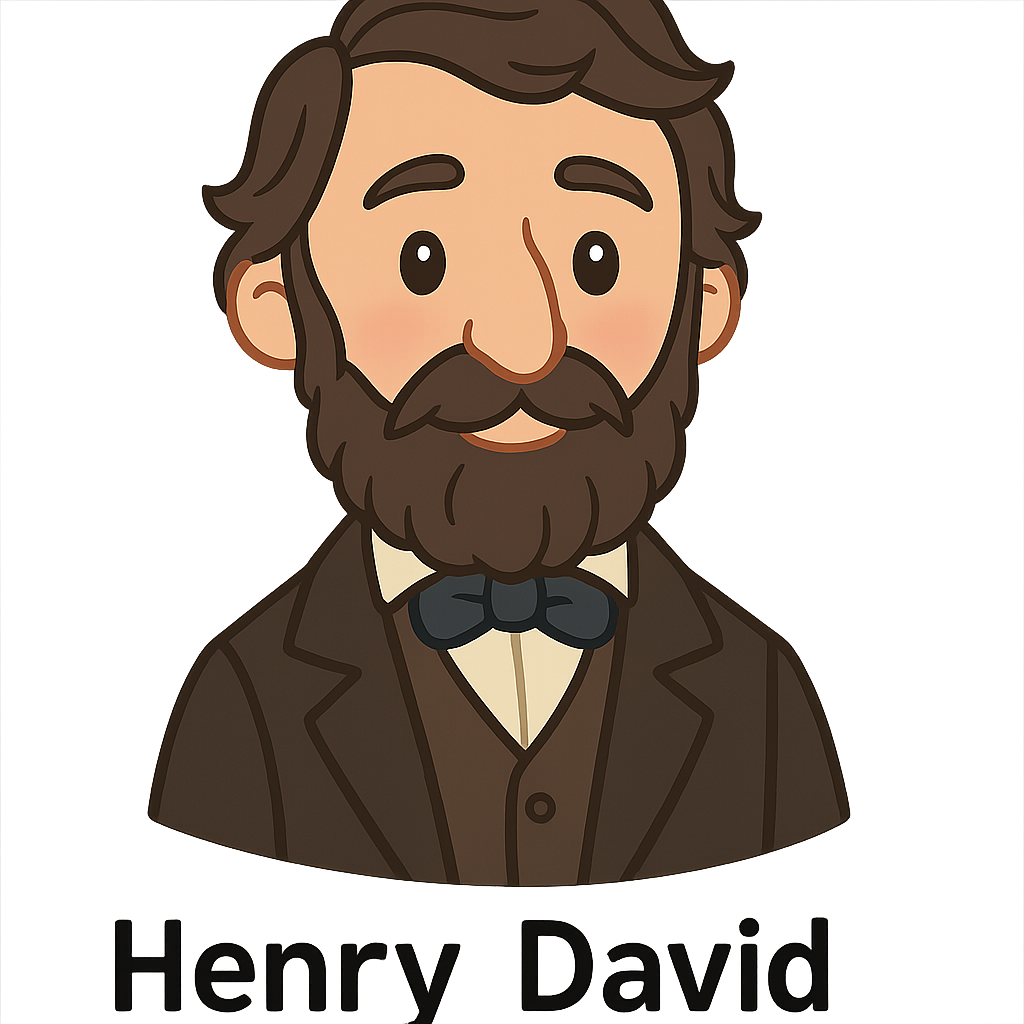
Hello! My name is Henry David Thoreau, and I want to tell you my story. I was born on July 12th, 1817, in a special town called Concord, Massachusetts. Even as a boy, I felt more at home in the woods and fields than anywhere else. The world around Concord was my playground and my classroom. I loved exploring the Sudbury River in my boat and learning the names of all the plants and animals I encountered. My family had a business making pencils, and while I certainly helped with the family trade, my real passion was always the natural world just outside my door. I knew early on that I wanted to live a life full of observation and thought.
I was lucky enough to attend Harvard College, where I studied hard and graduated in 1837. After college, I returned to my beloved Concord and soon became great friends with a famous writer and thinker named Ralph Waldo Emerson. He was the leader of a group of thinkers called the Transcendentalists. We believed that people, nature, and the spirit that connects everything are all inherently good and that individuals possess an inner light, or intuition, that is their highest authority. Mr. Emerson became a great mentor to me. He encouraged me to keep a journal, to write down my thoughts, and, most importantly, to trust my own heart and mind above all else. This idea of individualism became a cornerstone of my life's philosophy.
By 1845, I felt that society was becoming too complicated and too fast. People seemed so busy with work and earning money that they forgot how to truly live. I wanted to see what would happen if I stripped away all the unnecessary things and lived a much simpler life. So, on July 4th, 1845, I moved into a small cabin I built myself on the shore of Walden Pond, on land owned by Mr. Emerson. For two years, two months, and two days, I lived there alone. I grew my own food, watched the seasons change, and spent my days observing nature, reading, and writing in my journal. My goal was not to hide from the world, but to face it more directly. I wanted to discover the essential facts of life and learn what it had to teach me.
Henry David Thoreau
Hello! My name is Henry David Thoreau, and I want to tell you my story. I was born on July 12th, 1817, in a special town called Concord, Massachusetts. Even as a boy, I felt more at home in the woods and fields than anywhere else. The world around Concord was my playground and my classroom. I loved exploring the Sudbury River in my boat and learning the names of all the plants and animals I encountered. My family had a business making pencils, and while I certainly helped with the family trade, my real passion was always the natural world just outside my door. I knew early on that I wanted to live a life full of observation and thought.
I was lucky enough to attend Harvard College, where I studied hard and graduated in 1837. After college, I returned to my beloved Concord and soon became great friends with a famous writer and thinker named Ralph Waldo Emerson. He was the leader of a group of thinkers called the Transcendentalists. We believed that people, nature, and the spirit that connects everything are all inherently good and that individuals possess an inner light, or intuition, that is their highest authority. Mr. Emerson became a great mentor to me. He encouraged me to keep a journal, to write down my thoughts, and, most importantly, to trust my own heart and mind above all else. This idea of individualism became a cornerstone of my life's philosophy.
By 1845, I felt that society was becoming too complicated and too fast. People seemed so busy with work and earning money that they forgot how to truly live. I wanted to see what would happen if I stripped away all the unnecessary things and lived a much simpler life. So, on July 4th, 1845, I moved into a small cabin I built myself on the shore of Walden Pond, on land owned by Mr. Emerson. For two years, two months, and two days, I lived there alone. I grew my own food, watched the seasons change, and spent my days observing nature, reading, and writing in my journal. My goal was not to hide from the world, but to face it more directly. I wanted to discover the essential facts of life and learn what it had to teach me.
My time at Walden Pond was not entirely separate from the world's problems. In July of 1846, I was arrested and spent a night in the Concord jail. My crime was that I had refused to pay a specific tax called a poll tax. I did this as a form of protest because I strongly disagreed with the government using that money to fund the Mexican-American War, which I saw as an effort to expand slavery. I could not, in good conscience, financially support a government that upheld the terrible institution of slavery. That one night in jail made me think deeply about the relationship between an individual and their government. It led me to write an essay called 'Resistance to Civil Government,' which was published in 1849. Today, you might know it by the name 'Civil Disobedience,' and it argues that individuals should not permit governments to overrule their consciences.
After leaving Walden Pond in 1847, I returned to Concord and worked on turning my journals and experiences into a book. It took a long time to shape my thoughts into a final form, but in 1854, I finally published 'Walden; or, Life in the Woods.' The book wasn't just a simple story about my time in the cabin; it was a deep reflection on the importance of individualism, self-reliance, and living in harmony with nature. I argued that a simple life allows for a richer spiritual life. I spent the rest of my years in Concord, working as a surveyor to map the land, studying nature in great detail, and speaking out forcefully against slavery, becoming a firm abolitionist.
My close study of the natural world, often in harsh weather, took a toll on my health, and I developed tuberculosis. I lived to be 44 years old, passing away in my hometown of Concord in 1862. Though my books weren't very famous during my lifetime, my ideas have traveled far and wide since then. My thoughts on civil disobedience inspired leaders like Mahatma Gandhi and Dr. Martin Luther King Jr. in their own peaceful fights for justice. And my deep love and respect for the natural world have inspired countless people to become environmentalists and work to protect our planet. I hope my story encourages you to listen to your own conscience and to look for the wonders that are all around you in nature.
Wow facts
About
Henry David Thoreau was an American naturalist, essayist, poet, and philosopher, best known for his book *Walden*, but he is also known for his essay "Civil Disobedience." He was a leading figure in the Transcendentalist movement.
Take a Quiz
Question 1 of 5
What problem did Thoreau see with society in 1845, and what was his experiment to resolve it for himself?
Explore next






Want to do even more?
Go beyond exploring. Unlock tools that turn every story into real learning.

Storypie Plus for families
Full stories, quizzes, and printables. Nights and car rides, sorted.
- Unlimited audio stories
- Create Mode: your child stars in the story
- Offline downloads
- Printable worksheets & coloring pages

Why Storypie for Schools
Students engaged. Prep in seconds. Evenings back to you.
- Worksheets & Quizzes
- Classroom Management
- Formative Assessment
- Custom Curriculum & Lesson Plans
- 27 Languages

Why Storypie for Homeschool
Curriculum done. They'll ask for more. Hours back in your day.
- Worksheet Generator
- First-Person Audio Stories
- Built-in Comprehension Quizzes
- Custom Curriculum & Lesson Plans
- Print & Go Activities