English

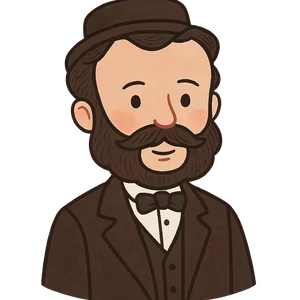
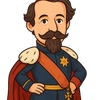
Henry Dunant
A Swiss businessman, social activist, and humanitarian who witnessed the Battle of Solferino in 1859.
Reads at Grades 3–5 Listens at Grades 1–5
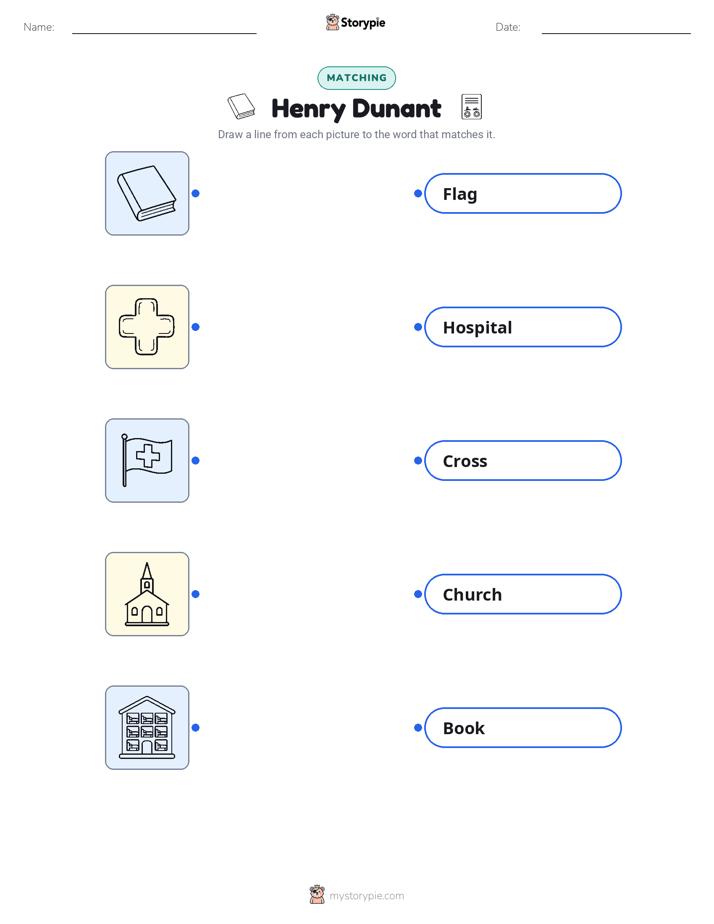
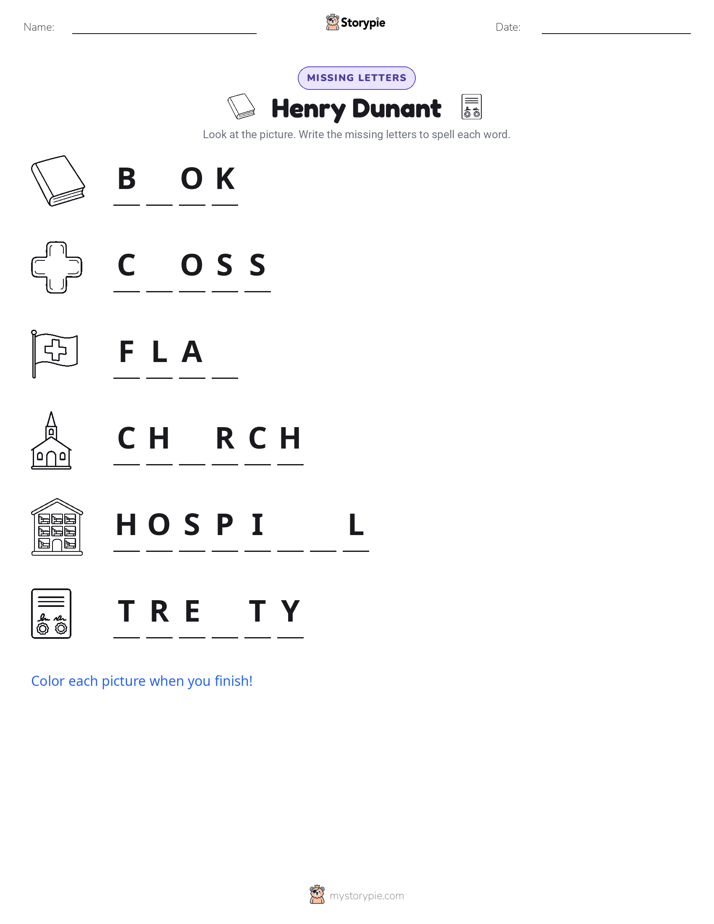
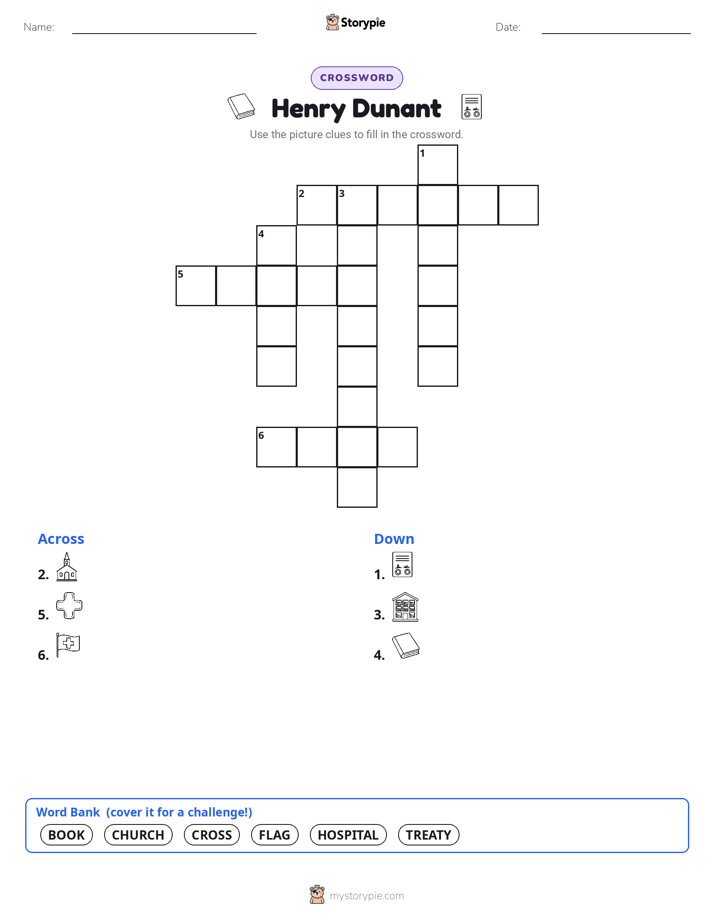
Print & create
Answer keys·No prep·Free with an account
28 worksheets · answer keys · full story · quiz · Ages 8-10 · CEFR B1
Plus adds 279,000+ more stories in 27 languages, audio for every one, and printables for all of them.
Just want Henry Dunant?
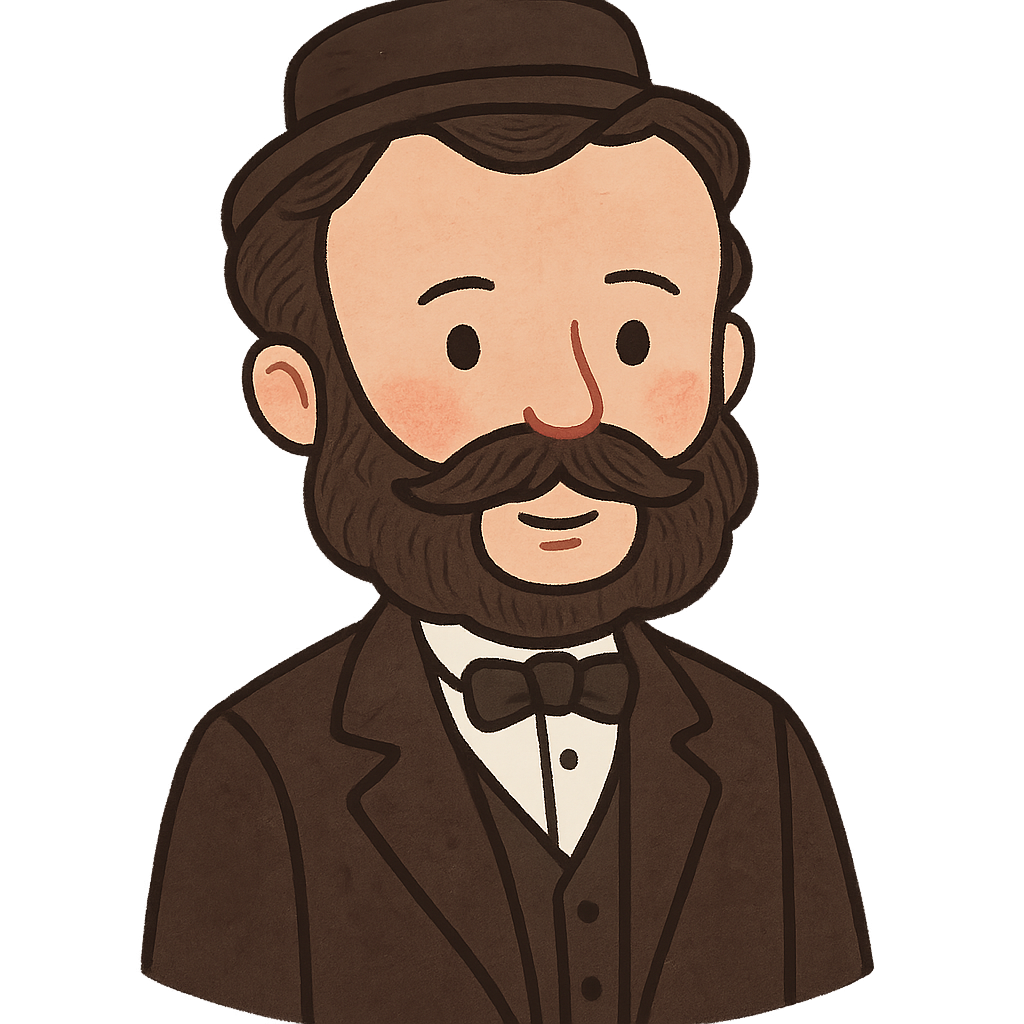
Hello! My name is Henry Dunant. I was born on May 8th, 1828, in the lovely city of Geneva, Switzerland. My family taught me that helping people was one of the most important things a person could do. Growing up, I was involved in charity work, helping those who were poor or sick. This lesson about kindness would guide my entire life, even though I didn't know it at the time.
As a grown-up, I became a businessman. My work required me to travel, and in 1859, I journeyed through Italy. On June 24th, 1859, I arrived in a small town called Solferino, just after a terrible battle had taken place. The scene was shocking. The fields were covered with thousands of wounded soldiers from the French, Austrian, and Italian armies. There were hardly any doctors or supplies, and the men were suffering greatly with no one to care for them. Seeing them in so much pain broke my heart.
I knew I could not simply leave. Forgetting all about my business, I decided I had to help. I went to the nearby town of Castiglione and asked the local people to join me. Together, we carried the wounded soldiers into churches and houses, which we turned into temporary hospitals. We did not care which army a soldier fought for; we helped everyone. To encourage the volunteers, I told them, 'Tutti fratelli,' an Italian phrase that means 'We are all brothers.' We gave them water, bandaged their wounds, and did our best to comfort them.
The memory of Solferino stayed with me long after I returned home to Geneva. I believed the world needed to understand the reality of war and the suffering it caused. In 1862, I wrote a book about my experience called 'A Memory of Solferino.' In my book, I suggested two important ideas. First, that every country should have groups of trained volunteers ready to care for the wounded in wartime. Second, that countries should agree to a set of rules to protect these volunteers and the injured soldiers, ensuring their safety on the battlefield.
Henry Dunant: A Heart for Humanity
Hello! My name is Henry Dunant. I was born on May 8th, 1828, in the lovely city of Geneva, Switzerland. My family taught me that helping people was one of the most important things a person could do. Growing up, I was involved in charity work, helping those who were poor or sick. This lesson about kindness would guide my entire life, even though I didn't know it at the time.
As a grown-up, I became a businessman. My work required me to travel, and in 1859, I journeyed through Italy. On June 24th, 1859, I arrived in a small town called Solferino, just after a terrible battle had taken place. The scene was shocking. The fields were covered with thousands of wounded soldiers from the French, Austrian, and Italian armies. There were hardly any doctors or supplies, and the men were suffering greatly with no one to care for them. Seeing them in so much pain broke my heart.
I knew I could not simply leave. Forgetting all about my business, I decided I had to help. I went to the nearby town of Castiglione and asked the local people to join me. Together, we carried the wounded soldiers into churches and houses, which we turned into temporary hospitals. We did not care which army a soldier fought for; we helped everyone. To encourage the volunteers, I told them, 'Tutti fratelli,' an Italian phrase that means 'We are all brothers.' We gave them water, bandaged their wounds, and did our best to comfort them.
The memory of Solferino stayed with me long after I returned home to Geneva. I believed the world needed to understand the reality of war and the suffering it caused. In 1862, I wrote a book about my experience called 'A Memory of Solferino.' In my book, I suggested two important ideas. First, that every country should have groups of trained volunteers ready to care for the wounded in wartime. Second, that countries should agree to a set of rules to protect these volunteers and the injured soldiers, ensuring their safety on the battlefield.
My book reached many important people all over Europe, and they listened to my ideas. In 1863, I joined with four other men in Geneva to create a committee to make these ideas happen. We called it the 'Committee of the Five,' and it soon became the International Committee of the Red Cross. The very next year, in 1864, a wonderful thing happened. Sixteen different countries came together to sign an agreement called the First Geneva Convention. They all promised to care for sick and wounded soldiers during a war, no matter their side, and to protect the medical teams who helped them.
My life had many ups and downs after that, but the idea I shared continued to spread across the world. For my work in starting the Red Cross and encouraging peace, I was awarded the very first Nobel Peace Prize in 1901. I lived to be 82 years old and passed away in 1910. Today, the idea that began on that battlefield in Solferino is stronger than ever. The Red Cross and Red Crescent organizations work in almost every country, helping people in times of war, natural disasters, and other emergencies. It makes me proud to know that the simple idea of 'Tutti fratelli'—that we are all brothers and sisters who should help one another—is still making the world a kinder place.
Wow facts
About
A Swiss businessman, social activist, and humanitarian who witnessed the Battle of Solferino in 1859. His experience led him to write "A Memory of Solferino" and co-found the International Committee of the Red Cross, for which he received the first Nobel Peace Prize in 1901.
Take a Quiz
Question 1 of 5
What does the Italian phrase 'Tutti fratelli' mean in this story?
Explore next




Want to do even more?
Go beyond exploring. Unlock tools that turn every story into real learning.
Storypie Plus for families
Full stories, quizzes, and printables. Nights and car rides, sorted.
- Unlimited audio stories
- Create Mode: your child stars in the story
- Offline downloads
- Printable worksheets & coloring pages

Why Storypie for Schools
Students engaged. Prep in seconds. Evenings back to you.
- Worksheets & Quizzes
- Classroom Management
- Formative Assessment
- Custom Curriculum & Lesson Plans
- 27 Languages

Why Storypie for Homeschool
Curriculum done. They'll ask for more. Hours back in your day.
- Worksheet Generator
- First-Person Audio Stories
- Built-in Comprehension Quizzes
- Custom Curriculum & Lesson Plans
- Print & Go Activities