English

Homi J. Bhabha
Homi J.
Reads at Grades 6–8 Listens at Grades 4–8
Print & create
Answer keys·No prep·Free with an account
28 worksheets · answer keys · full story · quiz · Ages 10-12 · CEFR B2
Plus adds 244,000+ more stories in 27 languages, audio for every one, and printables for all of them.
Just want Homi J. Bhabha?
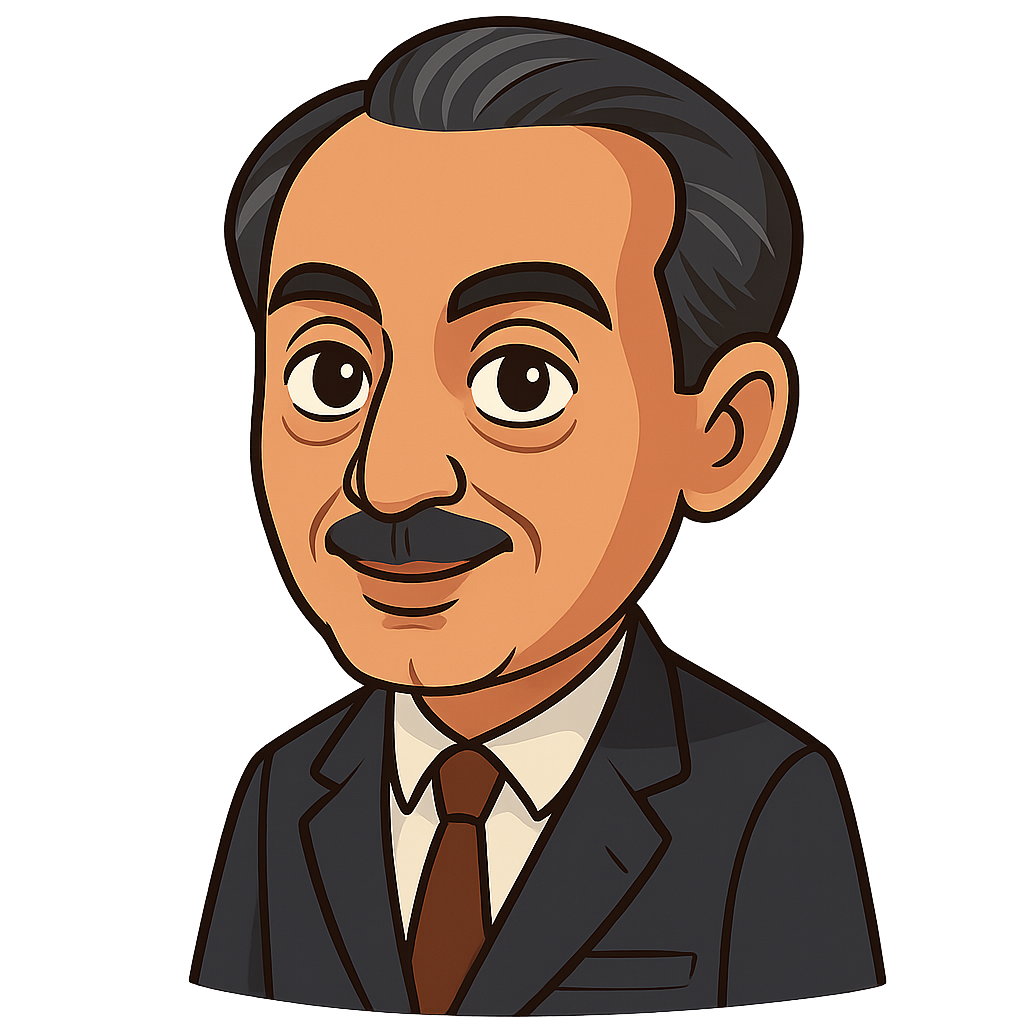
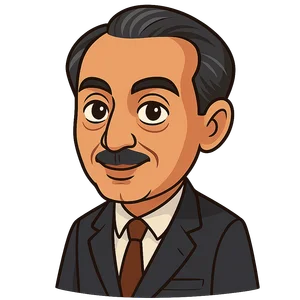
Hello! My name is Homi Jehangir Bhabha, and I am known for helping to shape the scientific future of my country. I was born on October 30th, 1909, in the vibrant city of Bombay, which was then part of British India. My family was well-known and held a deep belief in the value of education. From my earliest days, I found myself drawn to two very different worlds: science and art. I would spend hours reading books on physics to understand how the universe worked, but I also felt a deep connection to painting and classical music. My parents had a clear path in mind for me; they hoped I would become an engineer and contribute to our family's business. To set me on this path, they sent me to Cambridge University in England in 1927. I agreed to study engineering, but I proposed a deal to my father: if I excelled in my engineering courses, he would support my true passion, which was the study of physics.
At Cambridge, I dedicated myself completely to my studies. After successfully finishing my engineering degree, I was finally able to immerse myself in the fascinating world of theoretical physics. It was an incredibly exciting period for science, and I was thrilled to be a part of it. I earned my doctorate in physics in 1933. My research focused on cosmic rays, which are tiny, high-energy particles that travel through space and collide with the Earth's atmosphere. I was deeply curious about these collisions. In 1935, I published a scientific paper that described a process now known as 'Bhabha scattering,' which explains the interaction between electrons and positrons. This discovery was a significant contribution to a new field called quantum electrodynamics. During these years, I had the privilege of working alongside some of the most brilliant scientific minds of the era, and I felt I was part of a global effort to understand the very building blocks of our universe.
Homi J. Bhabha: A Vision for India's Scientific Future
Hello! My name is Homi Jehangir Bhabha, and I am known for helping to shape the scientific future of my country. I was born on October 30th, 1909, in the vibrant city of Bombay, which was then part of British India. My family was well-known and held a deep belief in the value of education. From my earliest days, I found myself drawn to two very different worlds: science and art. I would spend hours reading books on physics to understand how the universe worked, but I also felt a deep connection to painting and classical music. My parents had a clear path in mind for me; they hoped I would become an engineer and contribute to our family's business. To set me on this path, they sent me to Cambridge University in England in 1927. I agreed to study engineering, but I proposed a deal to my father: if I excelled in my engineering courses, he would support my true passion, which was the study of physics.
At Cambridge, I dedicated myself completely to my studies. After successfully finishing my engineering degree, I was finally able to immerse myself in the fascinating world of theoretical physics. It was an incredibly exciting period for science, and I was thrilled to be a part of it. I earned my doctorate in physics in 1933. My research focused on cosmic rays, which are tiny, high-energy particles that travel through space and collide with the Earth's atmosphere. I was deeply curious about these collisions. In 1935, I published a scientific paper that described a process now known as 'Bhabha scattering,' which explains the interaction between electrons and positrons. This discovery was a significant contribution to a new field called quantum electrodynamics. During these years, I had the privilege of working alongside some of the most brilliant scientific minds of the era, and I felt I was part of a global effort to understand the very building blocks of our universe.
My life took an unexpected turn in 1939. I was in India for a holiday when World War II broke out in Europe. The conflict made it impossible for me to return to my research and colleagues in England, so I had to remain in my home country. Initially, I was concerned that this would bring my scientific work to a halt, but this unforeseen event gave me a powerful new purpose. I accepted a position at the Indian Institute of Science in Bangalore. It was there that I observed the immense talent of young Indian students and scientists. I realized that my country had countless brilliant minds but lacked the world-class institutions where they could conduct groundbreaking research. This inspired a new dream: I wanted to build scientific centers in India that would be equal to the best in the world. I became convinced that science and technology were essential for India to become a modern and independent nation.
Fueled by this vision, I took action. In 1944, I wrote a proposal to the Sir Dorabji Tata Trust, a charitable organization established by my family, to create a new institute dedicated to fundamental research. My proposal was accepted, and in 1945, we founded the Tata Institute of Fundamental Research (TIFR) in Bombay. I was honored to be appointed its very first director. My ambitions, however, extended even further. I understood the immense power contained within the atom and firmly believed it could be harnessed for peaceful purposes, such as generating electricity to power India's cities and villages. In 1948, the government appointed me as the first chairman of India's Atomic Energy Commission. My most ambitious project was to establish a central hub for all our nuclear research. This dream became a reality in 1954 with the creation of the Atomic Energy Establishment, Trombay (AEET). To guide our progress, I developed a detailed three-stage plan designed to make India self-reliant in nuclear energy by using our country's own abundant natural resources.
My work was not just for the benefit of India; I also felt a responsibility to promote the peaceful use of science on a global stage. In 1955, I was given the great honor of serving as the President of the first United Nations Conference on the Peaceful Uses of Atomic Energy, which was held in Geneva, Switzerland. There, I had the opportunity to speak with scientists and world leaders from many different nations. I shared my strong belief that atomic energy held the promise to improve human lives, rather than to be used for destruction. Throughout my demanding career in science and administration, I never abandoned my love for the arts. I actively supported many modern Indian artists and made a special effort to ensure that our new scientific buildings were not just functional, but also beautiful, filling them with inspiring paintings and sculptures. I always believed that science and art spring from the very same source: the creative human spirit.
My life was devoted to building a strong scientific foundation for my country. On January 24th, 1966, my journey came to a sudden end. I was traveling to an international meeting in Vienna when the airplane I was on crashed into Mont Blanc, a mountain in the Alps. I was 56 years old. Though my life was cut short, the dreams I had for India continued to grow. Today, I am remembered as the 'father of the Indian nuclear programme.' Later that year, the research center I had poured my heart into, the AEET, was renamed the Bhabha Atomic Research Centre (BARC) in my honor. My work helped pave the way for India to become a world leader in science and technology, ensuring that the power of the atom would be used for progress and peace.
Wow facts
About
Homi J. Bhabha was an Indian nuclear physicist known as the "father of the Indian nuclear programme." He founded key research institutions and pioneered the use of atomic energy for peaceful purposes in India.
Take a Quiz
Question 1 of 5
In your own words, describe the main steps Homi Bhabha took to build India's scientific future after returning in 1939.
Explore next






Want to do even more?
Go beyond exploring. Unlock tools that turn every story into real learning.

Storypie Plus for families
Full stories, quizzes, and printables. Nights and car rides, sorted.
- Unlimited audio stories
- Create Mode: your child stars in the story
- Offline downloads
- Printable worksheets & coloring pages

Why Storypie for Schools
Students engaged. Prep in seconds. Evenings back to you.
- Worksheets & Quizzes
- Classroom Management
- Formative Assessment
- Custom Curriculum & Lesson Plans
- 27 Languages

Why Storypie for Homeschool
Curriculum done. They'll ask for more. Hours back in your day.
- Worksheet Generator
- First-Person Audio Stories
- Built-in Comprehension Quizzes
- Custom Curriculum & Lesson Plans
- Print & Go Activities