English


Homi J. Bhabha
Homi J.
Reads at Grades 3–5 Listens at Grades 1–5
Print & create
Answer keys·No prep·Free with an account
28 worksheets · answer keys · full story · quiz · Ages 8-10 · CEFR B1
Plus adds 244,000+ more stories in 27 languages, audio for every one, and printables for all of them.
Just want Homi J. Bhabha?
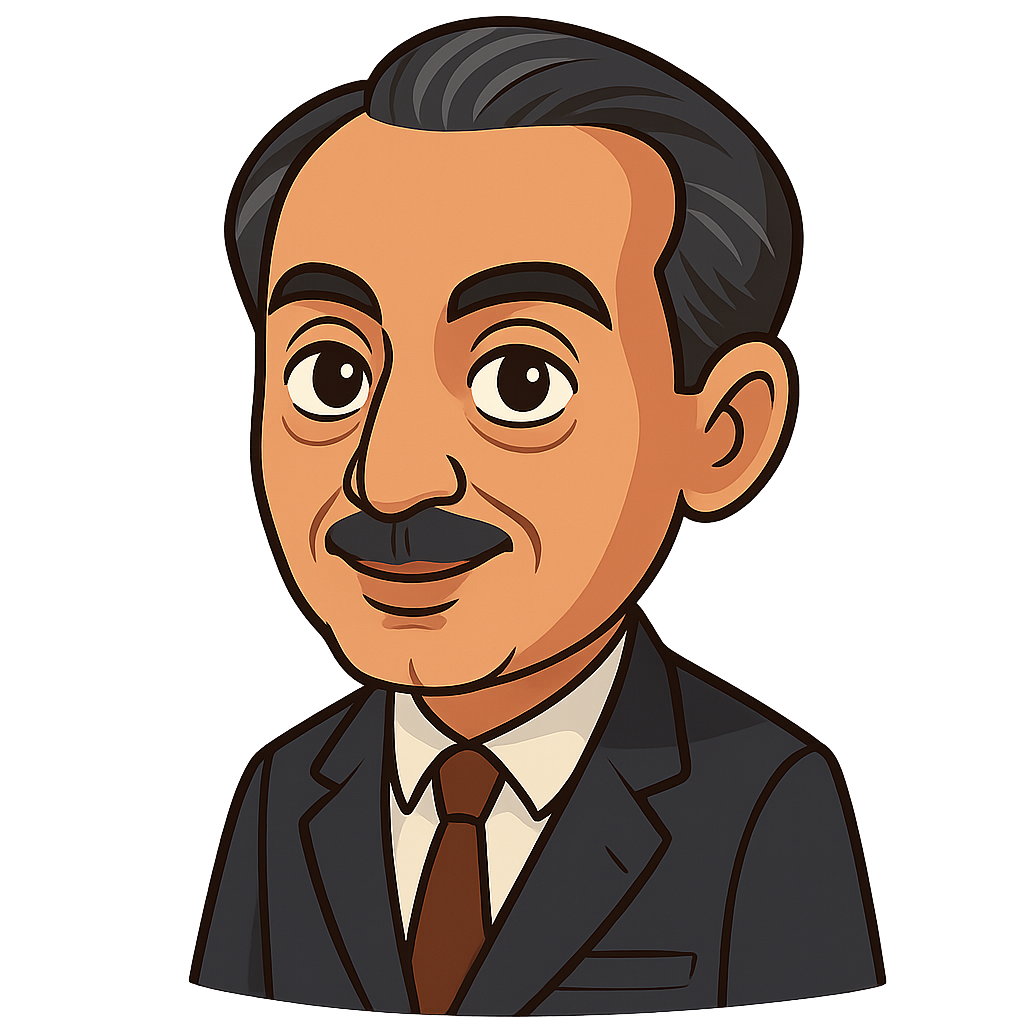
Hello! My name is Homi Jehangir Bhabha. I was born on October 30th, 1909, in a city called Bombay in India. My family home was filled with books, art, and music, which I enjoyed very much. But my biggest passion was science. I was always curious about how things in the world worked, and I spent hours reading and learning. My father had a dream for me to become an engineer and one day run a large company. However, my heart was set on physics, which is the science that studies matter, energy, and how they interact.
In 1927, when I was a young man, I sailed all the way to England to study at the famous Cambridge University. To make my father happy, I studied engineering at first, but all of my free time was spent in the library, reading everything I could about physics. I knew I had to follow my true dream. I finally wrote a letter to my parents explaining that I wanted to be a scientist more than anything. They understood and gave me their full support. I then focused my studies on the tiniest particles in the universe, known as cosmic rays. I even developed a theory explaining how certain particles scatter when they collide, a process that is now named 'Bhabha scattering' after me. I was very proud to earn my doctorate degree in nuclear physics in 1935.
I was visiting my home in India in 1939 when World War II began in Europe. Because of the war, I could not return to my work in England. While this seemed like a setback at first, it turned out to be a wonderful thing for me and for my country. I realized I could use all of my scientific knowledge to help India grow and become a modern nation. I had a big dream: to build a world-class science institute right here in India, so that other scientists would not have to leave the country to do important research. I shared my idea with a kind businessman named J.R.D. Tata, who agreed to help. Together, in 1945, we started the Tata Institute of Fundamental Research, which you might know as TIFR. It began in a small rented house, but it was the start of something huge.
Homi J. Bhabha: A Dream for Science
Hello! My name is Homi Jehangir Bhabha. I was born on October 30th, 1909, in a city called Bombay in India. My family home was filled with books, art, and music, which I enjoyed very much. But my biggest passion was science. I was always curious about how things in the world worked, and I spent hours reading and learning. My father had a dream for me to become an engineer and one day run a large company. However, my heart was set on physics, which is the science that studies matter, energy, and how they interact.
In 1927, when I was a young man, I sailed all the way to England to study at the famous Cambridge University. To make my father happy, I studied engineering at first, but all of my free time was spent in the library, reading everything I could about physics. I knew I had to follow my true dream. I finally wrote a letter to my parents explaining that I wanted to be a scientist more than anything. They understood and gave me their full support. I then focused my studies on the tiniest particles in the universe, known as cosmic rays. I even developed a theory explaining how certain particles scatter when they collide, a process that is now named 'Bhabha scattering' after me. I was very proud to earn my doctorate degree in nuclear physics in 1935.
I was visiting my home in India in 1939 when World War II began in Europe. Because of the war, I could not return to my work in England. While this seemed like a setback at first, it turned out to be a wonderful thing for me and for my country. I realized I could use all of my scientific knowledge to help India grow and become a modern nation. I had a big dream: to build a world-class science institute right here in India, so that other scientists would not have to leave the country to do important research. I shared my idea with a kind businessman named J.R.D. Tata, who agreed to help. Together, in 1945, we started the Tata Institute of Fundamental Research, which you might know as TIFR. It began in a small rented house, but it was the start of something huge.
After India became an independent country in 1947, our very first Prime Minister, Jawaharlal Nehru, understood that science was incredibly important for our nation's future. In 1948, he asked me to lead India’s new Atomic Energy Commission. My main goal was not to create weapons. Instead, I wanted to use the power of the atom for peaceful purposes, like creating clean electricity that could power towns and cities across the country. To help achieve this goal, I founded another major research center in 1954 called the Atomic Energy Establishment, Trombay. It was a great honor to represent India on the world stage, and in 1955, I was chosen to be the President of the first United Nations conference focused on the Peaceful Uses of Atomic Energy.
My life was filled with adventure and discovery, but it came to a sudden end in a plane accident in the mountains of France on January 24th, 1966. I lived to be 56 years old. Though I was gone, my dreams for India’s future in science lived on. To honor my work, the research center I built was renamed the Bhabha Atomic Research Centre, or BARC. Today, I am remembered as the 'father of the Indian nuclear programme' because of my vision to bring modern science to my country. The research centers I created are still making important discoveries that help India and the world.
Wow facts
About
Homi J. Bhabha was an Indian nuclear physicist known as the "father of the Indian nuclear programme." He founded key research institutions and pioneered the use of atomic energy for peaceful purposes in India.
Take a Quiz
Question 1 of 5
Why did Homi Bhabha say that being unable to return to England in 1939 was a 'wonderful thing'?
Explore next






Want to do even more?
Go beyond exploring. Unlock tools that turn every story into real learning.

Storypie Plus for families
Full stories, quizzes, and printables. Nights and car rides, sorted.
- Unlimited audio stories
- Create Mode: your child stars in the story
- Offline downloads
- Printable worksheets & coloring pages

Why Storypie for Schools
Students engaged. Prep in seconds. Evenings back to you.
- Worksheets & Quizzes
- Classroom Management
- Formative Assessment
- Custom Curriculum & Lesson Plans
- 27 Languages

Why Storypie for Homeschool
Curriculum done. They'll ask for more. Hours back in your day.
- Worksheet Generator
- First-Person Audio Stories
- Built-in Comprehension Quizzes
- Custom Curriculum & Lesson Plans
- Print & Go Activities