English


I. M. Pei
I.
Reads at Grades 6–8 Listens at Grades 4–8
Print & create
Answer keys·No prep·Free with an account
28 worksheets · answer keys · full story · quiz · Ages 10-12 · CEFR B2
Plus adds 164,000+ more stories in 27 languages, audio for every one, and printables for all of them.
Just want I. M. Pei?

Hello, my name is Ieoh Ming Pei, but you can call me I. M. I am an architect, someone who dreams up and designs buildings. My story began on April 26th, 1917, in Guangzhou, China. As a boy, my world was not filled with blueprints and models, but with the classical gardens of my family. I spent countless hours in those gardens, and they became my first teachers. I watched how sunlight filtered through the leaves, how shadows played on the stone paths, and how nature and man-made structures could live in perfect harmony. This understanding of light and space stayed with me my whole life. My path became clearer in the 1930s when my family was living in Shanghai. Every day, I watched construction workers build a tall hotel, reaching higher and higher into the sky. I was fascinated by the process of creating something so grand from just ideas and materials. It was then that a dream took root in my heart: I wanted to be an architect.
In 1935, I made a life-changing decision to chase that dream. I traveled across the ocean to the United States to study architecture. It was a huge step, leaving my home and culture behind to enter a new world. I enrolled at the Massachusetts Institute of Technology, which you might know as MIT, and later continued my studies at Harvard University. It was an exciting time to be learning. The world of architecture was changing, and I was fortunate to learn from some of the greatest minds of the era. One of my professors was a famous architect named Walter Gropius. He was a leader of a new style called modernism. He taught me to move away from the highly decorated styles of the past and instead embrace simplicity and honesty in design. Modernism was about using new materials like steel and large panes of glass, and focusing on clean, simple shapes. This idea of creating beauty through simple, powerful forms would become a cornerstone of my own work.
I. M. Pei: A Life in Light and Stone
Hello, my name is Ieoh Ming Pei, but you can call me I. M. I am an architect, someone who dreams up and designs buildings. My story began on April 26th, 1917, in Guangzhou, China. As a boy, my world was not filled with blueprints and models, but with the classical gardens of my family. I spent countless hours in those gardens, and they became my first teachers. I watched how sunlight filtered through the leaves, how shadows played on the stone paths, and how nature and man-made structures could live in perfect harmony. This understanding of light and space stayed with me my whole life. My path became clearer in the 1930s when my family was living in Shanghai. Every day, I watched construction workers build a tall hotel, reaching higher and higher into the sky. I was fascinated by the process of creating something so grand from just ideas and materials. It was then that a dream took root in my heart: I wanted to be an architect.
In 1935, I made a life-changing decision to chase that dream. I traveled across the ocean to the United States to study architecture. It was a huge step, leaving my home and culture behind to enter a new world. I enrolled at the Massachusetts Institute of Technology, which you might know as MIT, and later continued my studies at Harvard University. It was an exciting time to be learning. The world of architecture was changing, and I was fortunate to learn from some of the greatest minds of the era. One of my professors was a famous architect named Walter Gropius. He was a leader of a new style called modernism. He taught me to move away from the highly decorated styles of the past and instead embrace simplicity and honesty in design. Modernism was about using new materials like steel and large panes of glass, and focusing on clean, simple shapes. This idea of creating beauty through simple, powerful forms would become a cornerstone of my own work.
After finishing my education, I was eager to start creating my own buildings and bringing my ideas to life. In 1955, I took a major step and started my own firm, I. M. Pei & Associates. This gave me the freedom to develop my own unique architectural style. I had a deep love for geometry—the pure, clean logic of triangles, circles, and squares. I believed these simple shapes could be combined in surprising and elegant ways to shape light and create powerful experiences for the people inside. My goal was not just to build a structure, but to create a work of art that fit its purpose and its place. A good example of this philosophy is the National Center for Atmospheric Research, which I designed in Colorado. Completed in 1967, the building is nestled high on a mesa with a dramatic mountain backdrop. I used rough, pink-toned concrete that matched the color of the surrounding rocks, making the sharp, geometric buildings look as if they grew right out of the landscape.
My work eventually caught the attention of people who wanted to create important public spaces for the American people. In the 1970s, I was given two incredible opportunities. The first was to design the East Building of the National Gallery of Art in Washington, D.C. The project came with a major challenge: the piece of land I was given was a difficult, triangular shape that many thought was impossible to build on. I embraced the challenge, using the triangle as the basis for my entire design. I split the shape into two main triangular sections—one for the museum galleries and one for a study center—connected by a soaring, light-filled atrium. When it opened in 1978, people were amazed by how the building was both modern and respectful of the historic buildings around it. Shortly after, I received another great honor. Jacqueline Kennedy Onassis, the wife of the late President John F. Kennedy, asked me personally to design his presidential library and museum. It was a profound responsibility to create a space that would remember his life and inspire future generations. The building, dedicated in 1979, uses bold, simple shapes and a great glass pavilion that looks out over the water, creating a place for quiet reflection.
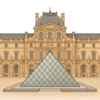
Perhaps the most famous—and at first, the most controversial—project of my career came in the 1980s, when I was asked to work on one of the world's most famous museums: the Louvre in Paris. The historic palace was beloved, but its entrance was a confusing and crowded maze. It desperately needed a new, central entry point that could welcome millions of visitors. My solution was a large, modern glass and steel pyramid to be placed right in the main courtyard. When my design was revealed, there was an uproar. Many people were shocked and angry. They felt that a modern glass pyramid had no place in the center of a historic French palace. The criticism was intense, but I firmly believed in my vision. I knew the pyramid's transparent glass would not clash with the old stone but would complement it, and its geometric form would honor the landscape traditions of France. After years of debate, the pyramid was completed in 1989. To my great relief, public opinion began to change. People saw how the pyramid brought light into the underground lobby and created a stunning, modern symbol for an ancient institution. Today, the Louvre Pyramid is one of the most beloved landmarks in Paris.
My career was long and took me all over the globe, allowing me to design buildings like the towering Bank of China Tower in Hong Kong, which was completed in 1990. In 1983, I was awarded the Pritzker Architecture Prize, which is often called the Nobel Prize for architects. It was a tremendous honor that recognized my life's work. I lived to be 102 years old, and I was fortunate to see many of my buildings become cherished parts of their cities. My greatest hope is that the buildings I left behind continue to bring people together and fill them with a sense of wonder. I hope they show how the careful use of geometry, light, and materials can create spaces that lift the human spirit.
Wow facts
About
I. M. Pei was a renowned Chinese-American architect known for his modernist designs that combined geometric forms with traditional aesthetics. His most famous works include the Louvre Pyramid in Paris and the East Building of the National Gallery of Art in Washington, D.C.
Take a Quiz
Question 1 of 5
What challenge did I. M. Pei face when designing the East Building of the National Gallery of Art?
Explore next





Want to do even more?
Go beyond exploring. Unlock tools that turn every story into real learning.

Storypie Plus for families
Full stories, quizzes, and printables. Nights and car rides, sorted.
- Unlimited audio stories
- Create Mode: your child stars in the story
- Offline downloads
- Printable worksheets & coloring pages

Why Storypie for Schools
Students engaged. Prep in seconds. Evenings back to you.
- Worksheets & Quizzes
- Classroom Management
- Formative Assessment
- Custom Curriculum & Lesson Plans
- 27 Languages

Why Storypie for Homeschool
Curriculum done. They'll ask for more. Hours back in your day.
- Worksheet Generator
- First-Person Audio Stories
- Built-in Comprehension Quizzes
- Custom Curriculum & Lesson Plans
- Print & Go Activities