English

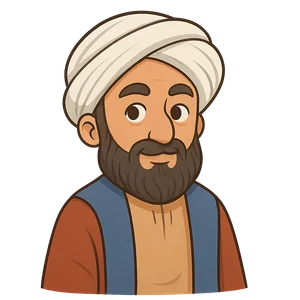
Ibn al-Nafis
Ibn al-Nafis was a 13th-century Arab physician and scholar…
Reads at Grades 6–8 Listens at Grades 4–8
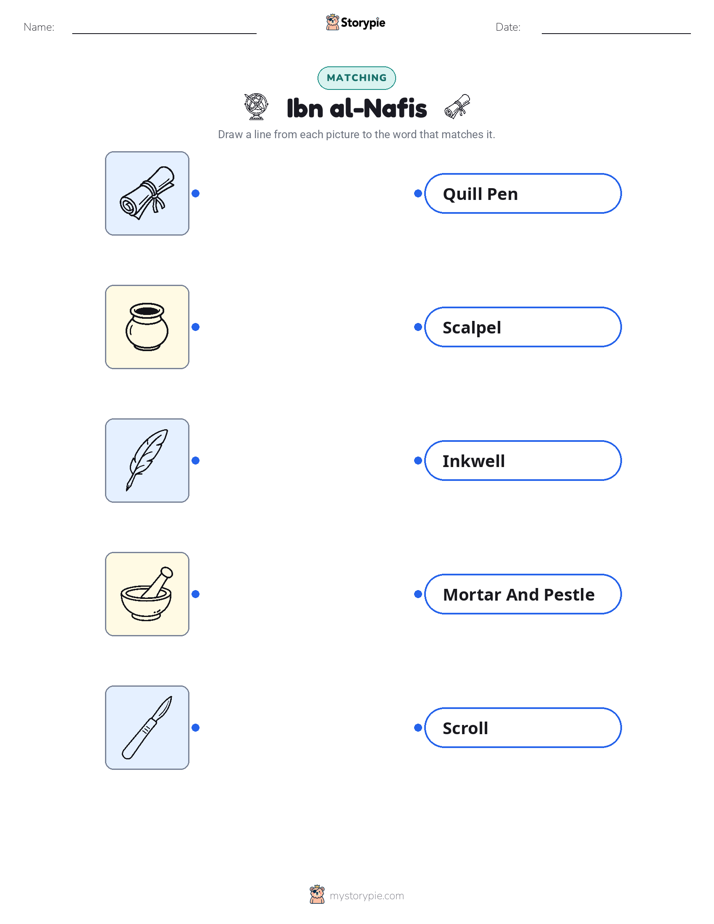
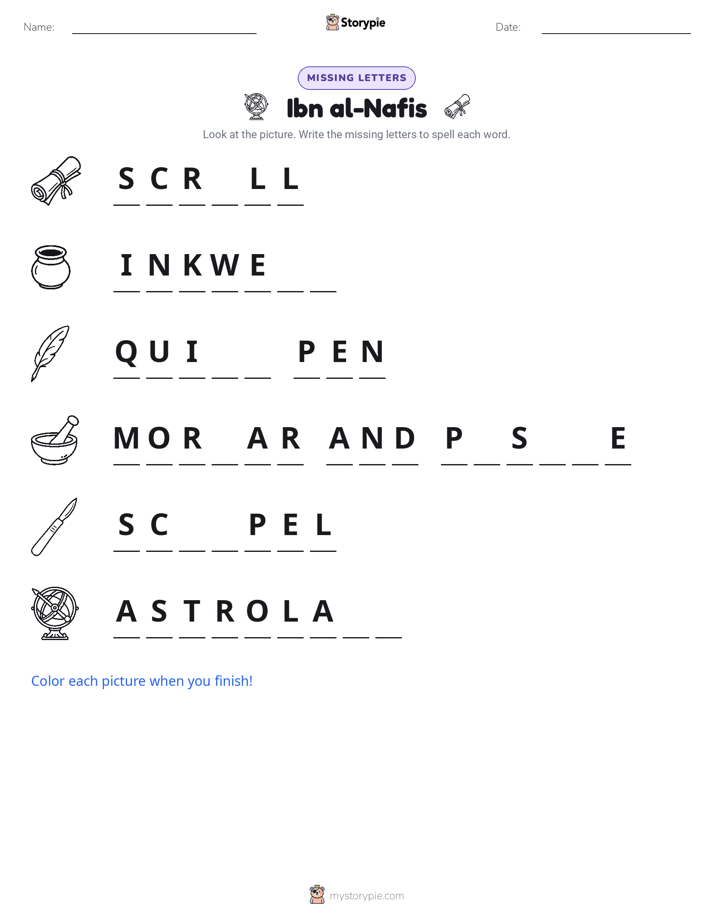
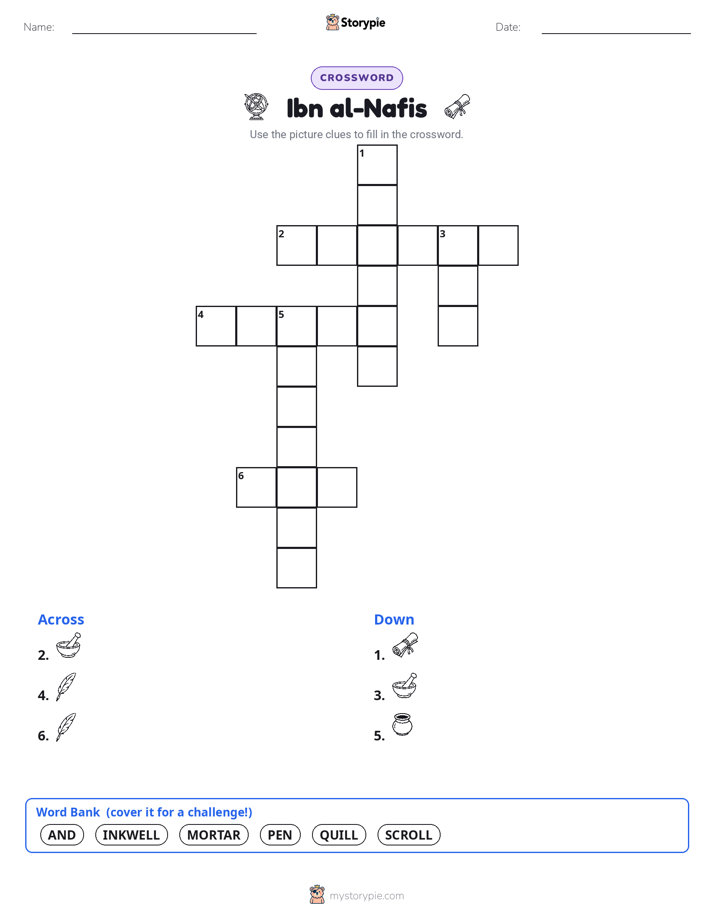
Print & create
Answer keys·No prep·Free with an account
28 worksheets · answer keys · full story · quiz · Ages 10-12 · CEFR B2
Plus adds 244,000+ more stories in 27 languages, audio for every one, and printables for all of them.
Just want Ibn al-Nafis?
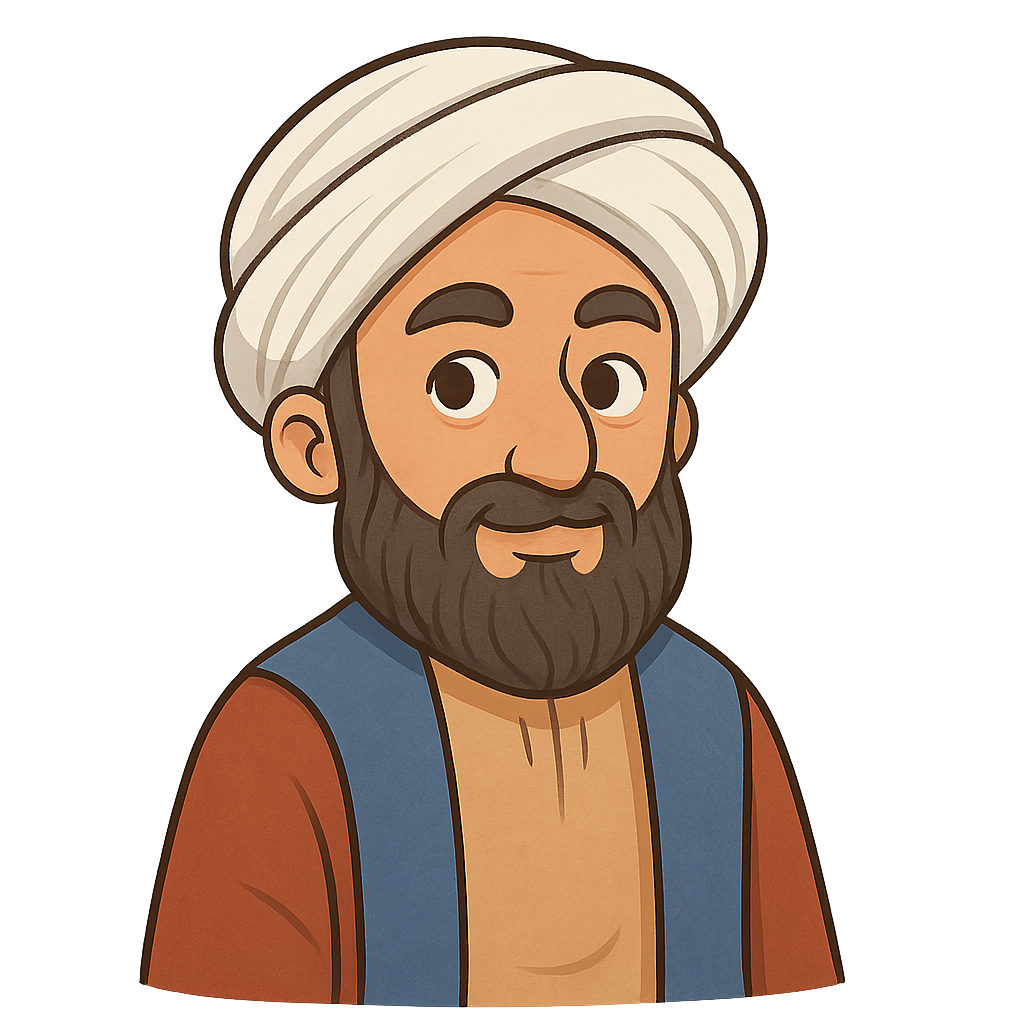
Hello. My full name is Ala al-Din Abu al-Hasan Ali ibn Abi-Hazm al-Qarshi al-Dimashqi, which is quite a mouthful. You can simply call me Ibn al-Nafis. I was born around the year 1213 in a small village not far from the magnificent city of Damascus. From my earliest days, I was filled with a deep curiosity about the world. I studied many different subjects, from law to philosophy, but my true passion was always medicine—the art and science of healing. The world in the 13th century was a place of great learning, and I was fortunate to live near one of its brightest centers. During the 1230s, I began my medical education at the Bimaristan al-Noori, the great Medical School Hospital in Damascus. It was more than just a place for the sick; it was a world-renowned institution of learning where the brightest minds gathered to study the mysteries of the human body. There, I poured over books and learned from experienced physicians, always asking questions and seeking to understand not just how to treat illnesses, but why the body worked the way it did.
After completing my studies, I felt a pull toward another great center of knowledge. Around the year 1236, I journeyed to Cairo, Egypt, a vibrant and bustling city that was the heart of the Islamic world at the time. My medical skills were quickly recognized, and I began working at the Al-Nasiri Hospital. My career progressed, and I was eventually appointed as the chief physician at the newly constructed Al-Mansuri Hospital. This was an incredible institution, a grand building dedicated to both healing and teaching. My responsibilities were immense. I treated countless patients, from ordinary citizens to the sultan himself, using the best knowledge available. But my work did not end there. A crucial part of my role was to educate the next generation of doctors. I spent many hours teaching students, sharing my experiences, and encouraging them to think critically. To spread knowledge even further, I dedicated myself to writing, authoring numerous books on medicine so that my findings and methods could be studied by others for years to come.
Ibn al-Nafis: The Doctor Who Charted the Heart
Hello. My full name is Ala al-Din Abu al-Hasan Ali ibn Abi-Hazm al-Qarshi al-Dimashqi, which is quite a mouthful. You can simply call me Ibn al-Nafis. I was born around the year 1213 in a small village not far from the magnificent city of Damascus. From my earliest days, I was filled with a deep curiosity about the world. I studied many different subjects, from law to philosophy, but my true passion was always medicine—the art and science of healing. The world in the 13th century was a place of great learning, and I was fortunate to live near one of its brightest centers. During the 1230s, I began my medical education at the Bimaristan al-Noori, the great Medical School Hospital in Damascus. It was more than just a place for the sick; it was a world-renowned institution of learning where the brightest minds gathered to study the mysteries of the human body. There, I poured over books and learned from experienced physicians, always asking questions and seeking to understand not just how to treat illnesses, but why the body worked the way it did.
After completing my studies, I felt a pull toward another great center of knowledge. Around the year 1236, I journeyed to Cairo, Egypt, a vibrant and bustling city that was the heart of the Islamic world at the time. My medical skills were quickly recognized, and I began working at the Al-Nasiri Hospital. My career progressed, and I was eventually appointed as the chief physician at the newly constructed Al-Mansuri Hospital. This was an incredible institution, a grand building dedicated to both healing and teaching. My responsibilities were immense. I treated countless patients, from ordinary citizens to the sultan himself, using the best knowledge available. But my work did not end there. A crucial part of my role was to educate the next generation of doctors. I spent many hours teaching students, sharing my experiences, and encouraging them to think critically. To spread knowledge even further, I dedicated myself to writing, authoring numerous books on medicine so that my findings and methods could be studied by others for years to come.
My most significant contribution to science came from questioning an idea that had been accepted for more than a thousand years. The ancient Roman physician, Galen, was highly respected, and his theories formed the basis of medicine. He had taught that blood moved from the right side of the heart to the left side through tiny, invisible pores in the septum, the wall that separates them. For centuries, no one dared to challenge this. However, through my own careful study of anatomy and logical reasoning, I concluded that this could not be true. I could find no evidence of these pores, and it did not make sense logically. I proposed a different path for the blood. Around the year 1242, in my book titled 'Commentary on Anatomy in Avicenna's Canon,' I explained my new theory. I argued that blood must travel from the right chamber of the heart to the lungs. There, it would mix with air before returning to the left chamber of the heart, fresh and ready to be pumped throughout the body. This process is now known as pulmonary circulation, and my work was the very first time it had ever been correctly described. It was a revolutionary idea that fundamentally changed our understanding of the human heart and how our bodies function.
While medicine was my primary focus, my curiosity was boundless. I believed that all knowledge was connected and that to be a great physician, one must also be a thinker. I wrote many other books on a wide range of subjects that interested me, including law, logic, and philosophy. I explored the deepest questions about existence and our place in the world. I even wrote a philosophical novel called 'Theologus Autodidactus.' It tells the story of a child who grows up completely alone on a deserted island. Without any teachers or books, he uses his own power of reason and observation to understand the natural world, science, and even the nature of the universe. This story was my way of showing that the human mind has a remarkable ability to discover truth on its own, simply by questioning and investigating the world around it. For me, science and philosophy were two sides of the same coin, both driven by a relentless search for understanding.
I lived a long and productive life, dedicated to healing, teaching, and discovery. My life came to an end on December 17th, 1288. I lived to be about 75 years old. For many centuries after my time, my discovery of pulmonary circulation was not widely known, especially in the medical schools of Europe, and others would later receive credit for it. However, modern historians have rediscovered my work and recognized its importance. Today, I am remembered as a pioneer of medicine and a brilliant thinker who was not afraid to challenge centuries of accepted wisdom. My story shows that true progress in science comes from those who dare to look at the world with fresh eyes and trust what their own observations tell them, proving that a single person's curiosity can indeed change the world.
Wow facts
About
Ibn al-Nafis was a 13th-century Arab physician and scholar, best known for being the first person to accurately describe the pulmonary circulation of blood.
Take a Quiz
Question 1 of 5
What was Ibn al-Nafis's most significant scientific contribution described in the story?
Explore next





Want to do even more?
Go beyond exploring. Unlock tools that turn every story into real learning.

Storypie Plus for families
Full stories, quizzes, and printables. Nights and car rides, sorted.
- Unlimited audio stories
- Create Mode: your child stars in the story
- Offline downloads
- Printable worksheets & coloring pages

Why Storypie for Schools
Students engaged. Prep in seconds. Evenings back to you.
- Worksheets & Quizzes
- Classroom Management
- Formative Assessment
- Custom Curriculum & Lesson Plans
- 27 Languages

Why Storypie for Homeschool
Curriculum done. They'll ask for more. Hours back in your day.
- Worksheet Generator
- First-Person Audio Stories
- Built-in Comprehension Quizzes
- Custom Curriculum & Lesson Plans
- Print & Go Activities