English

Ibn Battuta
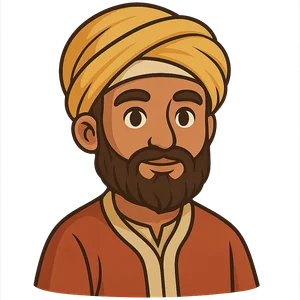
A Moroccan Muslim scholar and explorer who traveled extensively across Afro-Eurasia in the 14th century…
Reads at Grades 6–8 Listens at Grades 4–8
Print & create
Answer keys·No prep·Free with an account
28 worksheets · answer keys · full story · quiz · Ages 10-12 · CEFR B2
Plus adds 164,000+ more stories in 27 languages, audio for every one, and printables for all of them.
Just want Ibn Battuta?
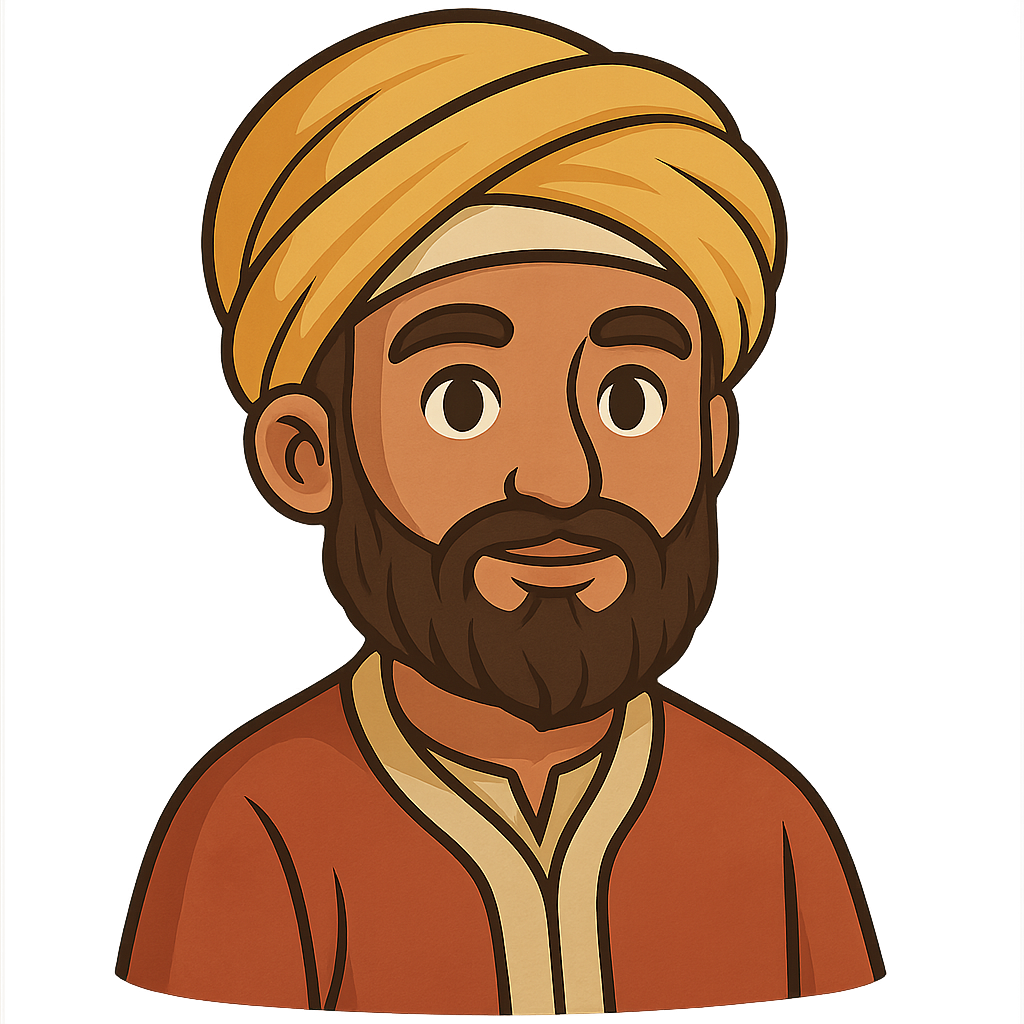
Hello, my name is Abu Abdullah Muhammad ibn Battuta, but you can call me Ibn Battuta. My story begins on February 24th, 1304, in the city of Tangier, which is in modern-day Morocco. I was born into a family of scholars and judges, so from a young age, I dedicated myself to studying Islamic law. In 1325, when I was 21 years old, I decided to undertake the most important journey for a Muslim, the Hajj, which is a pilgrimage to the holy city of Mecca. When I said goodbye to my family, I believed I would be gone for around 16 months. I could never have known that this single decision would ignite a passion for travel that would lead me on a journey lasting nearly 30 years and covering immense distances.
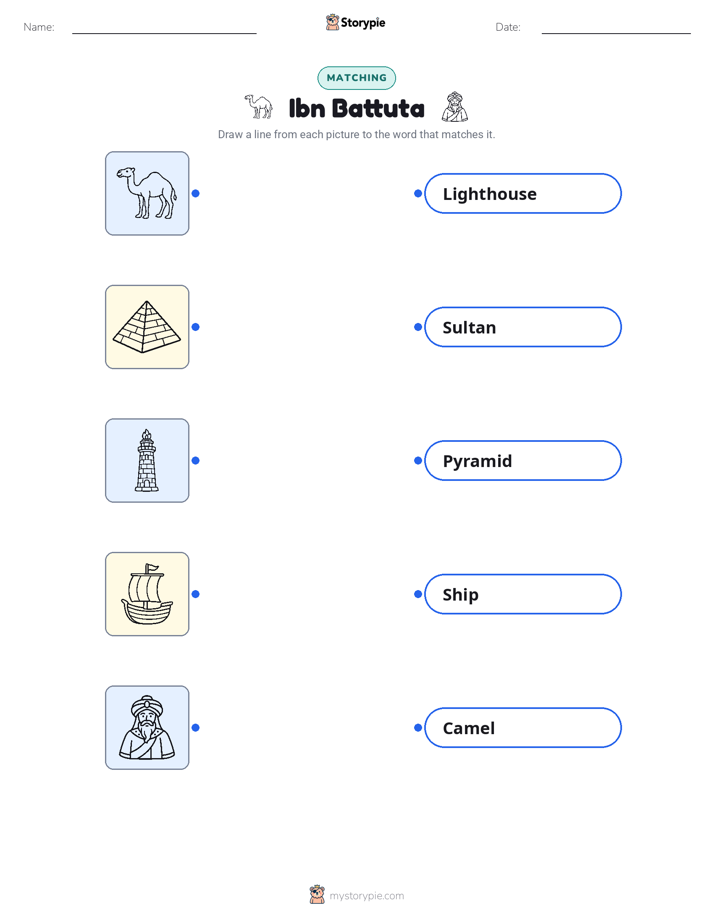
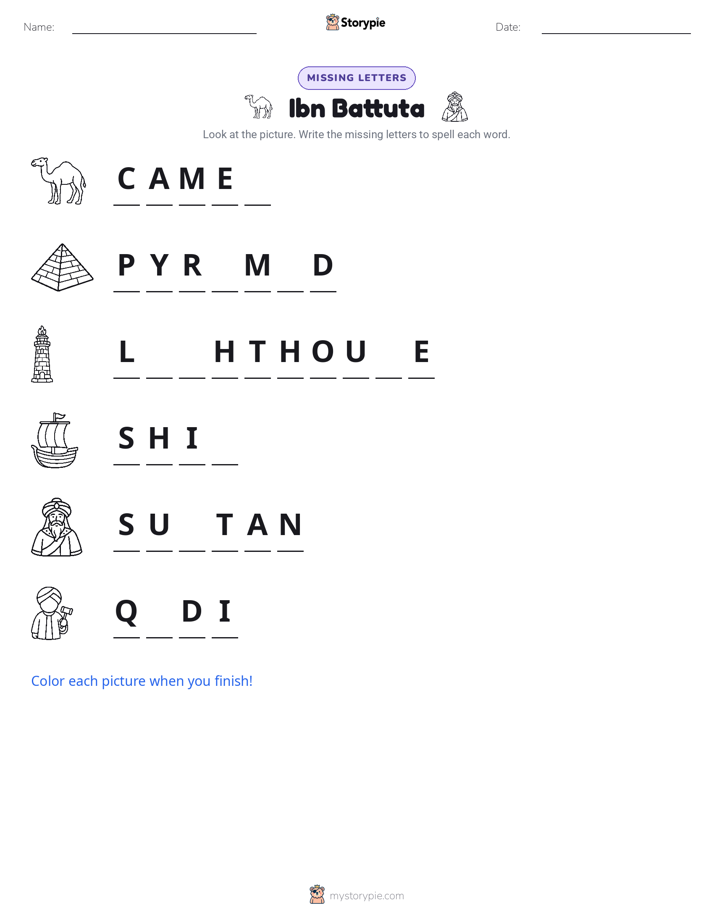
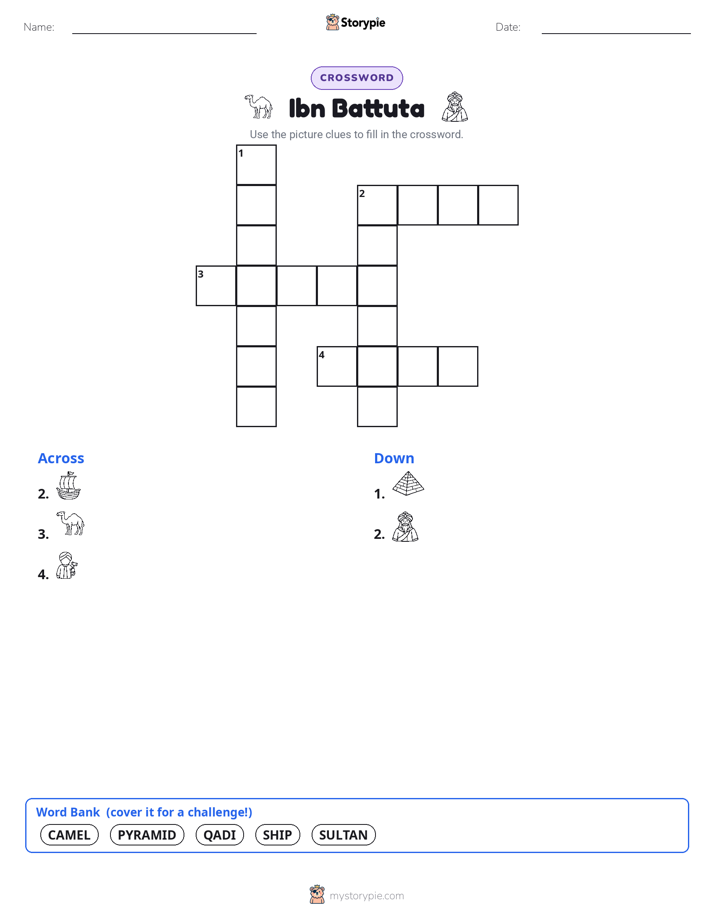
My journey began by land, traveling across the vast landscapes of North Africa. To protect myself from bandits, I joined large caravans, where groups of merchants and pilgrims traveled together for safety. We journeyed on camels, and the days were long and challenging, but the world was opening up before my eyes. I witnessed incredible sights that I had only read about in books, like the magnificent pyramids in Egypt and the legendary lighthouse of Alexandria. After I arrived in Mecca and completed the rituals of the Hajj, I felt a profound sense of accomplishment, but I also realized I was not ready to return home. A powerful curiosity filled me; I wanted to see every land in the Islamic world and learn from the wise people I might meet. My path then took me by sea down the coast of East Africa, where I visited busy trading ports. From there, I traveled through Persia and Anatolia, meeting with sultans and scholars and carefully writing down everything I saw and learned.
The Travels of Ibn Battuta
Hello, my name is Abu Abdullah Muhammad ibn Battuta, but you can call me Ibn Battuta. My story begins on February 24th, 1304, in the city of Tangier, which is in modern-day Morocco. I was born into a family of scholars and judges, so from a young age, I dedicated myself to studying Islamic law. In 1325, when I was 21 years old, I decided to undertake the most important journey for a Muslim, the Hajj, which is a pilgrimage to the holy city of Mecca. When I said goodbye to my family, I believed I would be gone for around 16 months. I could never have known that this single decision would ignite a passion for travel that would lead me on a journey lasting nearly 30 years and covering immense distances.
My journey began by land, traveling across the vast landscapes of North Africa. To protect myself from bandits, I joined large caravans, where groups of merchants and pilgrims traveled together for safety. We journeyed on camels, and the days were long and challenging, but the world was opening up before my eyes. I witnessed incredible sights that I had only read about in books, like the magnificent pyramids in Egypt and the legendary lighthouse of Alexandria. After I arrived in Mecca and completed the rituals of the Hajj, I felt a profound sense of accomplishment, but I also realized I was not ready to return home. A powerful curiosity filled me; I wanted to see every land in the Islamic world and learn from the wise people I might meet. My path then took me by sea down the coast of East Africa, where I visited busy trading ports. From there, I traveled through Persia and Anatolia, meeting with sultans and scholars and carefully writing down everything I saw and learned.
Around the year 1333, my travels brought me to the vast and wealthy lands of India. The ruler there, the Sultan of Delhi, was impressed by my extensive knowledge of Islamic law and appointed me to the position of qadi, which is a judge. I lived in his court for several years, dispensing justice and living a life of comfort, but my heart still longed for the open road and the thrill of discovery. Eventually, the Sultan entrusted me with a new mission: to serve as his ambassador to the emperor of China. This journey proved to be the most dangerous I had ever undertaken. The ship carrying me and the Sultan's gifts was caught in a violent storm and wrecked, and I lost everything. Though I was left with nothing, I refused to give up. I continued my journey, visiting the beautiful Maldive islands and Sri Lanka before finally reaching the great port cities of China. The country was unlike any place I had ever been, with its stunning crafts and bustling, organized cities.
After exploring China, I finally started the long journey back to my homeland. In 1349, I arrived in my hometown of Tangier, almost 25 years after I had left. My return was bittersweet, as I learned the sad news that both of my parents had passed away during my long absence. The world I had left behind had changed, and so had I. Even after all my travels, my desire to explore was not yet satisfied. In 1351, I embarked on one last great expedition, this time heading south across the enormous Sahara Desert. My destination was the incredible Mali Empire, a powerful and wealthy kingdom in West Africa, known for its gold. I finally returned to Morocco for good in 1354, having traveled an estimated 75,000 miles—farther than any other individual was thought to have traveled before me.
Upon my final return, the Sultan of Morocco was fascinated by my stories of faraway lands and incredible adventures. He insisted that my experiences be recorded for future generations. He appointed a scholar named Ibn Juzayy to listen to my stories and write them down. Together, we created a book that detailed my travels, which became known as the 'Rihla,' or 'The Journey.' I lived to be about 65 years old, and my life was filled with more wonder and discovery than I could have ever dreamed of when I first left home. Thanks to my book, people for hundreds of years have been able to see the world as it was in the 14th century, and I am remembered today as one of the greatest travelers in history.
Wow facts
About
A Moroccan Muslim scholar and explorer who traveled extensively across Afro-Eurasia in the 14th century, documenting his journeys in the book 'A Gift to Those Who Contemplate the Wonders of Cities and the Marvels of Traveling.'
Take a Quiz
Question 1 of 5
Based on the story, what character trait best describes Ibn Battuta's reaction to his shipwreck on the way to China?
Explore next






Want to do even more?
Go beyond exploring. Unlock tools that turn every story into real learning.

Storypie Plus for families
Full stories, quizzes, and printables. Nights and car rides, sorted.
- Unlimited audio stories
- Create Mode: your child stars in the story
- Offline downloads
- Printable worksheets & coloring pages

Why Storypie for Schools
Students engaged. Prep in seconds. Evenings back to you.
- Worksheets & Quizzes
- Classroom Management
- Formative Assessment
- Custom Curriculum & Lesson Plans
- 27 Languages

Why Storypie for Homeschool
Curriculum done. They'll ask for more. Hours back in your day.
- Worksheet Generator
- First-Person Audio Stories
- Built-in Comprehension Quizzes
- Custom Curriculum & Lesson Plans
- Print & Go Activities