English

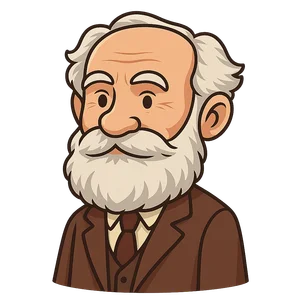
Ivan Pavlov
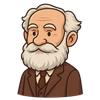
Ivan Pavlov was a Russian physiologist known for his groundbreaking research on digestion and the discovery…
Reads at Grades K-2 Listens at K–3
Print & create
Answer keys·No prep·Free with an account
28 worksheets · answer keys · full story · quiz · Ages 6-8 · CEFR A2
Plus adds 244,000+ more stories in 27 languages, audio for every one, and printables for all of them.
Just want Ivan Pavlov?
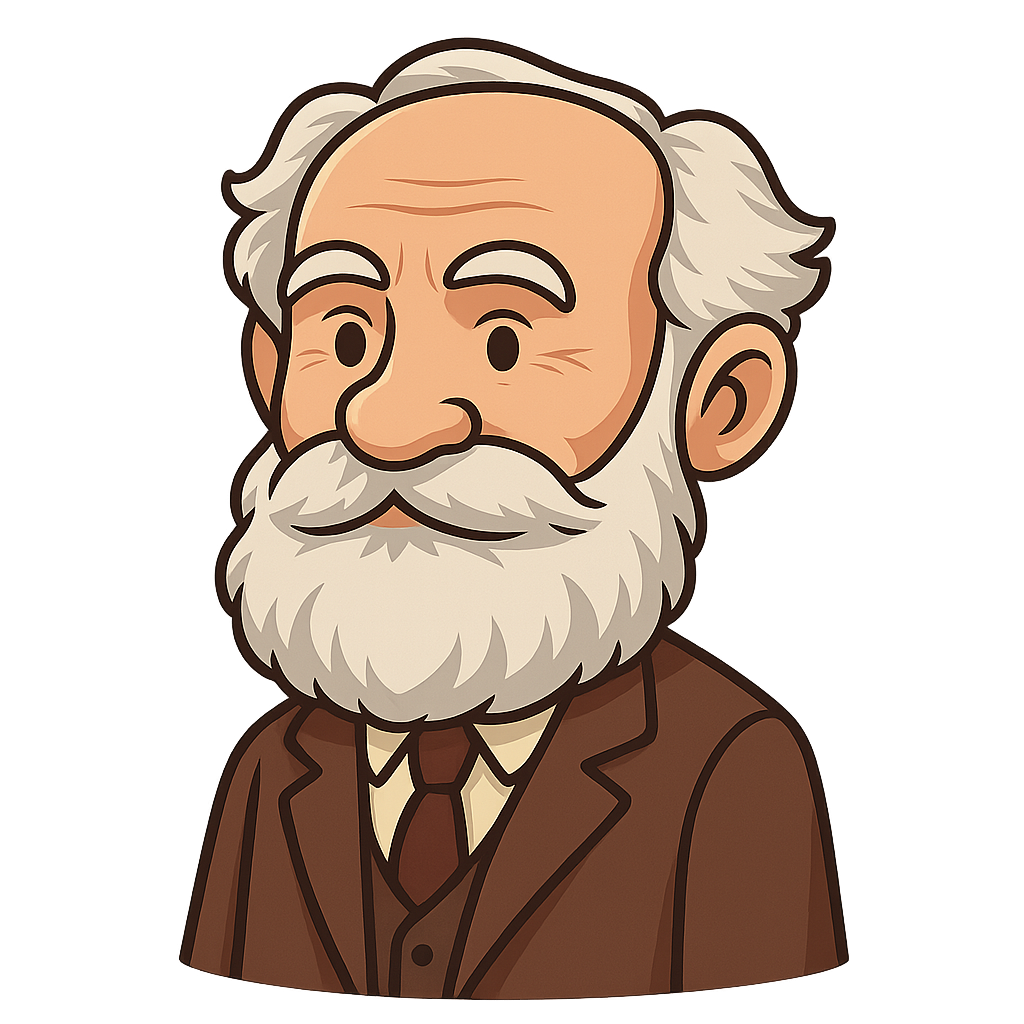
Hello, my name is Ivan Pavlov. I was born on September 26th, 1849, in a small Russian town called Ryazan. My family was very big, and our house was always busy and full of life. When I was a boy, I didn't spend all my time inside. I loved being outdoors, exploring the gardens and fields around my home. I was very curious about everything in nature. I would watch insects crawl and flowers grow, always wondering, 'How does that work?'. This curiosity stayed with me my whole life and helped me become a scientist who loved to ask questions and find answers.
At first, I thought I would become a priest, just like my father. It was a respected job, and my family expected it. But as I grew older, my love for science became too strong to ignore. I was fascinated by animals and how their bodies worked. In 1870, I made a big decision. Instead of going to a school for priests, I traveled to the big city to attend the University of Saint Petersburg. There, I could finally study the subjects I loved most, like chemistry and animal biology. It was the start of an amazing journey into the world of science.
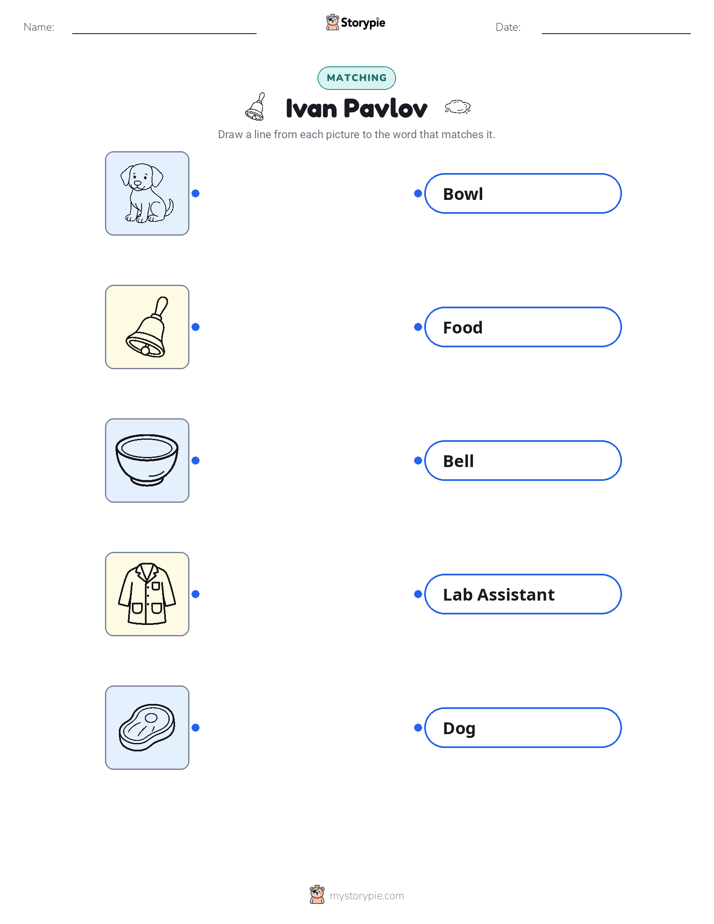
Many people know me because of my work with dogs. It all started when I was studying how their tummies work to digest food. I noticed something very interesting. The dogs didn't just start to drool when they saw their food; they would also drool when they saw the person who brought them the food. This gave me an idea for an experiment. I decided to ring a bell every single time just before I gave the dogs their meal. After doing this again and again, a surprising thing happened. The dogs learned to connect the sound of the bell with getting food. Soon, they would start to drool just from hearing the bell, even if no food was there. I called this discovery a 'conditioned reflex.' It showed that you could teach an animal's body to react to something new, like a sound, by connecting it to something natural, like being hungry.
Ivan Pavlov: The Scientist and His Famous Dogs
Hello, my name is Ivan Pavlov. I was born on September 26th, 1849, in a small Russian town called Ryazan. My family was very big, and our house was always busy and full of life. When I was a boy, I didn't spend all my time inside. I loved being outdoors, exploring the gardens and fields around my home. I was very curious about everything in nature. I would watch insects crawl and flowers grow, always wondering, 'How does that work?'. This curiosity stayed with me my whole life and helped me become a scientist who loved to ask questions and find answers.
At first, I thought I would become a priest, just like my father. It was a respected job, and my family expected it. But as I grew older, my love for science became too strong to ignore. I was fascinated by animals and how their bodies worked. In 1870, I made a big decision. Instead of going to a school for priests, I traveled to the big city to attend the University of Saint Petersburg. There, I could finally study the subjects I loved most, like chemistry and animal biology. It was the start of an amazing journey into the world of science.
Many people know me because of my work with dogs. It all started when I was studying how their tummies work to digest food. I noticed something very interesting. The dogs didn't just start to drool when they saw their food; they would also drool when they saw the person who brought them the food. This gave me an idea for an experiment. I decided to ring a bell every single time just before I gave the dogs their meal. After doing this again and again, a surprising thing happened. The dogs learned to connect the sound of the bell with getting food. Soon, they would start to drool just from hearing the bell, even if no food was there. I called this discovery a 'conditioned reflex.' It showed that you could teach an animal's body to react to something new, like a sound, by connecting it to something natural, like being hungry.
My work became known all around the world. In 1904, I received a very special honor for my research on how digestion works. It was called the Nobel Prize. I felt so proud and happy to receive such an important award. It felt wonderful to know that other scientists thought my discoveries were important. This special prize encouraged me to keep working hard, to keep asking questions, and to teach other young scientists everything I had learned.
I lived to be 86 years old, and I spent my entire life learning and discovering new things. My work with the dogs is still remembered today because it helps us understand something very important. It shows how all animals, and even people, learn new behaviors and form habits. My discoveries help scientists and teachers understand how our brains make connections and learn from the world around us.
Wow facts
About
Ivan Pavlov was a Russian physiologist known for his groundbreaking research on digestion and the discovery of classical conditioning, for which he won the Nobel Prize in Physiology or Medicine in 1904.
Take a Quiz
Question 1 of 4
Why did Ivan Pavlov's dogs start drooling when they only heard a bell?
Explore next






Want to do even more?
Go beyond exploring. Unlock tools that turn every story into real learning.

Storypie Plus for families
Full stories, quizzes, and printables. Nights and car rides, sorted.
- Unlimited audio stories
- Create Mode: your child stars in the story
- Offline downloads
- Printable worksheets & coloring pages

Why Storypie for Schools
Students engaged. Prep in seconds. Evenings back to you.
- Worksheets & Quizzes
- Classroom Management
- Formative Assessment
- Custom Curriculum & Lesson Plans
- 27 Languages

Why Storypie for Homeschool
Curriculum done. They'll ask for more. Hours back in your day.
- Worksheet Generator
- First-Person Audio Stories
- Built-in Comprehension Quizzes
- Custom Curriculum & Lesson Plans
- Print & Go Activities