English

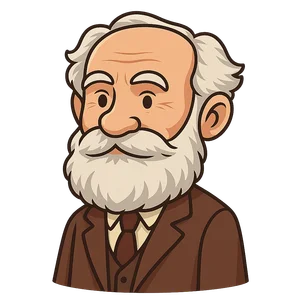
Ivan Pavlov
Ivan Pavlov was a Russian physiologist known for his groundbreaking research on digestion and the discovery…
Reads at Grades 6–8 Listens at Grades 4–8
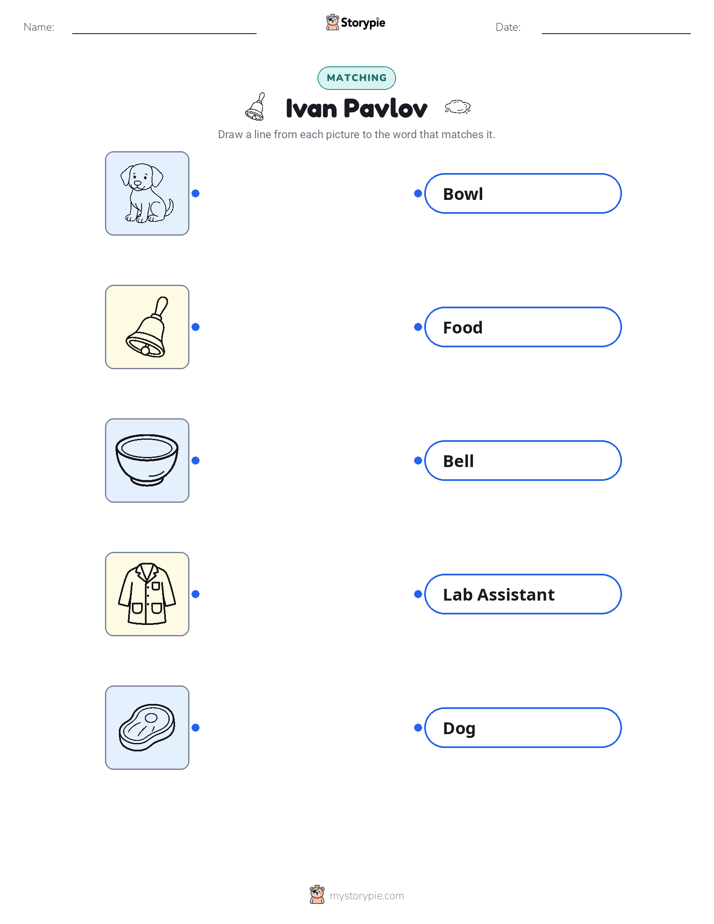
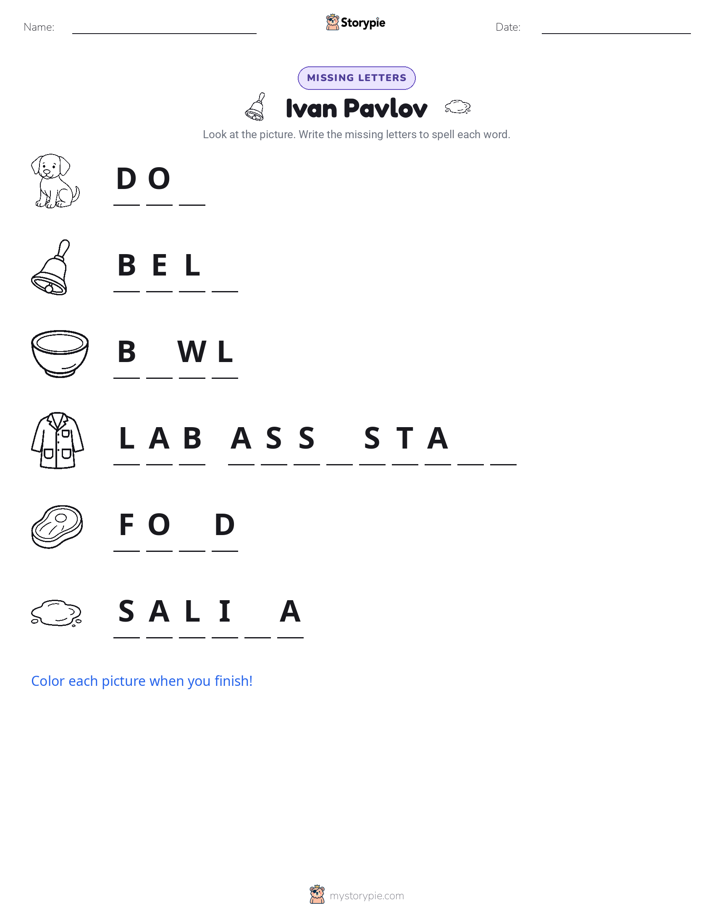
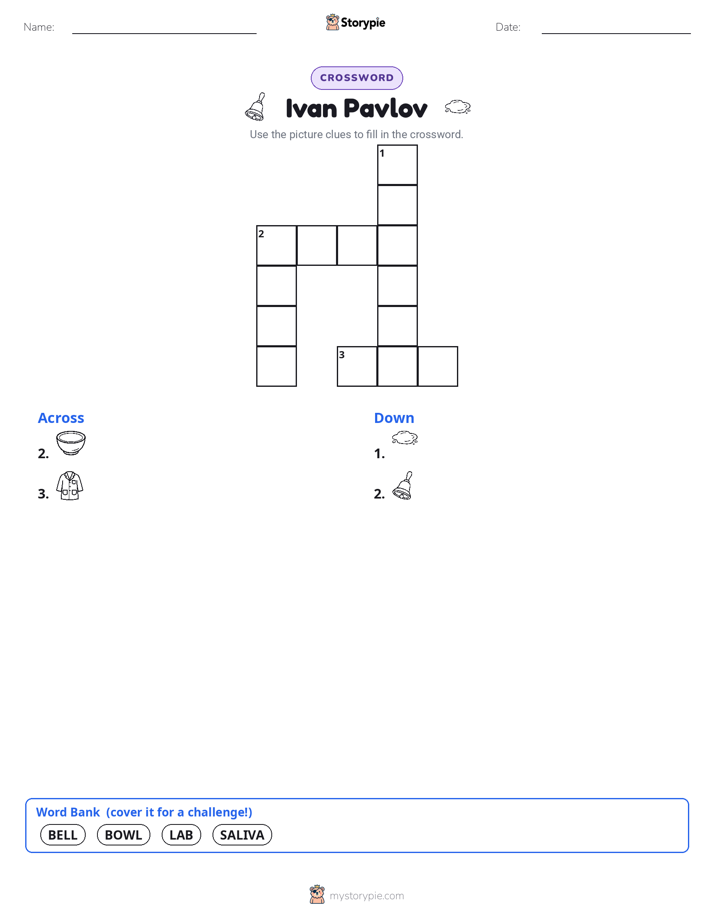
Print & create
Answer keys·No prep·Free with an account
28 worksheets · answer keys · full story · quiz · Ages 10-12 · CEFR B2
Plus adds 244,000+ more stories in 27 languages, audio for every one, and printables for all of them.
Just want Ivan Pavlov?
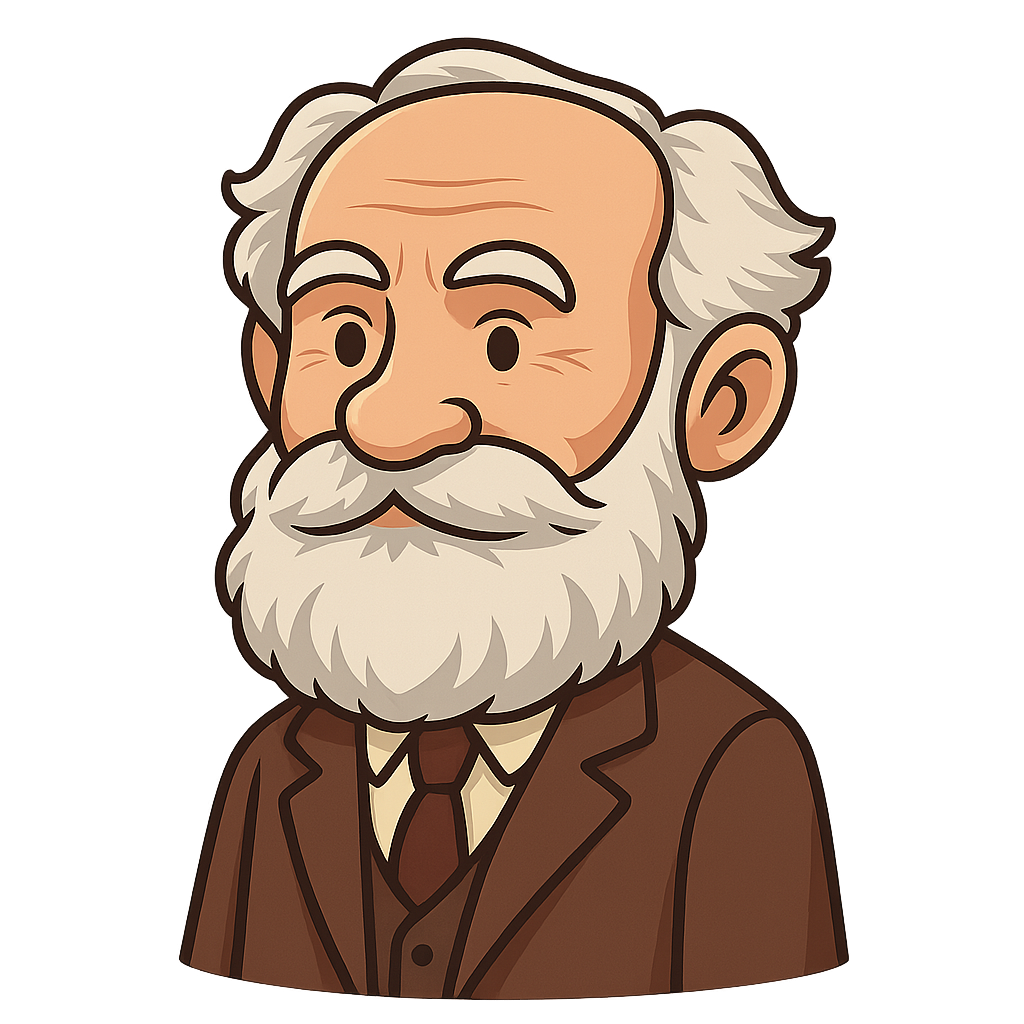
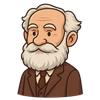
Hello! My name is Ivan Pavlov. I’d like to tell you the story of my life and my surprising discovery. I was born on September 26th, 1849, in a small town called Ryazan, in the large country of Russia. My father was a village priest, and for a long time, everyone, including me, thought I would follow in his footsteps. I even went to a special school, a seminary, to study religion. But my mind was always buzzing with questions about the world around me. I loved reading books about science, especially the ideas of a man named Charles Darwin. In 1870, I made a big decision: I left the seminary to study the natural sciences at the University of Saint Petersburg. I wanted to understand how life worked, not just through faith, but through observation and experiments.
After finishing my first studies, my curiosity only grew. I decided to become a doctor, so in 1875, I enrolled in the Imperial Academy of Medical Surgery. The part of medicine that fascinated me most was physiology—the science of how all the parts of a living body function. I was especially interested in the digestive system. How does a stomach know when to start working? How do the nerves send messages to make it happen? These were the puzzles I wanted to solve. I spent countless hours in the laboratory, carefully observing how animals' bodies responded to food. I earned my medical degree in 1879, but I knew my real work was just beginning. I wasn't just a doctor; I was a scientist on a quest for knowledge.
My most famous work began in the 1890s, and it started with dogs. I was studying their digestive glands and how much saliva, or drool, they produced when they ate. To do this, I developed a way to collect and measure the saliva. But soon, I noticed something very strange. The dogs didn't just start drooling when they saw or tasted their food. They would start drooling when they heard the footsteps of the lab assistant who brought them their meals! My scientific mind lit up. The assistant's footsteps were not food, so why were the dogs reacting as if they were? I realized I had stumbled upon something much bigger than just digestion. This was about how the brain learns and makes connections. I had to investigate this further.
Ivan Pavlov: The Story of a Bell and a Surprising Discovery
Hello! My name is Ivan Pavlov. I’d like to tell you the story of my life and my surprising discovery. I was born on September 26th, 1849, in a small town called Ryazan, in the large country of Russia. My father was a village priest, and for a long time, everyone, including me, thought I would follow in his footsteps. I even went to a special school, a seminary, to study religion. But my mind was always buzzing with questions about the world around me. I loved reading books about science, especially the ideas of a man named Charles Darwin. In 1870, I made a big decision: I left the seminary to study the natural sciences at the University of Saint Petersburg. I wanted to understand how life worked, not just through faith, but through observation and experiments.
After finishing my first studies, my curiosity only grew. I decided to become a doctor, so in 1875, I enrolled in the Imperial Academy of Medical Surgery. The part of medicine that fascinated me most was physiology—the science of how all the parts of a living body function. I was especially interested in the digestive system. How does a stomach know when to start working? How do the nerves send messages to make it happen? These were the puzzles I wanted to solve. I spent countless hours in the laboratory, carefully observing how animals' bodies responded to food. I earned my medical degree in 1879, but I knew my real work was just beginning. I wasn't just a doctor; I was a scientist on a quest for knowledge.
My most famous work began in the 1890s, and it started with dogs. I was studying their digestive glands and how much saliva, or drool, they produced when they ate. To do this, I developed a way to collect and measure the saliva. But soon, I noticed something very strange. The dogs didn't just start drooling when they saw or tasted their food. They would start drooling when they heard the footsteps of the lab assistant who brought them their meals! My scientific mind lit up. The assistant's footsteps were not food, so why were the dogs reacting as if they were? I realized I had stumbled upon something much bigger than just digestion. This was about how the brain learns and makes connections. I had to investigate this further.
I designed a new, more careful experiment. I decided to use a stimulus that had absolutely nothing to do with food—a bell. Before I gave the dogs their food, I would ring the bell. We did this over and over: ring the bell, then present the food. Ring the bell, then present the food. At first, the bell meant nothing to them. But after many repetitions, a change happened. The dogs began to connect the sound of the bell with the arrival of their meal. The truly amazing moment came when I rang the bell and didn't bring any food. The dogs started drooling anyway! They had learned to respond to the bell. I called this a 'conditional reflex.' Their brains had been 'conditioned,' or trained, to link two unrelated things together.
For my many years of research on the digestive system, I was awarded a very high honor, the Nobel Prize in Physiology or Medicine, in 1904. It was a proud moment for me and my country. While the prize was for my digestion work, my experiments with the conditional reflexes became my most famous legacy. The idea, now called 'classical conditioning,' showed that learning wasn't always a conscious choice. It was a basic, automatic process that could be studied scientifically. This discovery had a huge impact, helping to launch a new field of science called behaviorism, which focuses on observable behaviors. My work showed that we could understand the mysterious workings of the brain by carefully observing simple responses.
I continued my research for the rest of my life, always asking new questions and seeking answers in my laboratory. I lived to be 86 years old, passing away in 1936. Today, people remember me for those bells and my dogs, but my real gift to the world was showing how to study learning in a scientific way. The principles of classical conditioning are still taught in schools and universities, helping us understand everything from why a song on the radio can make you feel happy to how we learn and overcome fears. I am proud that my curiosity helped unlock one of the secrets of how our brains work.
Wow facts
About
Ivan Pavlov was a Russian physiologist known for his groundbreaking research on digestion and the discovery of classical conditioning, for which he won the Nobel Prize in Physiology or Medicine in 1904.
Take a Quiz
Question 1 of 5
What was the 'strange' problem Pavlov noticed that led to his famous experiment?
Explore next






Want to do even more?
Go beyond exploring. Unlock tools that turn every story into real learning.

Storypie Plus for families
Full stories, quizzes, and printables. Nights and car rides, sorted.
- Unlimited audio stories
- Create Mode: your child stars in the story
- Offline downloads
- Printable worksheets & coloring pages

Why Storypie for Schools
Students engaged. Prep in seconds. Evenings back to you.
- Worksheets & Quizzes
- Classroom Management
- Formative Assessment
- Custom Curriculum & Lesson Plans
- 27 Languages

Why Storypie for Homeschool
Curriculum done. They'll ask for more. Hours back in your day.
- Worksheet Generator
- First-Person Audio Stories
- Built-in Comprehension Quizzes
- Custom Curriculum & Lesson Plans
- Print & Go Activities