English

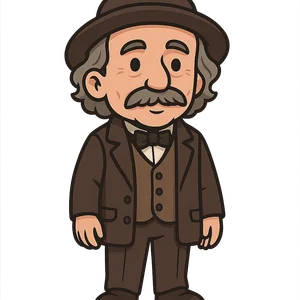
Jean-Henri Fabre
Jean-Henri Fabre was a pioneering French entomologist, naturalist, and author celebrated for his detailed…
Reads at Grades 6–8 Listens at Grades 4–8
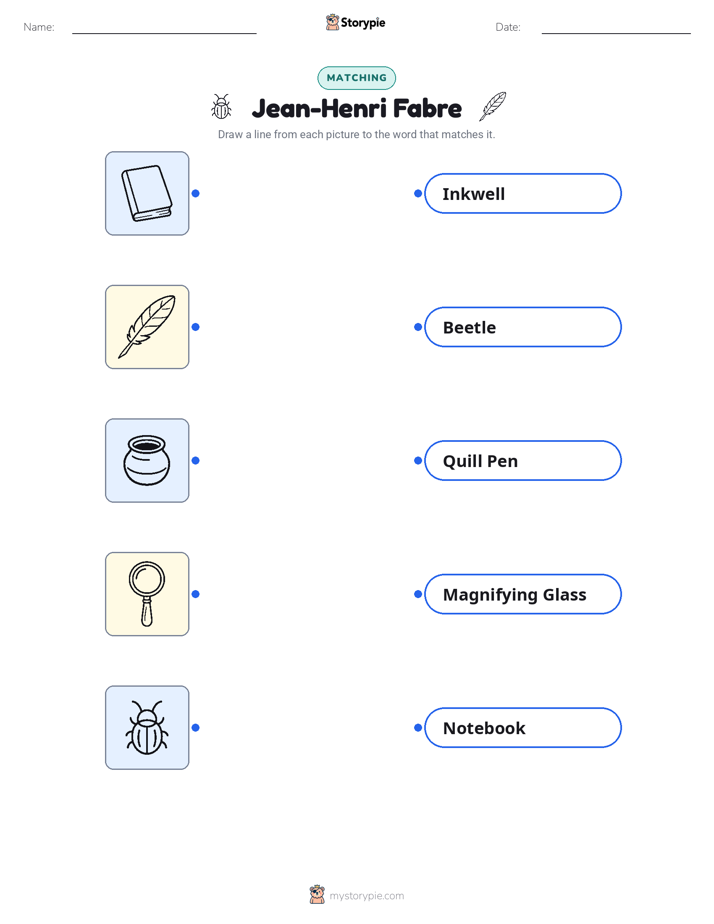
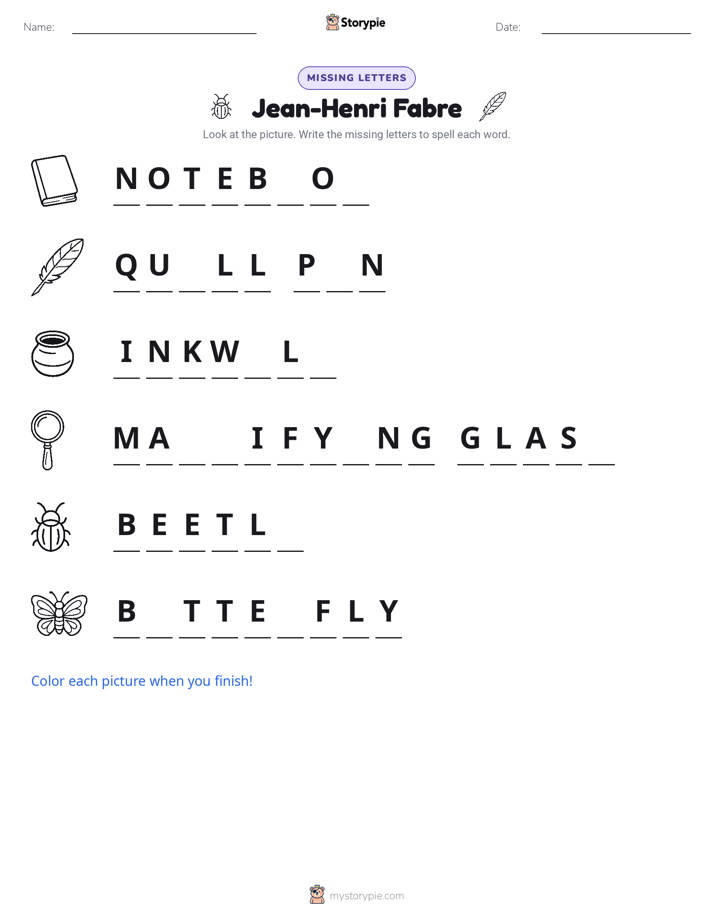
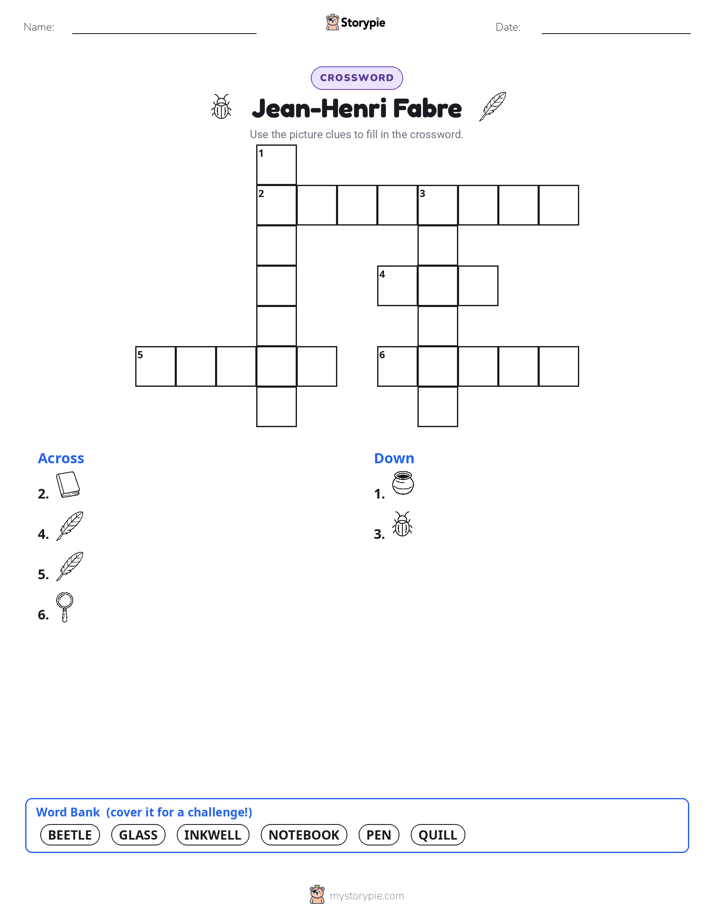
Print & create
Answer keys·No prep·Free with an account
28 worksheets · answer keys · full story · quiz · Ages 10-12 · CEFR B2
Plus adds 164,000+ more stories in 27 languages, audio for every one, and printables for all of them.
Just want Jean-Henri Fabre?
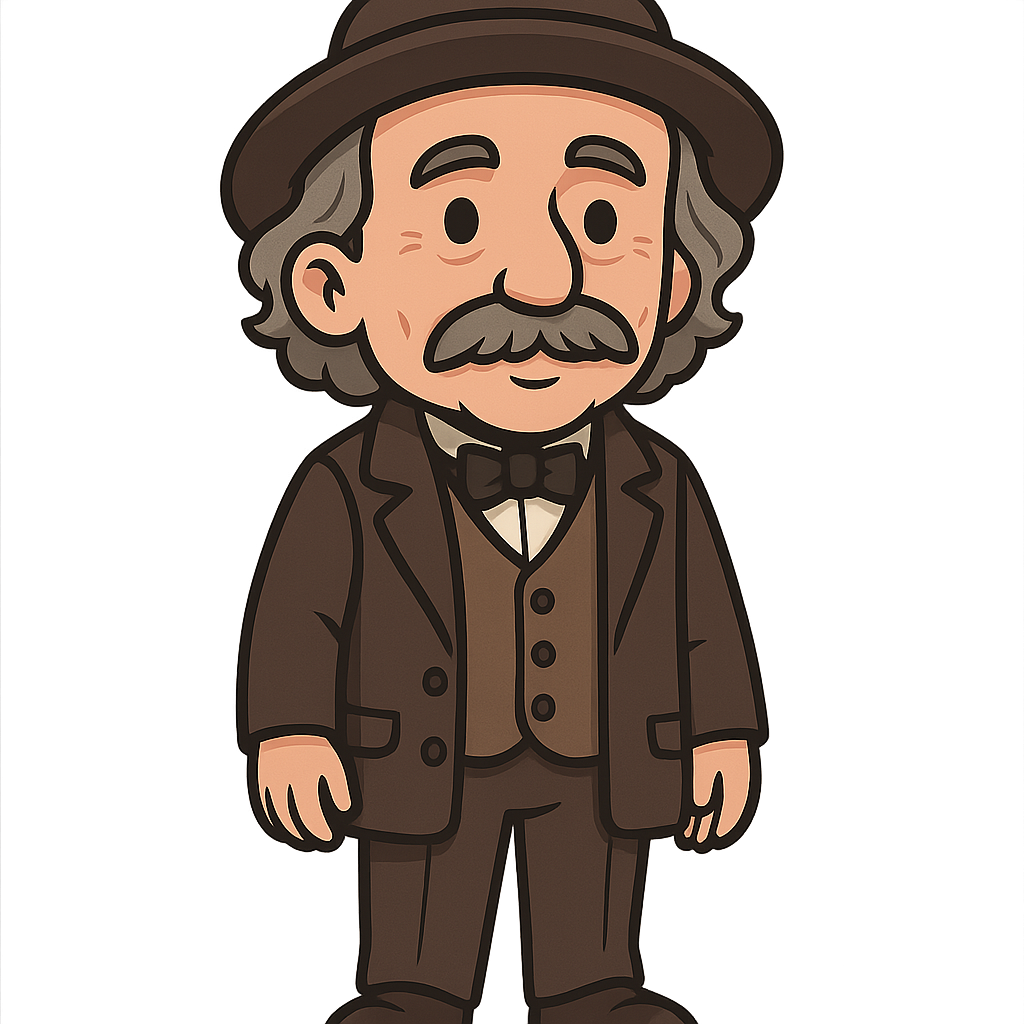
Hello! My name is Jean-Henri Fabre, and I want to tell you about my life's great adventure: watching the secret world of insects. I was born on December 21st, 1823, in a small village called Saint-Léons in the beautiful countryside of France. My family was quite poor, but the fields and forests around my home were my playground and my classroom. While other children played games, I was fascinated by the buzzing bees, the clever beetles, and the beautiful butterflies. I would lie in the grass for hours, completely still, just to see what they would do next. This curiosity about the natural world was a gift that stayed with me my entire life.
Because we had little money, I knew I had to work hard to make my way in the world. I loved learning so much that I decided to become a teacher. In 1842, I earned my teaching certificate and began sharing my passion for knowledge with students. In 1849, I took a job teaching science in Ajaccio, on the sunny island of Corsica. It was a paradise for a nature lover like me! The island was buzzing with insects I had never seen before. I spent all my free time exploring and studying them. I soon moved on to a teaching post in Avignon in 1852, but my real passion was my own research into the lives of my six-legged friends.
In my time, most scientists who studied insects, called entomologists, would capture them and pin them in boxes. I thought this was a shame. How could you learn how an insect truly lives by looking at it when it was no longer alive? I wanted to be a historian of insects, not just a collector. I decided to study them in their own homes, in the wild. I would watch a hunting wasp for hours, learning exactly how it paralyzed its prey to feed its young. In 1855, I published my first important scientific paper on this very topic. I wanted to understand their instincts—the amazing, built-in knowledge that guides their lives. My methods were unusual, but they allowed me to see things no one had ever described before.
Jean-Henri Fabre: The Poet of Science
Hello! My name is Jean-Henri Fabre, and I want to tell you about my life's great adventure: watching the secret world of insects. I was born on December 21st, 1823, in a small village called Saint-Léons in the beautiful countryside of France. My family was quite poor, but the fields and forests around my home were my playground and my classroom. While other children played games, I was fascinated by the buzzing bees, the clever beetles, and the beautiful butterflies. I would lie in the grass for hours, completely still, just to see what they would do next. This curiosity about the natural world was a gift that stayed with me my entire life.
Because we had little money, I knew I had to work hard to make my way in the world. I loved learning so much that I decided to become a teacher. In 1842, I earned my teaching certificate and began sharing my passion for knowledge with students. In 1849, I took a job teaching science in Ajaccio, on the sunny island of Corsica. It was a paradise for a nature lover like me! The island was buzzing with insects I had never seen before. I spent all my free time exploring and studying them. I soon moved on to a teaching post in Avignon in 1852, but my real passion was my own research into the lives of my six-legged friends.
In my time, most scientists who studied insects, called entomologists, would capture them and pin them in boxes. I thought this was a shame. How could you learn how an insect truly lives by looking at it when it was no longer alive? I wanted to be a historian of insects, not just a collector. I decided to study them in their own homes, in the wild. I would watch a hunting wasp for hours, learning exactly how it paralyzed its prey to feed its young. In 1855, I published my first important scientific paper on this very topic. I wanted to understand their instincts—the amazing, built-in knowledge that guides their lives. My methods were unusual, but they allowed me to see things no one had ever described before.
My dream was to have a piece of land of my very own, a place where nature was left wild so I could observe it without disturbance. After many years of teaching and saving, in 1879, I finally bought a small estate in the village of Sérignan-du-Comtat in the south of France. I called it L'Harmas, a local word for a patch of rocky, wild ground. To others, it might have looked like a messy wasteland, but to me, it was the perfect open-air laboratory. It was teeming with rosemary and thyme, thistles, and hundreds of insects. Here, I could finally dedicate all my time to my life's work, observing, experimenting, and writing.
From my home at L'Harmas, I began to write my most famous work, a ten-book series I called Souvenirs Entomologiques, which means 'Entomological Memories.' I started publishing the first volume in 1879. I didn't want to write dry, boring science books that only other scientists could understand. I wanted everyone to feel the same wonder I felt. I wrote about the insects as if they were characters in a grand play, describing their dramas, their families, and their clever ways of surviving. I used beautiful language, like a poet, to share my discoveries. The great English naturalist Charles Darwin called me an 'inimitable observer,' and people began calling me 'The Homer of Insects'.
I spent over thirty years at my beloved Harmas, writing and watching the tiny creatures who were my lifelong teachers. I lived to be 91 years old, passing away in my home on October 11th, 1915. People remember me not just for my scientific discoveries, but for showing the world that science and poetry can go hand in hand. My home, L'Harmas, is now a museum, and my books are still read by people who want to look a little closer at the ground beneath their feet. I hope my story inspires you to find your own patch of wilderness, even if it's just in your backyard, and take the time to observe the amazing little lives unfolding all around you.
Wow facts
About
Jean-Henri Fabre was a pioneering French entomologist, naturalist, and author celebrated for his detailed, observational studies of insect behavior and his beautifully written books that made science accessible to the public.
Take a Quiz
Question 1 of 5
What was Jean-Henri Fabre's main disagreement with how other entomologists of his time studied insects?
Explore next


Want to do even more?
Go beyond exploring. Unlock tools that turn every story into real learning.

Storypie Plus for families
Full stories, quizzes, and printables. Nights and car rides, sorted.
- Unlimited audio stories
- Create Mode: your child stars in the story
- Offline downloads
- Printable worksheets & coloring pages

Why Storypie for Schools
Students engaged. Prep in seconds. Evenings back to you.
- Worksheets & Quizzes
- Classroom Management
- Formative Assessment
- Custom Curriculum & Lesson Plans
- 27 Languages

Why Storypie for Homeschool
Curriculum done. They'll ask for more. Hours back in your day.
- Worksheet Generator
- First-Person Audio Stories
- Built-in Comprehension Quizzes
- Custom Curriculum & Lesson Plans
- Print & Go Activities