English

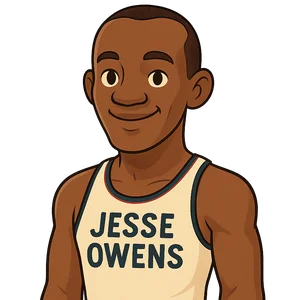
Jesse Owens
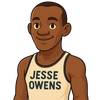
Jesse Owens was an American track and field athlete who won four gold medals at the 1936 Olympic Games in…
Reads at Grades 3–5 Listens at Grades 1–5
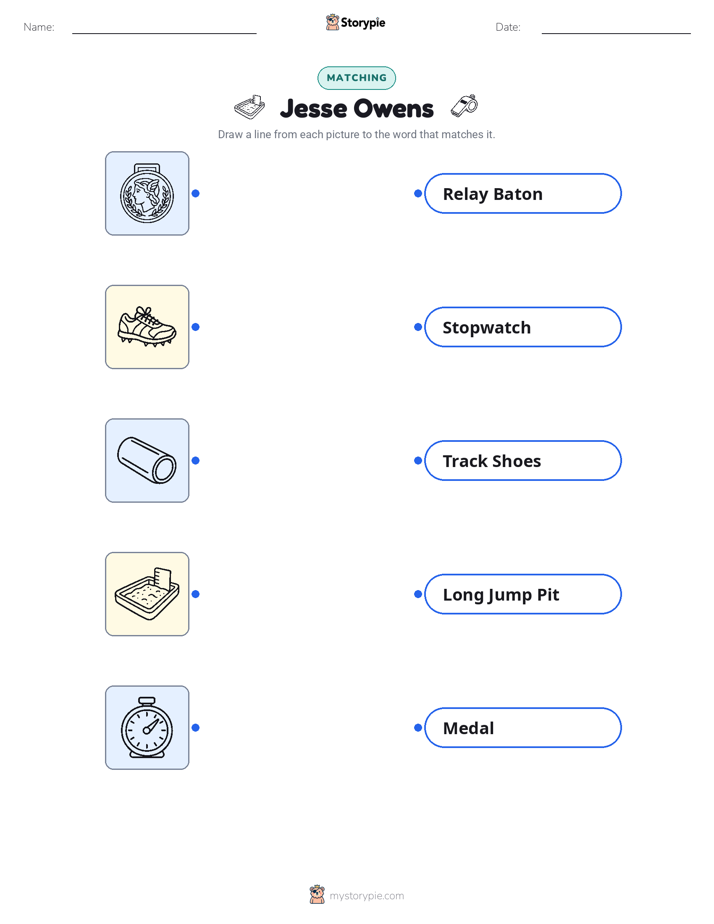
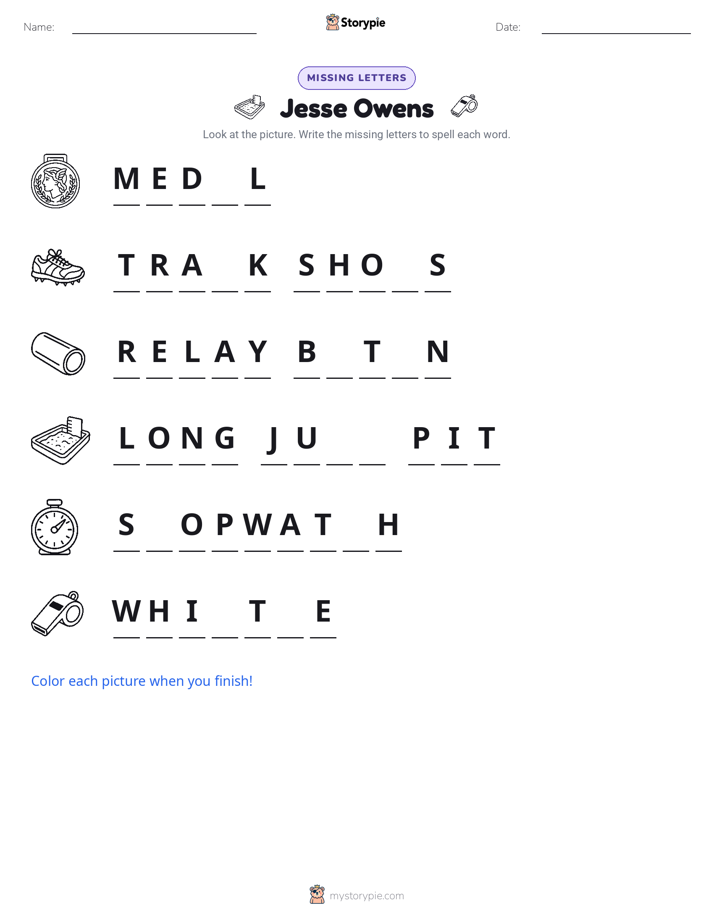
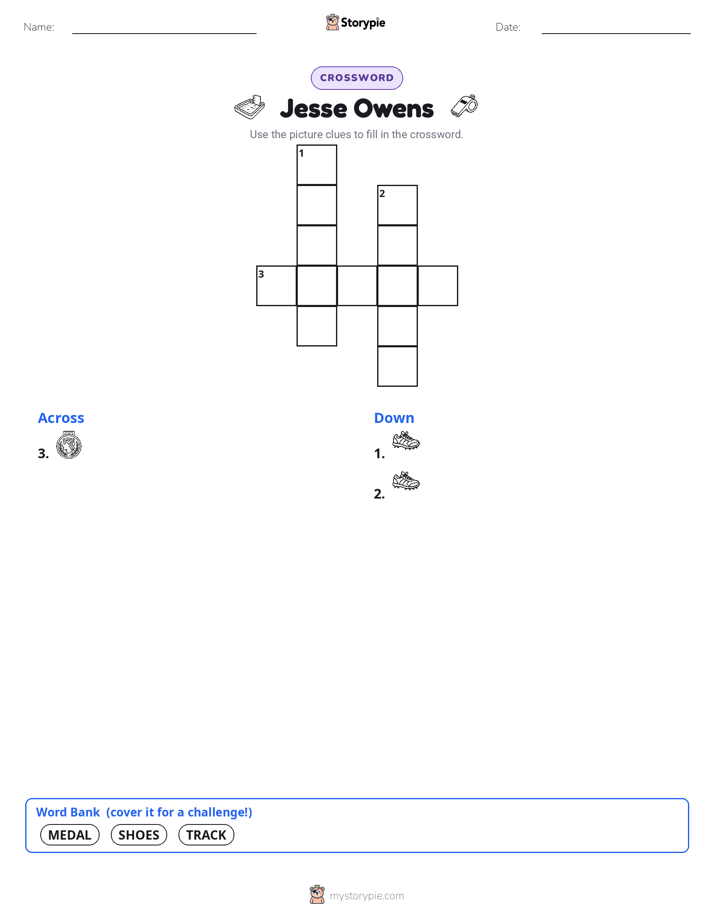
Print & create
Answer keys·No prep·Free with an account
28 worksheets · answer keys · full story · quiz · Ages 8-10 · CEFR B1
Plus adds 244,000+ more stories in 27 languages, audio for every one, and printables for all of them.
Just want Jesse Owens?
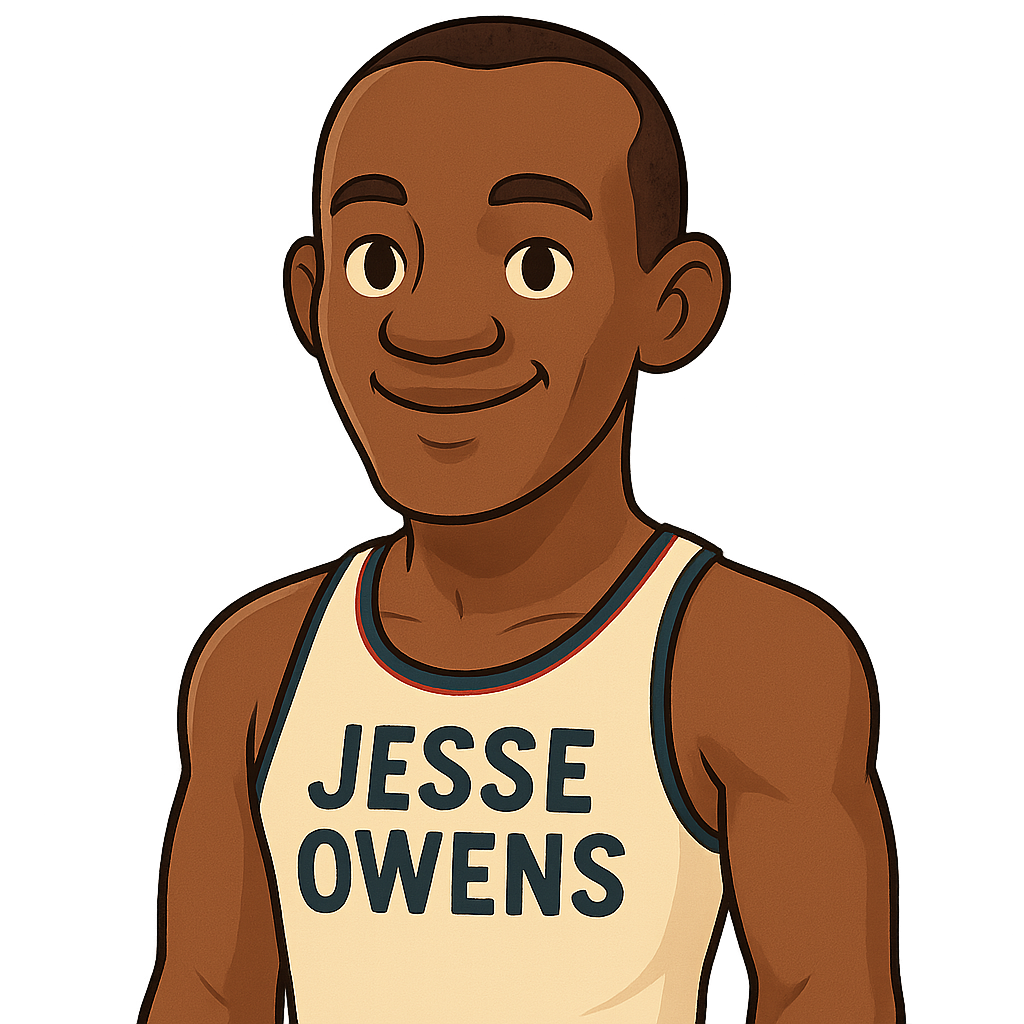
Hello, my name is Jesse Owens, but that’s not the name I was born with. My real name is James Cleveland Owens, and my family always called me J.C. for short. I was born on September 12th, 1913, in a small town called Oakville, Alabama. My family were sharecroppers, which meant we worked hard on someone else's farm to make a living. Life was not always easy. Around 1922, when I was about nine years old, my family joined many others in what was called the Great Migration, moving north to find better opportunities. We settled in Cleveland, Ohio. It was there that I got my new name. On my first day of school, my teacher asked for my name. I said, “J.C.,” but with my southern accent, she thought I said “Jesse.” The name stuck, and from that day on, I was known to the world as Jesse Owens.
It was in Ohio that I discovered my passion for running. At Fairmount Junior High School, a coach named Charles Riley saw something special in me. He believed I had the potential to be a great runner and offered to train me. Because I had to work after school to help support my family, Coach Riley met with me early every morning before classes began. While other kids were still asleep, we were out on the track, working on my speed and form. His guidance was a gift that changed my life. I continued to improve at East Technical High School, becoming a star athlete. After graduating, I decided to attend Ohio State University in 1933. Even though I was a talented athlete, being a Black man at a large university during that time came with many challenges, but I was determined to keep running and get my education.
Jesse Owens: The Boy Who Could Fly
Hello, my name is Jesse Owens, but that’s not the name I was born with. My real name is James Cleveland Owens, and my family always called me J.C. for short. I was born on September 12th, 1913, in a small town called Oakville, Alabama. My family were sharecroppers, which meant we worked hard on someone else's farm to make a living. Life was not always easy. Around 1922, when I was about nine years old, my family joined many others in what was called the Great Migration, moving north to find better opportunities. We settled in Cleveland, Ohio. It was there that I got my new name. On my first day of school, my teacher asked for my name. I said, “J.C.,” but with my southern accent, she thought I said “Jesse.” The name stuck, and from that day on, I was known to the world as Jesse Owens.
It was in Ohio that I discovered my passion for running. At Fairmount Junior High School, a coach named Charles Riley saw something special in me. He believed I had the potential to be a great runner and offered to train me. Because I had to work after school to help support my family, Coach Riley met with me early every morning before classes began. While other kids were still asleep, we were out on the track, working on my speed and form. His guidance was a gift that changed my life. I continued to improve at East Technical High School, becoming a star athlete. After graduating, I decided to attend Ohio State University in 1933. Even though I was a talented athlete, being a Black man at a large university during that time came with many challenges, but I was determined to keep running and get my education.
One of the most incredible days of my athletic career happened on May 25th, 1935. I was competing for Ohio State at the Big Ten Championship meet in Ann Arbor, Michigan. People now call it the “Day of Days,” and for good reason. In a span of just 45 minutes, I did something that no one thought was possible. I competed in four different events and managed to break three world records and tie a fourth. I tied the world record in the 100-yard dash. Then, I broke the world records for the long jump, the 220-yard dash, and the 220-yard low hurdles. That single afternoon showed the world what I was capable of, and it prepared me for the biggest stage of all.
In 1936, my journey took me to the Olympic Games in Berlin, Germany. The leader of Germany at the time was Adolf Hitler, a man who believed in very wrong and hurtful ideas about people from different backgrounds. He thought that certain athletes were superior to others. I didn't let that stop me. I was there to compete and do my best. During those games, I felt a powerful sense of joy as I won four gold medals in the 100-meter dash, the 200-meter dash, the long jump, and the 4x100-meter relay. But one of my most important moments wasn't just about winning. During the long jump competition, a German athlete named Luz Long gave me some helpful advice. His act of kindness and sportsmanship showed that friendship is more powerful than hate. We became friends, proving that people can come together no matter where they are from.
When I returned home to America after the 1936 Olympics, I was celebrated as a hero. However, my life was still difficult. Even with four gold medals, I faced unfairness and prejudice because of the color of my skin. It was hard to find a good job, and to make a living for my family, I had to take on unusual work, including racing against horses for entertainment. It was not the life I had imagined for an Olympic champion. But I never gave up. Later in my life, I found a new purpose. I began traveling the country as a public speaker, sharing my story and working to inspire young people to chase their dreams, no matter the obstacles they might face.
I lived to be 66 years old, and I spent many of those years working to make the world a more understanding place. People today remember my four gold medals from the 1936 Olympics. They see them not just as a victory in sports, but as a victory for the idea that a person’s character is what truly matters. My story shows that everyone, no matter who they are, deserves a fair chance to run their own race.
Wow facts
About
Jesse Owens was an American track and field athlete who won four gold medals at the 1936 Olympic Games in Berlin, Germany, challenging Adolf Hitler's racist ideology.
Take a Quiz
Question 1 of 5
What was Jesse Owens's real first name?
Explore next




Want to do even more?
Go beyond exploring. Unlock tools that turn every story into real learning.

Storypie Plus for families
Full stories, quizzes, and printables. Nights and car rides, sorted.
- Unlimited audio stories
- Create Mode: your child stars in the story
- Offline downloads
- Printable worksheets & coloring pages

Why Storypie for Schools
Students engaged. Prep in seconds. Evenings back to you.
- Worksheets & Quizzes
- Classroom Management
- Formative Assessment
- Custom Curriculum & Lesson Plans
- 27 Languages

Why Storypie for Homeschool
Curriculum done. They'll ask for more. Hours back in your day.
- Worksheet Generator
- First-Person Audio Stories
- Built-in Comprehension Quizzes
- Custom Curriculum & Lesson Plans
- Print & Go Activities