English

Johann Wolfgang von Goethe
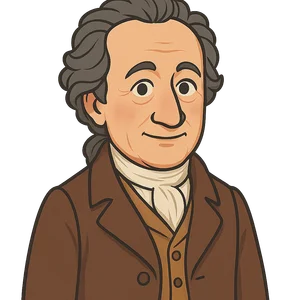
Johann Wolfgang von Goethe was a celebrated German writer, poet, scientist, and statesman…
Reads at Grades 6–8 Listens at Grades 4–8
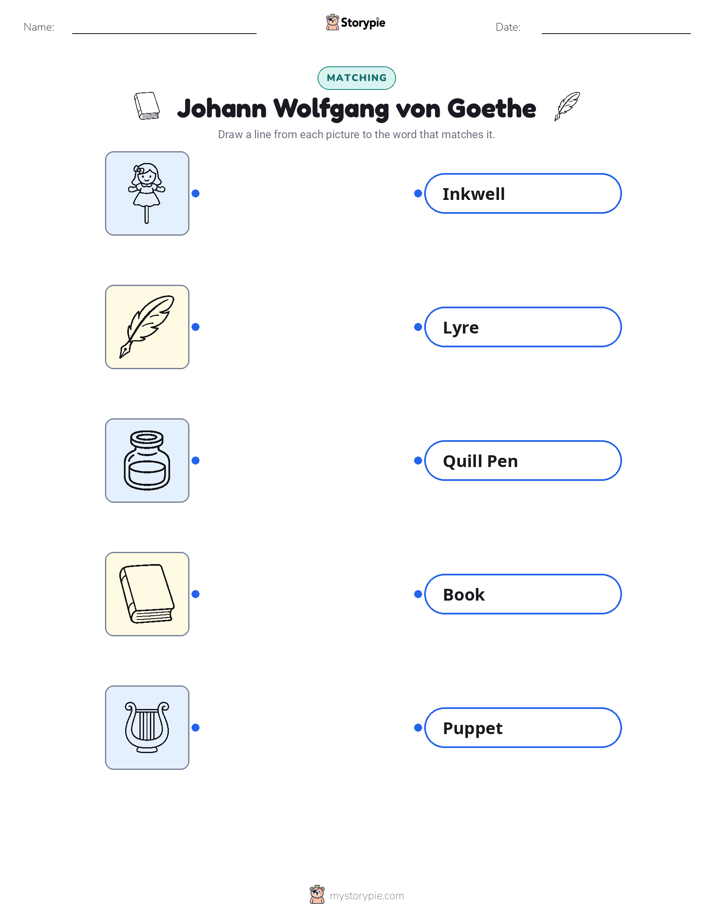
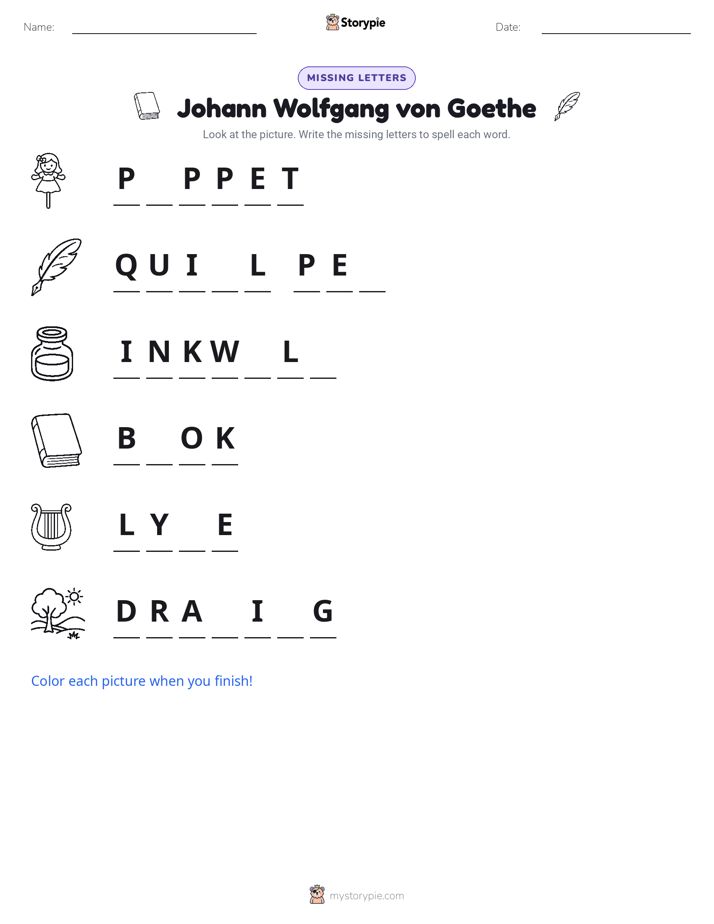
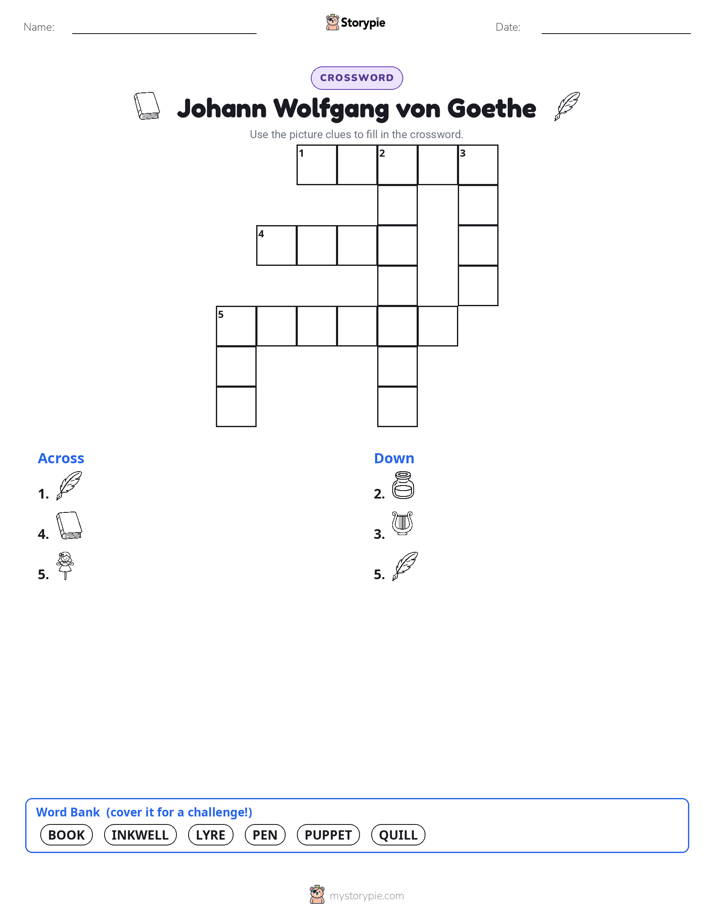
Print & create
Answer keys·No prep·Free with an account
28 worksheets · answer keys · full story · quiz · Ages 10-12 · CEFR B2
Plus adds 244,000+ more stories in 27 languages, audio for every one, and printables for all of them.
Just want Johann Wolfgang von Goethe?
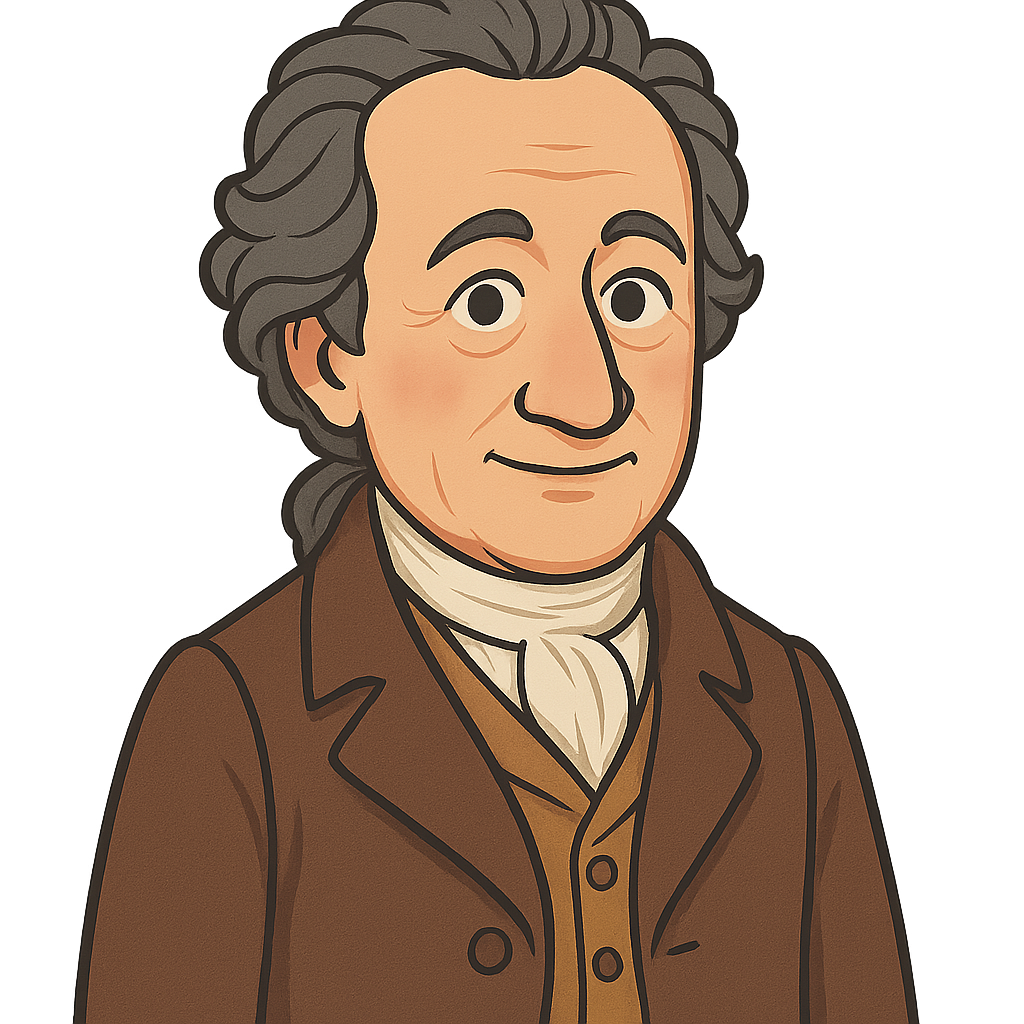
Hello there! My name is Johann Wolfgang von Goethe, and I'd like to tell you my story. My adventure began on August 28th, 1749, in the busy city of Frankfurt, Germany. My family was well-off, which meant I didn't go to a regular school. Instead, my father taught me at home, and he made sure I learned everything from Latin and Greek to drawing and music. My greatest joy was the puppet theater my grandmother gave me. I would put on plays for my family, my imagination running wild with stories of heroes and villains. When I was ten, in 1759, French soldiers came to stay in our house during a war. Instead of being scary, they introduced me to the magic of French theater. Watching their performances, I knew I wanted to create stories that would move people, just as those plays had moved me.
In 1765, when I was sixteen, my father sent me to Leipzig University. His dream was for me to become a lawyer, but my dream was to become a writer. I attended my law classes, but I spent most of my time writing poetry, attending concerts, and learning about art. I even fell in love for the first time, and all those powerful feelings of joy and sadness poured out into my poems. Unfortunately, I became very ill in 1768 and had to return home to Frankfurt. It was a difficult time, but it also gave me a chance to read and study things that fascinated me, like science and philosophy. I was slowly figuring out that I didn't have to choose just one thing to be; I could be interested in everything!
Once I was healthy again, I went to the city of Strasbourg in 1770 to finally finish my law degree. There, I met a thinker named Johann Gottfried Herder, who completely changed the way I saw the world. He encouraged me to find inspiration in folk songs, nature, and the amazing plays of William Shakespeare. This sparked a new, passionate literary movement we called *Sturm und Drang*, which means 'Storm and Stress'. I wrote my first hit play, *Götz von Berlichingen*, in 1773. But it was my novel from 1774, *The Sorrows of Young Werther*, that made me famous across all of Europe. It was a very emotional story about a young man's hopeless love. So many people connected with it that young men started dressing like the main character, Werther! I was amazed that a story I wrote could have such a powerful effect on people I'd never met.
Johann Wolfgang von Goethe
Hello there! My name is Johann Wolfgang von Goethe, and I'd like to tell you my story. My adventure began on August 28th, 1749, in the busy city of Frankfurt, Germany. My family was well-off, which meant I didn't go to a regular school. Instead, my father taught me at home, and he made sure I learned everything from Latin and Greek to drawing and music. My greatest joy was the puppet theater my grandmother gave me. I would put on plays for my family, my imagination running wild with stories of heroes and villains. When I was ten, in 1759, French soldiers came to stay in our house during a war. Instead of being scary, they introduced me to the magic of French theater. Watching their performances, I knew I wanted to create stories that would move people, just as those plays had moved me.
In 1765, when I was sixteen, my father sent me to Leipzig University. His dream was for me to become a lawyer, but my dream was to become a writer. I attended my law classes, but I spent most of my time writing poetry, attending concerts, and learning about art. I even fell in love for the first time, and all those powerful feelings of joy and sadness poured out into my poems. Unfortunately, I became very ill in 1768 and had to return home to Frankfurt. It was a difficult time, but it also gave me a chance to read and study things that fascinated me, like science and philosophy. I was slowly figuring out that I didn't have to choose just one thing to be; I could be interested in everything!
Once I was healthy again, I went to the city of Strasbourg in 1770 to finally finish my law degree. There, I met a thinker named Johann Gottfried Herder, who completely changed the way I saw the world. He encouraged me to find inspiration in folk songs, nature, and the amazing plays of William Shakespeare. This sparked a new, passionate literary movement we called Sturm und Drang, which means 'Storm and Stress'. I wrote my first hit play, Götz von Berlichingen, in 1773. But it was my novel from 1774, The Sorrows of Young Werther, that made me famous across all of Europe. It was a very emotional story about a young man's hopeless love. So many people connected with it that young men started dressing like the main character, Werther! I was amazed that a story I wrote could have such a powerful effect on people I'd never met.
My fame brought me an incredible opportunity. In 1775, the young ruler Duke Karl August invited me to live and work in his court in the small city of Weimar. I said yes, and it became my home for the rest of my life. I wasn't just a writer anymore. The Duke trusted me, and I became a statesman, helping to run the state. I was in charge of everything from managing silver mines to designing parks and running the state theater. It was a lot of responsibility, but I enjoyed the challenge of using my mind for practical problems as well as creative ones. My close friendship with the Duke allowed me to help turn Weimar into one of the most important cultural centers in all of Europe.
After ten years of government work, I felt my creativity was running dry. So, in 1786, I took a secret trip to a place I had always dreamed of: Italy. For nearly two years, I traveled, sketched ancient ruins, and studied the beautiful art of the Renaissance. The warm sun and incredible history of Italy filled me with new energy and ideas. This journey marked a new period in my writing, which people now call 'Weimar Classicism'. But my curiosity didn't stop with art. I was also a scientist! I loved studying plants and how they grew. I even made a real scientific discovery in 1784 when I identified a small bone in the human jaw called the intermaxillary bone. I also developed my own Theory of Colours, published in 1810, because I was fascinated by how we see light and color.
Of all the things I wrote, one story stayed with me for my entire life. It is a play called Faust. I started writing it when I was a young man and didn't finish the second part until I was over eighty years old. It tells the story of a brilliant scholar, Dr. Faust, who is tired of all his book learning. He makes a dangerous deal with a devilish spirit named Mephistopheles to experience all of life's knowledge and pleasures. I published the first part of the play in 1808. It asks big questions: What does it mean to be good? What is the price of knowledge? During my later years in Weimar, my great friendship with another famous writer, Friedrich Schiller, pushed me to work on my most ambitious ideas, including Faust.
I lived a very long and busy life, right up until I passed away in Weimar on March 22nd, 1832. I lived to be 82 years old. Today, people remember me as a 'polymath'—someone whose curiosity knew no bounds. I was a poet, a novelist, a playwright, a scientist, a statesman, and an artist. My words and ideas have traveled the world, and my play Faust is still considered one of the greatest works of German literature. I hope my story shows you that you never have to choose just one passion. The world is full of amazing things to learn and discover.
Wow facts
About
Johann Wolfgang von Goethe was a celebrated German writer, poet, scientist, and statesman, best known for his epic drama 'Faust' and his influential novel 'Faust'.
Take a Quiz
Question 1 of 5
What character trait best describes Johann Wolfgang von Goethe, based on his story of studying law, science, and art?
Explore next






Want to do even more?
Go beyond exploring. Unlock tools that turn every story into real learning.

Storypie Plus for families
Full stories, quizzes, and printables. Nights and car rides, sorted.
- Unlimited audio stories
- Create Mode: your child stars in the story
- Offline downloads
- Printable worksheets & coloring pages

Why Storypie for Schools
Students engaged. Prep in seconds. Evenings back to you.
- Worksheets & Quizzes
- Classroom Management
- Formative Assessment
- Custom Curriculum & Lesson Plans
- 27 Languages

Why Storypie for Homeschool
Curriculum done. They'll ask for more. Hours back in your day.
- Worksheet Generator
- First-Person Audio Stories
- Built-in Comprehension Quizzes
- Custom Curriculum & Lesson Plans
- Print & Go Activities