English

Joseph Priestley
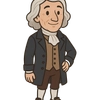
Joseph Priestley was an 18th-century English chemist, theologian…
Reads at Grades 6–8 Listens at Grades 4–8
Print & create
Answer keys·No prep·Free with an account
28 worksheets · answer keys · full story · quiz · Ages 10-12 · CEFR B2
Plus adds 164,000+ more stories in 27 languages, audio for every one, and printables for all of them.
Just want Joseph Priestley?
Hello! My name is Joseph Priestley, and I was a man of many questions. I was born on March 13th, 1733, in Yorkshire, England, a place of rolling hills and bustling towns. From a young age, I was fascinated by everything—I loved learning new languages, studying history, and debating ideas about religion. Above all, I was captivated by the endless mysteries of the natural world. My path first led me to become a minister and a teacher, roles I cherished because they allowed me to share knowledge and explore important questions about life. However, my mind was always buzzing with scientific puzzles. To me, science and faith were not separate; I believed that understanding the world God created was a form of worship itself. My home was never just a home; it was also my laboratory. I spent countless nights there, surrounded by glass tubes, strange chemicals, and the exciting, bubbling possibility of discovery. It was in that room that I felt I could truly explore the magnificent details of creation.
My scientific journey truly took a leap forward after a trip to London in 1765. There, I had the great fortune of meeting the brilliant American inventor and statesman, Benjamin Franklin. He was a great inspiration, and he saw the spark of curiosity in me. He encouraged my experiments with electricity, a mysterious force that fascinated scientists of my time. Fueled by his encouragement, I dove into my work and, in 1767, I published a whole book on the history of electricity. During these experiments, I even discovered that graphite, the very same material you find in your pencils, could conduct an electrical current. My curiosity, however, was not limited to electricity. Soon, my attention was captured by a brewery located near my home. I was mesmerized by the gas, or 'air' as we often called it, that bubbled up from the enormous vats of fermenting beer. I began to experiment and figured out how to dissolve this 'fixed air'—what you now call carbon dioxide—into water. Around the year 1767, this tinkering led me to invent the world's first fizzy, bubbly drink: soda water!
Joseph Priestley: The Man Who Discovered Oxygen
Hello! My name is Joseph Priestley, and I was a man of many questions. I was born on March 13th, 1733, in Yorkshire, England, a place of rolling hills and bustling towns. From a young age, I was fascinated by everything—I loved learning new languages, studying history, and debating ideas about religion. Above all, I was captivated by the endless mysteries of the natural world. My path first led me to become a minister and a teacher, roles I cherished because they allowed me to share knowledge and explore important questions about life. However, my mind was always buzzing with scientific puzzles. To me, science and faith were not separate; I believed that understanding the world God created was a form of worship itself. My home was never just a home; it was also my laboratory. I spent countless nights there, surrounded by glass tubes, strange chemicals, and the exciting, bubbling possibility of discovery. It was in that room that I felt I could truly explore the magnificent details of creation.
My scientific journey truly took a leap forward after a trip to London in 1765. There, I had the great fortune of meeting the brilliant American inventor and statesman, Benjamin Franklin. He was a great inspiration, and he saw the spark of curiosity in me. He encouraged my experiments with electricity, a mysterious force that fascinated scientists of my time. Fueled by his encouragement, I dove into my work and, in 1767, I published a whole book on the history of electricity. During these experiments, I even discovered that graphite, the very same material you find in your pencils, could conduct an electrical current. My curiosity, however, was not limited to electricity. Soon, my attention was captured by a brewery located near my home. I was mesmerized by the gas, or 'air' as we often called it, that bubbled up from the enormous vats of fermenting beer. I began to experiment and figured out how to dissolve this 'fixed air'—what you now call carbon dioxide—into water. Around the year 1767, this tinkering led me to invent the world's first fizzy, bubbly drink: soda water!
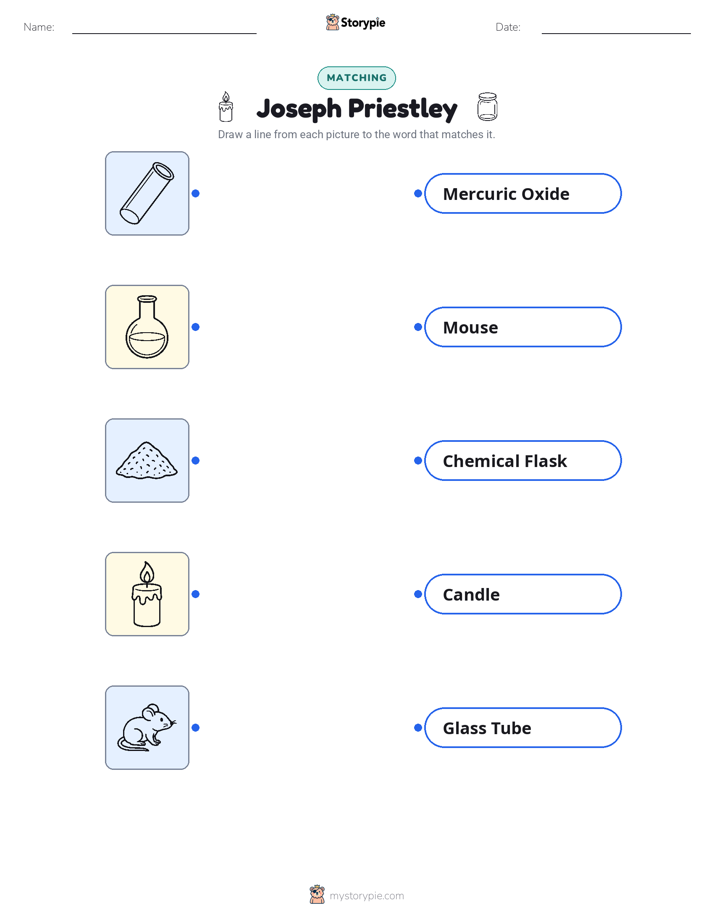
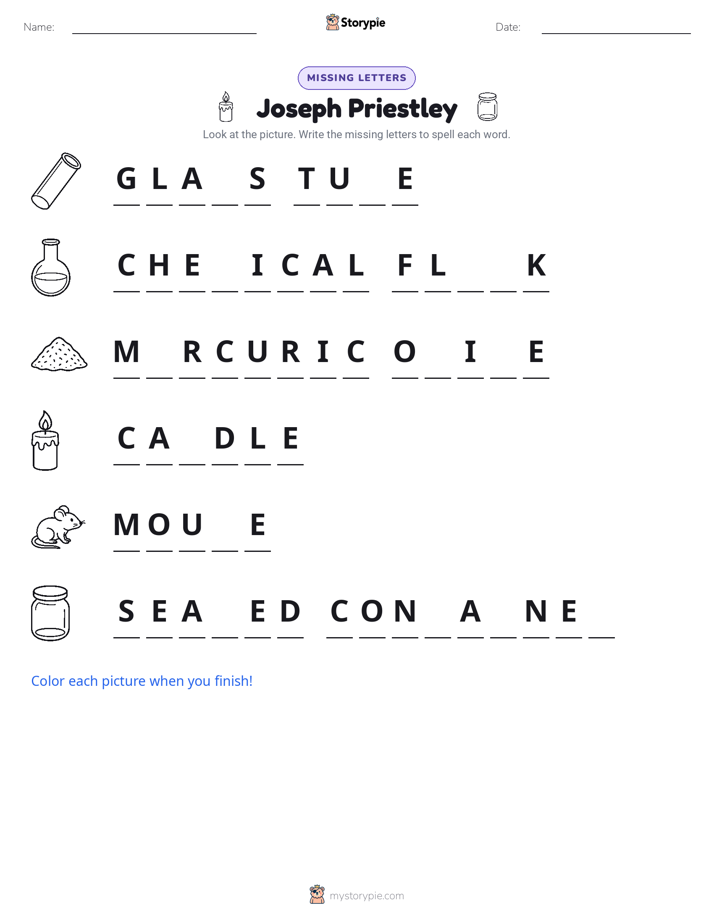
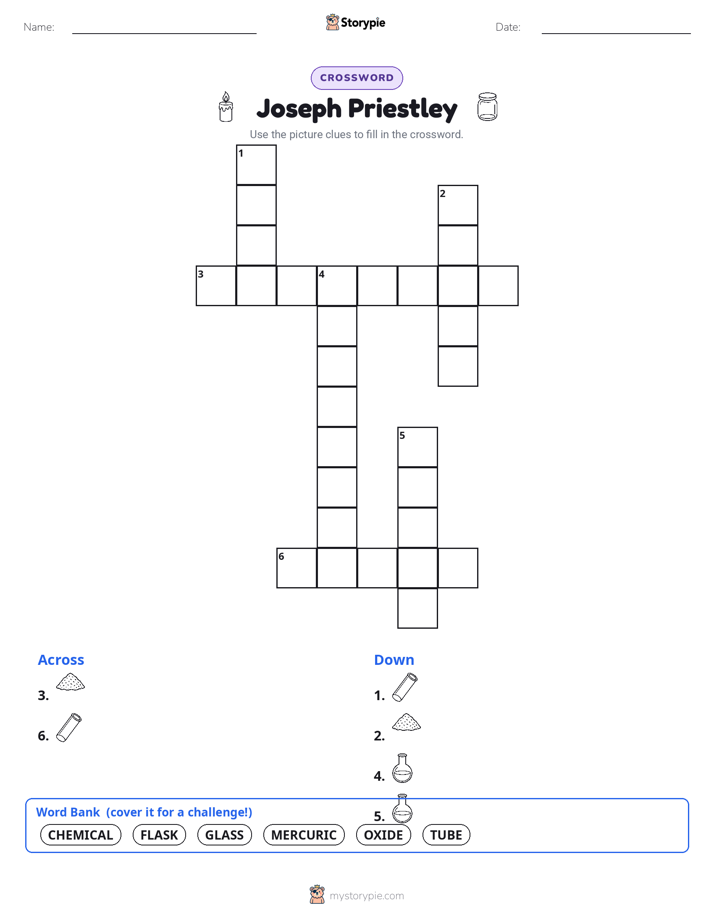
My most famous discovery, however, happened on a sunny afternoon, on August 1st, 1774. In those days, many scientists, including myself, believed in an idea called the 'phlogiston theory.' We thought that a fire-like element called phlogiston was inside everything that could burn, and that it was released when something was set on fire. I wanted to test this idea. In my laboratory, I took a large magnifying glass and used it to focus the sun's powerful rays onto a curious red powder known as mercuric oxide. As the intense beam of light heated the powder, I watched in amazement as it began to release a gas unlike any I had ever encountered. My mind raced with questions. What was this new 'air'? To find out, I placed a candle into a container of it. Instead of just burning, the candle's flame erupted, blazing with a dazzlingly bright light. Then, I placed a mouse in a sealed container with the new air and found it could live much longer than in a similar amount of ordinary air. I decided to call my discovery 'dephlogisticated air,' because according to the phlogiston theory, it seemed so pure that it could absorb huge amounts of phlogiston from a burning flame. I didn't know it at the time, but I had become the first person to isolate the gas that is essential for all life.
Besides being a scientist, I was a man with strong opinions about freedom and fairness, and I was never afraid to voice them. I openly supported the ideals of the American and French Revolutions, which promoted liberty and the rights of ordinary people. In England during the late 1700s, these were very controversial and even dangerous ideas to hold. Sadly, my outspoken views made some people very angry. In 1791, their anger turned to violence when a mob attacked and burned down my home and laboratory in the city of Birmingham. All of my precious books, my detailed notes, and my scientific equipment were destroyed in the fire. It was a heartbreaking loss. Realizing that England was no longer safe for my family, we made the difficult decision to leave our home. In 1794, we sailed across the Atlantic Ocean to the United States. We settled in the quiet town of Northumberland, Pennsylvania, where I found the peace and freedom to continue my work. In America, I made new friends with other great thinkers, including Thomas Jefferson, who shared my love for both science and liberty.
My discovery of 'dephlogisticated air' was a major step, but it was a brilliant French scientist named Antoine Lavoisier who later studied my work and gave the gas the name you use today: oxygen. He developed a new theory of combustion that replaced the phlogiston theory, though I held onto my original beliefs for the rest of my life. Even so, my experiments with different types of gases helped pave the way for the entire field of modern chemistry. I lived to be 70 years old, passing away peacefully in my American home on February 6th, 1804. I hope my story inspires you to always stay curious, to ask big questions, and to have the courage to stand up for what you believe in, even when it is difficult. From the very air you breathe to the fizz in your soda, a little piece of my curiosity is still with you today.
Wow facts
About
Joseph Priestley was an 18th-century English chemist, theologian, and natural philosopher credited with the discovery of oxygen, but Antoine-Laurent Lavoisier identified and named it. He is also known for the invention of carbonated water.
Take a Quiz
Question 1 of 5
What is the main theme of Joseph Priestley's story?
Explore next






Want to do even more?
Go beyond exploring. Unlock tools that turn every story into real learning.

Storypie Plus for families
Full stories, quizzes, and printables. Nights and car rides, sorted.
- Unlimited audio stories
- Create Mode: your child stars in the story
- Offline downloads
- Printable worksheets & coloring pages

Why Storypie for Schools
Students engaged. Prep in seconds. Evenings back to you.
- Worksheets & Quizzes
- Classroom Management
- Formative Assessment
- Custom Curriculum & Lesson Plans
- 27 Languages

Why Storypie for Homeschool
Curriculum done. They'll ask for more. Hours back in your day.
- Worksheet Generator
- First-Person Audio Stories
- Built-in Comprehension Quizzes
- Custom Curriculum & Lesson Plans
- Print & Go Activities