English

Joseph Priestley
Joseph Priestley was an 18th-century English chemist, theologian…
Reads at Grades 3–5 Listens at Grades 1–5
Print & create
Answer keys·No prep·Free with an account
28 worksheets · answer keys · full story · quiz · Ages 8-10 · CEFR B1
Plus adds 164,000+ more stories in 27 languages, audio for every one, and printables for all of them.
Just want Joseph Priestley?
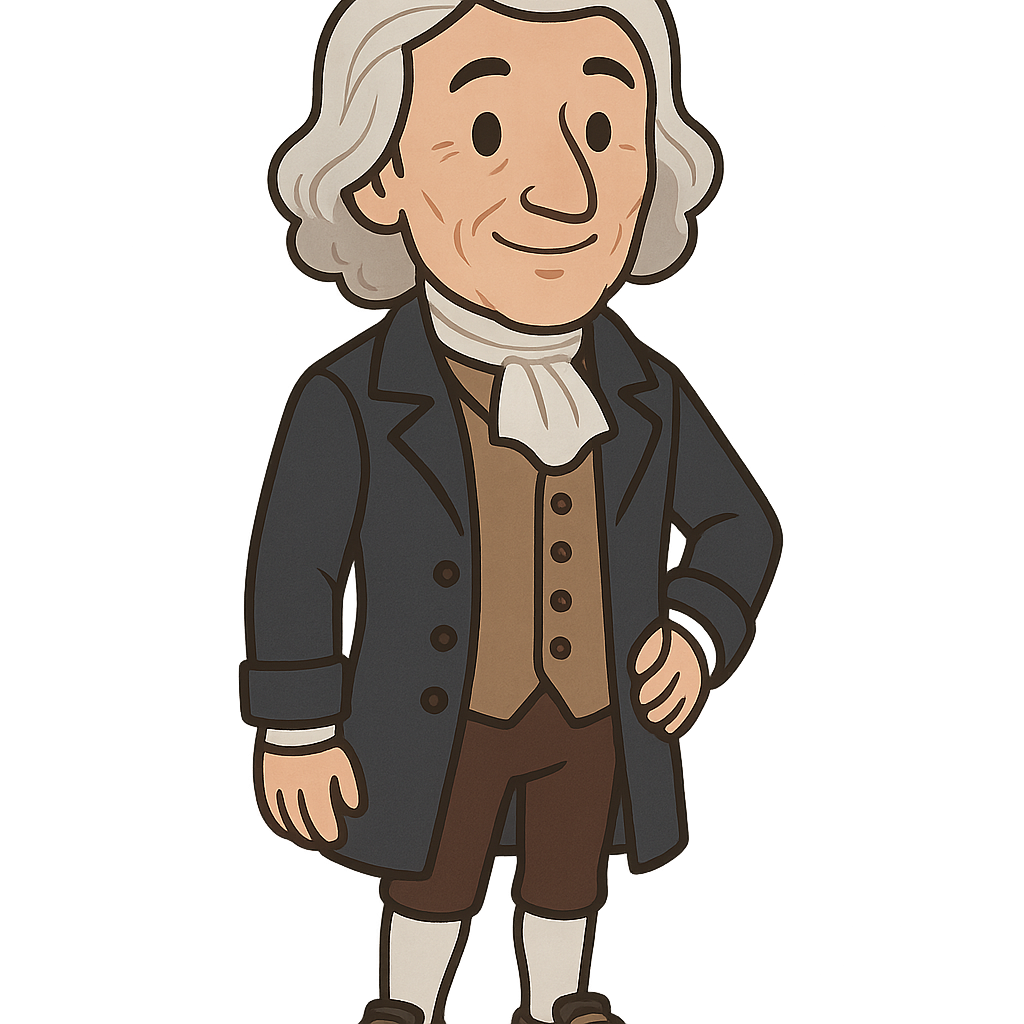
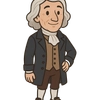
Hello! My name is Joseph Priestley. I was born on March 13th, 1733, in a small town in England. From a young age, I was filled with an endless curiosity about the world. I absolutely loved to learn, and I was especially good at languages. Most of my time was spent with my nose buried in a book, soaking up as much knowledge as I could. My family hoped that I would become a minister in the church, and I did follow that path for a while. However, I soon discovered that my mind had just as many questions about science and the natural world as it did about matters of faith. My curiosity was simply too big to be contained in just one subject.
I eventually became a teacher at a school called Warrington Academy. While I truly enjoyed teaching others, my mind was always buzzing with scientific questions that I longed to answer. A wonderful opportunity came around 1766, when I traveled to London and met the famous American inventor, Benjamin Franklin. He was conducting fascinating experiments with electricity, and our conversation left me feeling incredibly inspired. He encouraged me to conduct my own experiments, which was just the push I needed. Filled with new energy and ideas, I went to work and wrote a book called 'The History and Present State of Electricity,' which was published in 1767. This book marked the real beginning of my new life as a scientist.
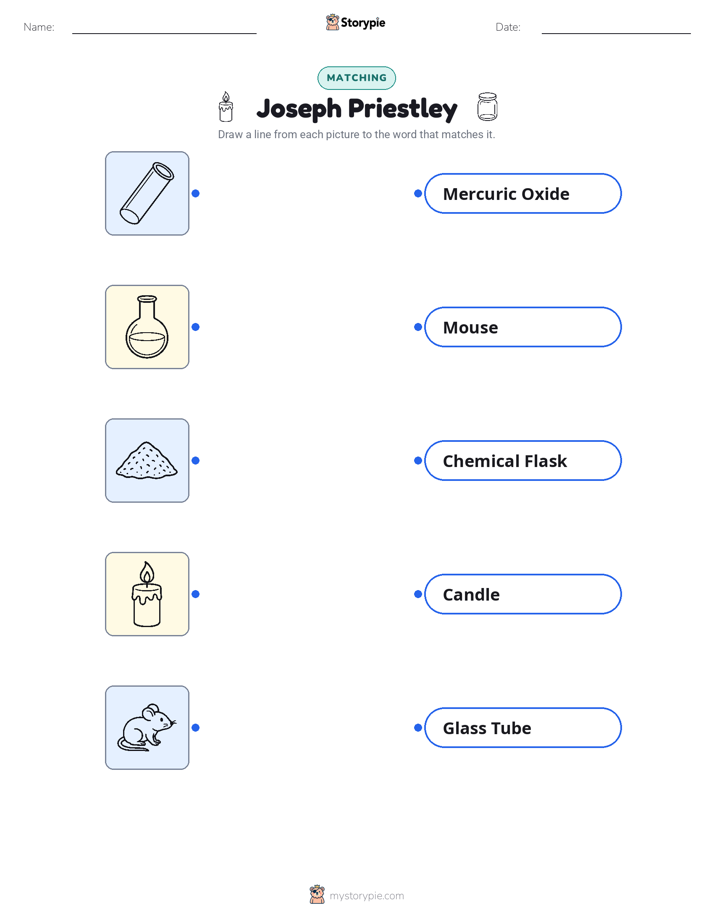
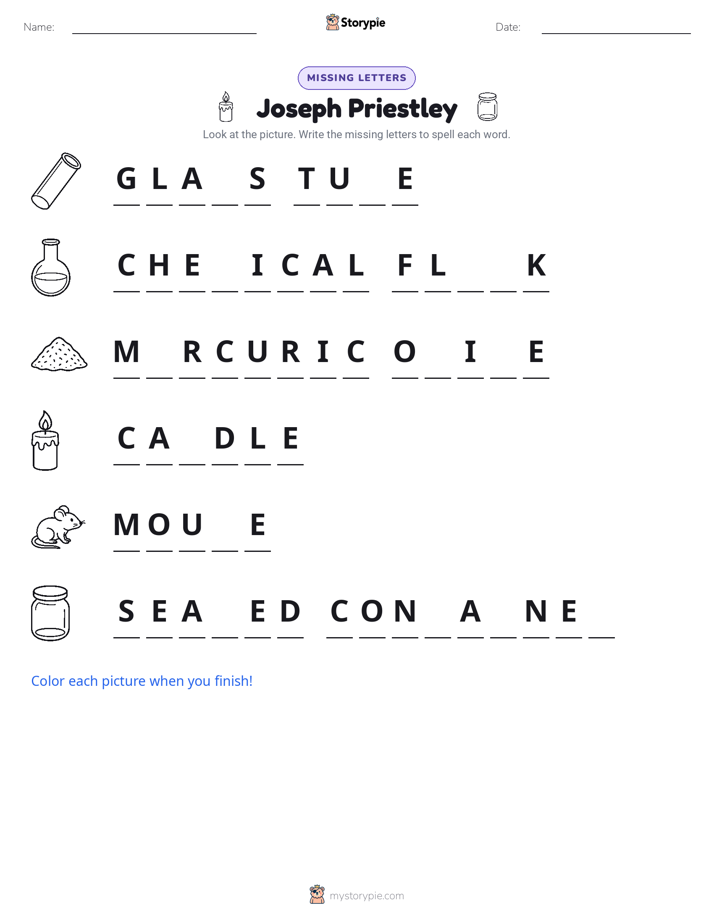
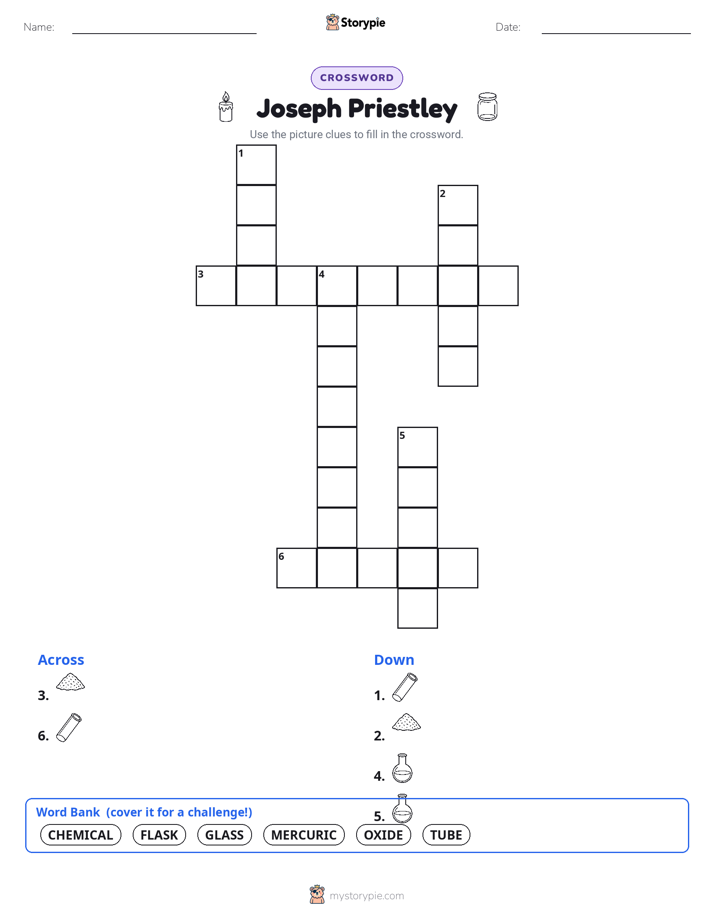
After my work with electricity, I became fascinated with 'airs,' which is what we used to call gases. I happened to live next to a brewery, and I noticed the fizzy air that bubbled up from the enormous vats of beer. I wondered what would happen if I could capture that air. In 1767, I developed a method to mix that fizzy air with water. When I tasted it, I realized I had invented soda water! This was exciting, but my most important discovery happened on August 1st, 1774. In my laboratory, I used a large magnifying glass to focus sunlight onto a red, powdery substance inside a sealed glass tube. As it heated up, it released a very special and unusual kind of air. I noticed that a candle flame burned with an amazing brightness in this new air. Even more surprising, a mouse I placed in a container of it became very active and energetic! I knew I had found something incredible, and I decided to call it 'dephlogisticated air.'
Joseph Priestley: The Discoverer of Oxygen
Hello! My name is Joseph Priestley. I was born on March 13th, 1733, in a small town in England. From a young age, I was filled with an endless curiosity about the world. I absolutely loved to learn, and I was especially good at languages. Most of my time was spent with my nose buried in a book, soaking up as much knowledge as I could. My family hoped that I would become a minister in the church, and I did follow that path for a while. However, I soon discovered that my mind had just as many questions about science and the natural world as it did about matters of faith. My curiosity was simply too big to be contained in just one subject.
I eventually became a teacher at a school called Warrington Academy. While I truly enjoyed teaching others, my mind was always buzzing with scientific questions that I longed to answer. A wonderful opportunity came around 1766, when I traveled to London and met the famous American inventor, Benjamin Franklin. He was conducting fascinating experiments with electricity, and our conversation left me feeling incredibly inspired. He encouraged me to conduct my own experiments, which was just the push I needed. Filled with new energy and ideas, I went to work and wrote a book called 'The History and Present State of Electricity,' which was published in 1767. This book marked the real beginning of my new life as a scientist.
After my work with electricity, I became fascinated with 'airs,' which is what we used to call gases. I happened to live next to a brewery, and I noticed the fizzy air that bubbled up from the enormous vats of beer. I wondered what would happen if I could capture that air. In 1767, I developed a method to mix that fizzy air with water. When I tasted it, I realized I had invented soda water! This was exciting, but my most important discovery happened on August 1st, 1774. In my laboratory, I used a large magnifying glass to focus sunlight onto a red, powdery substance inside a sealed glass tube. As it heated up, it released a very special and unusual kind of air. I noticed that a candle flame burned with an amazing brightness in this new air. Even more surprising, a mouse I placed in a container of it became very active and energetic! I knew I had found something incredible, and I decided to call it 'dephlogisticated air.'
It wasn't long before another scientist heard about my work. A French chemist named Antoine Lavoisier studied my 'dephlogisticated air' and gave it the name we all use for it today: oxygen. My scientific work was exciting, but my life was not always easy. I had many strong opinions about politics and religion that were not very popular in England during that time. My ideas made some people very angry. In 1791, a terrible thing happened when an angry mob burned down my home and destroyed my entire laboratory, which was filled with my precious books and equipment. It was a very sad day for me and my family. We no longer felt safe, so in 1794, we made the difficult decision to sail across the ocean and start a new life in America.
I spent the final years of my life in Pennsylvania, where I continued my scientific work and writing. I lived to be 70 years old. Today, people remember me for discovering oxygen, a discovery that completely changed science by helping us understand how things burn and how we breathe. I am also remembered for some of my other fun inventions, like the rubber eraser to fix pencil mistakes and, of course, fizzy soda water. I hope my story shows you that a curious mind can ask amazing questions and make discoveries that can change the world for everyone.
Wow facts
About
Joseph Priestley was an 18th-century English chemist, theologian, and natural philosopher credited with the discovery of oxygen, but Antoine-Laurent Lavoisier identified and named it. He is also known for the invention of carbonated water.
Take a Quiz
Question 1 of 5
In the story, I said my mind was always 'buzzing with scientific questions.' What does the word 'buzzing' mean here?
Explore next






Want to do even more?
Go beyond exploring. Unlock tools that turn every story into real learning.

Storypie Plus for families
Full stories, quizzes, and printables. Nights and car rides, sorted.
- Unlimited audio stories
- Create Mode: your child stars in the story
- Offline downloads
- Printable worksheets & coloring pages

Why Storypie for Schools
Students engaged. Prep in seconds. Evenings back to you.
- Worksheets & Quizzes
- Classroom Management
- Formative Assessment
- Custom Curriculum & Lesson Plans
- 27 Languages

Why Storypie for Homeschool
Curriculum done. They'll ask for more. Hours back in your day.
- Worksheet Generator
- First-Person Audio Stories
- Built-in Comprehension Quizzes
- Custom Curriculum & Lesson Plans
- Print & Go Activities