English

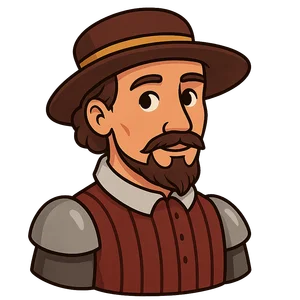
Juan Ponce de León
Juan Ponce de León was a Spanish explorer and conquistador known for leading the first official European…
Reads at Grades 6–8 Listens at Grades 4–8
Print & create
Answer keys·No prep·Free with an account
28 worksheets · answer keys · full story · quiz · Ages 10-12 · CEFR B2
Plus adds 244,000+ more stories in 27 languages, audio for every one, and printables for all of them.
Just want Juan Ponce de León?
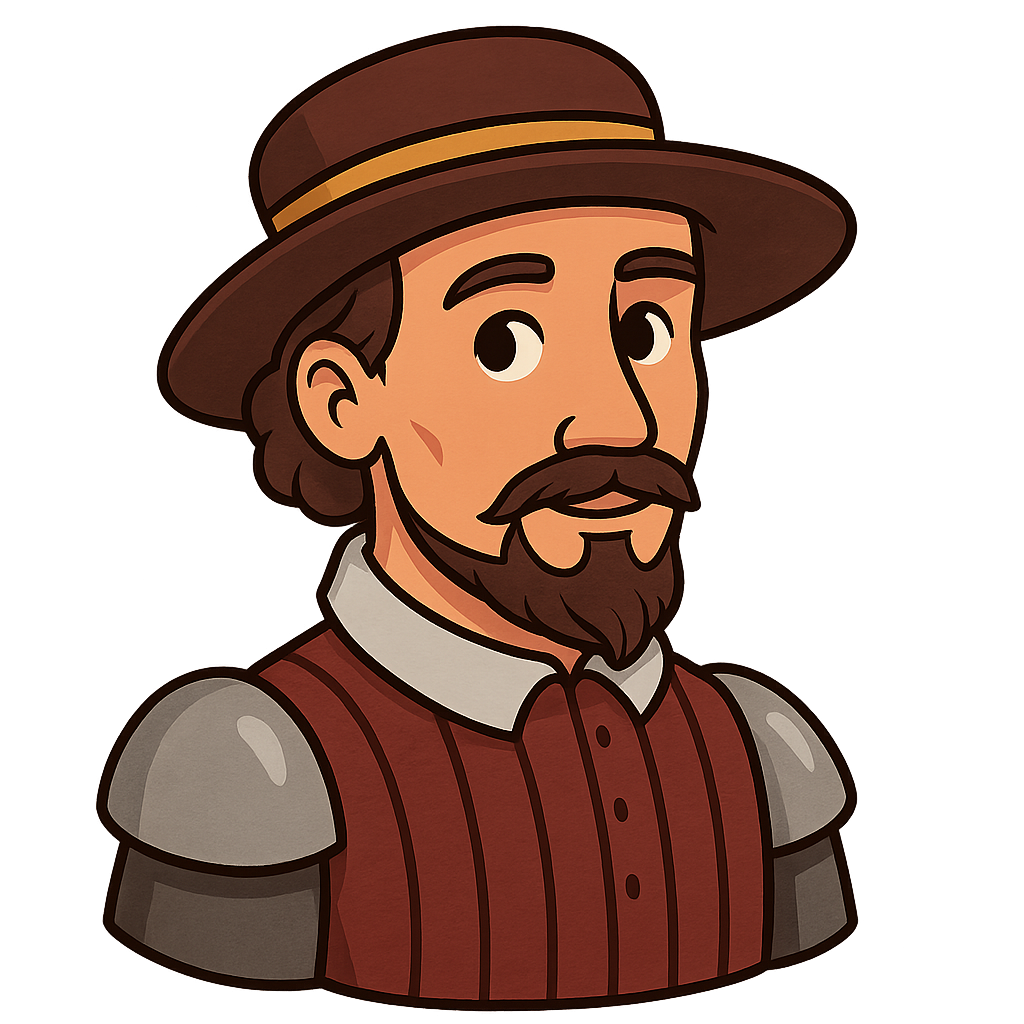
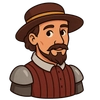
Hello! My name is Juan Ponce de León. I will tell you the story of my life as a Spanish explorer and conquistador. I was born around the year 1474 in a small town in Spain called Santervás de Campos. My family was part of the nobility, but we were not wealthy, so I understood from a young age that I would have to make my own way in the world. As a boy, I served as a page in the royal court, an important position where I learned about the codes of chivalry and the strategies of warfare. It was an electrifying time to be alive in Spain. Sailors were returning with incredible stories of a 'New World' across the Atlantic Ocean, a land recently reached by an Italian explorer named Christopher Columbus. These tales of adventure and opportunity sparked a fire in my heart, and I longed to see these new lands for myself.
When I was about 19 years old, in 1493, I seized my chance for adventure. I joined Christopher Columbus on his second voyage across the vast Atlantic. The journey was long and perilous, testing the limits of our ships and our spirits, but the sight of the green islands of the Caribbean for the first time was breathtaking. We landed on a large island that the native Taíno people called Hispaniola. I spent several years there, working to help establish the first Spanish settlements and learning a great deal about this new environment. It was on Hispaniola that I proved myself as a capable soldier and a respected leader, skills that would serve me well in the years to come as I carved out my own path in the New World.
Juan Ponce de León
Hello! My name is Juan Ponce de León. I will tell you the story of my life as a Spanish explorer and conquistador. I was born around the year 1474 in a small town in Spain called Santervás de Campos. My family was part of the nobility, but we were not wealthy, so I understood from a young age that I would have to make my own way in the world. As a boy, I served as a page in the royal court, an important position where I learned about the codes of chivalry and the strategies of warfare. It was an electrifying time to be alive in Spain. Sailors were returning with incredible stories of a 'New World' across the Atlantic Ocean, a land recently reached by an Italian explorer named Christopher Columbus. These tales of adventure and opportunity sparked a fire in my heart, and I longed to see these new lands for myself.
When I was about 19 years old, in 1493, I seized my chance for adventure. I joined Christopher Columbus on his second voyage across the vast Atlantic. The journey was long and perilous, testing the limits of our ships and our spirits, but the sight of the green islands of the Caribbean for the first time was breathtaking. We landed on a large island that the native Taíno people called Hispaniola. I spent several years there, working to help establish the first Spanish settlements and learning a great deal about this new environment. It was on Hispaniola that I proved myself as a capable soldier and a respected leader, skills that would serve me well in the years to come as I carved out my own path in the New World.
From the shores of Hispaniola, I could often see another island to the east, a place the Taíno people called Borikén. I had heard persistent rumors that this island held significant deposits of gold. Driven by these stories, in 1508, I led a small expedition to explore it. The island was lush and beautiful, and we did indeed find some gold, confirming the rumors. The Spanish crown was pleased with my successful mission, and in 1509, I was appointed the first governor of the island. We renamed it Puerto Rico, which means 'rich port,' because of its promising harbor and resources. My primary job was to build a permanent settlement and govern the new colony. This was an extremely challenging time, as my duties led to conflict with the native Taíno people who bravely resisted Spanish rule. I learned that building a new life in a new land was much harder than simply exploring it.
After a few years, political changes in the Spanish colonies meant I was no longer the governor of Puerto Rico. However, my desire to explore was as strong as ever. I journeyed to Spain and received permission directly from the king to discover and settle lands that were rumored to exist to the north of Cuba. In 1513, my ships set sail on this new mission. After carefully navigating through the chain of islands now called the Bahamas, my crew and I spotted a long, green coastline on April 2nd. We had arrived during the Easter season—which we called Pascua Florida, or the 'Festival of Flowers'—and because the land was so lush and covered in beautiful vegetation, I named it La Florida. I was the leader of the first official European expedition to this land, which would one day become a part of the United States.
Many years after my voyages, a famous story began to circulate that I was searching for a magical Fountain of Youth in Florida, a spring whose waters could make old people young again. It is a fascinating tale, but it is not quite true. The historical record shows that my official mission from the king was to find new lands, claim them for Spain, and search for valuable resources like gold. The exciting story about the fountain was added to my biography by a writer many years after my death. While the idea of a magical fountain is compelling, my real goals were the ones shared by most explorers of my time: discovery, conquest, and securing fortune for my country and for myself.
I returned to Spain to report my discovery of Florida and was officially granted the right to colonize the land I had named. It took several years to organize the expedition, but in 1521, I sailed back to Florida with two ships. My party included about 200 settlers, horses, tools, and supplies needed to start a new town and build a lasting colony. This time, however, our reception was not peaceful. The native Calusa people who lived in the region fiercely defended their land against our arrival. During a battle with the Calusa, I was struck by an arrow and badly wounded. My men knew I needed urgent medical help, so we abandoned our settlement attempt and sailed to Havana, Cuba, hoping I could recover there. Sadly, my injury was too severe to be treated.
I passed away in Cuba in July of 1521. I lived to be about 47 years old. My life was one of constant adventure and discovery, lived during an era when the known world map was being completely redrawn. Though my final attempt to build a colony in Florida did not succeed, I am remembered for giving the state its name and for being the first European to lead a documented expedition to its shores. I am also remembered as the first governor of Puerto Rico. My voyages helped connect different parts of the world, changing the course of history forever.
Wow facts
About
Juan Ponce de León was a Spanish explorer and conquistador known for leading the first official European expedition to Florida and serving as the first governor of Puerto Rico, with a short break in 1511 when Juan Cerón was the temporary governor.
Take a Quiz
Question 1 of 5
What is the main idea of the section titled 'The Myth of the Fountain of Youth'?
Explore next

Want to do even more?
Go beyond exploring. Unlock tools that turn every story into real learning.

Storypie Plus for families
Full stories, quizzes, and printables. Nights and car rides, sorted.
- Unlimited audio stories
- Create Mode: your child stars in the story
- Offline downloads
- Printable worksheets & coloring pages

Why Storypie for Schools
Students engaged. Prep in seconds. Evenings back to you.
- Worksheets & Quizzes
- Classroom Management
- Formative Assessment
- Custom Curriculum & Lesson Plans
- 27 Languages

Why Storypie for Homeschool
Curriculum done. They'll ask for more. Hours back in your day.
- Worksheet Generator
- First-Person Audio Stories
- Built-in Comprehension Quizzes
- Custom Curriculum & Lesson Plans
- Print & Go Activities