English

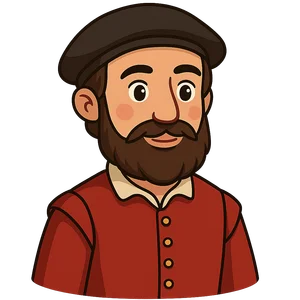
Juan Sebastián Elcano
Juan Sebastián Elcano was a Spanish explorer of Basque origin who completed the first circumnavigation of the…
Reads at Grades 6–8 Listens at Grades 4–8
Print & create
Answer keys·No prep·Free with an account
28 worksheets · answer keys · full story · quiz · Ages 10-12 · CEFR B2
Plus adds 164,000+ more stories in 27 languages, audio for every one, and printables for all of them.
Just want Juan Sebastián Elcano?
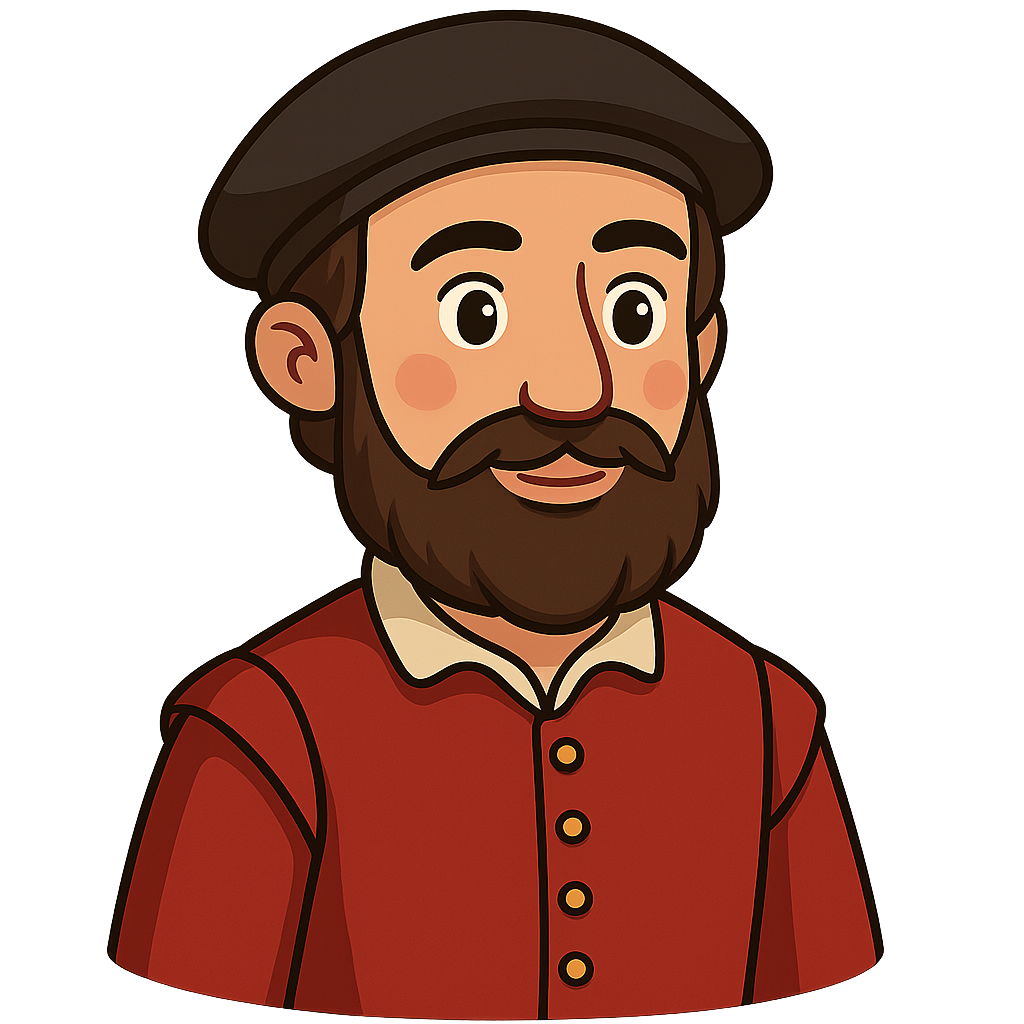
Hello! My name is Juan Sebastián Elcano, and I want to share the story of one of history's greatest adventures. I was born around the year 1487 in Getaria, a small fishing town in the Basque Country of Spain. Growing up surrounded by the ocean, the sea became both my playground and my school. It was there I learned to navigate by the stars, to understand the powerful winds, and to command a ship. My early career was spent as a merchant sailor, but I also gained valuable leadership experience fighting in military campaigns for Spain in Italy and Algiers. Every moment at sea prepared me for the journey that would later define my life and change the world's maps forever.
In 1519, I learned of a daring and incredibly risky expedition being organized by a Portuguese captain named Ferdinand Magellan. His plan was revolutionary for its time. Instead of sailing east around Africa to reach the valuable Spice Islands in Asia, he proposed sailing west, right through the Americas, to find a new passage. It was an idea that many thought impossible. I was captivated by the challenge and signed on as the ship's master for one of the five vessels, the *Concepción*. On September 20th, 1519, our fleet of over 270 men departed from the port of Sanlúcar de Barrameda, sailing into a vast and unknown horizon.
The journey was far more difficult than any of us could have ever imagined. We endured violent storms that threatened to tear our wooden ships apart, faced mutinies from desperate crew members, and suffered through the biting cold of the southern latitudes. In late 1520, after months of searching, we finally navigated a treacherous, winding passage at the tip of South America, which is now known as the Strait of Magellan. Upon entering the vast, calm ocean on the other side, Magellan named it the Pacific. Our relief, however, did not last. We sailed for months without sighting land, and our supplies of food and water dwindled to almost nothing. Many of my brave crewmates died from scurvy, a terrible sickness caused by a lack of fresh food. Then, in April of 1521, our captain, Ferdinand Magellan, was tragically killed during a battle in the Philippines.
Juan Sebastián Elcano
Hello! My name is Juan Sebastián Elcano, and I want to share the story of one of history's greatest adventures. I was born around the year 1487 in Getaria, a small fishing town in the Basque Country of Spain. Growing up surrounded by the ocean, the sea became both my playground and my school. It was there I learned to navigate by the stars, to understand the powerful winds, and to command a ship. My early career was spent as a merchant sailor, but I also gained valuable leadership experience fighting in military campaigns for Spain in Italy and Algiers. Every moment at sea prepared me for the journey that would later define my life and change the world's maps forever.
In 1519, I learned of a daring and incredibly risky expedition being organized by a Portuguese captain named Ferdinand Magellan. His plan was revolutionary for its time. Instead of sailing east around Africa to reach the valuable Spice Islands in Asia, he proposed sailing west, right through the Americas, to find a new passage. It was an idea that many thought impossible. I was captivated by the challenge and signed on as the ship's master for one of the five vessels, the Concepción. On September 20th, 1519, our fleet of over 270 men departed from the port of Sanlúcar de Barrameda, sailing into a vast and unknown horizon.
The journey was far more difficult than any of us could have ever imagined. We endured violent storms that threatened to tear our wooden ships apart, faced mutinies from desperate crew members, and suffered through the biting cold of the southern latitudes. In late 1520, after months of searching, we finally navigated a treacherous, winding passage at the tip of South America, which is now known as the Strait of Magellan. Upon entering the vast, calm ocean on the other side, Magellan named it the Pacific. Our relief, however, did not last. We sailed for months without sighting land, and our supplies of food and water dwindled to almost nothing. Many of my brave crewmates died from scurvy, a terrible sickness caused by a lack of fresh food. Then, in April of 1521, our captain, Ferdinand Magellan, was tragically killed during a battle in the Philippines.
After Magellan’s death, our mission was thrown into chaos. We had lost our leader, many men, and several ships. The surviving crew members gathered and held a vote to decide our future, and I was elected as one of the new leaders to guide us forward. We pushed on and finally reached our destination: the Spice Islands. There, we loaded our last two remaining ships, the Trinidad and the Victoria, with a precious cargo of cloves. We knew the journey home would be just as dangerous, so we decided to split up. The Trinidad would attempt to return by sailing back east across the Pacific, while I would take command of the Victoria and continue sailing west, completing a full circle around the globe to get back to Spain.
The final leg of our journey aboard the Victoria was a desperate race against time and starvation. To get home, we had to cross the immense Indian Ocean and sail around the southern tip of Africa. This route was controlled by the Portuguese, who were Spain's rivals, meaning we could not risk stopping at their ports for fresh supplies. Once again, we faced extreme hunger and thirst. It took every ounce of our courage and skill to keep the battered, leaking ship afloat and on course. Finally, on September 6th, 1522, nearly three years after our departure, our little ship sailed back into a Spanish harbor. Of the more than 270 men who had set out, only 18 of us had made it back. We had achieved the impossible. We were the first people to ever circumnavigate the world.
Upon my return, the Emperor of Spain, Charles V, recognized our historic achievement and honored me with a coat of arms. It proudly displayed a globe with the Latin words 'Primus circumdedisti me,' which means, 'You were the first to circumnavigate me.' My life remained tied to the sea, and in 1525, I embarked on another expedition to the Spice Islands. This time, however, my luck ran out. I fell ill during the voyage and passed away at sea in the Pacific Ocean in 1526. I lived to be about 39 years old. Though my life ended on the vast ocean I loved so much, the journey I completed with the crew of the Victoria is remembered for proving that the world was round and forever changing humanity's understanding of our planet.
Wow facts
About
Juan Sebastián Elcano was a Spanish explorer of Basque origin who completed the first circumnavigation of the Earth.
Take a Quiz
Question 1 of 5
Based on the story, what were the main challenges Juan Sebastián Elcano and the crew faced on their voyage?
Explore next


Want to do even more?
Go beyond exploring. Unlock tools that turn every story into real learning.

Storypie Plus for families
Full stories, quizzes, and printables. Nights and car rides, sorted.
- Unlimited audio stories
- Create Mode: your child stars in the story
- Offline downloads
- Printable worksheets & coloring pages

Why Storypie for Schools
Students engaged. Prep in seconds. Evenings back to you.
- Worksheets & Quizzes
- Classroom Management
- Formative Assessment
- Custom Curriculum & Lesson Plans
- 27 Languages

Why Storypie for Homeschool
Curriculum done. They'll ask for more. Hours back in your day.
- Worksheet Generator
- First-Person Audio Stories
- Built-in Comprehension Quizzes
- Custom Curriculum & Lesson Plans
- Print & Go Activities