English

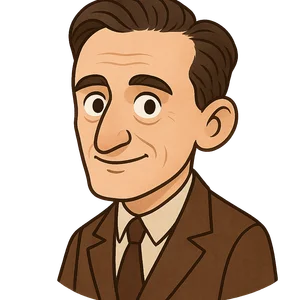
Julian Tuwim
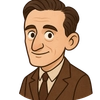
Julian Tuwim was a celebrated Polish poet, writer, and translator…
Reads at Grades 6–8 Listens at Grades 4–8
Print & create
Answer keys·No prep·Free with an account
28 worksheets · answer keys · full story · quiz · Ages 10-12 · CEFR B2
Plus adds 164,000+ more stories in 27 languages, audio for every one, and printables for all of them.
Just want Julian Tuwim?
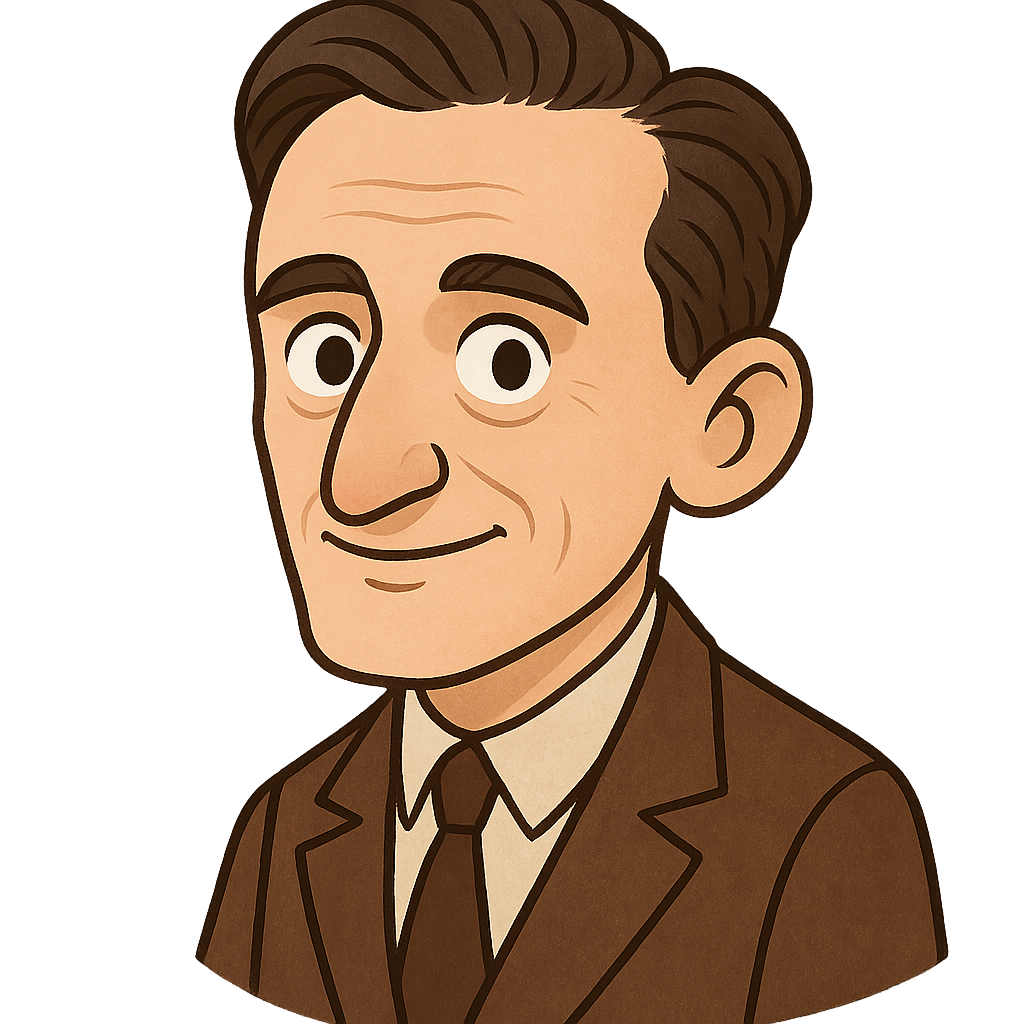
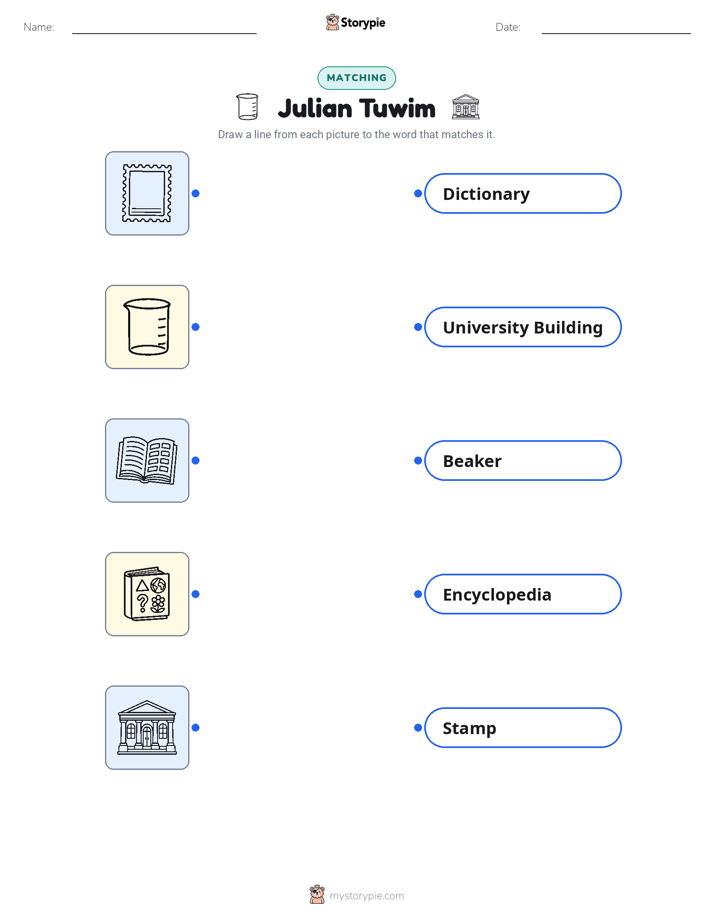
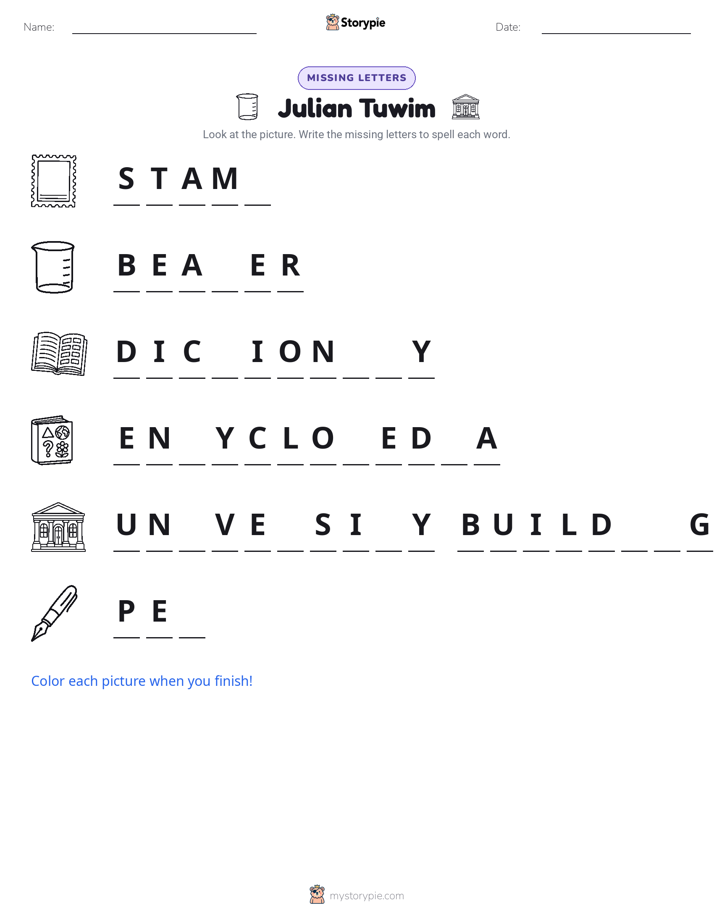
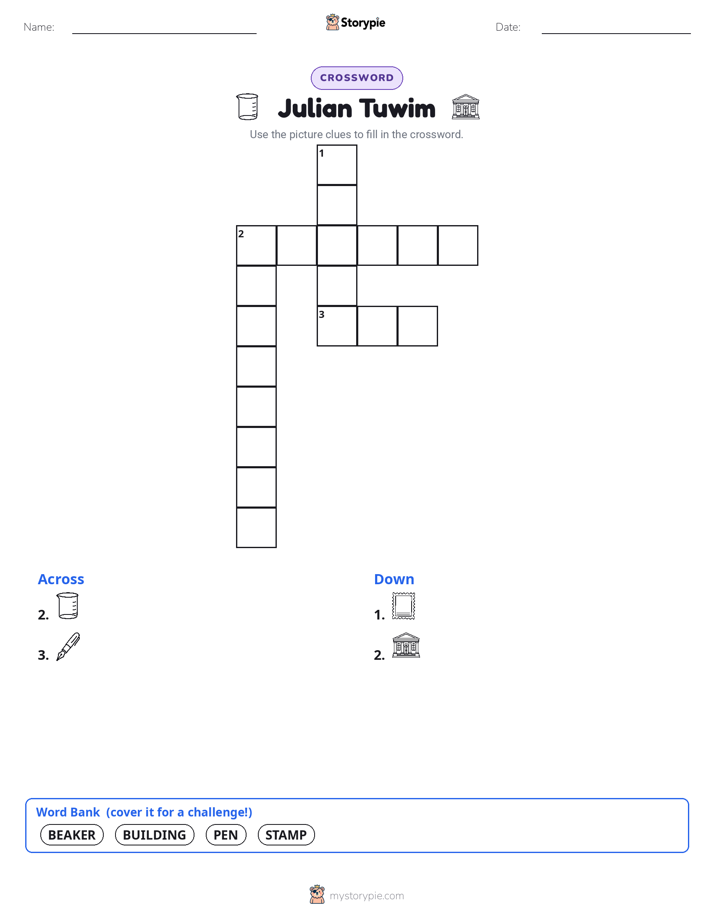
Hello! My name is Julian Tuwim, and I was a poet who loved to play with words. My story begins on September 13th, 1894, in a bustling city called Łódź, in Poland. The world I was born into was full of wonder, and I was a curious boy, fascinated by everything. I collected stamps, which were like tiny windows to the world, showing me places I dreamed of seeing. I also loved science and even had a small chemistry lab at home where I would mix potions and powders, pretending to be a great scientist. But my greatest love was language. I was fascinated by strange words and the sounds they made. I spent countless hours in my father's library, not just reading stories, but exploring dictionaries and encyclopedias. I loved discovering new ways to describe the world around me, and this early love for words would shape my entire life.
When I grew older, I moved to Warsaw in 1916 to study at the university. While I was enrolled in law and philosophy, my heart was truly in poetry. Warsaw was an exciting, vibrant city, buzzing with artists and thinkers who were all imagining a new future for our country. In 1918, a very important year for Poland as it regained its independence, I gathered with some of my friends who also loved poetry. Together, we started a group we called 'Skamander.' We believed that poetry shouldn't be old and stuffy, only talking about kings and ancient history. We wanted to write poetry that felt new and alive, that spoke about everyday life in simple, powerful language. My very first book of poems was published that same year, and a year later, in 1919, I married the love of my life, Stefania. It was a time of great change and excitement, both for my country and for me as a young poet finding his voice.
Julian Tuwim
Hello! My name is Julian Tuwim, and I was a poet who loved to play with words. My story begins on September 13th, 1894, in a bustling city called Łódź, in Poland. The world I was born into was full of wonder, and I was a curious boy, fascinated by everything. I collected stamps, which were like tiny windows to the world, showing me places I dreamed of seeing. I also loved science and even had a small chemistry lab at home where I would mix potions and powders, pretending to be a great scientist. But my greatest love was language. I was fascinated by strange words and the sounds they made. I spent countless hours in my father's library, not just reading stories, but exploring dictionaries and encyclopedias. I loved discovering new ways to describe the world around me, and this early love for words would shape my entire life.
When I grew older, I moved to Warsaw in 1916 to study at the university. While I was enrolled in law and philosophy, my heart was truly in poetry. Warsaw was an exciting, vibrant city, buzzing with artists and thinkers who were all imagining a new future for our country. In 1918, a very important year for Poland as it regained its independence, I gathered with some of my friends who also loved poetry. Together, we started a group we called 'Skamander.' We believed that poetry shouldn't be old and stuffy, only talking about kings and ancient history. We wanted to write poetry that felt new and alive, that spoke about everyday life in simple, powerful language. My very first book of poems was published that same year, and a year later, in 1919, I married the love of my life, Stefania. It was a time of great change and excitement, both for my country and for me as a young poet finding his voice.
While I wrote many serious poems for adults, some of my most famous work was written for children. I believed that poetry should be fun, a game you could play with sounds and ideas. I loved to play with the rhythm and sound of words, making them bounce and sing off the page. In 1938, I wrote one of my most famous poems, 'Lokomotywa' (The Locomotive). It’s a long poem that sounds just like a train starting up—chugging and puffing and picking up speed until it roars down the tracks. I filled it with funny sounds and exciting descriptions of all the things the train was carrying, from pianos to cannons. I also wrote about an elephant who was a bit forgetful, Mr. Tralaliński, and a radio station run entirely by birds! I wanted my poems to make children laugh and spark their imaginations, showing them that language could be a wonderful playground.
My happy life in Poland was interrupted in 1939 when World War II began. The world I knew was turned upside down. Because I was Jewish, it was no longer safe for me to stay in my home country. My wife and I had to flee, leaving everything we knew and loved behind. It was a long and difficult journey that took us across a war-torn continent. We traveled through Romania, France, and Portugal, eventually finding a temporary home in Brazil. Then, in 1942, we moved to the United States. During these years of exile, I missed Poland more than words can say. To cope with my sadness and longing, I wrote one of my longest and most important works, a poem called 'Kwiaty polskie' (Polish Flowers). It was my way of carrying my homeland, its smells, its landscapes, and its people, in my heart, even when I was an ocean away.
After the war finally ended, I made the decision to return to Poland in 1946. It was not the same country I had left. The cities were scarred by war, and the nation was now under a different kind of government. Many of my friends and fellow writers were gone forever. It was a difficult and complicated time, but Poland was my home, and the Polish language was the air I breathed as a poet. I felt I had a duty to return. I continued to write, translate great literature from other languages into Polish, and work in the theater. I wanted to help rebuild the cultural life of my country after so much destruction and loss.
I passed away on December 27th, 1953. I lived to be 59 years old. Though my life had its share of sadness and upheaval, I am remembered for the joy and wonder I tried to share through my words. Today, children all across Poland still grow up reading 'Lokomotywa' and my other poems, their voices chanting the chugging rhythm of my imaginary train. My words, which I loved so much, have lived on, and I hope they continue to make people smile, think, and appreciate the magic of language.
Wow facts
About
Julian Tuwim was a celebrated Polish poet, writer, and translator, renowned for his influential poetry for adults and his beloved, whimsical verses for children.
Take a Quiz
Question 1 of 5
In your own words, describe Julian Tuwim's journey during World War II.
Explore next




Want to do even more?
Go beyond exploring. Unlock tools that turn every story into real learning.

Storypie Plus for families
Full stories, quizzes, and printables. Nights and car rides, sorted.
- Unlimited audio stories
- Create Mode: your child stars in the story
- Offline downloads
- Printable worksheets & coloring pages

Why Storypie for Schools
Students engaged. Prep in seconds. Evenings back to you.
- Worksheets & Quizzes
- Classroom Management
- Formative Assessment
- Custom Curriculum & Lesson Plans
- 27 Languages

Why Storypie for Homeschool
Curriculum done. They'll ask for more. Hours back in your day.
- Worksheet Generator
- First-Person Audio Stories
- Built-in Comprehension Quizzes
- Custom Curriculum & Lesson Plans
- Print & Go Activities